

Standing in the lobby of the Olde Walkerville Theatre, you can feel the history in the floorboards. It is a space that demands respect, and tonight, Dec. 7, the air is thick with a specific kind of urgency. This isn't just another tour stop for Downchild. It is a rescue mission for a local legend.
The Windsor music scene is a tight-knit ecosystem, and right now, one of its pillars needs a lift. Kim “The Commander” Kelly, the man who spent decades putting this city on the map for touring acts, is facing a brutal recovery after a fall left him paralyzed. But the blues community does not leave its own behind.
And then there is Sparky’s Toy Drive. It is the season of giving, though for many in the 519, the budget is tighter than a snare drum. The proceeds from tonight’s gate are pulling double duty, feeding the soul of a fallen comrade and putting gifts under trees that might otherwise stay bare.
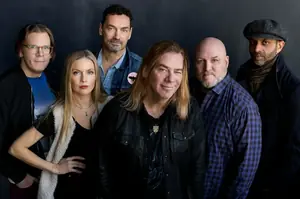
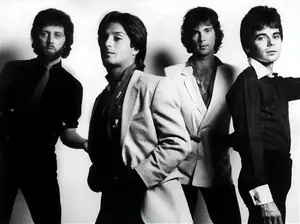
Downchild is the only band that could anchor a night like this. They are the architects of a sound that most people recognize but few can properly attribute. If you have ever seen a guy in a skinny tie and dark sunglasses belt out a shuffle, you are looking at a shadow of what Donnie Walsh started in 1969.
Chuck Jackson has been the voice of that legacy for 28 years. He has seen the band through half its life, surviving the shifts in industry trends and the slow decline of the smoky blues club. He is a veteran who carries the weight of the genre without letting it crush his spirit.
The connection between Downchild and The Blues Brothers is more than just a footnote in a trivia book. Dan Aykroyd didn't just stumble upon this sound; he lived it at the restrictive, legendary clubs where Walsh and his crew were defining the Canadian blues identity.
When asked if the band still maintains that signature vibe after five decades, Jackson says, "Sure does. You know, our thing is we like to make sure people are dancing; we do a lot of jump blues and we’re still recording fresh new material all the time. Our newest CD was nominated for a Juno and our last CD won the Juno. So yeah, we’re still writing songs, still in that tradition of Downchild and it’s that same tradition that the Blues Brothers followed when they did three of our songs on their first album. We just played a show with Dan Aykroyd last week, so that friendship is still alive."
It is a bold claim to stay fresh in a genre that often feels like a museum piece. But the Juno hardware on their shelf suggests they aren't just recycling 12-bar progressions for the sake of nostalgia. They are still writing, still grinding and still relevant.
But there is a lingering question about what makes this music "Canadian." We often look south to Chicago or the Delta for the blueprints of the blues. Yet, there is a distinct flavour to the way it translates across the border, a certain grit that comes from surviving a northern winter.
Jackson says, "I think it’s quite an eclectic variety of Canadian blues musicians and doing all styles. We do have our own style with Downchild, but all the blues musicians in Canada have been influenced heavily by American blues. It can even be broken down by style—the Chicago blues style, the urban style, some jump blues, some of the Delta blues and even country blues. There’s a wide range of blues that’s gathered and influenced by so many different Canadian artists."
The technical proficiency of Canadian players is often overlooked. They take the raw, bleeding-heart emotion of the American South and polish it with a technical precision that is undeniably sharp. It is a hybrid of styles that refuses to be boxed into a single sub-genre.
Buddy Guy was one of the first blues artists I ever saw. I listened to so many different artists like Paul Butterfield and Muddy Waters. B.B. King was also a big influence. Junior Wells was a big influence on me playing harmonica. A lot of the British blues invasion like Eric Clapton and John Mayall were playing the blues and they inspired me to find out who the original artists were.
The history of the blues in Canada is a relatively short timeline. While the greats were recording in the 1920s, Canada didn't really catch the fever until the 50s. Ronnie Hawkins is usually cited as the patriarch, the man who brought the fire across the border, but everyone has their own entry point.
For Jackson, the education was a mix of live experience and the British invasion that acted as a middleman for the original Black artists. It is a common path for musicians of his era—discovering the roots by following the branches.
Jackson says, "Well, Buddy Guy was one of the first blues artists I ever saw. But you know, I listened to so many different artists like Paul Butterfield and Muddy Waters. B.B. King was also a big influence. Junior Wells was a big influence on me playing harmonica. A lot of the British blues invasion like Eric Clapton and John Mayall were playing the blues and they kind of inspired me to find out who the original artists were. And I started listening to Sonny Boy Williamson and the great Chess performers like Little Walter. I’ve pretty much listened to all the blues greats like Willie Dixon and Howlin’ Wolf, who again, is another big influence on me."
The mention of Junior Wells and Little Walter is significant. You can hear that harmonica influence in the way Downchild structures their arrangements. It isn't just about the notes; it is about the space between them and the vocal-like phrasing of the harp.
Windsor has always been a reliable stop for the band, though it has been a minute since they graced a stage in the city. The Olde Walkerville Theatre, with its high ceilings and historic acoustics, provides a different energy than the cramped bars of the past.
Jackson admits he isn't entirely sure if he has stepped foot in this specific venue before, but the connection to the city is personal. It always comes back to Kim Kelly. The man wasn't just a promoter; he was the connective tissue of the local circuit.
Jackson says, "I don’t think so. You know, we played Windsor so many times over the years with Downchild. It used to be a big stop and a lot of it had to do with Kim Kelly, who would book us. This show is a fundraiser for our old friend."
That friendship is what brings the band back tonight. There is no ego on display here. It is about a group of musicians showing up for the man who used to make sure they had a stage to play on and a cheque at the end of the night.
The setlist for the evening is a calculated mix of the new era and the foundational tracks that built the house. If you are looking for the hits, you will find them, but the band is also pushing their recent material, proving they aren't content to be a tribute act to themselves.
Jackson says, "Well, you’re going to get a lot of our new songs from our last two Juno-nominated and Juno-winning CDs, and you’re going to get a lot of the fan favourites like Flip Flop Fly, Almost and Shotgun Blues as the Blues Brothers covered. Just a little something from all our albums. We’re going into our 50th year and we’re going to be doing a new tour in the new year featuring songs from all 20 of our albums."
The technical execution of a song like "Flip Flop Fly" requires a specific kind of swing that most modern rock bands can't emulate. It is about the "jump"—that upbeat, infectious rhythm that bridges the gap between big band jazz and early rock and roll.
And 50 years is no small feat. To survive five decades in an industry that eats its young is a miracle. With 20 albums in the rearview mirror, Downchild is entering their golden anniversary with more momentum than bands half their age.
They aren't alone on the bill tonight. The local support is formidable, featuring A.J. Vanden Berghe, Dusty D’Anunnzio and Sean Shepard. It is a showcase of Windsor talent standing shoulder-to-shoulder with the heavyweights.
If there is a critique to be made, it is that the blues can sometimes feel trapped in its own traditions. But when the cause is this righteous and the playing is this tight, those complaints fall away. The music serves a higher purpose tonight.
The theatre is expected to be packed. The community is showing up for Kelly, for the kids and for the pure, unadulterated sound of a band that knows exactly who they are.
And that is the beauty of the blues. It is a genre built on hardship, but its ultimate goal is to find a way through the pain. Tonight, in the heart of Walkerville, that is exactly what is happening.
Tickets for the event start at $40 and are available at the box office. The show starts tonight, Dec. 7, and if you have any soul left in your body, you should be there.
The 519 scene needs this win. Kim Kelly needs this win. And Downchild is here to make sure they get it.