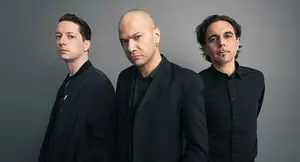
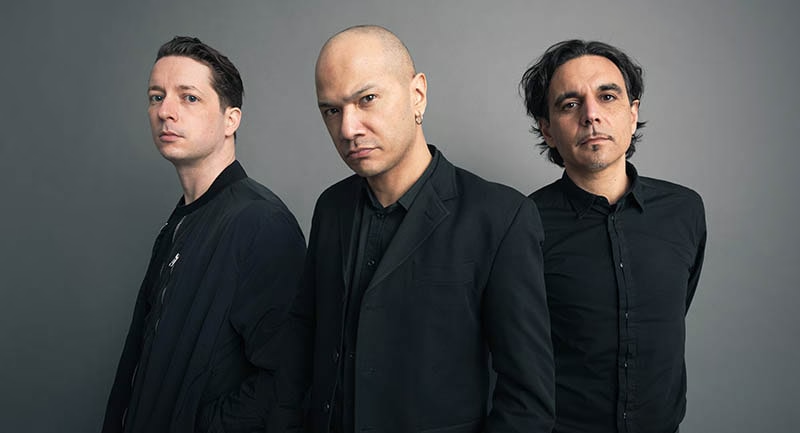

The air inside the London Music Hall carries that specific scent of stale beer and anticipation that only a true rock house can cultivate. It is May 9, and the marquee outside is screaming a name that has become synonymous with high-voltage Canadian exports: Danko Jones. This isn’t just a band; it is a three-headed garage-rock beast led by a man whose stage presence is part Pentecostal preacher, part stand-up comic and entirely unfiltered adrenaline. They have shared the sweat-soaked boards with legends like Guns N’ Roses, Motörhead and Clutch, yet they remain the perennial underdogs who outwork everyone on the bill.
The latest reason for the road-weary grind is *A Rock Supreme*, a record that feels like a concentrated shot of everything the band has stood for since the late 90s. It is loud. It is obnoxious. And it is precisely what the doctor ordered for a Thursday night in London. I caught up with the man himself before he hit the stage to talk about the mechanics of the new record and the digital firestorm surrounding their latest visual offering.
When I ask about the intent behind the new tracks like “Dance Dance Dance” and “Burn in Hell”, looking for some grand artistic pivot or a conceptual shift, Danko shuts down the pretension immediately. He isn’t here to reinvent the wheel; he’s here to make sure the wheel spins fast enough to melt the asphalt.
"Umm no. The mission is the same as every time we do an album, which is trying to make the best rock album we can. Just write a bunch of hard rock tunes that we like that sound good to our ears and if they do, hopefully they’ll sound good to other people’s ears too," Jones says.
There is a refreshing honesty in that lack of artifice. In an industry obsessed with "pivoting" and "evolving" into unrecognisable territories, Danko Jones stays in the pocket. They understand that rock and roll is a craft, not a science experiment. They are looking for that specific frequency that makes a crowd in a dark room lose their collective minds.
"That’s really all it is. I think that pretty much the same with every band on the planet. We’re all trying to make the best sounding records we possibly can. Everybody wants to make Appetite for Destruction. You know what I mean?"
And he’s right. Every guitar player who has ever plugged a Gibson into a Marshall stack is chasing that 1987 lightning bolt. But while most bands hide that ambition behind layers of indie-rock irony, Danko wears it like a badge of honour. He knows the history. He respects the lineage.
But the conversation shifts quickly to the visual side of the new record. The video for "Dance Dance Dance" is a slick, high-energy piece of filmmaking that feels more like a cinematic short than a standard promotional clip. It was helmed by Amir Chamdin, a name that carries significant weight in the European rock scene.
"No, that was filmed in Stockholm. The director’s name is Amir Chamdin, and we’ve been wanting to work with Amir for over 10 years. He’s just a great film director and we love his music videos. He’s done pretty much every Hellacopters video and a bunch of others. We hooked up with him last summer at a Hellacopters show actually, and we got to talking. When it came time to make this video, he pitched us the treatment and I think it turned out great," Jones explains.
Chamdin’s aesthetic is unmistakable—high contrast, sharp edges and a sense of movement that mirrors the track’s frantic pace. But in the hyper-sensitive climate of 2019, even a well-shot dance video can become a lightning rod for controversy. When the band posted a snippet on social media, the reaction was swift and, in Danko’s eyes, completely disconnected from the reality of the production.
I don’t believe in the saying “any news is good news” or “there’s no such thing as bad publicity”. I think there is such a thing as bad publicity.
"Yeah, cool. We posted a clip of it to Instagram and it just shows you where people are these days. They saw the clip they started calling us sexist. It was crazy with a deluge of comments from people. People either loved the video or people accused us of being sexist. The girls all came to the shoot. They all dressed themselves. There was no wardrobe that Amir shoved in their faces. So, it was their own clothes, their own dance choreographers and their own trainers. They came onto the set ready to dance. Honestly, it’s what they wear when they dance," he says, his voice carrying a mix of frustration and disbelief.
It is a classic case of the digital age’s "shoot first, ask questions later" mentality. A 15-second clip stripped of context becomes a weapon. Danko is quick to defend the agency of the performers involved, noting that the dancers were professionals who owned their space, their style and their choreography.
"We said in a follow-up comment, please watch the whole video before you start giving your review of the entire video. Once we posted a different clip and we posted what we what I just said, everything stopped. It just goes to show you that people will look at something whether and immediately make their judgment on it. Those comments that labeled us sexists were harsh; I mean that’s a strong accusation, especially in these times. So, if you’re going to say that about us make sure you do diligence and make sure you at least watch the whole video before you start accusing us of something pretty heavy to label someone like that in 2019," he adds.
The sting of the accusation clearly hasn't faded. For a band that has built its reputation on the inclusive, communal power of rock, being branded with such a heavy label based on a thumbnail-sized preview is a bitter pill. And Danko isn't the type to buy into the old PR adage that any press is good press.
"You better have all your ducks in a row before you do that. All those comments disappeared the next time we posted a clip from the video. Yeah, we loved the video because we saw the whole thing but then it took away from the whole release of it. I was like, wow this is it sucks. This is seriously not what we were going for. I don’t believe in the saying 'any news is good news' or 'there’s no such thing as bad publicity'. I think there is such a thing as bad publicity."
Moving away from the digital noise, we touch on his history with spoken word performances. There was a time when Danko was frequently compared to Henry Rollins—not just for his intensity, but for his ability to hold a room with nothing but a microphone and a story. But that’s a different kind of labour, one that requires a different set of muscles than fronting a power trio.
"I don’t really do too many spoken word shows. I did some in 2004 because I wanted to try it out and see if I could do it - and I did it. I did a week and a half of touring on it and it was okay. People showed up thinking I was going to do some sort of acoustic thing or the band was playing, so it wasn’t really promoted properly because nobody knew what was going on. I did it before and then I stopped doing it," he recalls.
But the itch returned in a massive way nearly a decade later. It wasn't a small club tour this time; it was Wacken Open Air, the undisputed mecca of heavy metal in Germany.
"I didn’t do it for eight years and then I returned for the 2012 Wacken Open Air Festival, which is the biggest metal festival in the world. They made this crazy offer out of the blue asking if I would do a spoken word show at the festival and I agreed if I could have a few things with me. I needed a projector, a projection screen and a podium and they provided that for me. The projection screen was huge because it was under this massive tent that they were billing as the biggest tent at the biggest festival in the world," Jones says.
The image of Danko standing before a sea of metalheads in a massive tent, backed by a projection screen, feels like a scene from a rock and roll fever dream. And the billing was just as surreal.
"I spoke for two days consecutively at Wacken in 2012. I did the first two days and then Henry Rollins did the second two days, so it was Henry and me, and I thought it was fun. We took the video footage and cut it into a bonus feature on our Live at Wacken DVD and it was just a lecture where I prove that the real Peter Criss died in 1978 - and that’s what my spoken word show was."
This is where the Danko Jones "super-fan" persona takes over. He isn't just a performer; he is a scholar of the genre, specifically the theatrics and mythology of KISS. His lecture on the "death" of Peter Criss is the stuff of legend among the die-hards. But don't expect him to start touring a Rollins-style political monologue anytime soon.
"I’m not really into doing stuff like Henry and Jello Biafra do - they do it best and I don’t really want to tell road stories live - that’s probably what I would probably do if I had to do spoken word and that just doesn’t interest me at this point. What I do like to do is what I did – and that’s to lecture on KISS. When I put out my book last year I did some book talks and that was a version of a spoken word show. I just did one of those back in February in Stockholm and I just talked for an hour and read articles from the book but I also read articles that didn’t make the book. That was a different fresh approach to it," he explains.
The book, *I’ve Got Something to Say*, is a collection of his colourful columns and essays, and it serves as the current foundation for his solo appearances. But the logistics of a Danko Jones lecture are more demanding than you might think.
"I’m using the book if anything to do spoken word, but it’s not really the same thing. There are people that can do it really well, but I need more than what Henry and Jello need, so it makes it hard to tour - not everyone can provide me with a big enough projection screen that everyone in the audience can see clearly."
And what about the man himself? The Catman? Did Danko ever get to present his theories to Peter Criss in the flesh?
"No. I spoke at a rock convention in London, Ontario where Peter Criss appeared. We were one the same day, but I didn’t I didn’t get to meet him because it was just too crazy."
As he prepares to take the stage tonight at London Music Hall, there is no projection screen. There is no podium. There is only a wall of amplifiers and a frontman who knows exactly what his mission is. And in the world of Danko Jones, that is more than enough.