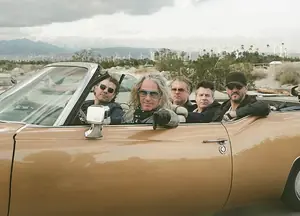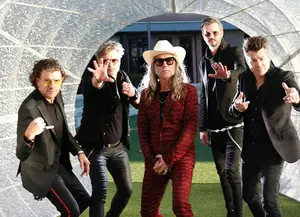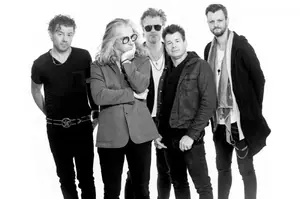

Will Turpin is leaning back at Real 2 Reel Studios in Georgia. It is the kind of space that smells like vintage valve amps and expensive coffee. As the bassist and a founding pillar of Collective Soul, he has spent three decades anchored in the low end of a band that refused to die when the 1990s alt-rock bubble finally burst. We are talking about the long game.
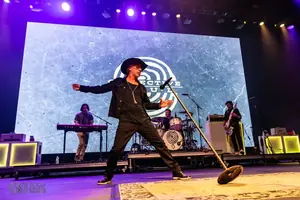
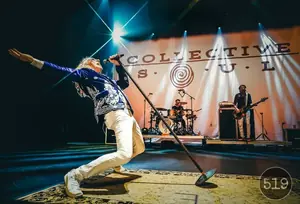
The band is currently gearing up for a July 8, 2023 date at the Detroit Music Hall for the Performing Arts. It is a venue with enough history to match their own. Turpin, a Stockbridge native, does not carry the jaded weight you might expect from someone who survived the major label wars of the Clinton era. Instead, he sounds almost surprised they are still the ones holding the keys to the van.
"There are moments when you simply need to pinch yourself. The opportunities we've had, the sights we've seen, and the feats we've accomplished, all as friends from a small Georgia town – it's extraordinary," Turpin says. He is right. Most bands from that era are currently playing state fairs or have dissolved into bitter litigation. Collective Soul just kept touring.
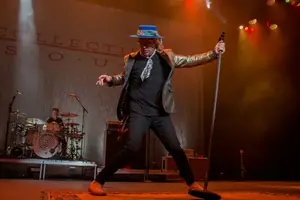
The Detroit show is not just another stop on a never-ending circuit. For Turpin, the live environment has shifted from a display of technical proficiency to something far more communal. He views the stage as a pulpit for a specific kind of rock and roll optimism.
"Our journey over these 30 years has transformed us from a band of individuals playing instruments into something more profound, something we call a 'celebration of life'. We extend an open invitation to all, hoping everyone will join in this celebration," Turpin says. It is a lofty sentiment. But when you have survived 30 years in an industry that eats its young, maybe "celebration" is the only word left that fits.
We are staring down the 30th anniversary of their debut, *Hints, Allegations, and Things Left Unsaid*. That record was originally a collection of demos that accidentally conquered the world. Turpin remembers the headspace of the band back then. They were not looking for a quick hit. They were looking for a legacy.
"What I distinctly remember is our collective ambition to show people what more we had to offer. We didn't merely want a successful record, we were aspiring for a fruitful career with several records deemed as masterpieces," Turpin says. It was a bold stance in 1993. Most bands were just trying to sound like Nirvana. Collective Soul wanted to sound like a stadium.
Then there is "Shine." You cannot talk about this band without that riff. It is the song that defined a year and launched a thousand radio programmers’ careers. Turpin does not resent the song’s gravity. He knows exactly what it did for them.
"That was the one that initiated our journey. But for Collective Soul, every song and every step along the way has contributed to our path. We wanted to showcase the depth of our creative reservoir," Turpin says. He is defensive of their catalogue, and rightfully so. They have more hits than the casual listener remembers.
But nostalgia is a trap. The band is currently touring, yet the setlist is not a museum piece. They are not playing the debut album front-to-back just because the calendar says it is an anniversary. Turpin is pragmatic about what makes the cut.
"We undoubtedly love playing 'Shine,' but we have an extensive repertoire of songs that people would love to hear us perform. Unfortunately, we can't accommodate all of them all the time," Turpin says. Deciding what to cut is the hardest part of the job. You have to balance the casual fan who wants the radio hits with the die-hards who want the deep cuts from *Dosage*.
There are moments when you simply need to pinch yourself. The opportunities we've had, the sights we've seen, and the feats we've accomplished, all as friends from a small Georgia town – it's extraordinary.
He stays focused on the forward motion of the group. "It's less about reliving the past and more about celebrating the journey," he says. That is a fine line to walk. Most heritage acts fall off one side or the other. Collective Soul seems to have found a middle ground that involves actually liking each other.
The business side of the band has evolved just as much as the music. They started on an indie before moving to the Atlantic Records machine. Now, they are back to doing it themselves with *Blood* and *Vibrating*. But Turpin is quick to point out this was not a nostalgic return to their roots. It was a survival tactic.
"The industry's been in a state of flux since we first signed in '94," Turpin says. "The landscape shifted radically. We've transitioned from cassettes to the digital realm and watched as record label giants diminished. Our current mode of operation involves partnerships, working with professionals already in the game, as opposed to employing a label."
This shift led to the creation of Fuzz Flex Records. It is a name that sounds like a boutique pedal company. The origin story is predictably internal and a bit eccentric. It came from the brain of lead singer Ed Roland.
"Sugar Fuzz was a name we've toyed with," Turpin shares. "It had been used for a custom guitar cabinet someone made for us. We frequently need new names for corporate purposes, and this one stuck." It is a reminder that even the biggest bands are essentially small businesses with weird inside jokes.
The latest record, *Vibrating*, feels like a band finding a second wind. It does not sound tired. Much of that comes down to the personnel. Johnny Rabb and Jesse Triplett have been in the fold for a decade now, and the "new guy" smell has long since worn off, replaced by a genuine musical friction.
"Their energy has invigorated us," Turpin admits. "Our creative process has been immensely enjoyable with Johnny on drums. They've been with us for a decade now and it's been a remarkable journey." Rabb’s precision on the kit gives Turpin more room to move on the bass. It is a tighter unit than it was in the late 90s.
When I ask him to boil the new record down to a single word, he does not go for "rock" or "loud." He goes for something more visceral. He chooses "emotion."
"All music essentially boils down to emotion," Turpin says. He is right. If the listener does not feel the gut-punch, the technical proficiency does not matter. It is a simple philosophy, but it is the reason they are still selling out halls in Detroit.
The songwriting dynamic remains a collective effort, even if Ed Roland is the primary architect. Turpin is the one who ensures the DNA of the band remains intact. He views his role as a filter for the band’s identity.
"Every song carries a hint of everyone's personality," Turpin asserts. "We've all put our unique DNA into these songs, transforming them into Collective Soul pieces." It is about the "theatre" of the sound—the way a bassline interacts with a vocal melody to create something that sounds like Stockbridge, Georgia.
The actual mechanics of their studio work have not changed much since the early days. They still rely on the room and the energy between the players. It is a refreshing lack of artifice in an era of Pro Tools perfection.
"Ed comes up with an idea and we, as a band, find the appropriate feel and space to make it a Collective Soul song. We do this by being receptive and open-minded, letting the energy and emotion flow through us," Turpin says. It sounds simple. But being "open-minded" after 30 years of doing the same job is a rare feat.
The future looks crowded. They have already spent a month in Palm Springs tracking a new album. There is a documentary in the works. The 30th-anniversary tour is just the beginning of a massive push. Turpin is making a promise that sounds more like a threat to the quiet of the music industry.
"Next year, you won't be able to escape hearing the name Collective Soul. We're going to be around a lot," Turpin says.
He is not joking. Between the new recordings and the constant touring, the band is operating with a level of labour that would break younger groups. They are not just surviving; they are thriving in a market that usually discards its legends.
Watching Turpin talk about the band is a lesson in endurance. He is a man who knows exactly where the bodies are buried in the music industry, yet he still loves the craft. He paints Collective Soul as a unit that values the friendship as much as the royalty cheques.
The Detroit show will be a test of that endurance. The Music Hall is a room that demands presence. If Turpin and the rest of the Georgia boys can bring that "celebration of life" to the stage, it will be more than just a trip down memory lane. It will be a statement of intent.