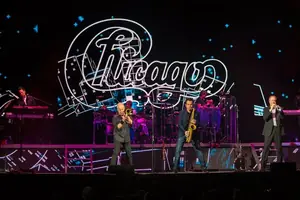

Chicago remains a massive, horn-heavy machine that refuses to slow down. It is a heritage act, sure, but one that operates with the precision of a high-end watch. Since the late 1960s, this unit has morphed from a gritty, underground jazz-rock experiment into a global pop juggernaut. We are talking about 36 albums and more than 100 million records sold. The stats are staggering: 20 Top 10 pop hits and 22 Top 10 adult contemporary singles. Most bands at this stage are content to rot on the casino circuit, but Chicago still plays with a chip on its shoulder.
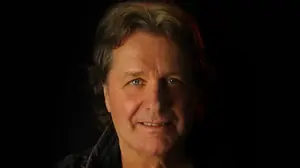
The current lineup has finally added a Canadian to the mix, and it is about time. Toronto vocalist Neil Donell is the man stepping into the spotlight. If you do not know the name, you have definitely heard the voice. Donell is a studio legend with over 10,000 recordings to his credit. He has shared airwaves with everyone from Anne Murray and Andrea Bocelli to Willie Nelson, Michael Bolton and Shania Twain. He is not just a singer; he is a vocal chameleon who can inhabit a track like a ghost.
Donell is set to handle the lead tenor duties when the band rolls into FirstOntario Centre in Hamilton on June 15. It is a heavy lift, considering the vocal shoes he has to fill. I caught up with him to talk about the transition from the isolation of the recording booth to the roar of the arena. He is the "new guy," but he carries himself with the quiet confidence of a veteran who has seen it all.
When I ask him about how the last two years have shifted his reality, he is quick to point out the communal aspect of the gig. "Yes, it’ll be two years in October. The first thing is that I have a new family because the band and the entire organization is very much like a family - and we’re traveling a lot. The band still does more than a hundred shows a year, so you have to get up to speed," Donell says.
And that pace is no joke. Chicago is a touring beast. They do not just show up; they grind. For a guy used to the controlled environment of Toronto studios, the road is a different animal. It is a logistical nightmare of buses and hotels that would break a lesser performer.
"That’s a bit of an adjustment, mostly with the travel. A lot of the times you have a pretty lengthy tour bus ride after the show and you might not get into the hotel before 8:00 in the morning, but playing this iconic catalog of songs is a thrill every night. The band still sells out, it’s a lot of fun. I guess you could say the fun quotient in my life has skyrocketed," he admits.

The story of how he landed the gig sounds like a modern industry fable. It involves the digital rabbit hole of YouTube, where the band's brass apparently went hunting for a specific sound. Donell had been a "ghost" in the machine for decades, a session pro who could deliver exactly what a producer wanted without the ego.
"There’s a lot of speculation on how that happened. I think YouTube was part of it. My living was predominantly as a studio musician for more than 30 years. In fact, I still do a fair amount of studio work when I’m in Toronto and also for clients all over the world. I think somebody heard me and I was brought to the attention of the band through various YouTube things that they heard and saw," Donell explains.
But it was not an overnight hire. The courtship was slow, a series of feelers sent out by management while Donell was working in Manhattan. "I was in New York City in December 2015 when they first contacted me and it took a little while before it actually took root. I had conversations with management at that point in time and then I guess it was October maybe 2017 when they approached me and asked me to become a member of the group," he says.
Donell was a fan long before he was a coworker. He grew up in the Montreal music scene, a place where the fusion of jazz and rock was treated with religious reverence. When the Chicago Transit Authority dropped their debut in 1969, it changed the DNA of what a rock band could be.
"You know I hadn’t," he says when asked if he had seen them live previously. "One of the second bands I was ever in as a teenager was a band that had horns in it because we had a music program at the high school I attended in Montreal. So, when the first Chicago Transit Authority album came out in 1969, we were kids. That was monumental to a lot of musicians or budding musicians at the time and we were very excited about that fusion of Jazz and Rock. I put a band together to play those songs so I’ve been familiar with the band’s catalog since the inception of the group pretty much."
The genius of hiring Donell lies in his versatility. Chicago originally had a three-headed vocal monster: the soulful grit of Terry Kath, the smooth baritone of Robert Lamm and the soaring tenor of Peter Cetera. Finding one guy who can navigate those disparate styles is nearly impossible.
"Over the years, I have pretty much performed the whole catalog at one point or another. The band had three lead singers originally - and it still does. The late, great Terry Kath, Robert Lamm (one of the founding members who is still in the band) and Peter Cetera who left the group in the 80s. I somehow had the ability to emulate all three voices and I think that’s what piqued their interest in me. They thought that if anybody got into any problems or was sick, I could cover up any of the three voices at any given time," Donell says.
But playing with the actual legends is a different beast than fronting a tribute act. There is a weight to the performance when Jimmy Pankow is standing a few feet away blowing a trombone. These are guys who are in the Songwriters Hall of Fame, rubbing shoulders with the ghosts of Lennon and McCartney.
"Yes and no. This is a group of highly skilled musicians. Every single member that’s in the band now has a certain level of musicianship and you really can’t get any higher. It’s consistently good and it’s just exciting every night. There’s Jimmy Pankow, one of the founding members and phenomenal trombone player, and on the other hand there’s Robert Lamm - a founding member. They’re inducted into the Songwriters Hall of Fame and in the company with people like Lennon and McCartney. They will tell you that it never gets old. It’s just exciting every single night. It’s astonishing really," Donell says.
The complexity of the arrangements is what separates Chicago from the standard three-chord rock fodder. These are sophisticated compositions that require a deep understanding of theory and emotion. Lamm, in particular, has always used his lyrics as a sort of public diary.
These songs mean a lot of different things to a lot of people. Every night at the meet and greets before and after the shows, people will come up to us and say that this specific song was our wedding song - that has happened a couple times on this tour. People have come up, and they said that this song or that song got me through a stressful period, whether it’s a serious illness or the loss of someone in the family... But to me, that’s what the sacred trust is. People pay good money to come to these concerts and see a band that they love and whose music that they love and so the onus is on us to ensure that they leave the theater with great big smiles on their faces.
"I would say absolutely. The depth of the writing is something that you don’t find very often in pop and rock music. They’re very sophisticated songs, both musically and lyrically. Robert Lamm is often asked if he’s going to get around to writing a biography, and his answer is usually: all you have to do is read the lyrics of my songs and you’re going to get a pretty strong insight of who I am and what my life is all about," Donell notes.
Being the first Canadian in a quintessentially American band is a badge of honour Donell wears proudly. It is a surreal pivot for a guy who was perfectly happy being the busiest session singer in Toronto. He did not go looking for fame; fame finally found the right guy.
"Oh, yeah, it is. To get a phone call from a band that’s sold north of 225 million records and is in the Rock and Roll Hall of Fame and has been around this long and continues to have to pack houses, it’s almost surreal at times. I wasn’t expecting it. A lot of people say I’m living the dream. I have to qualify that and tell them this is not something that I aspired to do. I was very content in the studio because the variety was enormous and I was very busy - and I made a good living at it. Hopefully you get good at what you do and somebody notices. In this case, somebody did and it just turned out to be a wonderful fit both for the band and myself. We all get along famously," he says.
There is a philosophy Donell brings to the stage that he calls a "Sacred Trust." It is a recognition that these songs are the soundtrack to people's lives. When you play "You’re the Inspiration" or "Colour My World", you are not just playing notes; you are triggering memories of weddings, funerals and first loves.
"These songs mean a lot of different things to a lot of people. Every night at the meet and greets before and after the shows, people will come up to us and say that this specific song was our wedding song - that has happened a couple times on this tour. People have come up, and they said that this song or that song got me through a stressful period, whether it’s a serious illness or the loss of someone in the family and so, you know how significant the songs are for people. So many fans come to the concert expecting to hear what they remember and you have to take into consideration that a lot of these recordings were done when the guys were in their 20s and 30s when they were younger," Donell explains.
But there is a technical challenge here. How do you sound like a 25-year-old Peter Cetera when you are decades into your career? You have to balance the nostalgia with your own artistic identity. It is a tightrope walk.
"The average age of the band now is about 50 to early 70s. A lot of these songs like “You’re the Inspiration”, “Questions 67 and 68”, and songs of that nature, bring back a lot of memories for people and they want to hear them as they remember them. You have to try to replicate those original recordings and at the same time find the balance of bringing a little of yourself into the mix, so you do have to personalize them to some degree. But to me, that’s what the sacred trust is. People pay good money to come to these concerts and see a band that they love and whose music that they love and so the onus is on us to ensure that they leave the theater with great big smiles on their faces," he says.
The energy in the current lineup is reportedly higher than it has been in years. Founding members are rejuvenated. It is rare for a band in its 52nd year of touring to feel like they are hitting a new stride, but the addition of Donell seems to have sparked something.
"Yes, there seems to be. Remember this is the band’s 52nd year of touring. It’s astonishing and virtually unheard- of. A lot of people have been saying that the current incarnation of the band is the best that the band has ever been; even some founding members have said every single night that we’re nailing it! Robert Lamm introduces everybody in the band and every night he talks about how exciting and how great this version of the band is - you can see it on everyone’s faces. In a recent interview, he said every night that he’s smiling from ear-to-ear and you know when I see the founding members just smiling and beaming, you know that we’re doing something right," Donell says.
Maintaining a four-octave voice requires the discipline of an athlete. Donell is a fitness obsessive and a yogi who avoids the typical rock and roll pitfalls. You do not hit those high notes by living on a diet of bourbon and cigarettes.
"Yes and no. Over the years I learned certain techniques and I’m a bit of a fitness guy so I keep myself in very good physical condition. I work out every day when I’m on the road and even when I’m home. I’m a yogi. I do a lot of yoga and I don’t drink alcohol. I actually do master classes when I’m home in Toronto to hopefully teach other singers what I’ve learned," he admits.
His background in mimicry is his secret weapon. Whether it was his work with Jeans N Classics or his thousands of studio sessions, Donell has spent his life studying the mechanics of other singers. He can flip from Sting to Joe Cocker to Steve Perry without breaking a sweat.
"I learned when I was a teenager that I had - and everybody has - the ability to be a mimic to some degree. That’s how we learn by copying the reactions and sometimes the voices of other people. It’s just an innate skill that people have. Some people have it more than others and learn to develop it and I learned very young that I had that ability. As a studio singer and studio musician for years, I think I imitated over a 100 people in some way shape or form and when I was with Jeans N Classics, I’ve been everyone from Sting to Joe Cocker to Steve Perry," Donell says.
His approach to new challenges is borrowed from billionaire Richard Branson: say yes first, then figure out how to do it. It is a ballsy way to run a career, but it has served him well. He would lock himself in a room with a recording until he found the "Eureka moment."
"When I’m doing studio work, I could get a call asking if I can do this voice or that voice. If I had never done the voice before I would take a Richard Branson approach, which is saying yes and figuring it out later. I would hang up the phone and I would immediately go and get recordings of that particular artist and go about my business and have the music playing in my house and without fail at some point in time I would have what I used to call a Eureka moment where I would find exactly how to produce that sound and make that voice and style work," he explains.
Donell’s ability to replicate a performance once got him into a bit of legal trouble—or at least, his employers. He once recorded a vocal for a beer commercial that was so close to Foreigner's Lou Gramm that the ad had to be pulled. It was a victim of its own perfection.
"In the studio I’ve worked with everyone from Andrea Bocelli to Willie Nelson to Michael Bolton. It’s been a really wide range over the years. I remember one time there was a new beer that came to Canada and they bought the rights to a song by the band Foreigner, and they had me come in and I could sound just like Lou Gramm. We did that, it went to air, and they had to take it down because it was too close to the original. People actually thought it was the original recording. You can buy the rights to the song, but it doesn’t necessarily give you the rights to the performance. That’s a separate thing that you have to negotiate. I have that ability to do that," he says.
The studio world has changed drastically since Donell started. The era of big budgets and ensemble vocal groups has been replaced by home studios and file sharing. He recalls the days when he would knock out an entire album's worth of backing vocals in a single, grueling session.
"The great thing I loved about the studio work was the variety of it all – it was always something different. There was a time in the 80s and through the 90s where I did a lot of albums where they would bring in two or three singers to an ensemble work and then the budgets got paired back. As time went on, the recorded music business has kind of disintegrated because of downloading and file sharing and we got to this point where you have the budgets weren’t there anymore," Donell reflects.
He is a perfectionist in an era where Auto-Tune is the default setting. He prefers the grit of a real performance, even when the schedule is punishing. "They would bring me in for the day and I would do the background vocals of an entire album, 10 to 12 songs in one day. I guess those are the things that I really enjoy doing, even though it’s very intense and you’re often exhausted at the end of it from the focusing in the studio. Precision is critical, even though things can be fixed with auto-tuning. I like to be as meticulous as I can, as exacting as I can, in any performance situation and still bring as much feeling and soul to those performances that I can," he says.
The sheer volume of his work means he is often haunted by his own voice in public spaces. He can be walking through a grocery store or Disney World and hear himself selling a product or singing a jingle he forgot he even recorded. It is the life of a high-level session pro.
"Well, what I think would surprise people is probably how often they’ve heard my voice and don’t know it’s me. I had a commercial that I think it just ended in December of last year. It ran in the United States and Canada for about three and a half years, which is virtually unheard- of these days. Everyone is very surprised when they find out that it’s me," Donell says.
One specific jingle even managed to cross international borders and touch lives in a way he never anticipated. It is a reminder that even commercial work can have a profound impact when the vocal is right.
"Many years ago, I did a commercial for a major company and something about this particular jingle really touched people. It aired in different parts of the world - in Australia, New Zealand, South Africa, parts of Europe, the United States and Canada. The outpouring I got from that was crazy. People went out of their way to find out who the voice was on that commercial and I got hundreds of emails from all over the world. Some of them were incredibly touching and I had people who had sons and daughters over in the Gulf War who were moved by the commercial. I remember a lady in New Zealand contacted me. She had just had her first child and something about the commercial made her cry, so she felt compelled to reach out," he recalls.
"The bottom line is that people would be really surprised at how often they hear my voice. In fact, I will be in a city or someplace and turn on the television or the radio wherever I am and there I am. It even happened to me at Disney World. I heard a voice from the speakers in a store as I was going about my business, and 10 or 15 minutes later I’d realize it was me. So many times I’ll hear something that I’ve completely forgotten about it and it can surprise me. There are over 10,000 recording sessions out there and it still it stuns me to think of it," Donell says.
As for the current tour, fans can expect a deep dive into the band's history. Last year was about the sprawling ambition of Chicago II, but the current setlist is a lean, mean hits machine. There is even an unplugged segment for the purists.
"Last year the band was playing the Chicago II record in its entirety during the first half of the show. That was thrilling because that album comes from the era when there were concept albums, and of course that particular record had “Colour My World”, “25 or 6 to 4”, and “Make Me Smile”. We’ve gotten back to the greatest hits now. There’s a little section in the first-set where there’s a little unplugged thing that goes on, which is great fun. Then in the back half, it’s all hits," he explains.
Donell gives a lot of credit to the band's long-standing management for keeping the wheels on the bus. Peter Schivarelli has been at the helm since 1985, and he knows how to keep a legacy act feeling fresh.
"We have a brilliant manager that’s been with the bands for years (since 1985), who’s not only a great manager, but one of the kindest and nicest human beings you will ever meet. He likes to change things up every year. So, who knows what 2020 will bring. We did songs off of Chicago II last year – maybe he’ll go for Chicago III next year. That’s one of my favorite albums. There are some brilliant songs on that record," Donell says.
And that is the thing about Chicago. They have the catalog to keep changing the game. With Donell at the mic, they finally have a singer who can handle the past while pushing them into whatever comes next. Catch them in Hamilton. It is not just a concert; it is a masterclass in survival.