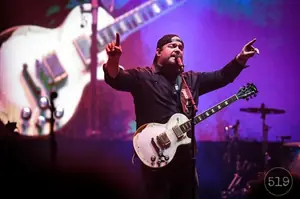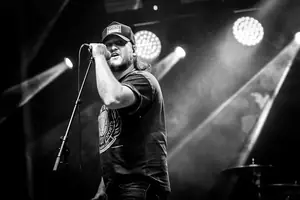


Mike McNamee has never been afraid to dream big, but this time, he is taking things in a whole new direction. It is a pivot that usually reeks of a mid-life crisis for most professional athletes, yet for the man now known to music fans as Boston Levi, the transition feels less like a detour and more like a homecoming.
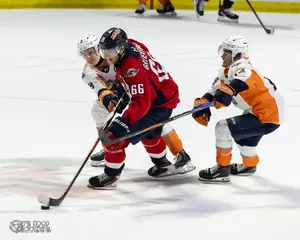
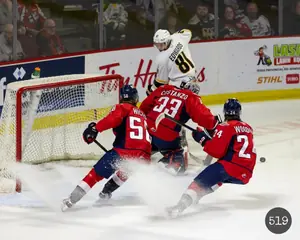
The one-time professional hockey player traded in his skates for an acoustic guitar in 2020. He is pairing powerful, unique vocals with a kind of down-to-earth, insightful and relatable lyricism listeners cannot help but warm up to. It is a gritty sound, stripped of the polished artifice that plagues much of the modern indie-folk scene.
Folks across the industry have taken notice. Most notably Jay Emmons of The Glorious Sons has been working closely with Levi, helping to not only shape his sound but produce his first full body of work as well. This is not just a vanity project; it is a calculated entry into the Canadian music canon.
The singer-songwriter’s first two tracks, "Feel It All" and a cover of Taylor Swift’s "Exile" featuring Martina Lake, dropped last year. While "Run Baby Run" hit streaming platforms in early 2021, it was the Swift cover that proved Levi could handle the heavy lifting of a narrative ballad without losing his own edge.
We recently sat down with Levi and Emmons via Zoom to chat about what it is like to step off the rink and into the spotlight. Watching them on screen, the chemistry is obvious—Emmons is the veteran guide and Levi is the hungry protégé. We talked about their songwriting inspiration and what they are cooking up for the future.
There is really no better way to kick things off than by letting our readers know how you got started in music. What made you want to pick up a guitar for the first time?
"I didn’t start playing until I was about 20, but the earliest I can remember, I was in high school when I really dove into music and found my favourite artists and what I connected with," Levi says. "Since then, it’s really gone with me everywhere. I listen to it all the time. I was given a guitar when I was 13 or 14 for Christmas from one of my uncles—and I didn’t touch it until much later when I was playing junior hockey away from home and I had a lot of spare time on my hands. I picked it up and just sort of started playing songs I enjoyed. Over the years it really became what I loved to do."
That late start is actually his secret weapon. Most musicians spend their teens mimicking their idols, but Levi spent those years absorbing the world through a different lens. By the time he actually started playing, he had something to say.
When did you discover you could also write music?
"Definitely not that long ago," Levi explains. "I mean, back in university I remember writing my first song and looking back at it now, I mean, it wasn’t much. But it was something you start just trying to make happen and then a few years ago, while I was over in Europe, I started writing a little more seriously. Obviously, over the past year it’s taken off quite a bit."
His modesty is charming, but the growth is evident in the tracks. There is a technical jump from those early university scribbles to the polished hooks we are hearing now. You can hear the influence of European isolation in the newer melodies; they are lonelier and more haunting.
You’ve been praised for your honest and relatable lyrics. Where do you find that inspiration?
"I’ve been lucky enough, just in the hockey world, to play with a lot of people and hear a lot of their stories about where they’re coming from or what they’re going through," Levi says. "I’m not good at making things up, I’m never going to be the kind of guy to come up with wild stories. So, generally I pull from things that I’ve heard from buddies I’ve played with over the years or people close to me. It’s about real-life events, whether good or bad or sad or happy. It’s important to know where people are really coming from."
This is where the "Information Gain" happens. Levi is a documentarian of the locker room. He is taking the unspoken anxieties of high-stakes sports and translating them into song. It is a perspective most songwriters simply do not have access to.
I’d love to ask—where did the name Boston Levi come from?
"My mom wanted to name me that at birth, and my father said no at the time," Levi says. "But my Nana’s maiden name was Boston, and her dad’s first name was Levi, so I guess my mom just switched it around. When we were thinking of names for what I could be instead of Mike McNamee, Boston Levi immediately popped into my mind, so we went with it."
It is a strong choice. Boston Levi sounds like a heritage brand, something durable and timeless. Mike McNamee sounds like a guy who sells you insurance or, well, plays hockey.
I put a lot of time and effort into the sport of hockey and it’s been my life since I was about three years old. ... Without even saying it, we looked at each other and knew that with a little bit more work, we might be on to something in terms of getting me into a music career — and that just became my reality. I still love hockey, and I still think about it every day. But, with everything that’s been going on, it just seemed like the right time to jump into music, especially having Jay on my side and the team I’ve got in my corner. It was something that I really couldn’t pass up.
That begs the question: why take on a stage name at all?
"Jay mentioned that Mike McNamee wasn’t really appealing or artistic at all—and I agreed, it’s just a bland name," Levi admits. "So yeah, we just used it to change things up."
Emmons is right. In an industry where branding is half the battle, you need a name that people can hang their hats on. Boston Levi fits the aesthetic of the music—it is rustic but intentional.
You had mentioned finding bands in high school that really influenced you. Are they the same as the ones that speak to you now? Or have your tastes changed over the years?
"When I first got into music in high school it was heavy Kings of Leon," Levi says. "They were probably the first band that ever made me feel something from music, and I’ll never forget that. Nowadays, The Glorious Sons have had a major impact—as silly as it sounds, working with Jay—but, honestly, ever since I first heard them, they’ve had a huge influence on me. I can’t really see that changing, both of those bands will always be with me."
The Kings of Leon influence is particularly audible in Levi's vocal fry. He has that Caleb Followill ability to make a note sound like it is breaking in all the right places. And working with your heroes? That is the dream.
How did you and Jay get together for this collaboration in the first place?
"We met when I was in Germany, and they were on their first European tour," Levi recalls. "They had a show in Cologne and I went to it and there were 12 people there. So, after the show I met (drummer) Adam Paquette at the merch table and ended up spending the whole night, until about three or four in the morning, just talking about life and everything. Ever since then, Jay was in touch with me and I got lucky enough that he asked me to come record last year."
There is something poetic about meeting in a half-empty room in Cologne. It is the antithesis of the stadium rock life The Glorious Sons live now, and it clearly grounded their friendship in something real.
Does that sound right, Jay?
"Correct," Emmons says. "We were buds right away, but then all of a sudden Mike would start sending me songs. Then, probably about two years ago we did a writing session at my place. We wrote a song together, and it was OK . . . and then last summer I was doing a recording session for myself and finished one of my songs and wondered if that Mike guy would come down and record it with me and see what happens. He had Feel It All at the time, and we literally walked into the studio—I think we finished it in one day. I felt, I think we might be on to something here."
The speed of that first session is the ultimate litmus test. If you can finish a track in a day, the ego has been left at the door. Emmons clearly saw a raw material in Levi that just needed a bit of professional heat to forge.
So, there’s been a lot of big changes for you over the past year—specifically making the decision to move on from hockey to music. What was that decision like? Was it a hard one, or relatively easy to take that leap?
"It was tough," Levi says. "I put a lot of time and effort into the sport of hockey and it’s been my life since I was about three years old. But last year I had signed to go back to play in Europe and obviously that wasn’t happening because of COVID. This whole thing with Jay started and that first weekend we went into the studio we ended up completing two songs, I think, in four days. Without even saying it, we looked at each other and knew that with a little bit more work, we might be on to something in terms of getting me into a music career—and that just became my reality."
The pandemic was a thief for many, but for Levi, it was a pivot point. Without the lockdown, he is likely still grinding out shifts in a European league. Instead, he is tracking vocals.
"Throughout the summer, we obviously got the chance to finish the EP and it was exciting times," Levi continues. "It all happened really fast. I still love hockey, and I still think about it every day. But, with everything that’s been going on, it just seemed like the right time to jump into music, especially having Jay on my side and the team I’ve got in my corner. It was something that I really couldn’t pass up."
Jay, was producing something that you’ve done before? Or was this a new venture for you?
"I think Mike was the first record I ever produced," Emmons says. "Before the pandemic, I never had time to even think about getting into something like that. We were on the road pretty much 70 percent of the time. So, when you got home, you didn’t really even want to think about music. We got pulled off the road on March 15, 2020, and I literally did not think about music until about mid-May when I booked some studio time. At that point I was ready to get back to it, and I’ve pretty much been in the studio with myself and Mike and The Glorious Sons on and off ever since. It’s been really nice and it’s been a good time to connect with music on a different level. Even though we can’t play live, recording and producing music has been a blessing, for me anyway. It’s so different to come at everything from this angle."
Emmons is discovering a second act here. Producing requires a different kind of stamina than performing; it is about patience and psychology. You can hear his fingerprints on the production—the way the guitars sit in the mix feels very much like a Sons record, but with more breathing room.
Was that where you found the inspiration behind your new label 745 Music?
"I guess that’s another thing that came to fruition from having some downtime," Emmons says. "That’s myself and Michelle Owen, my business partner—she used to tour manage The Glorious Sons for two or three years. We basically traveled the world together, and we both always had this desire to help other musicians realize their dreams."
It is a noble pursuit, but a risky one. Starting a label in the streaming age is like trying to build a house in a hurricane. But Emmons and Owen have the industry scars to make it work.
"It started with a band called Brother Elsey, who we saw in Detroit," Emmons explains. "They opened for The Glorious Sons about two or three years ago. Michelle and I started managing the band, and over the years we talked about where the company was going and what we wanted to do to take it to the next level. With COVID, we started getting serious, working with Boston and recording a record with Brother Elsey. Michelle’s got a couple artists under her belt, and it all just came together."
The Detroit connection is vital. There is a certain blue-collar ethic in that city that mirrors the Kingston scene. It makes sense that 745 Music would look for that specific kind of grit.
"In September of this year, we made it official and launched our own artist-friendly label," Emmons says. "From there it’s just gone up. It’s been a lot of work. It’s been fun, a little scary and challenging, but it’s been great."
Coming back to Boston, as a relatively new artist, what do you want our readers to know about you?
"I’m a pretty passionate guy that writes meaningful lyrics," Levi says. "I think one thing I’ve always gotten from music is just how much you can connect with it, no matter what you’re going through. Someone will always be able to see themselves in a song for many different reasons—and to me that’s really important. With the first five songs or six songs on the upcoming EP, that’s really what you’re going to get. Hopefully with a lot of hard work, we’re going to take this somewhere."
The passion is there, but the real test will be the live show. Can he command a room the way he commanded the ice? If the recordings are any indication, the transition will be seamless.
And lastly guys, when can we expect that debut EP from Boston Levi?
"The EP is scheduled to come out May 26, so that will be the next thing, which I’m very excited about," Levi says. "There was a lot of hard work put into that. I can’t wait."
Mark the calendar. May 26 is the day we find out if Boston Levi is the real deal. Given the team in his corner, I would not bet against him.
Get Tickets