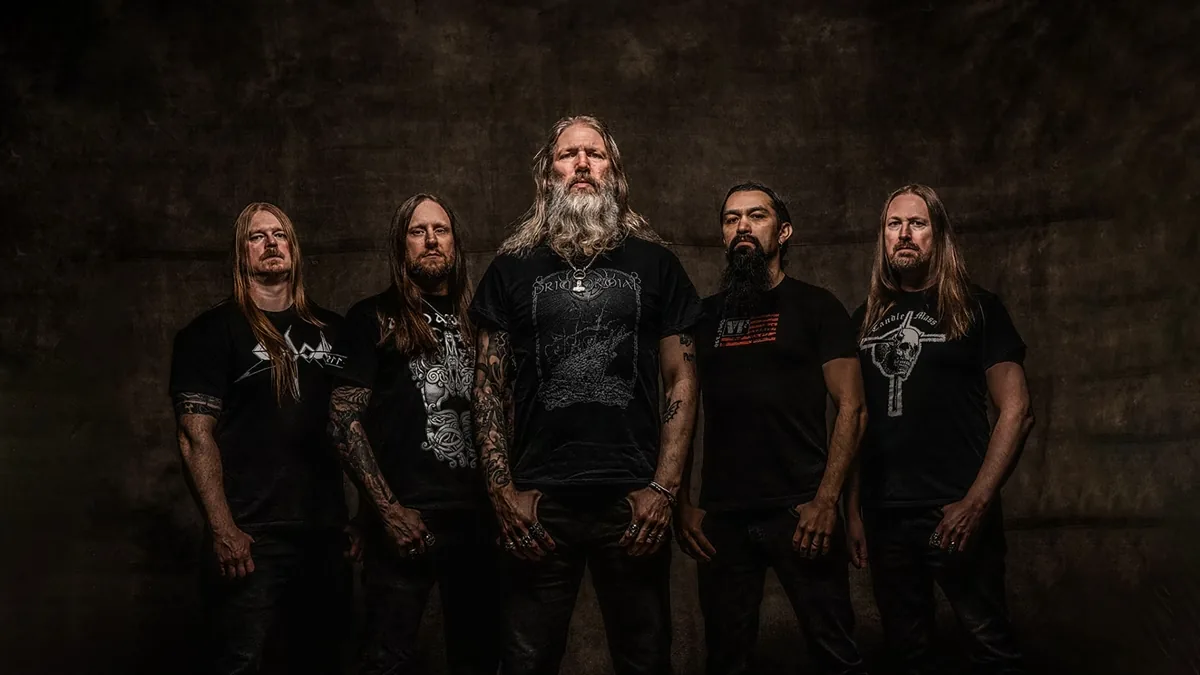

Listening back to this raw 2011 tape with Amon Amarth’s then-drummer Fredrik Andersson, you can hear a band on the absolute brink. They were riding the colossal wave of 2008’s Twilight of the Thunder God, an album that kicked down the door to the mainstream and dragged Viking metal along with it. The pressure was immense. And with their eighth studio album, Surtur Rising, about to drop, the question wasn't if they could deliver, but how they could possibly top a career-defining moment.
This was a band that had evolved from a raw, vicious entity into a polished, arena-conquering machine. Andersson, who joined in 1998, had a front-row seat for that entire ascent. He puts the band’s evolution in stark, practical terms. It’s the difference between youth and experience, between chaos and control.
“Obviously, it’s different,” Andersson says, his voice clear over the line from Sweden. “An album that was recorded in a week by a couple of guys that are in their early 20s or even teenage years compared to something that’s done in two months by a couple of mid-thirty guys who have been playing metal for the last 20 years.” That first album he’s referencing, Once Sent from the Golden Hall, was a slab of primal energy. Surtur Rising, by contrast, was a calculated assault, forged with the precision that time and a bigger budget afford.
He’s right. The leap in fidelity, songwriting complexity and sheer muscularity between those two records is staggering. You can hear the money, but more importantly, you can hear the mileage. “We’ve developed as musicians and as songwriters,” he states. “And obviously, the production has become better since there’s more room for that, like both economically and also time-wise.”
But that polish doesn’t come easy. Andersson paints a picture of a fiercely democratic, and critical, creative process. While guitarists Olavi Mikkonen and Johan Söderberg remain the primary architects of their signature sound, nothing gets through without a fight. It’s a five-man crucible where riffs go to die unless they are absolutely essential.
“If I’ve come up with maybe hundreds of riffs, I think three have made it onto one of them or something like that,” he admits, a testament to the band’s ruthless quality control. “After it’s gone through all the filters in the band, like all the opinions, five different opinions, what’s left is only the songs that end up on the album. So it’s a tough filter to go through.”
This process occasionally yields surprises, like the Andersson co-written track “Slaves of Fear.” It’s a darker, more cynical piece of work, a departure from their usual fare of heroic sagas. He explains that the song’s bleak atmosphere wasn’t a grand design but an emergent property of the creative process, a perfect storm of melancholic music and aggressive lyrics.
“It wasn’t intentional, it turned out that way,” he explains. “It gives it its own life, basically. And that’s something that’s very cool when you write music. It’s not always that the songs turn out the way you thought they would. It is a little bit like they’re having their own existence almost.” It’s a fascinating look into how a band that seems so thematically rigid can still let the art lead the way.
We started to feel that our fans were expecting a little bit too much from our videos. We’ve been getting complaints almost of how they want our videos to be done. It’s like, well, we’re not movie producers.
And in 2011, the industry was shifting under their feet. The conversation turns to music videos, and Andersson’s tone becomes palpably skeptical. The glory days of Headbangers Ball were long dead. The new king was YouTube, a platform that demanded high production value but offered little in return financially. It was a new and frustrating paradigm for a band of their stature.
“It’s hard to see the point almost since nowadays the only media where you can showcase your video is on YouTube,” he says, laying bare the economic reality. “It’s a lot of money to record a video.” But the problem wasn’t just financial. It was also about managing fan expectations in a digital world where everyone is a critic.
“We started to feel that our fans were expecting a little bit too much from our videos. We’ve been getting complaints almost of how they want our videos to be done,” he says with a hint of exasperation. “It’s like, well, we’re not movie producers. We can only rely on the video crew that’s making the video and the budget we have to do it.” It was a sign of the times: the direct artist-to-fan pipeline also meant direct, and sometimes unrealistic, demands.
This pragmatism extended to other physical media. After the monumental success of their Wrath of the Norsemen DVD set, a release so comprehensive it felt like a closing statement, they had no interest in repeating the formula. Why release another live DVD when the first one was definitive? Instead, they bundled the four Bloodshed Over Bochum full-album concerts as a bonus disc for Surtur Rising. A smart move. It rewarded the die-hards without diluting the impact of their landmark release.
Thematically, the album drew its fire from Surtur, the mythological giant destined to set the world ablaze at Ragnarök. Andersson is quick to clarify it’s not a concept album but a thematic anchor. The goal was pure aggression, a sonic reflection of the world-ending inferno. And he’s brutally honest about the band’s thematic lane.
“You can’t really write about Vikings being farmers and stuff like that,” he laughs. “So it has to be about fighting and kind of aggressive stuff, especially when you’re playing aggressive music.” This is the Amon Amarth brand, distilled to its essence. It’s not history class; it’s heavy metal mythology, brought to life on the album’s cover by their long-time visual team of Tom Thiel and Thomas Ewerhard.
From a technical standpoint, the album captures Andersson at a new level of maturity. He speaks about a conscious decision to rein in his playing, to focus on execution over complexity. It’s a move that could be seen as a double-edged sword. On one hand, it shows immense confidence. On the other, it hints at a band finding a comfortable formula.
“On this album, I stepped back a little bit and only wrote stuff that I felt right playing and that I could pull off easily,” he reveals. “I think it’s also the most confident thing and I think that I mean at least I can hear it.” It’s a subtle but crucial critique; the performance is tighter and more powerful, but it perhaps lacks the dangerous, off-the-rails energy of their earlier work. It was the sound of a band becoming incredibly good at being itself.
This professionalism carried over to the business of touring. He explains the initial absence of Canadian dates on their North American run not as a slight but as a brutal reality of logistics. “We were forced kind of a last-minute call to book this short North American trip, which is squeezed in between two European tours,” he says, pulling back the curtain on the unglamorous puzzle of international tour booking.
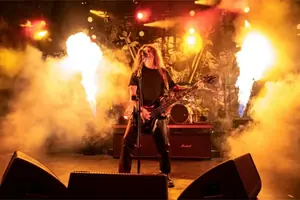
He promises a return, and they would indeed make good on that promise. Because ultimately, the stage is where Amon Amarth truly lives. The studio work, the thematic debates, the video budgets—it all leads back to the live experience.
“Being on stage is what we love to do, and that’s why we’re in this business, I guess,” Andersson concludes. Looking back, Surtur Rising was the final piece of the puzzle. It was the record that solidified their sound, perfected their brand and gave them the arsenal to become the undisputed kings of Viking metal on the world’s biggest stages. This tape is a snapshot of that moment, of a band fully aware of its power and ready to burn it all down.
519 Magazine Archive: We are thrilled to officially unearth the Rockstar Weekly Digital Vault. This isn't just a re-post; it's a high-fidelity restoration of a pivotal era in music journalism. By pairing original print dates with modern retrospectives, we’re bridging the gap between historical rock-and-roll grit and the lightning-fast performance of today’s web. These stories—once locked in physical print and lost URLs—are now back, fully searchable, and optimized for a new generation of fans.
We are thrilled to officially unearth the 519 Magazine Digital Vault. This isn't just a re-post; it's a high-fidelity restoration of a pivotal era in music journalism. By pairing original print dates with modern retrospectives, we're bridging the gap between historical rock-and-roll grit and the lightning-fast performance of today's web. These stories—once locked in physical print and lost URLs—are now back, fully searchable, and optimized for a new generation of fans.