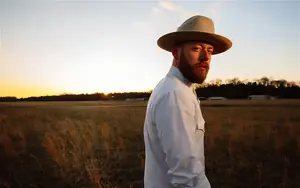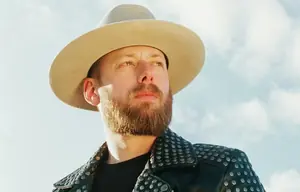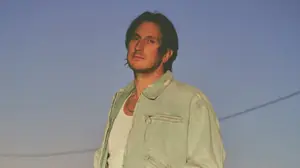

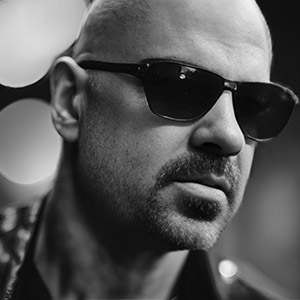
Sudbury is not a city that hands out participation trophies. It is a town of nickel mines and hard winters, a place that builds a specific kind of grit into the bones of anyone who stays long enough. Andrew Hyatt carries that geography in his voice. In an industry that often feels like a meat grinder for mid-level talent, Hyatt has managed to survive the swift rises and the even swifter falls that claim his contemporaries.
He is not just another guy in a trucker hat. Hyatt is a study in what happens when resilience meets a total lack of a Plan B. Sitting down with his latest output, the bonus track "Still Somethin'" added to the expanded edition of his *Four Good Years* EP, you can hear a man who has stopped trying to please the radio programmers and started trying to save his own soul.
The track is a nostalgia trip, but it lacks the cheap sentimentality that usually clogs the Canadian country charts. It feels lived-in. Hyatt understands that music is the only time machine we actually have.
"Life is full of nostalgic moments that are earmarked with great songs and memories tied together," Hyatt says. "This song, 'Still Somethin',' brings me back to all of those moments and songs."
And that is the hook, isn't it? The way a specific chord progression can smell like a basement party in Oct. 2008 or a breakup in the middle of a July heatwave. Hyatt leans into this, using his craft to build a vivid memory catalogue. But the road to getting this specific vocal on tape was a nightmare that nearly ended his career before he hit his stride.
The track was produced by Scott Cooke. If you know the Canadian country landscape, you know Cooke is the guy who polished the edges for Chase Rice and Dallas Smith. But even with a heavy hitter behind the glass, "Still Somethin'" almost didn't happen. It was recorded, then it was buried.
"We originally recorded this song before I had my vocal surgery in 2021. It just didn’t hit right, so we sat on it for a while," Hyatt explains.
The surgery was not a minor tune-up. It was a crisis. For a singer, a vocal condition is a death sentence whispered in the dark. Hyatt underwent a procedure that was as much about mental endurance as it was about surgical precision.
Watching him perform now, there is a flicker of hesitation that wasn't there five years ago. It makes him more interesting. He is no longer invincible, and he knows it. The recovery process was a slog through silence and doubt.
"The mental part of recovery is still a challenge," he reveals. "There’s a lot of anxiety around singing for me now. I'm still learning to trust my voice. It takes a lot of work to get on stage or in front of a microphone… but I’m working through that."
That anxiety is the "Information Gain" here. Most artists would hide that. They would talk about "coming back stronger" or use some other PR-approved cliché. Hyatt admits he is scared of the microphone. That honesty is why his fan base is so fiercely loyal.
The mental part of recovery is still a challenge. There’s a lot of anxiety around singing for me now. I'm still learning to trust my voice. It takes a lot of work to get on stage or in front of a microphone… but I’m working through that. ...Post surgery, I re-sang it, and it became a favorite of mine.
The ordeal changed the DNA of the music. When he finally stepped back into the booth to revisit the shelved track, the perspective had shifted. The song finally fit the man.
"Post surgery, I re-sang it, and it became a favorite of mine," he says.
There is a noticeable shift in the sonics of his newer material. It is moving toward rock, a genre that has always been the subtext of his career. If you listen to the texture of the guitars on "Still Somethin'," they owe more to the 90s alt-rock scene than they do to modern Nashville.
"I mean if you go back and listen to 'I NEEDED THAT,' you’ll hear that we’ve been leaning into rock for a long time," he points out.
This isn't a pivot for the sake of a trend. Hyatt grew up on a diet of Christian rock, punk, and the kind of alt-rock that requires you to scream until your throat bleeds. It informs his stage presence, which is a far cry from the "two-step and a grin" routine of his peers.
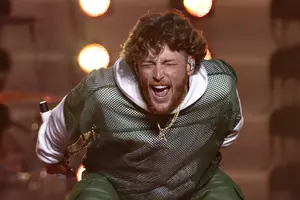
"I think it influences me mostly on stage. I never stand still. I’m always trying to keep the energy at a 10," he adds.
But there is a technical critique to be made here. Sometimes that energy at a 10 can mask the nuance of his songwriting. Hyatt is a better writer than he gets credit for, and occasionally the wall of sound hides the poetry. That is why the acoustic versions on *Four Good Years* are so vital.
When you strip away the production, you find the raw nerves. Hyatt seems to know this, too. He finds a different kind of strength when there is nothing to hide behind but a wooden box and six strings.
"I always love tracking an acoustic version of a song. I feel like I’ve lived with the songs longer by the time we get to making them. In my opinion, my vocal is stronger in the acoustic version," he expresses.
He is right. His voice in the acoustic tracks has a weight to it that feels earned. It is the sound of a man who has spent too many hours in the back of a van and too many nights wondering if his vocal cords would hold up for the next set.
The future looks crowded, which is a good problem for a guy who almost lost his voice. There are two new albums in the works. One is a deep dive into the wreckage of separation—a topic most country artists handle with the grace of a sledgehammer, but one Hyatt seems equipped to handle with more surgical detail. The other is a full-band record, likely leaning further into that rock-heavy aesthetic he has been teasing.
Hyatt is ready for the exposure. He is ready for the vulnerability that comes with putting your personal failures on a digital retail shelf.
"Can’t wait to spill my guts to the world," he says.
It is a bold statement in an era of curated Instagram feeds and sterilized press releases. But Hyatt has the hardware to back up the bravado. Winning the Rising Star award at the 2022 Canadian Country Music Association Awards was a validation of his survival. Touring with the likes of Dean Brody and Tim Hicks gave him a front-row seat to how the big machines operate.
But he isn't interested in being a machine. He is interested in being a person.
"I’ve learned that being a good human is the secret to lasting power," Hyatt shares.
It sounds simple, but in the music business, it is a radical concept. Most artists are looking for a shortcut or a viral moment. Hyatt is looking for longevity. He is looking for the kind of career where he can still be singing these songs 20 years from now, even if his voice breaks a little on the high notes.
His journey is a reminder that the best art usually comes from the things that almost broke us. Whether he is on Instagram (@theandrewhyatt), Facebook (/AndrewHyattMusic), or his own website at theandrewhyatt.com, the message is consistent.
He is still here. He is still loud. And he is still proving that there is always "still somethin'" worth fighting for in the silence after the surgery.