

Sitting in the back of the London Music Hall, the air smells like a mix of stale beer and the electric anticipation that only five decades of Canadian rock history can generate. I’m looking at a battered copy of *First Glance* on the table, the 1978 record that effectively saved April Wine from the soft-rock doldrums of the mid-70s. It was the moment Brian Greenway stepped in, trading a part-time forklift job for a permanent spot in the Canadian Music Hall of Fame.
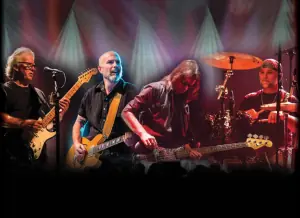
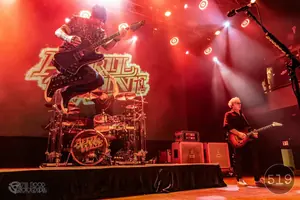
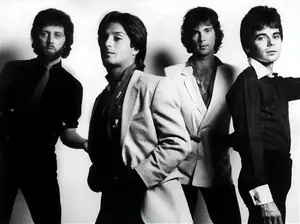
Greenway has been the anchor of this ship since 1977. And while the industry around them has crumbled and rebuilt itself a dozen times, April Wine remains. They hit London on Oct. 11, bringing a lineup that feels like a sturdy bridge between the past and the present. You’ve got Greenway and the legendary Myles Goodwyn on guitars, Richard Lanthier holding down the low end on bass and the "new guy," drummer Roy Nichol. Nichol spends his off-hours playing in a Journey tribute called Raised On Radio, which tells you everything you need to know about the technical precision required to keep this engine running.
I caught up with Greenway to talk about the 50-year milestone. Half a century is an absurd amount of time to keep a rock band from imploding. Most marriages don’t have that kind of mileage. But when I ask him if they have some grand, theatrical spectacle planned for the anniversary, he gives it to me straight.
"We’re all getting married. No, nothing special. We’re just doing our normal year, and of course announcing it on stage. I mean, what can you do for 50 years other than keep doing it?" Greenway says.
It is a brutally honest take on the survival of a legacy act. There is no pomp, no bloated orchestral reinterpretations. Just the work. He’s realistic about the commodification of nostalgia, too. You sell the shirts, you sell the hats and you move to the next town.
"I don’t know what special things you could do. I mean, you have t-shirts, you have hats and you have stickers. You announce it on stage and thank the people for supporting us for that long. We thought about it and said, 'What can you do?'" Greenway says.
But there is a bitterness in the industry analysis here that most critics ignore. The band considered a 50th-anniversary album, but the modern radio landscape is a graveyard for new material from heritage artists. If it isn't a hit from 1981, the gatekeepers don't want to know about it. It’s a stagnation that hurts the craft.
"I mean, we could have a big bash, but how does that work? Or you could put out an album, we didn’t do that. But that’s the problem these days. There would have been a 50th year album, but who’s going to play it? I mean, radio plays our old songs. Which at one point were new, so they played them then. It’s strange how they’re not playing the newer stuff, but they keep playing the older stuff," Greenway says.
Greenway wasn't there when the first bricks were laid in 1970. He missed the true infancy of the band by seven years, a fact that often surprises casual fans who see him as synonymous with their arena-rock peak. His entry into the fold was less of a corporate merger and more of a slow-burn recruitment.
"I missed it by seven years. I was asked to join them. A fellow I played with in two other bands, was doing the bass player at that point, the late Steve Lang. And I remember seeing him at a music hall and he said, 'Oh, has Myles talked to you yet?' And I said, 'No, why would Myles talk to me?' He says, 'Oh, you’ll find out.' Yeah with a big smile on his face. It was nothing bad," Greenway says.
The irony is that Greenway had already tried to kick the door down years earlier. In 1973, he sat across from Goodwyn during a guitar player search. He didn't get the gig. But the rock gods have a funny way of circling back when the timing is right. By 1977, the chemistry was undeniable.
"And I had actually auditioned. Well, I had a meeting with Myles in 1973 when they were looking for a guitar player, but I didn’t make the cut then. So I was asked to come back, well, four years later right? I was brought in. And I knew everybody, except Myles. I didn’t know Myles that well, but I knew the rest of them quite well from playing in different bands and doing shows with them while I was in other bands. So I was quite delighted. But I was asked to join, and you know, 'Okay well you’re going to join for the summer tour and if it works out you’ll be a permanent member.' So I was on probation for three or four months," Greenway says.
That "probation" turned into a lifetime appointment. When you ask a man what keeps him on a tour bus after five decades, the answer is usually a mix of pragmatism and passion. It’s about the bills, sure, but it’s also about the ritual of the performance.
What can you do for 50 years other than keep doing it? ... There would have been a 50th year album, but who’s going to play it? Radio plays our old songs, which at one point were new, so they played them then. It’s strange how they’re not playing the newer stuff, but they keep playing the older stuff.
"Short memory. The fans, the dates, making a living of it, paying the bills, because we could make a living doing it. The love of the job, the love of playing an instrument, the love of traveling, the love of playing for your fans. Making it sound like the first night, every night," Greenway says.
There is a specific kind of vitality that comes from the stage. While their peers are retreating to Florida retirement communities, Greenway and company are still hauling gear. He rejects the idea of retirement because he rejects the idea that what they do is "labour" in the traditional sense.
"Oh yes it does. I mean the word 'play' is our job description, right? We play music. We don’t work music. So when we go to work, we play. And so therefore it’s not a job, so there’s nothing to retire from," Greenway says.
The technical shift in the band’s sound upon his arrival is undeniable. Before 1977, April Wine was flirting with a softer, almost pop-adjacent sensibility. Greenway brought the grit. He brought the third guitar that allowed them to layer harmonies and riffs in a way that mimicked the heavy hitters of the era.
"It might’ve. That was my style, I guess I was a little heavier. Myles was approaching that direction, but also at the same time the albums leading up to when I joined we were a little lighter as well. And when I joined, the group took a harder edge in the music. So if that was because of me, I’ll take credit for it. But I think it was just the way it worked out," Greenway says.
But with that harder edge came a volume problem. During the Attitude Tour, the band became notorious for punishing their audience’s eardrums. It wasn't just a stylistic choice; it was a technical failure born of ego and failing hearing.
"No, we got so many complaints about the volume. What it turned out to be was the sound man just mixing it. When he left, things quieted down. Also Jerry, when he left the band things quieted down too, because he was sort of half deaf. So he would have these giant monitors so he could hear himself on stage. So the louder he became, the louder we had to become. And the louder we became on stage, the louder that the mix had to be out front," Greenway says.
It was a domino effect of decibels. In an era before sophisticated in-ear monitors, the stage was a war zone. Greenway admits it eventually became counterproductive. You can’t hear the melodies if your brain is vibrating against your skull.
"It was like a domino effect. But now we try to keep quiet, and there are decibel level laws now in places and codes. So we don’t get over, you know 100, 105 decibels. It was outrageously loud. I remember playing California in that Attitude Tour, and we weren’t asked back to places. We cut the Coach House in San Juan Capistrano. It was just, we were too loud. I mean I go see a band that’s too loud, and I don’t enjoy it. It’s just it’s not music anymore, it’s just sonic noise," Greenway says.
The peak of that heavy era was undoubtedly 1979's *Harder... Faster*. The recording process was the stuff of rock and roll legend—seclusion in the woods, a private lake and a staggering amount of booze. It was the kind of hedonistic production cycle that simply doesn't exist in the modern, budget-conscious industry.
"Oh, that was so much fun in 1979. Because we were up in the studio in Warren Heights. We had it for three months. It was on a private lake, we had a nice house to live in, very beautiful. We had a cook to cook for us, we went out to nice restaurants every night for dinner. It was just perfect, you know. And we made just perfect use of it by drinking every night at dinner and not going back to work and waking up hungover. Not getting music done. Yeah. Yeah. It was a lot of fun. That was probably the most fun I’ve ever had in a session," Greenway says.
Despite the hangovers, the album produced some of their most enduring work, including "Before the Dawn." For Greenway, that track was a moment of pure, unforced inspiration. It’s the kind of songwriting that feels like a spiritual download rather than a calculated effort.
"Before the Dawn, boy I wrote that song in 20 minutes sitting on the floor of my townhouse in Pointe-Claire, where I had a townhouse at one place. And I don’t know where it came from. I just remember sitting in the hallway in between rooms with my guitar, and all of a sudden it was like I was a conduit for it. And I’ve heard that other times, from other writers, and suddenly this song comes out of you and you don’t know where it came from. Yeah, there’re words and everything. I said, 'I wish I could write a bunch more like that,'" Greenway says.
When you’ve been a brand for 50 years, your name starts appearing in strange places. I’ve seen the bootlegs and the weird dual-albums with Great White, but Greenway’s strangest encounter with the April Wine logo involves a Vancouver adult entertainer who took the "brand" a bit too literally.
"Oh, well there was a stripper in Vancouver and her name was April Wine. That’s her stage name she was using. And she was also using our logo. And she would pose naked on her pictures, her promo pictures on our albums. And you would see every now and then someone would send us, 'Oh I see you’re playing at this strip club?' Because you see the logo and April Wine was appearing there. But it wasn’t us, it was her. So we had to send her a cease and desist notice. So that was probably the weirdest thing. And actually she came out to a show with her husband and met us, and she was quite proud of the fact she was using our name. And we said, 'No, you can’t do that.' And so that’s probably the weirdest thing," Greenway says.
When he isn't fighting trademark battles or touring the continent, Greenway keeps his skills sharp with side projects. He understands that the "chops" are a perishable resource. You don't stay at the top of the Canadian rock hierarchy by sitting on your hands in the off-season.
"I have a little acoustic solo act together. I go out and play so I can keep my chops up in front of people, because nothing like playing in front of people to make that happen. You play in your basement by yourself, and you know it just... You’ve got to keep your chops up. And then I have a five-piece blues band that I have called The Blues Bus. And we go out and do that when I’m home. I just like to keep playing," Greenway says.
The memories of the road are a dizzying list of rock royalty. Tours with Rush and Styx in the US, sharing stages with Neil Young and Jethro Tull in Germany. It’s a global perspective that few musicians ever truly achieve.
"Doing the tours with Rush and Styx, and we were so lucky to be opening for them across the United States. And with Nazareth, 1978 in Germany with King Crimson, and Neil Young, and Jethro Tull in Munich and Frankfurt for Labor Day weekend playing in front of like 125,000/135,000 people in these places. Just meeting Brian May in Germany, hanging out with him one night at a place called the Sugar Shack. Just the people you meet, the places you see, and realize that everybody’s the same. We just have different languages. Those are great memories," Greenway says.
But for a London audience, the most significant memory dates back to 2005. It was a three-night stand with Deep Purple that culminated in every guitar player’s dream. Greenway and Goodwyn were pulled on stage to play the most famous riff in rock history with the men who actually wrote it.
"Yes, in fact in 2005 we played there with Deep Purple at the O’Keefe Center, I think that’s what it was called back then. And this was our third show with them in the space of three days. Myles and I were invited up for the encore to jam with them on Smoke On The Water. So that was quite something being on stage with Don Airey, and Steve Morse, and Roger Glover, Ian Paice and Ian Gillan playing Smoke On The Water. Because every guitar player, that’s one of the first songs they kind of learn, you know. And to be playing it with the real guys was quite an honor. I have it on film actually, someone filmed it for me that night, and it’s a nice memory to have," Greenway says.
As April Wine prepares to take the stage at the London Music Hall, there’s a sense that this isn’t just another gig. It’s a victory lap that has lasted 50 years. They might not have a new album to hawk, and they might have lowered the volume to a manageable 105 decibels, but the core of the band remains as hard-edged as the day Greenway walked away from that forklift. Don’t expect a "bash." Just expect the music. That’s more than enough.