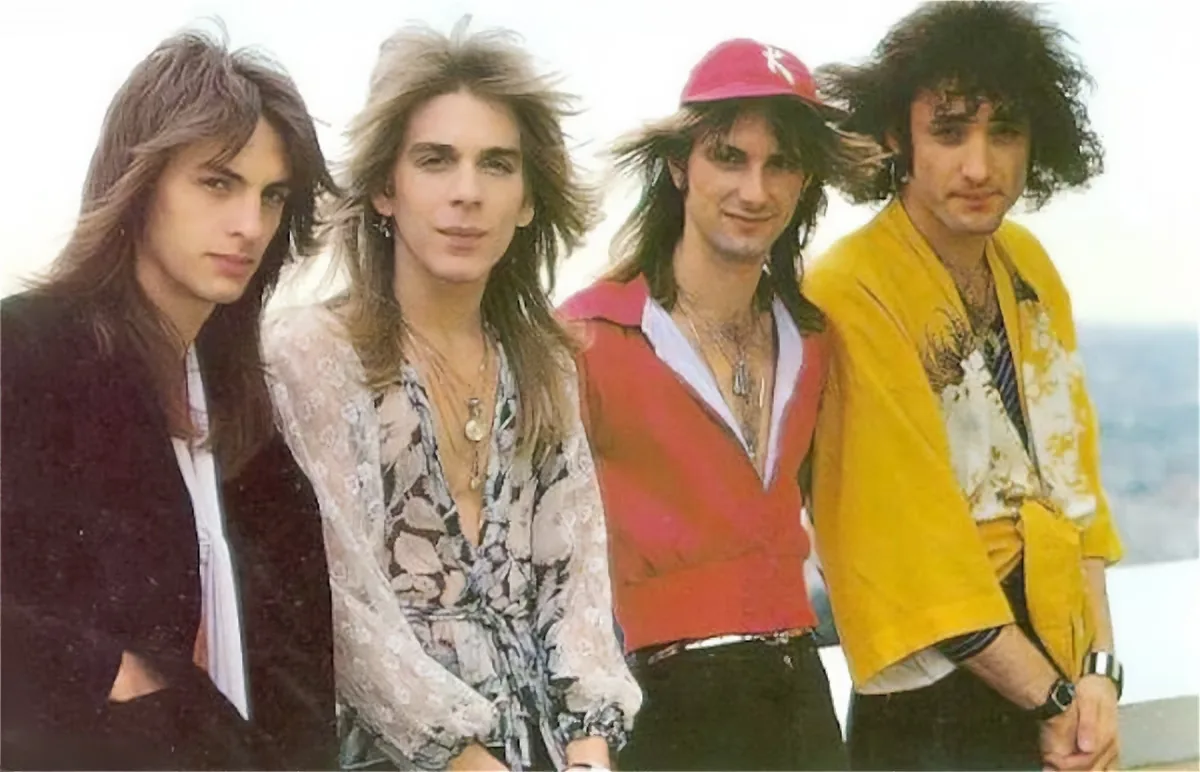

Listening back to these raw archival tapes from 2009, the voice of Kelly Garni cuts through the hiss with a startling clarity. It’s not just the sound of a survivor from the Sunset Strip’s most notorious era. It’s the sound of a primary source, a man who stood at ground zero for the formation of Quiet Riot and the ascent of a guitar god. Garni’s memories aren’t polished for a VH1 special; they’re gritty, contradictory and brutally honest. He was Randy Rhoads’ first real musical partner, his co-conspirator and the brother he chose before the world knew his name.
This interview catches Garni at a fascinating pivot. He’s just launched a website, a digital sanctuary for his fallen friend. But this wasn't about simple nostalgia. It was a direct response to the nascent internet fan culture of the time. He talks about the online drama, the misinformation and the need to reclaim the narrative. “There's a lot of drama that goes on with the other boards,” Garni says, his voice tinged with frustration. “And to me, it kinda cheapened Randy. So I kinda wanted to have my own board where I was a little bit more in control of things like that.” It was a move to protect a legacy, to build a firewall against the noise of anonymous opinions that he felt diluted the truth of the man he knew.
And the man he knew was forged in the crucible of seventh grade. Two outcasts in Burbank, California. Garni paints a vivid picture of a young Randy Rhoads, a kid who was different from the jump. “He wore his hair different. He dressed different,” Garni recalls. He saw in Rhoads a charisma that defied their 11 years of age, a silent confidence that drew him in. They became inseparable, a two-man tribe against the world, eventually morphing into mirror images of each other. It was this bond that became the band’s true nucleus.
Garni’s entry into music was almost an afterthought, a role assigned to him by his friend. Randy needed a foil, someone to bounce his developing lead work against. Keyboards were too heavy. Bass was the answer. Garni learned by watching Randy’s fingers on the fretboard, a direct transmission of musical DNA. This symbiotic relationship propelled them, making them preternaturally skilled players who were jamming with guys in their 20s while they were still just 13.
Their first gig on the Sunset Strip is a story steeped in the glorious sleaze of the era. A former massage parlour turned rock club, where the barmaids were former masseuses. They got paid $10 each and were propositioned in the back room. But their minds were elsewhere. “We were thinking $10. Jeez. We can buy cigarettes. We can buy, you know, strings, beers, picks, whatever, candy,” Garni says. It’s a perfect snapshot of teenage ambition, where a ten-dollar bill held the promise of rock and roll survival.
But as Quiet Riot began to take shape with the arrival of Kevin DuBrow, a fundamental conflict emerged. Garni and Rhoads had a vision steeped in the theatrical darkness of Alice Cooper. They wanted guillotines, fake blood and a stage show that shocked. Their new Beverly Hills management, however, saw dollar signs in a completely different direction. They saw the Bay City Rollers. They saw cute, marketable boys. Not snarling rock monsters.
This led to one of the most infamous images in pre-metal history. “I have to sit here and I have to say, yep. I wore a sailor suit. That was me. The heavy metal musician in the sailor suit,” Garni admits, the embarrassment still palpable years later. While Randy embraced his polka-dot-and-bowtie persona, turning it into a signature look, Garni felt utterly neutered. The band they had dreamed of was being systematically dismantled and rebuilt into a pop-rock act that was anathema to their core identity.
In a weird, perhaps to some perverted way, it actually puts me and Randy on stage again together, at least a small, small, small part of him.
The creative tension was mirrored by a growing personal animosity, particularly between Garni and DuBrow. The fight for the band’s soul became a brutal power struggle. Garni, fueled by booze and a sense of betrayal, was on a mission to get DuBrow fired. It all came to a head one night in a scene that sounds ripped from a screenplay. After looting a bar that had caught fire, Garni and Rhoads got into a drunken, violent argument over DuBrow’s fate.
The details are shocking. “I had a handgun hidden in the chair that I was sitting in, and I pulled it out, and I only meant to scare him, and I fired a shot into the ceiling over his head to scare him,” Garni recounts. Randy, fearless, charged him anyway. The ensuing brawl destroyed the living room. It was the end. Garni was arrested, and deservedly kicked out of the band he helped create. He’s unflinching in his self-assessment, admitting he had become a liability. “I earned it,” he says flatly. “I pretty much set the bar for getting kicked out of bands with that little stunt.”
What followed was a hard pivot into civilian life. Garni cut his hair, enrolled in paramedic school and spent the next 10 years working the streets of Los Angeles. It was a life far removed from the Sunset Strip, a necessary penance and a path to discipline. Music was a ghost, a past life he had no intention of revisiting. Photography became his new creative outlet, a way to frame the world on his own terms.
Years later, a strange thing happened. He and Kevin DuBrow, the man he once plotted to remove from his own band, became the closest of friends. After DuBrow moved to Las Vegas, they were inseparable. Garni finally understood the protective, magnetic quality that had drawn Randy to Kevin. “When you were with Kevin, you felt very, very safe,” he explains. This late-in-life brotherhood makes DuBrow’s sudden death in 2007 all the more tragic for him. Garni, the trained paramedic, is still haunted by the fact that he never saw the signs of his friend’s addiction.
It was DuBrow’s death that ultimately pulled Garni back to the stage. Asked to play a tribute show, he felt the weight of being the last man standing. He had to honour both Randy and Kevin. He had to fill their shoes. This led to the formation of No Sky Today with Randy’s brother, Kelle Rhoads, a project that reconnected him with the joy of playing.
But the most powerful symbol of this full-circle story is an object of almost mythic significance. During that final, violent fight, Randy had raked his famously long thumbnail across Garni’s forehead, breaking it off in the process. Garni’s girlfriend found it the next day. And he kept it. For decades.
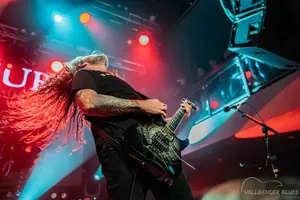
He commissioned a custom eight-string bass from Australian luthier Perry Ormsby with a singular request: incorporate the nail. The result is a piece of art, a shrine. Suspended in clear acrylic in the headstock, the fingernail is now a permanent part of the instrument. The fretboard is inlaid with the musical notation for “Hey Joe” the first song Randy ever taught him.
It’s a macabre and beautiful tribute. Some might find it strange, but Garni sees it as the ultimate expression of their bond. It represents the love, the conflict and the unbreakable connection between two brothers in arms. “In a weird, perhaps to some perverted way, it actually puts me and Randy on stage again together, at least a small, small, small part of him,” he says. With that bass in his hands, Garni isn’t just playing music. He’s carrying history.
519 Magazine Archive: We are thrilled to officially unearth the Rockstar Weekly Digital Vault. This isn't just a re-post; it's a high-fidelity restoration of a pivotal era in music journalism. By pairing original print dates with modern retrospectives, we’re bridging the gap between historical rock-and-roll grit and the lightning-fast performance of today’s web. These stories—once locked in physical print and lost URLs—are now back, fully searchable, and optimized for a new generation of fans.
We are thrilled to officially unearth the 519 Magazine Digital Vault. This isn't just a re-post; it's a high-fidelity restoration of a pivotal era in music journalism. By pairing original print dates with modern retrospectives, we're bridging the gap between historical rock-and-roll grit and the lightning-fast performance of today's web. These stories—once locked in physical print and lost URLs—are now back, fully searchable, and optimized for a new generation of fans.