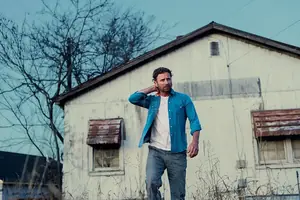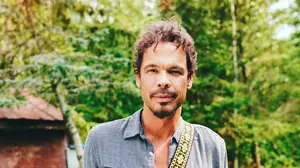

The transition from Sarnia chiropractor to Nashville’s next big thing was supposed to be a linear trajectory for Eric Ethridge. But the world had other plans. I caught up with Ethridge recently—he was calling in from Edmonton, looking every bit the relaxed newlywed despite the global industry collapse visible in his rearview mirror. There is a certain clinical precision to the way he speaks, likely a remnant of his medical training, yet it is softened by the genuine giddiness of a man who just dropped a career-defining EP.
Ethridge was halfway through a massive national run with Gord Bamford when the lights went out across the continent. Most artists retreated into a state of bewildered denial. But Ethridge, leaning on a background that involves more anatomy textbooks than most songwriters, saw the writing on the wall before the ink was dry. He packed his gear and headed for isolation.
The ring on his finger is the first thing you notice—a heavy, polished symbol of a whirlwind year that saw him marry fellow Canadian country artist Kalsey Kulyk. It is a classic Nashville story, really. Two Canadians find each other in the neon hum of Broadway rather than the snowy plains of their own backyard. Ethridge explains the meet-cute with a grin:
"We met actually in Nashville, just songwriting. My wife, Kalsey, she’s Canadian as well. She’s from Northern Saskatchewan. That’s how we originally met. Much later on, we ended up falling in love and getting married. I’m the luckiest man alive. It’s been an exciting time."
There is an inherent irony in two Canucks finding love south of the border only to be forced back north by a pandemic. It did little for their paperwork, but everything for their partnership. Ethridge jokes about the logistical nightmare of their romance:
"I know. We joke with each other that it didn’t really help our green card situation, so we’ll just have to find another way, I guess."
Marriage in the age of COVID-19 is a pressure cooker. For most touring musicians, the first year of marriage is spent in separate time zones, communicating through grainy FaceTime calls and frantic texts between soundchecks. Ethridge and Kulyk got the opposite. They got four months of uninterrupted domesticity. It was a baptism by fire that Ethridge insists only strengthened the bond.
"It’s better, I think. The married life is the great life. I think Kalsey and I haven’t experienced the typical married life, because we got married and then the pandemic hit and we lost all of our shows for probably the next two years. It was kind of a shock. We were debating between having our wedding December of 2019 or December of 2020, and we’re really glad we picked December of 2019, because right after that the pandemic hit. We did it in Mexico with our family, and it was amazing. We were really lucky with how it turned out. It’s been good."
The timing was almost eerie. Had they waited, the Mexico nuptials would have been a casualty of border closures and gathering limits. Instead, they traded the stage for the living room. The 60-date tour with Bamford vanished, replaced by a forced honeymoon that neither saw coming.
"At the same time, it was funny, I was about to go out on the road doing a 60-dates national tour with Gord Bamford and a bunch of other artists. We were bummed because we’re not going to see each other for a month. And then the pandemic hit, and we’ve seen each other every day for four months. We’re spoiled in that sense. We thought we weren’t going to see much of each other this year, and now we’re attached at the hip, which is really nice."
This period of forced stillness allowed for a rare kind of family integration. In the music business, families are often the casualties of the grind. But the Ethridge-Kulyk clan got a month of quality time that a normal touring schedule would never permit.
"We’ve had a lot of time to spend with family members. Our families live very far apart from each other. She was with my family for about a month, they’re just getting to know her more and more. And likewise for me, I’m out here in Edmonton with her family right now. It’s been great in that respect for sure."
The lead single from his new EP, *Forever With You*, is "Dream Girl". It is a glossy, high-octane track that sounds exactly like a hit should. It has already cleared two million streams, a metric that serves as a middle finger to the lack of live touring opportunities. When I ask if he finally found the subject of the song in his new wife, he does not hesitate.
"I did, yes. I absolutely did find my dream girl. It’s unbelievable. I have to pinch myself still. I’m very lucky, and I am the first to admit it, so I’m just going with that."
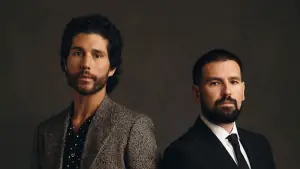
The song’s pedigree is pure Nashville royalty. Written by Dan + Shay—the duo currently dominating the crossover space—it arrived in Ethridge’s inbox like a gift from the gods of A&R. But the acquisition of the track was more about cosmic alignment than simple industry networking.
"It seems like it was serendipity a little bit, because I had this idea for a song called Dream Girl. I had brought it into a few writing sessions, and the people in the writing sessions didn’t like the idea. Probably six months later, I got an email from one of the publishers at the company I’m with, and they said, listen to this song Dream Girls, written by Dan + Shay. At the time, it was right before they released 10,000 Hours with Justin Bieber. They were already blowing up with Tequila and Speechless and all those songs. I loved the song immediately, and I was like, let’s record this yesterday. I’m in, I love it. They released 10,000 Hours, which was awesome. So it’s cool to have those two, they wrote a song that’s on my record, which is really exciting."
Ethridge is acutely aware that he is in the process of shedding his "newcomer" skin. The first record was a sandbox; this new EP is a blueprint. He is hunting for a "sonic brand"—that elusive, recognizable texture that makes a listener stop scanning the radio dial.
"I’m really proud of that song. It’s been streamed a ton. I think it represents more in line of when you’re an artist your sound is always developing, but I think it’s closer to what my vision is anyways, over the long term. In my career, I feel like we’re just starting to get into the swing of things, really. The first record did really well, but it was me, I think I was just saying the first record was experimenting with sounds and ideas and what we wanted things to sound like. This record is more. I spent the whole last year and a half in Nashville writing, and we’re starting to get to the point where I think things are evolving, and we’re getting to a place where I’m developing my signature as an artist."
That signature is being forged in the fires of unconventional collaboration. Instead of sticking to the safe confines of Nashville’s country-producer elite, Ethridge tapped Brian Howes. Howes is the man behind the board for rock heavyweights, not the guy usually found in a Stetson-filled studio. It was a tactical gamble to avoid the homogenous "Nashville sound."
"Yes. Every artist that is successful seems to have their own sort of sonic brand or signature, or something that you’re like, that’s a Luke Bryan song, that is an Eric Church song. The Florida Georgia Line. It’s something that listeners don’t really realize most of the time. There’s a lot of work that gets put in and a lot of thought and effort to develop it. How do you as an artist stand out from the crowd? That’s the challenge, and the hardest thing of all. You want to have music that people connect with and that they like to listen to, but also what makes it different than every other person that’s putting music out there."
Working with Howes was a revelation for Ethridge. The producer’s wall of platinum records served as a constant reminder of the standard required. But more than that, it was about the collision of genres.
"I’m a huge fan of Brian’s work. I grew up listening. I didn’t even realize it until I met him and started working with him, but he produced all my favorite bands growing up. I was like, you did this record and you did this record? Holy crap. They were the platinum records on his walls. At the time, I started working with Brian Howes in 2015, and the thing was, I’m sort of a person that tends to go against the grain of things. When everyone was going to Nashville to get a certain sound, I’m going to work with somebody completely different that doesn’t know or hasn’t been exposed to the country market, but is an extremely talented producer. If I take country songs to him, I want to see what he does with them. I want to see how he produces them and what happens there."
This "against the grain" mentality is what defines Ethridge. He is not interested in being a cookie-cutter crooner. He wants the intensity of a rock show under the umbrella of a country lyric.
At the same time, I think in some ways my medical background gives me a different sense of understanding. I just understood immediately why this is so important to end the shows. ... For me, my perspective on it was simply, we need to cancel the tour immediately so we don’t spread this to more people. This is what needs to happen to save lives.
"It’s been a very interesting process. It’s been very cool because he and I can talk about that for hours, I’m sure, but I really like what we’ve been able to come up with. He’s a guy that is always growing and always learning. He’s had so many hits and so many massive records, but he never stops trying to improve himself, which I really admire about him. That’s the kind of person I want to work with. He’s not just complacent and, I’ve made my success, I’m just going to mail it in today. He’s always trying to get better, which I really admire. When everybody was going one way, I decided to go the other way just to see what happened. It’s a risky move to do, but at the same time, with no risk comes no reward."
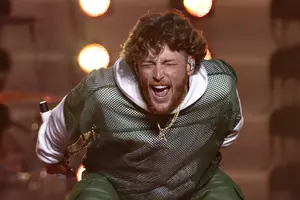
His live show philosophy is where the rock influence truly bleeds through. Ethridge is critical of the traditional "stand and sing" country trope. He wants movement, sweat, and the kind of arena-level energy that Garth Brooks pioneered.
"I wouldn’t say that I want to be a rocker. I love all types of music. I love pop music, rock music, rap, hip hop, R&B. I can appreciate all those types of music, and I’ve listened to people that I like in all those genres. Originally as a child, I was raised on rock music, classic rock and that type of thing. My live shows though, one thing I found with country music was, I would say where there’s a lot of artists that are lacking is in their live show. There’s some traditions with country music where the artist stands in the center of the stage and the band stands back in the shadows and plays the songs, and the artist walks around and sings them to people."
He points to the titans of the genre as his North Star. If you aren’t blowing minds, you aren’t doing it right.
"Whereas the first artists, and I wouldn’t say all country artists do this, but really successful country artists and just musicians in general. A great example of this is Garth Brooks. Garth Brooks blew the world away with his show. He obviously had great songs, but he’s the only guy, he took 20 years off and he comes back and he’s selling out 70000-seater stadiums multiple nights in a row in the same city. Part of that is the songs and his personality, but also the experience that fans get when they go to see him. Eric Church is another one, puts on an incredible show, as well as Florida Georgia Line. I wouldn’t say that it’s because I wanted to be a rocker, it’s more so that I wanted, as an artist, as a newcomer to country music, I again had to set myself apart and I wanted to engage people and connect with people."
And it is working. The fans are showing up, or at least they were until the world stopped turning.
"If you’re not getting the traditional push at radio, for example, I wanted people to come to my show. My goal was when people came to one of my shows, I wanted their minds to be blown and I wanted them to come to another one, and I wanted to meet them after and get to know them. We’ve had people that have come to 10, 12 shows. Some people will come to five shows in a summer, which is amazing. Whatever it is we’re doing, it’s working. I’m very lucky to have great musicians that play with me, and they’ve been there since the beginning, and they’ve been super supportive. They play their asses off when we get on stage, so I’m very lucky to have those guys. Not every artist has those types of people in their corner. That was the thinking behind that. From day one, I wanted the show that was going to get people excited."
Breaking down the EP *Forever With You*, Ethridge starts with the heavy hitter. "Dream Girl" was always intended to be the calling card.
"I don’t have a ton of experience making albums, but I think when people listen and say, who’s this Eric Ethridge guy, when they listened to the first song, I want them to be like, oh my God, this sounds amazing. This is awesome. Don’t know who he is, but I like how it sounds. That’s what I wanted Dream Girl to be, and that’s why we put it first there. That was my thinking on it, anyways."
Then there is "Gasoline", a track born from a room full of heavyweights. Jennifer Denmark and Jimmy Robbins helped craft a song that bridges the gap between radio polish and live-show grit.
"I wrote with two killer songwriters in Nashville, Jennifer Denmark, who just had her first number one with Jimmie Allen, with Make Me Want To, and then Jimmy Robbins, who is a monster songwriter in Nashville, he’s had hits with Jason Aldean, Florida Georgia Line, Thomas Rhett, Maren Morris, and Kelsea Ballerini. I’m lucky to get in a room with that guy once in a while, so that’s very awesome. That song was a favorite as well, and it also shows a different side of me. It’s a more up-tempo song, so it’s a faster-pace song, one that’s going in our live show. It was a tie between that and Dream Girl, there was even talk about putting that one to radio next, so we’ll see what the consensus is. It’s more upbeat, it has a driving beat to it, and it’s a fun song."
The title track, "Forever With You", serves as the emotional anchor. It is the wedding song he realized his catalogue was missing just as he was preparing to drop to one knee.
"I wrote that with the same two people, Jennifer Denmark and Jimmy Robbins, on another day. I was about to propose to my wife, Kalsey, and I was like, I want to write a wedding song because I don’t have any. And I’m going to go do this. I wanted to shoot a music video for it and all this stuff. That’s just what we wrote that day, and I absolutely love that song. I think it’s the quintessential wedding song. I think we’re putting out a music video for it relatively soon. That one, we have a wedding video that got made in Mexico, and that’s the song for the wedding video. We’re just figuring out right now how we’re going to release that. It’s very personal to me and I had my wife in mind when I wrote that."
"Break Your Heart" pushes Ethridge’s vocal boundaries. It is a track that defies the "one-trick pony" label he desperately wants to avoid. He welcomes the critique that his music is varied, viewing versatility as a strength rather than a lack of focus.
"This is before we were engaged, but one day in Nashville, I was talking with Kalsey before I went to go write, and I had this idea. The idea was, I ain’t ever going to break your heart. I was like, I think that could be a great song, and it was about Kalsey too. I brought it into the writers that day, and we wrote that song in maybe an hour and 15 minutes. I just love it. Not only am I surprised that idea hasn’t really been written in that way before, but also it vocally is a different range for me. I try to make every song different, and this works against me sometimes. I’ve had some critiques saying that, who is Eric Ethridge? What does he do? I’ve heard all these songs are good, but what is it that he does? Some people think that’s a negative thing. I actually look at that as a positive thing, because my goal is not to be a one-trick pony. My goal is to be a versatile artist that can sing anything. You can give me a Shania Twain song and I’ll sing the hell out of it, a Garth Brooks song, or a Michael Jackson song or whatever, you know what I mean?"
The connection with the listener is the ultimate metric.
"The goal at the end of the day is, I’m a fan of music, and I want to connect to people. Maybe one song doesn’t connect, maybe Dream Girl and Gasoline doesn’t connect to a person, but Break Your Heart does. And that’s a win for me as an artist. Otherwise, I would have lost that potential listener down the road. But if they come across this song and say, I don’t like this other stuff, but I like this song, that’s a win in my books."
Rounding out the EP is "Miss Me", a track penned by Kulyk herself. It was a last-minute addition that proved the household is a two-way street of creative brilliance.
"Actually, this was written entirely by Kalsey. We were looking for a fifth song for the EP, and she’s like, I’m going to write you a song today. She sat down, 45 minutes later comes out with that song. Yeah, she’s an incredible writer. The label and publishing company loved it. We put it out on social media and people loved it. It turned out great, and I’m really happy with that one as well. We’re excited, and now we’re just getting ready. That EP is the first half of my full record, which we’re getting ready to go back in the studio and do relatively soon. Exciting times. This will be my first full record released as a signed artist once it’s done."
But we cannot ignore the elephant in the room. The tour cancellation was not just a professional setback; it was a societal shift that Ethridge understood on a cellular level. His medical background provided a grim clarity that many of his peers lacked.
"Yeah, it was. It was a really tough time. At the same time, I think in some ways my medical background gives me a different sense of understanding, though. I just understood immediately why this is so important to end the shows. For someone that doesn’t understand that stuff, has a deep understanding of pandemics, infectious disease, all that, how severe this could be and how severe it will be, it’s like, I got to cancel my tour. I’m pissed. For me, my perspective on it was simply, we need to cancel the tour immediately so we don’t spread this to more people. This is what needs to happen to save lives. The most important thing right now is saving as many lives as possible. That’s just something I think I’m in a unique position to understand because of my medical background."
He is pragmatic about the tension between economics and health.
"I understand the politics of shutting down versus not shutting down, and people saying, we can’t stay in lockdown. I understand everyone’s point of view, but I have a different understanding of the public health perspective. The public health teams around the world are looking at, how do we save as many lives as possible? They’re don’t really care how much money we’re going to lose, it’s how many lives can we save? I understand that. The business people are going to be focusing on how much money we’re losing. I get that, I understand that. But I come from the health field, so everyone’s focused on saving lives."
Being married hasn't slowed the hustle. If anything, it’s created a familial synergy that keeps the wheels turning even when the tour bus is parked.
"No, it hasn't actually. The way that I look at it is we're in a family business. My wife is an incredibly talented artist and songwriter, and I'm her biggest fan. I'm just as excited, if not more excited, about her music than I am about my own. We work together as a team on these things. Where her talents are and where her strengths are is usually where my weaknesses are, so we compliment each other very well on that front."
The pandemic has also forced a shift in how the music is made. Zoom co-writes are the new normal, a necessary evil in a world without borders.
"I think, mostly, writers are writing over Zoom now or Skype and FaceTime, but we've actually surprisingly got a few songs that I'm pretty pumped about. We're in the stage right now where we're just picking. We have a list of songs and we're just going through them right now, and everyone's picking their favorites and what we're going to do with them. We still haven't gotten into the studio yet, that's hopefully happening in the next five, six weeks or so. The goal is to get it out this year."
Nashville was home, but Canada is safety. Ethridge is vocal about his gratitude for the Canadian healthcare system and the way the country has navigated the crisis.
"Nashville, it was home. It felt like home by the time we left. My wife and I ended up deciding to leave just because, based on everything I knew about pandemics and how things were going, I had a feeling that this is not going to be over quickly. I had a feeling this is going to be sticking around and it was going to be a huge problem for the United States for the foreseeable future, also a massive problem for the music industry. I was on a 60-day tour and that got canceled, and pretty much every tour around who was canceled. Now we're back in Canada, and we're very grateful to be Canadian. We're very grateful to be in a country that has universal healthcare. In my books, Canada has done a pretty good job in handling this pandemic, considering everything that's happened. It's definitely up there for top countries in the world on our handling of the pandemic, for sure."
And then there is Sarnia. The hometown. The place where the chiropractor shingle once hung. It remains the anchor for his entire operation.
"Absolutely. My family's there, my parents and brothers too. We spent the first two months of the pandemic in Sarnia. Sarnia is where I grew up, it's my hometown, it's where I was practiced as a chiropractor. That's where I'm from. It's always going to be a part of me. I love Sarnia. I'm a huge fan of Sarnia. I grew up just a five-minute walk from the beach on Lakeshore Road, and some of my favorite memories are on the beach in Sarnia. It'll always be a big part of my life. It was home base while I was building my music career. We toured out of Sarnia. It's where we kept all of the equipment, still do."
The conversation turns to the current state of "live" music. Virtual concerts, while a noble effort, are a pale imitation of the real thing. Ethridge is blunt about the limitations of the medium.
"Absolutely. I think the Zoom concerts are tough. They're good in some ways. I think doing them, there's something about human beings are social animals. We want to connect with people. I think everybody can attest to the thought of being at a concert. You feel the bass in your chest, you see the lights, you see the sound is awesome. The atmosphere, the experience, being close and shoulder to shoulder with people while everyone's having a great time, the energy, you just don't get any of that from Zoom."
The lack of crowd feedback is a visceral loss for a performer like Ethridge.
"Yeah. It's just not the same. I've been saying that to friends and family, I'm like, a lot of people have gotten severely affected by the pandemic. A lot of people have gotten laid off, and lost their jobs. I think people don't realize, athletes and artists probably have gotten affected worse maybe, I don't know about the worst, but definitely severely because I do believe that the economies will open back up to some extent, even a partial extent. People's jobs will come back. If you got laid off, their jobs will come back. Maybe not all of them, but a lot of them will, especially in the manufacturing, the private sectors and all that as people have safe means of going to work, wearing masks and protective equipment and social distancing."
But for the music industry, the prognosis is bleaker.
"But one thing I don't think is going to be okay is large crowds, until vaccines are out there, until there's a treatment and this is under control. Sporting events and large concerts, I do not know how that's just going to be feasible in the next two years. I know artists that were just about to go on a hundred-day tour, or they've hundreds of thousands of dollars invested in these things, and it's just gone within a week, and no knowing when it's going to come back. It's a pretty crazy time to be a musician. Nashville is full of people that work on a gig basis, where they get paid to play. All the musicians in Nashville that get paid to play make pretty good money, but they're not getting paid for the next two years, probably, even when the economies open back up. The other thing we got to think about too is even when things are allowed to open back up, how many people are going to be comfortable going back?"
The fear factor is a variable no one can account for.
"You can open up a concert, but I would say maybe 50% of people are going to even be comfortable going to that concert. There's still going to be some social fear probably of getting the coronavirus. That is an existential problem for the music industry. There's a lot of music businesses that operate on commission only, like agencies, for example, that just got hit so hard. I know major, the biggest agencies in the United States, just laid off most of their company, because they usually have millions of dollars coming in. $0 million are coming in. It's crazy on that front. It's quite the time."
Ethridge doesn’t sugarcoat the timeline. He is looking at 2022.
"I don't think a lot of artists are talking about it because it's such a negative topic. I don't really talk about it too much. I talked about it with friends and family, but everyone's trying to maintain positivity. I think there's a lot of artists that don't realize the impact that this is going to have. I think some people still think we're going to be playing shows this fall. I think practicality-wise, I really don't see that happening until 2022 probably, or late 2021. Unless there's a vaccine or a treatment, I don't know how that's going to be feasible."
We briefly discuss the Flaming Lips and their plastic bubbles—a concept that seems both hilarious and desperate.
"They did them in plastic bubbles? I got to look that up. That's hilarious and awesome. Wow. Some people started doing these drive-in concerts, which I think are a great idea. I think it's tough though. Even that, I looked at some polls of it, and I think maybe 50% of people said they would attend one of those. It's still not the same as a concert. You can't drink, there's no bathrooms. You got to tune into the radio to hear the music. It's a tough experience, like we were talking about earlier, the feeling of being at a live show and the sound is massive and the lights and the experience, and you feel like you're connecting with the band and the music, it's so hard to do that from your car. There's a lot of challenges, but people are resilient and we're going to figure it out."
Ethridge is a realist, but he isn't a defeatist. He’s a man with a medical degree, a new wife, and a hit song. He’ll wait for the world to catch up.
Get Tickets