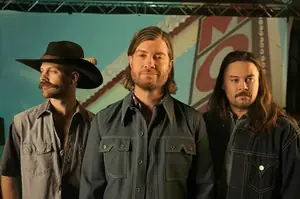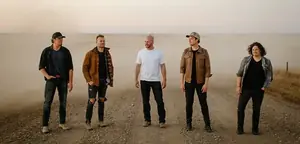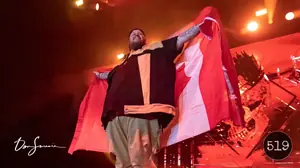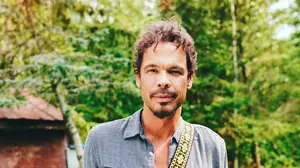


Sitting across from Ryan Marshall—now simply Marshall—you do not see a man mourning the loss of his spot in a multi-platinum viral juggernaut. There is a specific kind of lightness that comes with shedding the skin of a collective identity. For years, he was a vital cog in the Walk Off The Earth machine, a band that redefined how we consume indie-pop through sheer DIY audacity. But late last year, after a gruelling string of dates, Marshall walked away from the house he helped build.
He is not looking back. Using the moniker Marshall, a name that first appeared on his solo debut *Layers*, he is positioning himself to dominate the airwaves with a sound that feels less like a side project and more like a manifesto. His new single, This Is It, is scheduled for a mid-month arrival, and it carries the weight of a man finally speaking in his own unadulterated frequency. We caught up with him to talk about the strange timing of launching a solo career just as the world went into lockdown.
The timing is surreal. As the pandemic forces the global population into a forced internal monologue, the music industry is bracing for a tidal wave of claustrophobic art. Marshall sees the irony in releasing an anthem while everyone is stuck in their living rooms.
"No kidding. Right?" Marshall says. "Everyone’s going to be in the mood ready for a happy let’s-get-out-of inside-song, and everybody is going to be putting out lonely shit."
It is a fair critique of the creative reflex. While others are wallowing in the quiet, Marshall is leaning into a frantic, almost neurotic need to produce. For him, writing is not a hobby or a career choice; it is a physiological requirement. He describes it with the kind of intensity usually reserved for talk of chemical dependencies.
"I write all the time, that’s just something that I’ve done since I was 20. It’s kind of an addiction," he admits. "I get anxious when I’m not writing, and sometimes tour. When you’re touring for maybe a month or a month and a half, you have to figure out ways to take a break from that so that I can release that writing anxiety. I’m one of those types of people that I almost communicate better through my lyrics than I do in-person sometimes, if that makes any sense."
It makes perfect sense when you look at his trajectory. Most songwriters start with a guitar and a broken heart. Marshall started with a baritone—essentially a miniature tuba—in a high school jazz band. It is a bizarre origin story for a pop star, but it explains the rhythmic complexity he brought to his previous work. The transition to songwriting was less about artistry and more about a small-town kid bored in Caledonia.
"When it comes to the singer songwriter world, in high school, all I played was a baritone, which is like a miniature tuba," he says. "I was in the concert band and the jazz band. I didn’t even pick up a guitar until I went to university, and I didn’t sing at the time. So I would have been at least 20, and being in a small town called Caledonia, I took the song Sweet Home Alabama, and I wrote a 'Weird Al' Yankovic style version."
Every legend has a humble, slightly embarrassing beginning. For Marshall, it was a parody.
"I wrote a parody, Sweet Home Caledonia," he laughs. "That was the first time I’d ever written something. You had to start somewhere. I’d never done anything from scratch. And then the next following month I started figuring out how to write songs."
But the songs he is writing now are a far cry from "Sweet Home Caledonia." The departure from Walk Off The Earth was not a snap decision. It was the result of a decade of evolution and the crushing weight of grief. When Mike "Beard Guy" Taylor passed away over a year ago, the foundation of the band shifted. For Marshall, it was a moment of clarity regarding his own creative survival.
"Mm-hmm. Like we’ve been talking about, as far as writing goes, I really want to be able to concentrate on writing music where I can express my creativity, and writing is a huge part of that for me," he says. "We got to a point in Walk Off the Earth where Johnny and I had been together since 2006. It’s a long time. I started the band, it was just a three piece, and it had a lot of different pieces."
The loss of Taylor was the catalyst for a deeper internal inventory.
"And then when we lost Mike over a year ago, that was a big change too," Marshall explains. "A lot of those things that were all combining at the same time helped me realize that I needed to just follow my heart and follow my gut when it came to making sure that I was giving myself everything that I need personally when it comes to creativity and the type of music that I’m singing and people are hearing. I knew that I just needed to follow a different path for a minute. So whether that’s a solo artist, or whether that means I’m going to be doing more writing."
Marshall is a man who thrives on having several irons in the fire. The solo project, however, feels like the primary forge. He is returning to a sound that feels more like the early, hungry days of his former band—anthemic, edgy and unapologetically loud.
"I really love having multiple things going at one time. But definitely a big part of that is my project, which we’ve just called Marshall, because especially the new music that’s coming out now, that’s going to be coming out this year and it really feels like early Walk Off the Earth to me," he says. "It has a little bit of that alternative edge, it’s very anthemic. That type of music really gets me energized. My first album called Layers under Marshall was more electronic. It was definitely something that Walk of the Earth wasn’t doing, and that allowed me to express that side of me as a writer and that side of me vocally."
There is a technical liberation in being the only person at the microphone. In a group like WOTE, every member has to occupy a specific frequency to avoid sonic clutter. Going solo has allowed Marshall to find the ceiling of his own vocal range, pushing into territories that were previously off-limits.
"One of the biggest things that I enjoy being a solo artist is allowing my voice to get into different ranges that people typically haven’t heard," he notes. "Johnny and Sarah are both amazing vocalists, and so when the three of us were together in Walk Off the Earth, we each had our own spot on the spectrum. When you’re a solo artist, now you have to force yourself into those other areas. I’ve had a lot of fun with my voice, both recording it and playing live and experimenting and getting into areas that are a little less comfortable, and it’s been exciting."
This discomfort is the engine of his career. Marshall is notoriously competitive, a trait that keeps him from settling into the easy rhythms of a legacy act. He views comfort as the enemy of relevance.
"It really is," he says of the need to experiment. "I’m sure you’re referring to a lot of it video wise of what we did with Walk Off the Earth. But I think with every musician and every artist, you need to experiment. As soon as you get comfortable, I think you’re letting people get ahead of you. I’m a very competitive type person, and there’s lots of room in the music industry for more music, but I feel like once you’re comfortable and if you sit in that comfort for too long, you’re doing a disservice to yourself. Because to be creative, you have to be experimental."
The conversation inevitably drifts back to Mike Taylor. For fans, Mike was the silent, stoic heart of the band. For Marshall, he was a brother who championed his solo ambitions long before they became a reality.
"No. I don’t think it was a trigger," Marshall says, clarifying the timing of his exit. "Mike and I were really great friends outside of the camps. We were friends before he joined Walk Off the Earth. We became almost like brothers during Walk Off the Earth. Everybody that knows the music industry, when you’re touring that much with someone, you really become family. So we had a really close relationship. So losing him was like a family member to me. It wasn’t necessarily a trigger to say, okay, something needs to change, but he always did really support everything I did outside of Walk Off the Earth, both as a songwriter and as a solo musician."
The Marshall project was not a reaction to tragedy; it was a slow-burn development that Taylor was privy to from the start.
I really want to be able to concentrate on writing music where I can express my creativity, and writing is a huge part of that for me... I knew that I just needed to follow a different path for a minute. One of the biggest things that I enjoy being a solo artist is allowing my voice to get into different ranges that people typically haven’t heard.
"I had started working on the Marshall stuff almost a year and a half before he passed," he reveals. "I would bounce songs off of him, and he loved hearing it and being a part of it. There’s definitely a thought that went through my mind thinking about what Mike would say, and he would have always been the type of person to say, 'Hey, follow your heart, follow your music.' So no, I know it wasn’t a trigger, but I was definitely thinking about him during decisions that I’ve made over the past year and a half, he’s even involved in those decisions for sure."
The debut record, *Layers*, was essentially a rescue mission for songs that did not fit the WOTE mould. Marshall found himself sitting on a hard drive full of tracks that were too experimental for the band’s pop-skewing brand.
"Layers almost became an album of B sides. It was a bunch of stuff that I had on my hard drive that I had given to Walk off and said, 'Hey guys, what do you think? Do we like this?' To go back to that same word, it was just too experimental for what we were doing at that time," he says. "Sometimes Walk off is one of the best bands that take a song, whether it’s written by Miley Cyrus or anybody, and makes it their own. But just at that time, we didn’t feel these ones fit the puzzle. So there was a good seven or eight songs that I was able to go back and listen to on a hard drive and say, 'You know what...'"
The business side of the industry—the Los Angeles publishing deals and the "pitching" culture—nearly saw these songs go to other artists. But Marshall couldn't let go.
"At the time, I had a publishing deal with Cobalt in Los Angeles, and so we were looking for other artists to sing some of these songs or if we wanted to work with them. It became a talking point discussing who do we pitch this to? I just said, 'You know what? I don’t know if I want to pitch to anybody. I really like how my voice did on this.' That became the start of the Layers album, it was just me accepting that these songs need to come out, people need to hear them, and I don’t want anybody else’s voice on them. They’re personal songs to me, they mean something to me, and people need to hear them."
The evolution from *Layers* to the new single, This Is It, happened quickly.
"And then once that thought process was in, I’d say four to five months, then we wrote Mr. Parachute. I had written Shadows two years before Letters came out. Four or five of them existed and then three or four ended up being on the album that were written probably five to six months before it came out."
This Is It is a different beast entirely. It is a stadium-sized track that sounds like it was built for the Super Bowl. Marshall took his writing sessions to Nashville, working with the legendary Tawgs Salter to find a sound that was both commercial and visceral.
"Well, it really does have that anthemic little bit more alternative leaning feel," Marshall says. "I don’t like comparing music, but it almost gives me that 30 Seconds to Mars type anthem feel when I listen to it. But it also makes you feel like it should be playing right before the Super Bowl. It’s got a lot of energy. The Layers album, I wrote most of it on my own, except for a couple of songs with Jocelyn Alison and a great producer named Kojak. I did all of that in Los Angeles."
The Nashville sessions provided a different kind of alchemy.
"Most of the new music, and specifically This is It, I wrote in Nashville. There’s a producer that I worked with on a lot of the early Walk Off stuff, his name’s Tawgs Salter, one of the best producers in the world, let alone the best Canadian producer. Whenever I work with him, we end up with this fantastic anthem-style song. I was also working with another writer, lyricist, and she’s an amazing writer, Lindsey Ray. So between the three of us, we had a concept, we had an idea, and the song came out perfect for what we wanted."
He knows when he has a hit. You can see it in the way he discusses the post-production glow.
"Every writing session you always go, 'Wow, that’s a banger. That’s awesome.' And then you write a bunch more songs and then maybe it was or maybe it wasn’t. But fast forward four or five months after writing it and you listen back and you go, 'Yep, this is the one, this is a smash.' Time to do a video. And then you go to the next steps."
And then there is the video. It is a masterpiece of low-budget, high-concept comedy. Marshall plays a character—half real estate agent, half squatter—who ends up wandering through a luxury home in various states of undress. It is the kind of self-deprecating humour that has become his trademark.
"Isn’t it convenient how that played out," he says of the video’s accidental "isolation" theme. "So most of my videos I do, I have two amazing friends that are in the TV and movie business, Chris Stacey, Bryan Trieb. They’ve worked with me on every single one of the Marshal videos. Chris Stacey is a director and producer and Brian’s a steady cam operator. I was at Chris’s place for a couple of nights, he was in San Clemente, and I said, 'Okay we got to do a video, I’m heading back to Toronto tomorrow.' Oh, no, no. In two days. So we sat in his studio, we had no ideas. We knew Brian was coming down the next day to shoot it, but we just didn’t have a concept."
The idea came from a joke, as most good things do.
"Chris was going through some old videos and we were just playing the song against some videos that were just on mute to try and see if we’d come up with ideas. He had this old video where, a similar type thing, you did a job for a real estate company and there was a guy walking through a house naked for a couple of seconds just as a joke. And then we just came up with this idea, what if I was a real estate agent or what if I was looking after somebody’s house and then it just morphed? We came up with that idea at 11 o’clock on a Wednesday night, and we started shooting at 11:00 AM the next Thursday morning, and we were done in four hours. We just had so much fun."
The technical reality of shooting a "naked" video involves more logistics than one might think. Specifically, a trip to the lingerie department.
"Obviously, it was just random. I had to wear women’s underwear, because you have to make sure you have the right skin color so that it’s easier to remove and post," Marshall laughs. "Oh my God, it was an amazing day. Just something I did not see myself doing."
He is remarkably comfortable in his own skin, which is a prerequisite for a solo artist who plans to spend a significant portion of a music video in the buff.
"Yeah, I am. I’m pretty comfortable. I don’t think I want to walk around naked the whole day, but I’m comfortable with it," he says. "It’s funny, there’s so many different ways to look at the video and the song. I’ve played the song for people without them seeing the video first, and it’s funny when you get a reaction like, 'Wow, that’s a really cool song.' And then you show them the video and it almost changes the song for them. I just love that, because there’s a tenderhearted, joking foolishness that comes with the video and helps us get away from the seriousness of life. I just think the timing’s going to work out really great with what everybody’s going through right now, because there was no talk. We had no idea that this was going to be coming upon us when we shot that video, it was just pure joy and fun and let’s do something funny that people will want to watch more than once."
This Is It is just the tip of the spear. Marshall is sitting on a mountain of new material, though he is playing his cards close to his chest regarding the format of the release.
"It’s definitely part of something. I wouldn’t want to say it’s part of an EP, just because we haven’t really figured out the strategy yet for the next group of music," he says. "But it definitely is part of more music, and it’s not going to be the only song we release this year, there’s definitely going to be a couple. When I wrote Layers, or when I released Layers, the reason I called it Layers is because I knew there wouldn’t be another album like it as far as from me. It really was the first layer of me, and I called it that because as a writer and as an artist, I know that there’s just so many different layers on the type of person I am. That was the first, and I knew the second was going to be different. I didn’t know if it was going to be more acoustic, I didn’t know if it would be this, more anthemic."
The new era is defined by a more cohesive sound, a product of a specific time and place in his life.
"This second album or EP or group of music or whatever we package it as, it will be another layer, and they’ll all be very similar and sound and feel and the direction, because I just wrote it from a different place this time. So, yeah, there’s more music ready to go, we’re just going to come up with that right plan to get it out for people to want to listen to."
To bridge the gap between releases and satisfy the social media algorithms, Marshall has launched "Marshall Mondays." It is a variety show format that allows him to channel his inner late-night host.
"Well, my management team, who I love, is a huge part of my life. My manager said, 'Hey look, you got to start doing something on social media, because there’s not going to be any shows anytime soon. So maybe just start doing some live sessions where you’re playing songs or record them and put them up.' I said, 'That’s just not me.' I’m not really the type of person that is just going to put the phone in front of me and say, 'Hey, here’s a song,' or go on Live and really respond to all the comments. It’s not exactly the type of person I am personally, but I knew that there was somewhere in there that we could find a way to make that part of something."
He draws inspiration from the titans of the 11:30 PM slot.
"I’ve always loved variety shows. I think Jimmy Fallon is one of the most hilarious dudes and he’s just talented in so many ways. But I was a huge David Letterman fan. The idea of being able to be David Letterman as the host and as the interviewer, but then also be Paul Shaffer and Paul Shaffer’s band all at the same time within this little 15 minute skit that I get to do once a week is hilarious and super intriguing to me," he says. "So, bounced it off some friends and back and forth with Alisson and we just came up with this plan and just do Marshall Mondays and have a guest on and do a top five memes list, and like you said earlier, give people a moment of comedy to get away from the craziness and the chaos that could be around us in turn of the corner."
One of his frequent collaborators is Jocelyn Alice. Their creative chemistry was forged, appropriately enough, at a casino in Windsor.
"We did. She opened for Walk Off the Earth, which would have been four years ago, in Windsor at the casino. I was a huge fan," Marshall recalls. "We were with the agency group at the time and Ralph James, our booking agent, and he asked us if we had any idea who we wanted to open for us at that show, and he had a list and one of them was Jocelyn Alice. Boom, right away, let’s get her to open for us, I love her. Jackpot was one of my favorite songs at the time. But I never met her."
The professional relationship quickly turned into a genuine friendship.
"So she came and opened the show, and then we were chatting backstage, and we ended up going down to the casino and playing roulette for a couple hours afterwards. I mentioned to her that I had moved down to Los Angeles and I was doing a lot of writing and she was moving down to Los Angeles in the next six to eight months and said, 'Hey, we should get together and write.' So sure enough, she moved down and we started writing. There’s only a handful that I’ve come across that as soon as you start writing with them, you feel comfortable enough that you can be honest and you feel safe. When you get that, you’re always going to get the best music, because you’re not keeping those walls up and you’re not hiding things that will help you get the best song."
The honesty is the point.
"The best songs come from the heart, no matter if they’re happy or sad or whatever it is. That’s just a reality, people gravitate to music that they can relate to. You can relate to shit when it’s real. So her and I just happened. It was a good relationship from the start. She feels like a sister to me, and we’ve been great friends since."
As for the casino? Marshall is a creature of habit. If he is in Windsor, you know exactly where to find him.
"Yeah, that’s where I’ll be. Look, I’m not a casino goer, but when you tour a lot, you end up in casinos now and then, because it’s an easy spot for people to come and see you. So I’ve been to a few casinos for work purposes over the last eight years. If I’m in the casino, you’ll find me out the roulette table. I don’t really play anything else."
Before we let him go, we have to look back. This summer marks the 10th anniversary of *My Rock*, a pivotal moment for Walk Off The Earth when they were still a scrappy trio playing punk and ska shows across Canada.
"Wow, 10th anniversary of My Rock. That’s wild," Marshall says, leaning back. "It’s funny when I try to look back at Walk Off as a three piece, because it just feels like a different band almost. Those are the days of us doing work tour, traveling in a shitty little RV, driving across America and different parts of Canada. You just feel like a circus when you’re doing a warp tour and playing punk and ska shows with bands like Keeping Sex and Stale Fish and all these really cool underground Ontario bands. There was a huge cult following, and people never really got to see the potential of all these really cool three and four piece bands."
The music was raw, heavily influenced by reggae and the DIY ethos of the Ontario underground.
"As far as the music goes, obviously, that album was heavily ska, reggae influenced. Johnny sang a couple songs, but it was very vocal dominant for me. We weren’t working with outside writers at that time. I was writing most of the songs and Johnny was the producer and Pete was almost like our manager. We each had our own little job inside that band."
It was the moment they realized they might actually make it.
"My Rock was probably the first feeling of, 'Okay, this music and what we’re doing right now could actually turn into something.' We had put out Smooth Like Stone on a Beach, that was our first album. By the time we put out My Rock, we had got our shit together and we had done a couple of work tours and we felt like, 'Okay, yeah, maybe there’s potential. We should probably work our asses off on this.' It ended up working out pretty well. The band made some changes and we went a little bit different direction sonically."
Marshall is no longer that kid in the RV, but the hunger remains. The direction has changed, the band has changed, but the voice is finally exactly where it needs to be.
Get Tickets