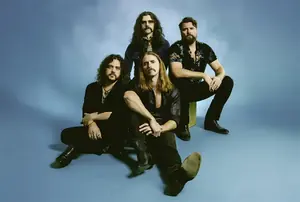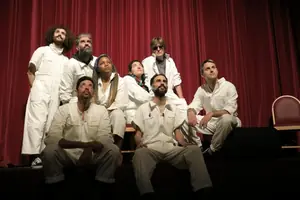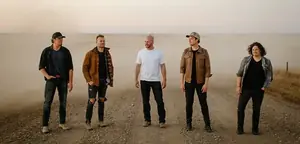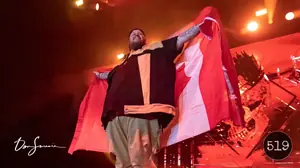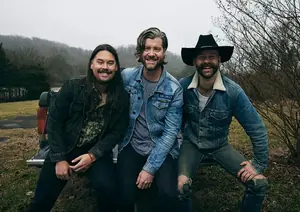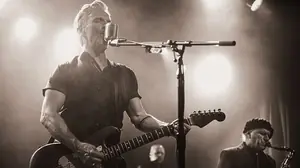


The tour bus for Tim & The Glory Boys smells like a mix of stale coffee and road-weary ambition. It is the kind of vehicle that has seen every pothole from Chilliwack to the Maritimes. While most bands are trying to figure out how to look more like Nashville royalty, this crew is leaning hard into a self-styled genre they call "canoegrass." It is a weird, wonderful lane that blends bluegrass grit with a rustic Canadian sensibility. Their latest move? Taking a massive 1980s synth-pop hit and dragging it through a muddy backroad.
"Get Outta My Dreams, Get Into My Truck" is more than a cover. It is a full-throttle reimagining of Billy Ocean’s 1988 classic that somehow feels like it was always meant to be played on a banjo. The track is audacious. And it works because the band does not treat the source material like a museum piece. They treat it like a party invite.
Tim Neufeld, the group’s frontman and a man who seems to possess a permanent twinkle of mischief in his eye, is quick to joke about how the song came to be. He does not lead with a lecture on artistic integrity. Instead, he goes for the laugh.
"We thought, what is the laziest way we can put out a song? What's the least amount of work we can do? We figured we had to change three words to make this song into a country song, and that's what we chose to do," Neufeld says with a chuckle.
But anyone who has spent five minutes listening to their tight harmonies knows that "lazy" is the last word you would use to describe them. There is a deep-seated nostalgia at play here. Neufeld is a student of the era, and his affection for the original track is genuine, even if he masks it with a bit of self-deprecating fluff.
He clarifies his stance quickly. "I'm just kidding. It sort of was that, but it was mostly just that I loved that song growing up and I'm old enough to have remembered when it came out. It's always sort of been in me as one of my favorite eighties songs," Neufeld says.
The transition from a late-night tour bus idea to a national radio single was not exactly a sprint. It was a marathon through red tape and creative deliberation. This was a concept they had been sitting on for years, waiting for the right moment to let it out of the garage.
Neufeld reflects on the timeline of the release. "We had the idea as a band maybe five or six years ago, and it was a long journey to sort of see it now being released as a single and as a song that's had a few words changed. It's been a wonderful journey that we didn't ever think we'd get to the end of. But here we are," he says.
The "countrying" of the track required more than just swapping out a few lyrics. It required a legal hunt that sounds more like a spy novel than a music industry standard. To get the green light, the band had to track down the original writers, including the legendary and notoriously private producer Mutt Lange. Lange is the man behind Shania Twain’s biggest hits and Def Leppard’s wall of sound. He is not exactly a guy who answers his DMs.
Neufeld details the lengths Sony Music had to go to. "It took about six months to track them down. Our record label, Sony Music, sent some people, I think, into the bush in New Zealand or Switzerland or something like that to find Mutt Lange. But eventually they did, and we got permission from the writers and here we are," he says.
Watching this band operate, you realize they are a product of the Canadian landscape they traverse. Their stories are not about flashy parties in Toronto or Vancouver. They are about the dirt, the detours, and the occasional mechanical failure in the middle of nowhere.
Colin Trask remembers a specific incident in Saskatchewan that tested the structural integrity of their home on wheels. It is the kind of story that reminds you that touring is mostly just driving until something breaks.
"One time we were in Saskatchewan. Tim was driving the tour bus as he does a lot of the time, and all of a sudden we're laying in our bunks and the bus just starts rumbling as if we're driving on gravel. We all came out to see what was up. Google Maps had taken him on a gravel road for about ten miles. We were hoping it wasn't going to rattle apart halfway through it, but it was one of the roughest and nastiest roads we've ever been stuck on," Trask says.
But the road offers more than just bad directions and rattled teeth. It offers a perspective on the continent that you cannot get from a plane. Brenton Thorvaldson points to their time south of the border as a highlight of their collective memory.
"When we have been touring through the US, we went through Yellowstone National Park in the bus. That was kind of an awesome way to see that part," Thorvaldson says.
We are a brotherhood, and we've been a tight-knit road family. There have been guys that have come and gone... For the last eight years, we've landed this crew. We click well, we connect well, and we love each other, so it works.
For Neufeld, the appeal of the road is simpler. It is a break from the relentless reality of being a parent. There is a strange dichotomy between being a guy who changes diapers and a guy who signs autographs.
"We get to go on, like, two-week sleepovers together. It's all amazing because we're a bunch of dads with kids and all the same domestic responsibilities that any other parent has, yet we get to go out on the weekends and be rock stars. It's a really weird life, but it's amazing," Neufeld says.
The technical side of their latest work shows how much the industry has shifted. Gone are the days of the whole band hunkering down in a single studio for a month. "Get Outta My Dreams, Get Into My Truck" was a Frankenstein’s monster of digital collaboration, stitched together across three different locations with producer Alan Salmon.
Neufeld explains the logistics of the remote session. "This is one of the first songs that was created in Nashville, where Alan lives, in Chilliwack, where I live, and in Selkirk, Manitoba, where Brenton has a studio. This was the first time we've collaboratively yet remotely made a song," he says.
Some purists might argue that something is lost when you are not in the same room. Neufeld disagrees. He argues that the modern studio environment was already heading toward isolation long before the internet made it mandatory.
"It's sort of the new way things are happening, but it is just with the Internet, it's really quite easy. It just sort of feels like you're still with the people. A lot of times, even in the biggest and best studios in the world, they have you in isolation booths away from everybody anyway, so it kind of feels similar," Neufeld says.
This brings us back to "canoegrass." It is a term that feels like a marketing gimmick until you hear them play. It is the sound of the Canadian wild, filtered through a country lens. Neufeld credits their fans for keeping the sound grounded in something real.
"I think it comes from touring Canada and allowing sort of the heartbeat of the genre to literally be inspiring us night after night as we hang out with beautiful hillbillies all over this great country," Neufeld says.
Their self-titled album with Sony Canada has already produced five top 40 hits, a feat that most bands would kill for. But when you ask them which track defines them, they do not point to the biggest radio earworm. They point to "Float." It is a song that captures their collective ethos: keep your head up and don't take the nonsense too seriously.
Colin Trask explains the connection to the track. "That's a song that really kind of speaks from the heart of who we are as dads, being silly and having fun and not taking life too seriously all the time," he says.
Neufeld’s inspiration for the song was literally as literal as it gets. He was not searching for a metaphor in a mountain range. He was just trying to stay cool on a hot day.
"I was trying to write from my life, and I was trying to think about what to write about while floating in my pool. And all of a sudden, it hit me. I can write about what I'm doing right now, my favorite pastime," Neufeld says.
There is a layer of depth to their writing that often goes unnoticed by the casual listener. They play with dual meanings, often bridging the gap between the spiritual and the secular without making it awkward.
Neufeld has a clear philosophy on the evolution of an artist’s prose. "I think there's often dual meanings and often not. We kind of go in waves, but I do love a good lyric of depth. Triple and quadruple meanings, even. I think it's an important sort of place for music to eventually get to or any artist's career arc when it comes to their prose," he says.
That honesty extends to their faith. In a world of "fake" curated lives, the band tries to stay tethered to something more substantial. They do not shy away from the difficult questions that come with a spiritual life.
"We just try to be as authentic as we can because fake faith is pretty lame, and that means being honest about our questions and doubts, too. And obviously, art has a really important role to play in peace and in helping us just have perspective on some of these issues. But that's where, if you can just be honest and write from your life and your journey, those things can naturally kind of fall into place," Neufeld says.
The result is a show that is uniquely inclusive. You can bring your kids, and you can bring your grandmother. It is a rare thing in a country music scene that often leans into "outlaw" tropes that feel more like costumes than reality.
Colin Trask sees this as the band’s core identity. "I think that's been a backbone for Tim and the Glory Boys our entire ten-plus years, always making music that even our own kids can listen to and enjoy. And the family dynamic of the show, I think, is always a special one and maybe one that doesn't always happen at country shows," he says.
Neufeld puts a finer point on it with a comparison that is hard to argue with. "We're the clean comedy. We're the Jerry Seinfeld of country music," he says.
Staying together for over a decade is the real miracle. Bands usually implode over money, egos, or bad catering. But the Glory Boys have managed to maintain a brotherhood that feels more like a family than a business arrangement.
Trask reflects on the revolving door of the road. "We are like a brotherhood, and we've been a tight-knit road family. And there have been guys that have come and gone. Some have spent a year with us, some a few years, and they move on to do other things. And it's sort of been this kind of ever-changing family. And for the last eight years, we've kind of landed this crew. I don't know, we click well, we connect well, and we love each other, so it works," he says.
For Brenton Thorvaldson, the stage is the only place that matters. The recording and the legal battles for song rights are just the price of admission for those 90 minutes under the lights.
"None of us want to do anything else besides play music. And so, when we get opportunities to play for crowds and just be our true selves and have a good time, there's no better feeling than that. We all live for those moments. If it's our favorite part about being in a band, it's playing live," Thorvaldson says.
Their music videos are often love letters to British Columbia. They use the Fraser Valley as a backdrop, not because it is cheap, but because it is home. There is a regional pride that bleeds through everything they do.
Neufeld explains why they keep the cameras rolling in their own backyard. "We live in British Columbia, in the Fraser Valley, so again, it's more just kind of being authentic to who we are and trying to portray us in our natural environment. It just happens to be incredible. We're so proud of where we live, so we get to show it off in these videos, and then everybody in Chilliwack and Agassiz and the Fraser Valley that lives sort of in our vicinity can be proud. That's a fun part of this job, too, is just the regional pride that we get to sort of be cheerleaders for," he says.
Tim & The Glory Boys are an anomaly. They are a "canoegrass" band with top 40 hits. They are dads who play rock stars on the weekends. And with "Get Outta My Dreams, Get Into My Truck," they have proven that they can take a piece of 80s cheese and turn it into a country-fried anthem that feels entirely their own. It is a testament to their ability to evolve without losing the playful spirit that started it all.