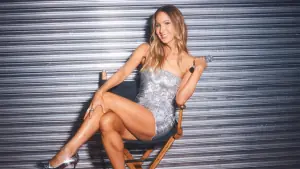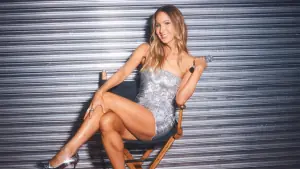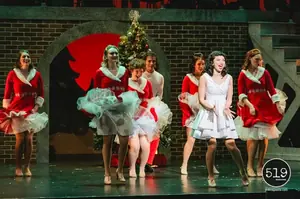

Standing in the lobby of the Chrysler Theatre, you can usually tell the vibe of a show by the footwear. But for the upcoming one-night-only engagement of *Little Black Dress* on Saturday, Feb. 8, the dress code is right there in the title. Actress, writer and producer Danielle Trzcinski is not just bringing a musical to Windsor; she is attempting to manifest a sea of cocktail attire in the stalls. It is a bold move for a touring production, but Trzcinski has the industry pedigree to pull it off.
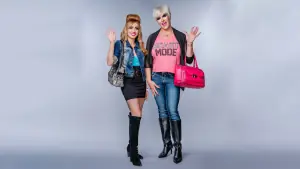
The show follows Mandy and Dee, two best friends navigating the minefield of adulthood. We are talking about the high-stakes moments where the titular garment becomes a uniform: the first awkward sexual encounter, the high-pressure job interview, the first date and the inevitable first funeral. It is marketed as a girls' night out, but don't let the pink-hued branding fool you. There is a sharp, satirical edge here that cuts deeper than your standard bachelorette party fodder.
Trzcinski is no stranger to the parody circuit. Many will recognize her from the unexpected juggernaut *Spank! The Fifty Shades Parody!*, a show that proved there is serious money in poking fun at pop culture phenomena. She even penned the standout track "Please Don't Spank My Butt" for that production. Now, the New York-based talent is bringing her latest creation to Windsor for the first time, and she is bringing a specific brand of chaotic energy with her.
When asked about the essence of the show, Trzcinski is quick to emphasize the emotional rollercoaster. "It is the most fun you'll ever have in this year," she says. "Yeah, it's a fearlessly funny girl’s night out musical about two girls, Mandy and Dee, going through life together in their little black dresses and all the funny and hilarious things that happen in their lives, as well as the show having a lot of heart as well."
The "heart" she mentions is what separates this from the low-effort jukebox musicals that often clog up regional theatre schedules. The origin story of *Little Black Dress* is rooted in the grind of the touring circuit, born from a realization that female audiences were being underserved by the very industry that claims to cater to them.
"Yeah, so basically I was on tour with a show called *Spank! The Fifty Shades Parody!* and I thought this show would be just three weeks in black box theatres," Trzcinski explains. "And it was three years in 1,000 and 2,000-seat houses. So I was on tour with Amanda Barker and we saw this audience that we didn't know existed, which were women who like to go to the theatre and party. But we realized there wasn't really a lot of shows out there for them. And a lot of the shows that are for women are written by men."
That last point is the "Information Gain" you won't find in the promotional flyers. The "chick flick" genre is historically dominated by male perspectives, often resulting in caricatures rather than characters. Trzcinski wanted to flip that script.
"So we decided we wanted to write something for the same audience, but where the female characters were smart and strong and funny and real women talking about real-life experiences, the way that things actually happened," she says. "And so I got together some writers: Natalie Tenenbaum, who was the vocal arranger for *Mean Girls* on Broadway. She wrote the music, and then Chris Bond, he's the writer of *Evil Dead The Musical*. And the four of us wrote *Little Black Dress*. And it's something that is so unique because it's a full original musical, which doesn't happen a lot with girls' night out shows. They're usually jukebox shows, and this is a full, original musical that also has improv and audience participation. And then we also do a lot of local jokes too. So every single show is different. Every night you will never see the same show."
The inclusion of Chris Bond is a fascinating pivot. Bond is known for the blood-soaked, campy brilliance of *Evil Dead*, and that sensibility likely prevents *Little Black Dress* from becoming too saccharine. But the real weight comes from the autobiographical nature of the script.
When I asked if the character of Dee was a reflection of her own life, Trzcinski didn't hesitate. "Well, 100 per cent, because my name is Danielle and the character's name is Dee," she says. "And yeah, I mean a lot of the stories and songs are based off of experiences that I've had. I mean, I even literally have the story of where I lose my virginity—I mean, like, word for word is what happened. And sometimes people get a little thrown by that song and they're like, 'Oh my God.' And I'm like, 'But that's what happens.' I mean, that's how horrible, awkward and uncomfortable it is. Obviously, I mean that's most women's first time when they lose their virginity."
This refusal to sanitize the female experience is the show's greatest asset. It grounds the comedy in a reality that feels earned rather than manufactured. "But yeah, I mean a lot of the experiences are experiences from my life. And they're right there on stage," she continues. "Well, I hear a lot of women say, 'This has so much heart. I was expecting to just laugh and have a good time. And I actually cried and felt really good and really appreciated the women in my life.' And I also laughed a lot. But a lot of women will say to me, 'I've never seen a story told so relatable and real,' and I think it's because it is a real show with real-life experiences. And I didn't sugarcoat it at all."
The audience improv is everyone's favourite part, including the cast because it makes it different for us every night. We have no idea what people are going to say. And it always ends up being more interesting than even things that I could write. ... One time we pulled a woman on stage and she got a little too excited about the stripper. And it was wild. ... Now we have safety procedures. But for the majority, the audience participation is always our favourite. Always the most fun, always a blast.
Despite the "girl's night" branding, the production has found a surprising demographic: the reluctant husband. It turns out that men, when dragged to the theatre, actually enjoy being in on the joke.
"Yeah, no, men love the show," Trzcinski notes. "I mean, we've had so many men come up to us and say, 'I wish that I had known that, I wouldn't have been so resistant. But I thought it was just as funny as my wife said.' And we got an amazing email the other day from this guy who said, 'I just wanted to say thank you for writing this because my wife and I have been stuck in this routine of just working and taking care of the kids. And I tried to find something fun for us to do and I just saw this on a whim, bought the tickets, and it was the most fun we've had out in a very, very long time. So thank you.' And I just was like, yeah, I mean it's been incredible the response that people who have seen the show have had. They love the show. I feel very lucky as a writer."
Of course, no "girls' night" musical would be complete without a bit of eye candy, but even here, Trzcinski subverts expectations. The male lead, Clint, is more than just a torso; he is a comedic workhorse.
"It is fun," she says of the male stripper scene. "I mean, you know what's so funny is that originally when we wrote the show, I was coming off of *Spank!*. So I mean, that's a *Fifty Shades of Grey* parody. So I knew that women loved this sexy male character, right? So I was like, we definitely have to have this guy in it. And then when we wrote the show, we really thought that was going to be the main focal point of women being like, 'Oh, it was so hot, it was so funny.' And women were like... I mean, Clint, he's our male character. He plays over 12 different roles. And so at the end, people were more focused on like, 'Holy crap, he's so talented. He played all these characters and I thought there were more men in the show.'"
The technical demand on a single actor playing a dozen roles is immense. It adds a layer of theatricality that elevates the production above mere titillation. "He played so many different people," Trzcinski says. "But at the end of the day, I will say, I mean, yeah, it's really fun having him in the show. He's so talented and such a good person to work with on and off the stage. So it's funny because I don't even think of him as a stripper, but women love him. I mean, he's such a good guy, a great performer and actor. But yeah, I mean women love it and honestly, that's one of the parts of the show where we bring an audience member on stage when the stripper comes out. So that's always really fun to see how these women react when we bring them on stage and he comes out as a cop."
However, involving the audience is always a gamble. Live theatre is unpredictable, and when you mix a "girls' night" atmosphere with alcohol and a man in a police uniform, things can get messy.
"Yes," Trzcinski admits when asked if the improv ever gets out of control. "There was one woman, I think she was in LA. I mean, the audience improv is everyone's favourite part, including the cast, because it makes it different for us every night. We have no idea what people are going to say. And it always ends up being more interesting than even things that I could write. But one time, because it is a girls' night out show, a lot of times women like to drink a bit before the show and during the show. And one time we pulled a woman on stage and she got a little too excited about the stripper. And it was wild. I mean, yeah, she just had been drinking way too much. I don't know if she regrets this—do you regret it? Because she was on stage in front of 300 people."
The incident led to a shift in how the production handles these interactions. "Yeah, because of that, the stripper—he has to keep kind of a distance from the audience member because of that night," she explains. "He no longer even kind of goes even close to these women. It was wild, but it was fun at the time. But that one was too wild. She was too wild, too drunk and we couldn't even stay in focus. We were like, 'Focus, lady!' She was chasing him. Anyway, now we have safety procedures. But for the majority—and we've done, I think we're on our 25th city—I think the audience participation is always our favourite. Always the most fun, always a blast."
Trzcinski’s songwriting history is equally colourful. Her work on *Spank!* remains a point of pride, specifically the aforementioned "Please Don't Spank My Butt," a song that has taken on a life of its own.
"I do like writing songs like that," she says. "Harmony with heart is typically what I write. And I also kind of like to be a little bit edgy. But 'Please Don't Spank My Butt'—did you read *Fifty Shades of Grey*? Did you read that script? Okay. So basically that song came about because I was in *Spank!*, the *Fifty Shades of Grey* parody, and at the time, they were using pre-existing songs and just writing new lyrics for them. And there was a song in the show and someone found out and they were like, 'You can no longer use that song.' And the producers were like, 'What are we going to do? What are we going to do?' And then I called my friend Natalie, the composer now of *Little Black Dress*, but I called her and I'm like, 'Hey, if I send you lyrics, can you give me music? And I need it like tonight.'"
The result was a viral hit in the making. "She was like, 'Yeah.' And then I sent her the lyrics and then she sent me back the music and then I recorded it and I sent it to the producers and it became the song in the show that I played," Trzcinski recalls. "But I knew because I had the freedom to write whatever I wanted in terms of not having to fit it into a pre-existing song that it just so happened to be my song, Anastasia's big song of the night. And I don't know if you remember Christian Grey, her first stopping point was when he spanked her too hard. I like you, but like, don't spank me. So that was the name of the song. And that was her 'come to Jesus' moment where she was like, 'I really like him, but please just don't spank my butt.' And then she realizes he just can't. But it's so funny because that song, the show got licensed internationally and someone sent me the song of someone singing it in Polish. So you never know. I mean, if someone had asked me, 'Would you think this would be part of your life?' No, absolutely not. But here I am."
The music in *Little Black Dress* is equally eclectic, ranging from Broadway-style exposition to raucous party anthems. With 18 original songs, the show is a massive undertaking for a small cast.
"Yeah, I mean the songs are amazing. Natalie Tenenbaum is a genius," Trzcinski says. "They are catchy and uplifting and fun and contemporary. One is like the history of how the little black dress came about. So it's kind of a nice—I don't want to say learning song, but that was probably our most... I don't want to say 'pain' because I also don't want to scare people. But our most musical theatre song, I'll say. And then we have everything from—well, I have to be honest with you, this show, people sometimes think it's a little too edgy, so I don't know. I don't want to scare people away. But Detroit was crazy when they saw the show. They're a wild audience, so they liked the dirtier stuff."
She breaks down some of the specific numbers that have become crowd favourites. "So some of the songs are 'So Drunk,' which is the bachelorette party and they're just getting so drunk," she says. "'Power of the Dress' talks about how powerful and confident and sexy it makes you feel. And at that point of the show, she's not wearing the dress and all these bad things keep happening to her and she's not able to stand up for herself. And then she puts the dress on and she's just like... it's this incredibly powerful woman who just tells it like it is. It gives you the confidence to be her truest self."
The show also tackles the evolution of long-term relationships and the harsh reality of motherhood. "'Love, Love, Love' is the song where it talks about kind of the history of when people get together," Trzcinski explains. "So it's like, you first get married and you're making love all the time and then two years in, like, you're still pretty much making love and then by like a couple of years... wait, it's first honeymoon's love of love and you're first married the first year of your life, like a lot of love and passion, and then two years down the line you're like working on the house and then you're like just trying to find time maybe on the weekends. Everyone loves... and then they realize after that they're like, 'I'd rather have eight hours of sleep.' They're like, 'That sounds to me like this is as good as an orgasm.' So everyone loses their mind on that one. They love that one."
"And then 'Having a Baby is Easy' talks about the difference between TV birth versus real birth," she continues. "So how on TV they make it seem like it's so easy and quick and then real life about how horrible and painful and long it is. So those are a few of the highlights. I'm trying to think what else is there. 'Tequila to My Lime' is like that's what my best friend Mandy is to me. She's the tequila to my lime. She's my Amazon Prime. Yeah, there's been a few of the highlights that... let me see. There's 18 songs in the show. But the songs are amazing. I mean they're really, really fun. And I wrote every single one. Natalie and I wrote everyone together, but I have to give her credit, the music is insane. She works on Broadway, so yeah."
The Windsor stop is a significant one for Trzcinski, who has deep roots in the Canadian theatre scene despite her New York base. While she hasn't performed in Windsor specifically, she feels a kinship with the area.
"I don't think I've been to Windsor. We went to Detroit, which is the closest we've been," she says. "I haven't been to Windsor, but I have been to Canada and I mean, half of our writing team is Canadian. So we workshopped the show in Canada. We opened in Toronto at the Mirvish theatre. So I mean, *Spank!* was written by Canadians and was based out of Canada. And then my very first commercial, which was a lube commercial, was Canadian. So I love Canada. I've had more opportunities in Canada, I think, than America. I haven't been specifically to Windsor, but I'm so excited to go to Windsor. And honestly, so many women in Detroit loved the show that they're coming to Windsor because they loved it so much and Windsor is so close. So I'm pretty excited to play Windsor."
Watching the show from the third row of the Chrysler Theatre, it is clear that *Little Black Dress* is an attempt to bridge the gap between high-energy comedy and genuine theatrical substance. Whether the Windsor audience shows up in their best cocktail attire remains to be seen, but Trzcinski has provided plenty of reasons to get dressed up.
*Little Black Dress* performs at the Chrysler Theatre on Saturday, Feb. 8 at 8 p.m. Tickets start at $45.
Get Tickets