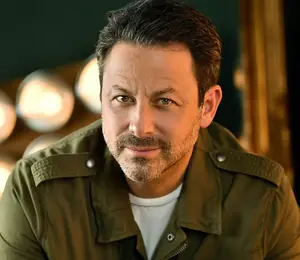

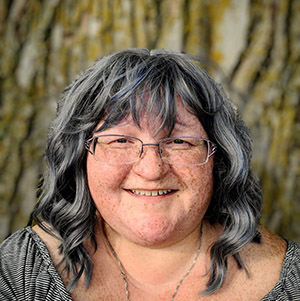
Looking at Rick Cosnett through a grainy Zoom lens, you do not see the polished, square-jawed Detective Eddie Thawne that the CW marketing machine spent years perfecting. Instead, you see a man who has finally stopped holding his breath. The Hollywood stunner, known for his pivotal run on *The Flash*, famously dismantled his own "mystery" in Feb. 2020 with an Instagram post that served as both a coming-out party and a career pivot.
But authenticity in this industry is rarely a straight line. It is a messy, jagged transition from being a "regular" in the Vancouver-filmed superhero ecosystem to starring in *Tu me manques*, a searing Bolivian drama that deconstructs the very shame Cosnett spent years navigating. The film, which served as Bolivia’s entry for the Best International Feature Film at the 92nd Academy Awards, is a far cry from Central City.
The narrative is heavy, centering on a father who travels from Bolivia to New York City to confront his deceased son’s boyfriend. It is a story about the wreckage left behind when sexuality is treated as a secret rather than a truth. Cosnett leans into the camera, his natural accent—a melodic blend of his Zimbabwean roots and Australian upbringing—finally taking centre stage.
"“Tu me manques” is really the most beautiful and tragic true story," Cosnett says, his voice carrying the weight of the film’s history. "The director wrote and produced the film as well. It was originally a play in Bolivia that actually became a movement for people coming out. It’s about a son, who is Bolivian and he’s gay. He and his boyfriend are in New York, but the son ends up moving back to Bolivia. He kills himself, and his father from Bolivia then reconnects with his Bolivian boyfriend in New York."
And that is where the tragedy curdles into a lesson. The film functions as a mirror for the audience, particularly for those who view their children’s identities through a lens of fear or religious dogma. Cosnett’s analysis of the script is sharp, identifying the systemic failure of parents who choose silence over acceptance.
"It’s this journey between a father going back through his son’s life and what that entails, because he was so full of fear that he really shunned it," he explains. "So in a way, for me anyway, the film is really a bit of a warning to what happens when you don’t embrace your children for exactly who they are, no matter what they are. You’re going to be stopping that channel and that opportunity for really deep love and something that ultimately underneath it all. Human beings really crave to have their children thrive and blossom. That’s the tragedy of it, but it’s also a beautiful love story, as it cuts back and forth in time. I played an artist who is living with HIV now, which comes with all its different complexities and shows how once you accept yourself, then other people actually will follow suit."
There is a definitive, authoritative weight to the way Cosnett discusses the dissipation of shame. It is not just actor-speak; it is the perspective of someone who has lived the "air of mystery" that Hollywood publicists often mandate for their leading men. The industry has a long history of homogenizing its stars, stripping away their natural cadences and personal truths to fit a marketable, heteronormative mould.
"If you can come to terms with your own shame and really dissipate that, and really learn how to love yourself, then you can open the channel to people like your parents, if they haven’t come around," he says. "It just really opens up those channels, so it has a beautiful message. It really has a profound effect and it had a profound effect on me when I ended up actually seeing the film after the fact."
But what drew him to this specific project? It was the writing, which he describes as "fantastic," and the opportunity to drop the American mask he had worn for years. For an actor who has spent a decade perfecting the mid-Atlantic "everyman" voice, the chance to use his natural accent was a revelation.
"The script. I thought it was fantastic writing. I found it really interesting that it had been a play and it had such a big impact," Cosnett says. "Now that we’re making the film version of it, and when I auditioned for it, it was like a five-page monologue audition. It really resonated with me and I used my natural accent, which I had never done before, so I actually ended up with my natural accent in the film."
The director, Rodrigo Bellott, provided Cosnett with a "beautiful blueprint" for the character, allowing him to build a performance that felt like more than just a supporting turn. In the edit, scenes are always sacrificed to the gods of pacing, but the core of Cosnett’s work remained.
"After that it was really amazing because the director was able to give me, as an actor, so many different tools in terms of exactly who I was playing in his life," he notes. "I had a beautiful blueprint for that—every bit counts in terms of creating someone in terms of the creativity and where you can go in your preparation and to create what you see, which will hopefully be the tip of the iceberg. There was even a lot more scenes that were deleted which always end up happening too. I felt really lucky to be able to be a part of the film. The lead actors were just so strong. I’m really proud to be a smaller part, in the larger picture of this."
The conversation shifts to the intersection of his professional roles and his personal evolution. Cosnett has played gay characters before, but doing so while maintaining a public "mystery" created a dangerous internal friction. In Australia, he was out at 19, but the Hollywood machine is a different beast entirely.
"I think so. I played quite a few gay roles in my career, but in Australia I didn’t have a problem with coming out, so to speak," Cosnett admits. "I came out when I was 19 in my personal life, but I didn’t think I was famous enough for anyone to care. When I came over here we didn’t say anything about it because we wanted me to have that air of mystery, but there’s a certain danger in that too. Now things are obviously different as the industry changes, but it’s still the same as that. You have certain people advising you, and in their defence they really want the best for you. It was probably the best for me at the time because I did get to where I needed to be. People do have certain prejudices, so it is scary to open up, but now there’s obviously things in place because people are realizing how great it is and how sexuality is obviously something that we all have on the same scale. There doesn’t have to be a gay or straight or this or that, but we’re obviously not there yet. It’s left to sort the label in order to normalize them."
The timing of his public coming out was almost cinematic in its synchronicity. While screening *Tu me manques* for Academy members, Cosnett found the courage to align his public persona with his private reality. It was a collision of art and life that felt inevitable.
"As the film was coming out last year, I was first doing screenings for the Academy members of the Oscars," he says. "There was a Q&A afterwards that I was in, and at the same time, I just came out on my Instagram, which was a weird coincidence. I was going through this life change as well and really searching for truth in my work. Once I sat through the film during the screening, I just felt so much courage from the film to get up afterwards and just lay it out flat and say, well, actually I’m gay. And so I’m saying it, and this is what people said to me coming into the industry. There’s still a stigma around it and just dissipating all of that with truth, which we’ve seen a lot of those societal shifts right now, and I’m happy to be here for it."
Bolivia’s decision to submit the film to the Oscars is a massive cultural statement, one that Cosnett does not take lightly. In a country where LGBTQ+ rights are still a battlefield, the film acts as a "domino effect" for truth.
“Tu me manques” is really the most beautiful and tragic true story. ... So in a way, for me anyway, the film is really a bit of a warning to what happens when you don’t embrace your children for exactly who they are, no matter what they are.
"Yeah, absolutely. I can’t speak to the whole of that, but it is a huge deal considering that is still not a cultural norm in Bolivia being gay or in so many countries throughout the world, and so many different cultures throughout the world," he says. "It’s a very poignant film for right now, and when someone has the courage to speak their truth, it can have a domino effect in quite a beautiful way."
But what about the rest of us? Cosnett’s critique of society’s "fragility" regarding queer identity is biting. He points to his upbringing in Zimbabwe, where the mere mention of the LGBTQ+ community is often met with irrational fear.
"I think just not being scared of it. I don’t think there’s a threat," he says firmly. "There’s a certain fragility that suddenly everything’s going crazy. I just heard certain things among friends from Zimbabwe saying how powerful the LGBTQ+ community is. For example, because you’re not allowed to say anything, it’s all like, don’t worry. We’re not going to take over the world and say, you can’t be straight. That’s not going to happen."
He continues, "I think there is so much opportunity for growth and love. If children start to feel in those formative years that being gay is a negative thing, suddenly all these weird defence mechanisms kick in. And it just messes you up from enjoying the fullness and happiness of your life and blossoming throughout your life. So I think the more people can just understand that it might be just a small little shift and maybe you’re not allowed to say your hurtful jokes in the same way. Well that small sacrifice for you will have a huge impact on someone else."
The film itself is a Spanish-language production, though Cosnett’s role was kept in English to represent a specific perspective. Despite being surrounded by Spanish legends like Rossy de Palma and Oscar Martinez, Cosnett admits his linguistic skills are still a work in progress.
"No, I unfortunately don’t speak as much Spanish as I would like," he says. "Growing up in Zimbabwe, we weren’t really exposed to Spanish. We had 22 different other languages, which is a pity, because obviously here in the US it’s something so close to us. My parts were all in English, and so I think the director really wanted my character to represent this white, gay, male that he represented in a different way throughout the films so that people can see themselves, I think that was probably his intention. It was incredible for me to be able to be immersed in it, of course, with all these Spanish legends, like Rossy de Palma and Bolivian legends as well, and Oscar Martinez, it was a special experience because obviously Spanish was all around me the whole time."
And while he aims to pick up the language—noting it is "first on my list"—much of his career has been defined by a different linguistic struggle: the American accent. The technical demand of erasing his natural voice for *The Flash* was a gruelling process that involved months of immersion and repetitive drills.
"Yes, I really did. It took a long time," he says of the accent work. "I’ve been doing it obviously since drama school. They try and teach you and for some people, obviously it’s easier than others. For me, it took a long time and I had an acting teacher in LA who told me I just have to be American for six months. So I was just American. Sometimes now I’ll switch back into it. I have to do it really badly for half an hour and then I’ll be talking like that the day before, or the morning of."
He recalls his time in Santa Barbara as the breaking point of his training. "On *The Flash* set, I would just be in hair and makeup and no one really notices because they just feel like you don’t have an accent anymore. I did a play in Santa Barbara which was the straw that broke the camel’s back, because I had a CD of American accent types repeating phrases, like “Jan prefers, yam jam” on my drive all the way up to Santa Barbara. It was a three-hour car trip and I just did that accent every day for six weeks."
But do not ask him to do it as a "party trick." For Cosnett, the accent is a tool for authenticity, not a gimmick. He looks to actors like Rosamund Pike as the gold standard for dialect freedom.
"I think it’s harder when someone says do it—I can’t do it as a party trick," he explains. "I can just do it or not do it. I aim to be more at Rosamund Pike’s level where she really worked on it and now she has freedom. That’s something I still aspire to do, to have that level of authenticity, to feel that freedom in the American accent. That’s hopefully something I’ll get soon. I have it, but there’s still an extra layer for me."
The conversation naturally drifts toward the DC Universe, a juggernaut that transformed Cosnett from a working actor into a global commodity. The intensity of the fandom is something he still views with a mix of awe and gratitude.
"It’s incredible; it’s crazy and insane and I feel very privileged and honoured to be just this small part of it because people really care about it," he says. "They are obsessed with it and they embrace you and love you and have all sorts of ideas for who you should be and who you should play. There are all sorts of theories about where your character should go; they just love all of it. I have been able to go to Comic Cons all over the world and meet fans from all over the world from Lithuania, Paris, Poland, Australia, England and Wales and Brazil. It’s really quite something. It’s amazing to be part of it. I feel very honoured and I would love to continue to be."
And then there are the fans. Cosnett recalls a moment in Rio de Janeiro that shifted his perspective on the impact of his work. It wasn't just about the lines on a page; it was about the emotional connection people formed with his characters.
"Yeah, the first Comic Con I did was actually in Rio de Janeiro and I had been on *The Vampire Diaries*," he recalls. "I wasn’t on *The Flash* yet, and I remember being in a room and people were late signing autographs, and this girl walked in and just looked at me and she burst into tears. I couldn’t quite understand it because I’ve been acting for a long time. I didn’t know performances had such an impact, but I realized that I was part of a collaboration that was larger than me and I’m very lucky to be a part of this story that other people had put in a lot of effort to set up."
He laughs as he mentions the more permanent displays of affection. "I noticed that one of the girls who I put my initials on her hand in pen, got them tattooed and I didn’t know how to feel about it at the time. Back then I was not going to encourage everyone get tattoos of me, and now it’s like, everyone should get a tattoo of my face, I think it’s beautiful. It’s a win-win situation. If that makes you feel good, then I’m all for it."
Filming *The Flash* in Vancouver provided Cosnett with a quintessential Canadian experience—mostly involving extreme cold and the legendary hospitality of the local crew. He speaks fondly of the early days, particularly the pilot episode and the friendships formed in the back of police cars.
"It was amazing. Canadians are obviously known for being very nice and that’s exactly what it was from the very first episode," Cosnett says. "I remember being out there with the wind wizard pilots at the barn with Jesse, it was very, very early, early morning where he basically escapes in the plane. I remember that first in the pilot and I just remember feeling so ready to do my work because there were so many people—and now I was a regular for the first time, which was so exciting because I was so much part of the show. I had warmers in my shoes. I had warmers on my body. I was in my detective creepy suit. Then someone gave me a fluffy jacket to put on top of it."
The camaraderie on set was a lifeline. "We worked all into the night and I could’ve done days on end without sleeping. I loved it so much. One of the first times with Jesse and I were sitting in the police car and he just started to sing. I thought to myself, we might even be friends one day, which now we’re like best friends. It was a very, very cool and fun experience, and not only that, I became best friends as well with the costumer who is Canadian. Both of the costumers actually are really good friends. I’ve still got so many close friends in Vancouver, all Canadian and all, just so creative, such beautiful, wonderful souls. I really missed that time. We were very, very lucky and then to be able to film a short film as well, right after season one with all these wonderful people as well. 60% of the Flash crew was experienced. I think a lot of us will just cherish it. It was such a beautiful experience."
In the early seasons of *The Flash*, Eddie Thawne served as the "foil" to Grant Gustin’s Barry Allen. Cosnett played the character with a deliberate lack of insecurity, a choice that made Eddie’s eventual sacrifice all the more poignant.
"I really love being the foil to Barry Allen," he says. "Barry has so many issues with his insecurity and his unrequited love for Iris. I got to play someone who had all of that and had a great time at high school. On top of all of that, he was a nice person who you really want to be around, who was fun, who was popular, who was sporty, who didn’t really have many insecurities. That is not really me at all, but it’s what I always wanted to be. And there’s nothing more fun than knowing that you’re just this wonderful cog in this story that you absolutely adore, and you’re getting to paint out all these beautiful sets in these beautiful costumes. You get to play with those people and make these dynamics come alive with the love triangle with me and Joe and me, dating his daughter."
But is Eddie Thawne truly gone? In the DC Universe, death is often just a temporary inconvenience. Cosnett is more than open to a return, perhaps with a darker twist.
"I do 100%. I hope someone else does," he laughs. "I have lots of different ways I can come back for sure. I think it’d be a lot more interesting after all this time to make me Barry’s, really diabolical, arch enemy of the whole thing. There are so many different options or just different versions of Eddie in different timelines."
Comparing the massive TV infrastructure of *The Flash* to the more intimate, artistic set of *Tu me manques*, Cosnett finds value in both. One offers the thrill of a well-oiled machine, while the other allows for more "precious" moments of discovery.
"On any film set, everyone’s always trying to hurry up, because there’s a lot of people to wrangle, but I think the difference is that there’s more camera, more activity and more rehearsals," he notes. "We’re going into this and stand here and do this and stand there. For example, you do have a little more artistic license in terms of let’s figure out what this moment is. We’re all in this sort of special space. We’re telling this story once, it’s only going to be a couple of hours, so it’s a little more precious, it’s a little bit more well thought out, I would say especially by the time you get to whatever episode. I don’t know which one’s better, but I love them both."
Ultimately, Cosnett hopes *Tu me manques* serves as a catalyst for difficult conversations. His message to parents and children alike is one of radical accountability and unconditional love.
"I hope that they will understand the power of loving unconditionally and especially in terms of your children for parents and knowing that if you are a child of someone who has a prejudice against you for being gay. Knowing that you can also change that relationship, by first of all, getting rid of the shame that has been passed down, but also that it is now your responsibility to get rid of that prejudice and love yourself fully," he says. "That will invite love in from other places. It could also be from your parents to have those hard conversations, to be able to reconnect before it’s too late. Also for children of people who are having children are growing up too, knowing that you need to embrace all of that. There’s no way around that. If you don’t embrace everything that they are, then unfortunately you’re going to cut off that channel for unconditional love, and they’re not going to blossom in the way that you actually truly want them to."
As for what is next in 2021, Cosnett is staying busy. He recently wrapped *Go To The Moon*, a film about Margaret Hamilton, the software engineer who helped put NASA on the lunar surface. And then there is his more experimental side: a comedic Instagram show called *The Vaucluse Daily*.
"I just did a film called “Go To The Moon” about Margaret Hamilton, who was one of the first female software engineers," he says. "She coined the phrase “Software Engineer” and took parts of the NASA missions to the moon. The story has a beautiful script and I’m really excited about that. I’ve just filmed that. I’m also developing a TV show at the moment. We’re doing the show on Instagram, which is super fun. It’s called The Vaucluse Daily and my friend Adam plays Sue and I play Jill. We’ve been playing these characters for about 15 years now and the world is finally getting to see them and it’s really exciting. Our main audience is in Sydney and it’s caught fire over there, which is exciting. So I want to spread it even further."
And with that, the Zoom call ends. Cosnett is no longer just a "regular" on a call sheet; he is an artist who has traded the safety of a secret for the messy, beautiful reality of the truth. It is a trade he seems more than happy to make.