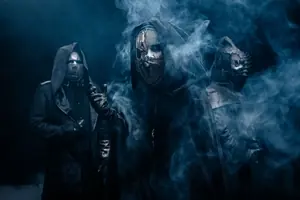


Sitting across from Jay Francis, the lead singer of The Suicide Disease, is an exercise in sensory overload. The mask he wears isn't some cheap Halloween gimmick or a lazy slipknot-derivative; it is a jagged, unsettling piece of theatre that forces you to look past the person and into the persona. We are in a cramped backstage area, the kind of room that smells of stale beer and ambition, and the glare from that mask is relentless. It is the first thing you notice and the last thing you can forget.
But the man behind the hardware is surprisingly grounded. There is no rock star posturing here. He leans in, the medical tape on the mask catching the dim light, and acknowledges the rarity of the moment. Jay says, “This is the first interview we've ever done actually face to face with somebody, so this is really cool to do this with you.” It is a disarming start for a band that thrives on anonymity.
The Suicide Disease is not interested in the typical industry treadmill. They are carving out a space that feels more like a survival kit than a discography. This project acts as an anthem of resilience and a shout into the void. It is stark proof of what music achieves when the pain is deep but the will to communicate that agony is even stronger.
Jay’s history is written in the geography of the Northeast. He carries the weight of his origins like a heavy coat. He explains the transition that shaped his psyche. Jay says, “Growing up outside of Philly, then moving to Mastic, Long Island—it wasn't just a shift in location. It was a collision of emotions and musical inclinations.”
Mastic is not the Hamptons. It is a place of grit and quiet desperation on the south shore of Long Island. That specific brand of suburban malaise is baked into the band's DNA. You can hear the damp, salt-air depression in their melodies. It is a beacon of solace for anyone who has felt the crushing weight of a small town that feels too small for their grief.
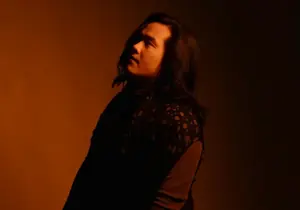
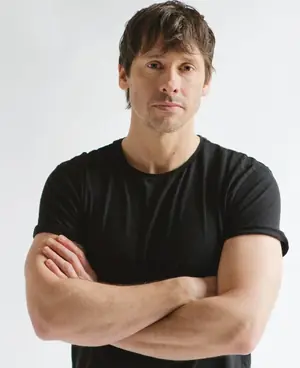
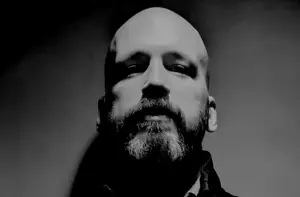
The band recently dropped "War" under the Zodhiac Records banner. This isn't just another radio-friendly rock track meant to fill a three-minute slot. It was built in the trenches with producers KJ Strock and Ricky Armellino. Strock has spent time in the weeds with Machine Gun Kelly and Crown The Empire, while Armellino brings the theatrical aggression of Ice Nine Kills.
The collaboration is a smart move. Strock and Armellino have a knack for polished chaos, and they’ve managed to capture the duality of Jay’s mental state. "War" deals with the haunting battle between life and death. It looks at the temptation of suicide that follows those left in the wake of a tragedy. It is heavy, both sonically and emotionally.
The song is a direct reflection of Jay’s internal state following the loss of his sibling. It is a raw look at the domino effect of suicide. Jay says, “When we kind of committed to this new direction, I was really in just a pretty depressed state. It really is kind of like a daily war in your own mind.”
And that is the crux of the band's identity. They are documenting the internal fight to keep breathing when the oxygen feels thin. The track captures the pull to join those who have passed versus the obligation to stay and protect their memory. It is a brutal, honest assessment of grief that most bands are too afraid to touch.
Nothing really fills the hole when someone's gone. But knowing that you're not alone has been the thing that sustains me.
The timing of their emergence is almost too perfect. We are living in a post-pandemic world where isolation is the new baseline. The collective fear and loss of the last few years have left people starving for music that does not lie to them. Jay understands this better than most. Jay shares, “Nothing really fills the hole when someone's gone. But knowing that you're not alone has kind of been the thing that sustains me.”
The sound itself is a strange, beautiful hybrid. It pulls from the aggressive percussion of the hardcore scene but drapes it in the neon-lit sadness of the 1980s. Jay gives credit to his older brother for this education. He was raised on a diet of basement shows and melancholic synths. Jay says, “We wanted to blend this 80s melancholy with a heavier instrumentation, and I think we found that sweet spot.”
Technically, the music works because it does not overproduce the emotion. The riffs are melancholic, but the rhythm section provides a backbone that keeps the song from collapsing under its own weight. It is a delicate balance. Jay speaks about his producers with a level of reverence that is rare in this business. Jay shares, “They breathed life into our sound.”
The path to this point was anything but linear. It involved a series of connections that sound more like a fever dream than a business plan. Jay recounts the series of events that led them to heavy hitters like Danny Diablo and Steve Feinberg. Jay muses, “From jamming in Mastic to recording in Lancaster—it's been a surreal journey.”
There is a palpable sense of nostalgia when he talks about the early days. He remembers the struggle of being a kid in Mastic with nothing but a dream and a loud voice. But that nostalgia is tempered by a profound sadness. When the conversation turns to his late brother, the atmosphere in the room shifts. Jay whispers, “I wish he was here to see it.”
The evolution of the band's recording process is a story of liberation. They started with demos on a cassette tape, the kind of lo-fi grit that defines the Long Island underground. Jay says, “Recording our first demo in a closet in Mastic and then War in a professional studio—it was liberating.”
The mystery surrounding the band is a deliberate choice. The masks are not about hiding; they are about revealing. In a society that demands we put on a happy face, The Suicide Disease puts on a terrifying one to show the truth. Jay explains, “That's why we remain anonymous, we make it about the message.”
The band name is not a metaphor. It is a clinical reality. It comes from Trigeminal Neuralgia, a disorder so painful it is nicknamed the "suicide disease." Jay’s brother suffered from it. Jay says, “The band name actually comes from the disease itself - my older brother knew it well. And that experience really shook me.”
The masks are a physical manifestation of that specific pain. They are patched together with what looks like medical tape, a nod to the hospital rooms and the futile attempts to patch up a soul that is breaking. Jay shares, “My brother's pain was in his face, an inescapable torment. Society often masks its pain, hiding what's inside. Our masks physically illustrate this reality, making the focus on what and how we're saying, rather than who's saying it.”
This isn't just performance art. It is a call for unity. The band wants the audience to stop being spectators and start being participants in the healing. Jay says, “Wearing masks on stage isn't new, but our intention behind it is. We want our audience to feel they're not just spectating but are part of the experience. They’re not alone.”
Opening up like this is a massive risk. In the music industry, vulnerability is often commodified and sold back to the fans in a sterilized package. But Jay and his crew are doing something different. They are breaking a silence that has existed for years. Jay says, “After my brother's death, even uttering the word 'suicide' was taboo. But keeping such emotions bottled up intensifies the pain. Our music gives those grappling with loss a voice. It's about spreading the message in the right way, ensuring people know they're not alone.”
The transition from parading a boombox with a cassette tape to being a signed act is the kind of underdog story that keeps the scene alive. They were discovered by Steve Feinberg, a man who knows talent when he hears it, and they haven't looked back. They are a living example of how art can be a tool for survival.
The Suicide Disease is more than a band. It is a movement that offers a place for the broken to gather. They are unmasking the complex emotions that most people try to bury. By doing so, they ensure that no one has to fight their internal battles in total isolation.
As for what is next, the momentum is building. Jay mentions a new single titled “Flood” that is currently in the works. There are talks of a full album, a string of live shows and a music video that will likely be as unsettling as their stage presence. But the core remains the same: authenticity.
The band is dedicated to keeping their output raw and unfiltered. They aren't looking for a polished pop-metal crossover hit. They want the truth, no matter how ugly it looks. In a world of filtered photos and fake smiles, The Suicide Disease is the cold water to the face that we all need.
You can find the band on Instagram, but don't expect a look behind the curtain. The mask stays on. The message stays clear. And the war inside the mind continues, but at least now, there is a soundtrack for the fight.