
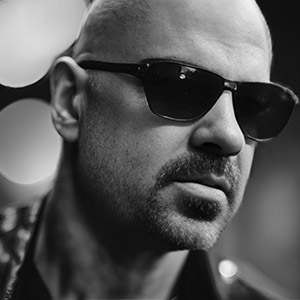
Sitting across from Rik Emmett, you don't see the spandex-clad shredder who once commanded the stage at the US Festival. You see a man who has traded the deafening roar of Marshall stacks for the quiet scratch of a pen on a spiral notebook. He’s relaxed, sharp and entirely over the artifice of the rock star machinery.
For over 30 years, Emmett has carved out a solo path that’s as eclectic as it is prolific. We’re talking about a discography that jumps from classical sketches to jazz-swing flourishes without breaking a sweat. It’s a far cry from the arena-rock anthems of Triumph, the band that made him a household name. But that’s the point. Emmett has always been a nomad in a genre that prefers its legends to stay frozen in amber.
After his final tour wrapped in 2019, the industry assumed he’d just fade into the quiet life of a suburban grandfather. But the creative engine doesn't just stall because the tour bus stops. He’s writing poetry, drafting new tunes and meticulously piecing together an autobiography. The man is busy. And now, his solo legacy is getting a digital steroid shot.
In July, Round Hill Records—the heavy hitters who own the Bush and Offspring libraries—dropped 11 of Rik’s solo albums onto digital platforms. We’re looking at a massive haul: *Ten Invitations* (1998), *Swing Shift* (1998), *Raw Quartet* (1999), *Live at Berklee* (2000), *Handiwork* (2003), *Good Faith* (2003), *Strung-Out Troubadours* (2006), *Live at Hugh’s Room* (2007), *Liberty Manifesto* (2007), *Push & Pull* (2009) and *Marco’s Secret Songbook* (2012). It’s a lot of data to digest, but it’s a necessary correction for a catalog that’s been largely invisible in the streaming era.
I sat down with Rik to talk about this retrospective surge. I mentioned that it’s a bit ironic to announce a retirement from touring only to spend the next year talking about 11 "new" digital releases.
"Yeah, it’s weird that it’s happening during this COVID lockdown time," Emmett says. "It’s all explainable that the Round Hill Records relationship with Triumph led to them saying, 'Well, how about your old catalog and stuff, you do anything with that?' I go, 'Well, not really, most of it’s kind of just lying dormant.' And they go, 'Well, how about we take it over? And have you ever really pushed it at iTunes and streaming at Pandora and all of these things?' I go, 'No, not really.' And they go, 'Well, why don’t we do that?' And I said, 'Well, hey, if you want to show that kind of support for me, I’m delighted.'"
This isn't just a cash grab. It’s about curation. For a guy who spent decades lugging gear, the digital shift represents a different kind of freedom. He doesn't have to worry about the logistics of physical distribution or the "hauling of the body" that comes with the road.
"Even though I came off the road, I felt, yeah I’m retiring from the idea of hauling my body around in airplanes and Ubers, and in and out of hotels and all of that, but I’m not retiring from being creative," he explains. "And in fact, I started writing a book of poetry after I’d written all the songs that were on the Bonfire Sessions that I’m doing off my site. Well, so that was really the first thing. I retired from the road, but I’m writing all of these tunes and I’m thinking, well, maybe I can record just voice and guitar and I’ll put those up for download off my own site. So, okay. We’ve got that project coming. And then once I kind of got through with that, I thought, gee, I should start writing some poetry. And it was very liberating. I really enjoyed the process creatively of not necessarily having to be tied into the idea of verses and choruses and matching, phrasing and meter and all of that stuff."
The poetry shift is telling. It’s the ultimate rejection of the "rock star" caricature. Most guys his age are trying to figure out how to squeeze back into their old stage clothes. Emmett is trying to figure out how to break the internal rhythm of a four-minute pop song.
"It looks like maybe I’m going to get a deal for the poetry book, because I’ve got some publishers to kind of go, no, we think your voice is authentic and it’s good," he notes. "And it’s not like you’re a lyricist that’s trying to pawn off lyrics, honestly, these are poems and they’re well done. And so that’s been a really nice vote of confidence. Here we are in these pandemic times and last weekend, the guys from the SongStudio workshop, I’d sort of backed my way out of that over the years, but they were doing it online. And so they said, 'Will you teach a couple of classes in the afternoon? And well, can we do an interview?' And I went, 'Yeah. Okay.'"
There’s a certain casualness to how he’s handling this new chapter. He’s teaching from his library, likely in comfortable clothes, far away from the glare of stage lights. It’s a domestic bliss that most musicians never actually achieve.
"That actually turned out to be a really nice experience," he says. "It was like go back into the classroom again, except that you can do it in your shorts sitting in your library. So it was kind of fun. So I think maybe I'll do some more of that. I don’t mind having that in my life. I can still spend half the day over by the pool and walking the dog and having the grandkids over. So it’s all good. It’s all feeling very natural. And I’m quite enjoying this chapter of my life."
But you can't talk to Rik Emmett without the shadow of Triumph looming over the conversation. It’s the elephant in the room, albeit a very loud, pyrotechnic elephant. Between the reissues and the Banger Films documentary, the past is constantly knocking on his door.
"Yeah and certainly the writing of a memoir or an autobiography, there’s going to be a ton of that," Emmett admits. "And there has been this Triumph documentary that Banger Films is doing. Those guys, they’re very good at what they do, and they dig deep. They send their interviewer back three or four times because as they go, they peel the layers of the onion and start to revisit the rise and the fall. And so with the fall, you go, Hey, I’m not sure I want to have to go all the way back to the why do I have all these bruises and scars, but I guess that’s maybe part and parcel of age. And as I say, this chapter of my life the idea of retrospection and Oh, we’re going into the Walk of Fame and Oh, we’re having documentaries made."
It’s an odd position to be in. He left the band in 1988. Most marriages don't last that long, yet people still want to talk about the "bruises and scars" of a breakup that happened over three decades ago. It’s the price of making music that actually mattered to people.
"It’s a natural occurrence," he says. "And as you say, the interest in the band, never really, I mean, I left the band in ‘88. That’s a long time ago, but it’s funny how one of the aspects of show business that you do get this kind of bump again as you get into a walk of fame, hall of fame era that people go well, what was it that people found so fascinating back in the late ‘70s and the early ‘80s? So, okay, I’m going to do it too. I think part of what feeds it all too is I’m not necessarily the cliche kind of rock star, caricatures thing."
The critique here is simple: Emmett was always too smart for the spandex. He was a guy who wrote magazine columns for 13 years and taught college courses. He wasn't just a "guitar hero"—he was a musician who happened to play the hero role for a while.
"I ended up lecturing and teaching classes at our college for a couple of decades," he continues. "I wrote magazine columns for 13 years. I’ve done different things. And of course I took the rockstar thing and certainly it went well. I don’t really want to do that anymore. I want to make records where I can indulge in the classical guitar things where I started out on and the jazz swing stuff that I like, even though maybe I’m not all that great at it, but I’m going to do it anyways because I like it. And there was probably more of a folk singer spirit in me than there was the class clown rockstar jumping around in the spandex pants, even though I was perfectly willing to do that. And I liked it and I could inhabit it. It was genuine. I wasn’t messing around when I was being a rockstar. I could do that, but, and in some ways that’s easier than trying to be a jazz guitar player, which is a lot harder to do."
He’s right. Playing "Lay It on the Line" for the ten-thousandth time is muscle memory. Navigating a complex jazz progression requires a different kind of mental labour. It’s an honest admission from a guy who could easily rest on his laurels.
"I was singing in church choir when I was seven years old," he recalls. "I had this kind of natural gift that led to other things. Now I’m playing guitar and I’m 10 and The Beatles are on Ed Sullivan and now I’m going to write songs because that seems to be what you do. And turns out I’m good at it."
This wasn't a choice; it was an inevitability. But as he looks back, you get the sense that the arena-rock detour was just that—a detour. A very successful, very loud detour.
"So these kinds of gifts, they lead you on to other kinds of things," he says. "And at the end of it, I think the writing became more important to me than anything else. And then you ended up in a rock band and you play in arenas and you’re doing that, but then I’m thinking, well, hang on, maybe it’s the path had been one where it led me to being more of a singer-songwriter, that might’ve been something where I would have felt more fulfilled and I would have felt more naturally organically kind of suited to that."
There’s no bitterness here, just a clear-eyed assessment of his own artistic DNA. He’s found a way to make the solo records pay for themselves and run his own digital shop. It’s a cottage industry built on authenticity. He’s even been studying the masters of the craft, specifically Bob Dylan.
If I could have picked my life at 30 or 40 or 50 and said, 'Hey, when you’re 67, these are the kinds of things that are going to be happening to you. Are you good with it?' I would have gone, 'Absolutely. That’s as good as it gets. Why wouldn’t I want to do that?' ... I really feel like the process of being creative all my life has been one of learning how to be comfortable in my own skin. I wasn’t always, but I think maybe one of the great gifts of aging wisdom is that you figure out how you do get comfortable in your own skin.
"So I, reentered into a phase of my life where I was able to indulge myself and do all of these things, and the records would pay for themselves and I could run my own little independent website and have that in my life," he explains. "And so I don’t have any regrets about any of it really when I look back. But having said all that, I have been doing a lot of reading lately too. And I’ve been reading about Bob Dylan, books like Why Bob Dylan Matters and why he wins Nobel prizes and his essential interviews and stuff. And here’s the thing about Dylan, where and it’s almost perverse that he doesn’t really care too much about audiences and marketing and stuff. He’s really just doing his thing and he’s going to keep doing his thing. And damn the torpedoes, he’s going to do his thing."
It’s a Zen approach. Dylan doesn't look back, and Emmett is trying to adopt that same forward-facing posture, even while the industry tries to pull him back into the '80s.
"And it’s that artistic thing he’s looking at on the horizon and he’s not really looking back over his shoulder very much at all," he says. "If it’s in the past, it’s in the past and he doesn’t want to be in the past. He’s very much got that Zen Buddhist thing of being in the present and moving forward, and I relate to that. I really do. I go, I may not be on a level with Bob Dylan in terms of ever getting a Nobel Prize, but..."
I joked that very few people are on Dylan’s level. He laughed, but the sentiment remains. He isn't living in the past. He’s just visiting it to collect the mail.
"No, that’s right. Exactly," he agrees. "But I do relate to the idea of you just move forward. So it’s your original question, the idea of this in retrospection and looking back, I kind of go, well, yes. I will handle it in due course. I will try to honor it and do my best by it, but I’m not going to live there. That’s not who I am. That’s never what I’ve been. I’m always, what’s next?"
The "what's next" is this Round Hill deal. Eleven albums is a massive chunk of his life. But there was a process to what made the cut and what didn't.
"Well, Round Hill, I gave them the rights to 13, there are three that I did for Duke Street when I first left Triumph that are not part of the deal," he clarifies. "And so when you deal with the retrospection and going all the way to the past, there’s still those. But of the 13 that they got, one of them was a Christmas album and they said, 'Hey, we’re thinking of putting these on on your birthday July of this year.' And I go, 'Well, I don’t think you should be putting out a Christmas record in July. That doesn’t make any sense.'"
It’s refreshing to hear an artist talk about the logistical headaches of their own catalog. Music journalism often ignores the "accounting" side of the business, but for Emmett, it’s a reality he’s tired of managing.
"And then there was a project that I’d done. And some of these things are partnered projects," he says. "Like there’s an album in the 11 called Liberty Manifesto. We called it Airtime. And it was really a project that Mike Shotton and I did together. And it’s a 50-50 thing. And I said, 'You guys are going to have to be accounting to him and getting mechanical licensing from him, etcetera, etcetera.' And there’s three albums with that I did with a guy named Dave Dunlop, where we had strung out Troubadours. And I mean, Round Hill bought my rights. They didn’t buy those guys’ rights. So they now have to account them, which is all well and good. I had gotten tired of and had sort of not been doing anything actively with those partnered projects because I didn’t want to have to be accounting quarterly and doing the administration of those kinds of things."
This is the reality of legacy. It’s not just about the songs; it’s about the paperwork. Emmett is looking at his life through the lens of a man who wants to simplify. His father is 92, and the process of handling an estate has clearly left an impression on him.
"So it’s kind of good for those guys that those things have come back to life, but there was discussion beforehand of the 11, there’s four that require accounting to third parties and the other ones, it was relatively straightforward and simple," he explains. "They’re mine and I could sell them the rights and Round Hill would own the masters and the publishing in a way they would go. And in a way, I was eager to do the deal with them because, well, we’re talking about looking backwards. I’m looking forward too in my life. My dad is still alive and around, but he’s 92 and he’s not doing well and he’s in a home. And there was a lot of the signing of power of attorney in all of his estate, dealing with these things and the will and all of those kinds of questions."
It’s a heavy realization. He doesn't want his four children to be burdened with the administrative nightmare of his publishing catalog. He’s being a father first and a musician second.
"Then you start looking at your own stuff and you go, okay, I got four kids, which one of them wants to be the administrator of my publishing? Your catalog. Who wants to be the person that’s dealing with the ownership of all of those master recordings? And I go, Oh, that’s an unfair thing to saddle my kids with. I think I should see if I can sell them off and just not have to burden them with unduly stuff," he says. "I mean, none of them are like that. That’s an unfair thing to have to put on somebody. I didn’t even like that part of the music. Anyhow, so that was part and parcel of the why did it happen and why those 11 etcetera, etcetera."
The digital release is a litmus test. Round Hill is watching the numbers. If the demand is there, we might see vinyl or high-end CDs. But for Rik, the ball is out of his court. He’s done with TuneCore and the "aggregators" that didn't actually do any work.
"Originally I made a deal for a short period of time with a company called TuneCore and they also had the publishing," he notes. "And so that was one of those kinds of digital aggregators. You just sign away and go on their site and you’d say, yeah, yeah. Do this and iTunes yes, Pandora sure, blah, blah, blah. But then over time they did what I would consider to be a very poor job of being a publisher. They were not bringing in any third-party licenses or they weren’t finding any stuff for me. They were only collecting on what happened naturally and organically based on my own activity in my own business. And I went well, that’s no good, so I don’t want to do that anymore. So I gave them notice and said, I’m backing out."
Now, he has a real partner. And while he’s willing to do the interviews and play the game, he’s also very clear about where his limits are. He isn't going back on the road. He isn't becoming a marketing machine.
"I’d like to think, Dan, that I’m a big boy and that I have the sort of cajones to be able to say, yeah, sorry, I don’t want to do that. Or I don’t want to go that far. I don’t want to try it," he says firmly. "And here I am talking to you and there are some artists, they would never do that. They just don’t want to do the marketing promotion kind of thing. And there’s others that are really good at it. They live for it. And I’m somewhere in-between. It’s still kind of novel to me again than I’m doing it so I kind of go, no. And I feel like I owe it to them. Round Hill did this lovely thing for me and so I’m going, okay, I want to return the favor. I want to be the kind of artist that they feel like, hey, this is a great guy. We love working with this guy, and he’s willing to meet us half way."
That "halfway" is a moving target. He’s 67. He’s been married for 44 years. He’s seen how the business can chew up a marriage and spit out the remains. He isn't letting that happen again.
"So half way, I would define that as it moves, it shifts," he explains. "And there will come a time I’m sure where I’m going to go on, all right, I’m sorry. That’s too much for me. I’m very eager to spend the afternoon out by the pool with my grandkids and I am at that age and stage of what matters to me. And I look back on my life, this whole thing is looking back. I mean, I can look back and say, yeah, the business got too big at some point in it threatened my marriage, just because it was eating up too much of my time and energy and I didn’t have enough time and energy for my wife and what she wanted out of her life."
It’s a rare moment of vulnerability from a guy who spent years on the cover of guitar magazines. He’s prioritized his family over the fame, and it’s a trade he’d make again in a heartbeat.
"And when you had that kind of experience, and I’ve been married 44 years and there’s nothing in my life that matters more to me than my family and my wife," he says. "And so I think I have perspective, I think I have my priorities in the right place, but life gets messy and life gets weird and things come along and you do get pushed and pulled out of shape. It does happen. I think that happens for anybody, but I do think I’ve kind of got the right healthy kind of take on it all. Time will tell."
Even the Triumph re-releases, like the *Classics* package, are something he views with a certain detachment. It’s not his brand anymore, but he’s happy to play nice for the sake of the legacy.
"Yeah. Well, I mean, first of all, you should know that Triumph is really, it’s kind of none of my business," he admits. "When I left it and eventually settled with the other guys, it became their brand and their thing. But then as years go by, decades go by and different things have started to happen. And you get to the point where it’s like, Oh, Walk of Fame and oh, Round Hill re-releasing the catalog. And then it’s kind of like, 'Hey, Rick, Would you step to the plate and be a good guy?' And I go, 'Yeah, sure.' There’s been enough time that’s gone past and enough water under the bridge that all I want is to be dealing in good faith with my former partners again, and be grown up people about it. So that’s all well and good."
However, he does have opinions on the technical side of those re-releases. He’s a purist. He remembers the analog heat of the studio, and he’s not always a fan of the modern "four-dimensional" remixes.
"But there’s also things that happened along the course of things," he notes. "Like, for example, they re-released our greatest hits record where they remixed it and they redid all the stuff that was, I think they have Rich Chicky sort of produce the stuff. And man, it had all this, you brought man remixed in four dimensions or Lord knows what it was. And I listened to it and I kind of went, well, I don’t know if that necessarily has the same artistic integrity that we had when we did those albums in the first place. And when the Classics album came out, we were more of that era and it was more about that vinyl experience anyways. And I think maybe Round Hill, and it’s not just Round Hill and Triumph, it’s the whole marketplace. There is this boutique kind of market that’s regenerated itself off vinyl and people going, want that experience again, what that audio quality, want 150 grams, blah, blah, blah."
He points to *Allied Forces* as the definitive Triumph record—the moment they built Metalworks Studio and figured out who they were. It’s a record that still holds up because it was made by an analog band in an analog world.
"And so I think Round Hill kind of said to Triumph, and this is only surmise alone. I probably don’t know for sure, but I think they probably said, you know that Classics album, if we did it as a gate for vinyl thing, it would be something that the marketplace would appreciate it because it’s the right kind of thing for that," he says. "And it’s maybe an answer to the people that went, what’s this remixed digital stuff? Come on. It was an analog band making analog music in an analog studio. Isn’t that really what recaptures spirit of that stuff better? And I mean, when interviewers ask me, what’s your favorite Triumph album, or what do you think captured the spirit of the band? There’s no doubt in my mind that Allied Forces was the record where we built the Metalworks Studio and we figured out what the band was all about, the pre-production and production and all of that kind of stuff of making good records. I think that was one of the best ones we did."
Despite the nostalgia, Emmett doesn't even own a turntable. He’s moving too fast to look back that long. He’s more interested in the gear he’s using today, like his endorsement deal with MJS Pickups and a custom guitar he’s calling the "Riknatter."
"And it doesn’t surprise me that our Classics album would have three or four cuts from it. That’s the evergreen kind of Triumph," he says. "So I think Round Hill is going about it in the right way. And I’m just happy to see that stuff as the next guy, but if you were to ask me personally, Hey Rick, did you ever turn table? I don’t really have the time for that. I move along, I move forward."
His creative spark is currently being fueled by a collaboration with a former student, Nathan Whitney, who is now playing for country star Thomas Rhett. They’re filming a video for MJS, and Emmett is feeling the pressure to keep up with the younger generation.
"Always has been, even though sometimes I let it get away from me, but absolutely. Yes. And then the next thing would be my own creative life," he says of his priorities. "The idea of just writing, every day trying to write something, try to journal, try to blog, trying to just work in my spiral notebooks, pick up my guitar and play. I’ll tell you anecdotally, I’ve got a really cool thing that’s going to happen tomorrow, where I have an endorsement deal with a company called MJS. They make pickups. And he’s a loose theory, a guitar guy, but his business is really the making of pickups. And so when I taught at Humber, I had a student named Nathan Whitney, and Nathan is a really heavily accomplished guitar player, young guy and terrific human being. And he was a student of mine. And when I did direct his studies, I sort of mentored him through his recording project in his fourth year."
Seeing Nathan on *Saturday Night Live* gave Rik a "vicarious thrill," but it also reminded him that his own chops need to stay sharp if he’s going to trade licks with the kid.
"Nathan went on to some other things. And then he eventually landed a gig as the touring guitar player in Thomas Rhett, Thomas Rhett’s band in the States," he explains. "And he’s a country guy and he’s a really good one. His dad had been in the Nashville songwriting music business, I think. And Thomas grew up in that and so he knows what he’s doing. And they were on Saturday Night Live before the COVID season happened. So the season before that. One of my students was on Saturday Night Live and I had this incredibly lovely vicarious thrill seeing Nathan on that show."
The "Riknatter" guitar—a hybrid of an old Emmett body and a Whitney neck—is the centerpiece of this new project. It’s a physical manifestation of his legacy passing to the next generation. But don't expect him to take it on tour.
"So Nathan is also an MJS’ pick pickup guy, and one thing leads to another and the guy’s designed these new pickups and put them into a Fender Telecaster where he used an old body of one of my guitars and the neck that belonged to Nathan and he built this guitar that he called the Riknatter and he said, 'Hey, will you guys do it like a video where we promote the pickups?' And then I go, 'Yeah, sure. It’ll be fun.' And so Nathan’s putting this thing together and then I realized, Oh, Jesus, I’ve bitten off more than I can chew. This guy could really play. And my chops are not in, like I’m going to have to go back to the woodshed a little bit."
He’s practicing every day now, even on family holidays. He’s not going to let a 67-year-old’s hands get bested by "piss and vinegar" without a fight.
"So I don’t mind it. It’s kind of fun that I’ve had," he says with a grin. "Like we went away to the cottage on a holiday with the family, but I had to take a guitar with me because if I don’t practice every day, I am not going to be able to cut this. And I’m not going to be able to meet Nathan at his level because he’s young and he’s full of piss and vinegar and he’s good. And I’m going well, I’m going to get my ass kicked a little but it’s going to be fun."
This is the sweet spot. He’s recording in his basement, doing what he loves, on his own terms. No tour buses, no airport security, just the music.
"So that what’s happening tomorrow in my basement," he says. "We’re shooting the video for this and I’m recording the audio. But if I could have picked my life at 30 or 40 or 50 and said, Hey, when you’re 67, these are the kinds of things that are going to be happening to you. Are you good with it? I would have gone, absolutely. That’s as good as it gets. Why wouldn’t I want to do that? Now, do I want to do it every week? No, sir. I do not. I’ll do it for the novelty of it and will check it out. And if somebody says, 'Hey, you want to take that out on the road?' I’m going to go, 'Nope, no way.'"
He’s comfortable in his own skin, arthritis and all. It’s a hard-won peace, but it’s one that suits him better than any gold record ever could.
"I love it," I told him. "You sound so much like you’re in your space. You’re in that perfect pocket."
"I think so," Emmett concludes. "I mean, do I wish I had a little less arthritis? But I think or I really feel like the process of being creative all my life has been one of learning how to be comfortable in my own skin. And I wasn’t always, but I think maybe one of the great gifts of aging wisdom is that you figure out how you do get comfortable in your own skin. And yeah, I feel pretty lucky, pretty blessed that that’s the way things have been kind of playing out lately.