
The Wolf Performance Hall in London is a sterile, high-fidelity box that offers nowhere for a performer to hide. It is the kind of room that demands total transparency from anyone brave enough to sit centre stage with nothing but a six-string and a microphone. For Rik Emmett, a man whose career has been defined by the deafening roar of arena stacks and the blinding flash of 1980s pyrotechnics, this intimate setting is a calculated pivot. It is a chance to deconstruct the myth of the guitar god and replace it with the reality of a seasoned storyteller who has survived the meat grinder of the Canadian music industry.
We caught up with Emmett to discuss his upcoming appearance on Nov. 28. He is the cornerstone of Canadian rock royalty, a guy who managed to balance the technical proficiency of a jazz fusionist with the populist appeal of a power trio. But even for a veteran of his stature, these "Evening of Stories" sessions represent a different kind of pressure. There is no wall of sound to lean on.
When asked about the blueprint for the evening, Emmett is candid about the loose, conversational nature of the production. He says, "Well I intend to leave it up to the host who is a guy named Cameron Smiley, and it’s kind of a one on one interview format. He asks questions about different things that have happened in my career and in my life and sort of sets the stage for stuff. So then later on the audience gets a chance to question and answer and I’ve got a guitar handy and if there’s a few things that lead me towards wanting to illustrate something or just play something or somebody makes a request or something that I might illustrate by playing some guitar. But yeah that’s basically the format. I’ve done this a few times before with Cameron up in Orillia and once in Brantford, so pretty comfortable pretty easy relaxed and it’s fun. The one in Orillia was kind of amazing. There was a friend of mine that had been with me in high school who sat beside me when I played violin in the orchestra and stuff, and there was a teacher that was an English teacher of mine from high school whose husband had been one of the football coaches of the football team I was on when I was only 14 years old. She brought pictures and stuff. So I mean I don’t know if anybody in London is going to pop out of the crowd and go ‘hey remember me’, but it could happen. You never know."
There is something quintessentially Canadian about that anecdote. In the United States, rock stars of Emmett's calibre are often treated like untouchable deities, shrouded in layers of management and artifice. In Ontario, they are guys who played violin in the high school orchestra and had football coaches who still remember their names. This lack of pretension is Emmett’s greatest asset as a solo performer.
But the shadow of Triumph is long and impossible to outrun. For many, Emmett will always be the soaring tenor voice behind "Magic Power" and "Hold On". It has been over 25 years since the band was truly active in its original configuration, yet the public’s appetite for the lore of the San Juan Avenue trio remains insatiable.
Addressing the repetitive nature of the nostalgia circuit, Emmett admits the constant look-back can be taxing. He says, "Good question because guess what’s happening right now. Some guys are making a documentary right now and so there’s been a guy that’s been interviewing and the production company that’s doing this for a bit. They’re called Banger Films and they’re doing this thing they’ve done with Rush, Alice Cooper and Metallica. They make these things and they put them on HBO or The Movie Network, so they did and do tons of research and they ask all these questions. So it never really ever goes away. And the answer to your question is I’m human so sometimes yes it bugs me, but most of the time I’m a fairly reasonable kind of human being so I can kind of look at it and go ‘well I can understand why people have a fascination with it’."
The fascination is easy to quantify. Triumph was a technical marvel in a genre often satisfied with three chords and a cloud of dust. Emmett’s ability to weave classical motifs into hard rock anthems gave the band a sophisticated edge that their peers lacked. And while he has spent the last three decades carving out a prolific solo career, he remains cognizant of the "rock star" caricature that follows him.
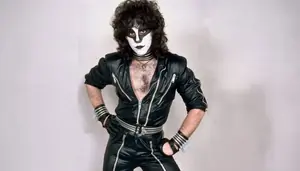
I was the rock star wearing spandex pants, jumping around and all of that stuff in the 70s and 80s. I also wrote in Guitar Magazine and then I had a career of my own where I made like 20 some odd albums after I left Triumph. I kept very active as a musician and a performer. I even taught college for over 20 years.
He continues, "It was a type of kind of commercial success on a fairly high level. You kind of become famous on more than one level. I was the rock star wearing spandex pants, jumping around and all of that stuff in the 70s and 80s. I also wrote in Guitar Magazine and then I had a career of my own where I made like 20 some odd albums after I left Triumph. I kept very active as a musician and a performer. I even taught college for over 20 years."
That last point is the most telling. Emmett isn’t just a survivor; he’s an educator. There is a technical rigour to his playing that suggests a man who never stopped practicing, even when the arenas shrunk to theatres. However, the question of a full-scale Triumph reunion is the elephant in the room that refuses to leave.
Emmett is realistic about the prospects of a studio return or a massive tour. He says, "No I doubt it. I mean it's kind of ridiculous to say no, but I said that to myself when I left the band in 1988 and you know for a couple of decades saying no never seemed enough. And then what happened in 2006/2007. Oh jeez, we got together."
The catalyst for that thaw in relations wasn't a massive payday or a label executive's whim. It was a deeply personal tragedy that forced a perspective shift. It serves as a reminder that behind the "Lay It On The Line" bravado, these are real people with real family ties.
Emmett recounts the emotional turning point with startling clarity: "There was a thing that happened where my younger brother got cancer and was really sick and was on his way out of this life. And he’s going through that process of sort of trying to put his affairs in order and make sure that he’s leaving nothing undone or unsaid and he sits me down and says ‘you know you can’t keep carrying around that baggage about Triumph. You got to fix that.’ And I said, ‘How can you be such an asshole that you’re going to make this be about me. Don’t do this to me.’ And he said ‘if you want to make me happy I want you to see if you can fix that.’ Oh my God."
And so, the ice broke. The heavy lifting of reconciliation began not in a boardroom, but in a hospital room. It led to the band’s induction into the Canadian Music Hall of Fame and a few select festival dates that many thought would never happen.
He explains the sequence of events: "I started talking through intermediaries and there was a thing about putting us in the Canadian Music Hall of Fame, so one thing led to another and we started talking about if we were going to play a gig. So we went to Sweden and played a show and then went down to Oklahoma and played a show. So all of the things that I had said no that’s never going to happen; they happened. You better never say never because you never know what’s in store or what will happen when you turn a corner. So I try not to do too much predicting, but having said all that, Gil (Moore) is not really keen on playing drums anymore. You know he really isn’t. And why would I want to force him to do something he’s not keen on. You know it was a very tough gig for him - he sang half the songs and played all the drums. Playing drums in a hard rock band is like running a marathon. You know the amount of work that you have to do is it’s ridiculous. So I don’t blame him for saying no I don’t want to do that again."
There is a technical reality here that fans often ignore. Playing drums for Triumph wasn't just about keeping time; it was an athletic feat of endurance combined with vocal duties. At a certain age, the body simply refuses to cooperate with the demands of the 1982 version of yourself. It is a valid artistic critique of the "reunion" culture—sometimes, the fire is still there, but the furnace is cold.
Watching Emmett in this acoustic setting provides a different kind of electricity. It is the sound of a man who has made peace with his past while refusing to be buried by it. The Wolf Performance Hall event on Nov. 28 is less about nostalgia and more about the craft of the song. For $30, it is a steal to hear 50 years of Canadian music history filtered through the fingers of one of the country's most articulate players.
But don't expect the spandex. And don't expect a miracle regarding a new Triumph record. What you can expect is a masterclass in how to age gracefully in a business that usually discards its legends before they hit 40. Emmett is still here, still playing, and still telling the truth—even when it hurts.