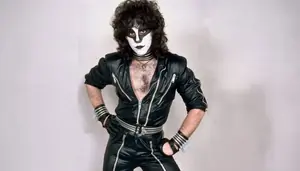

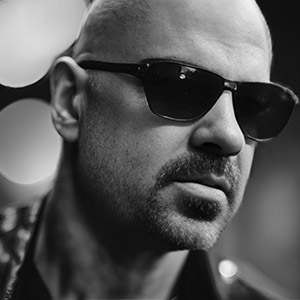
Sitting at the critic’s desk with the heavy gatefold of *Imaginos III – Mutant Reformation* feels less like a standard review and more like an autopsy of a fever dream. Albert Bouchard is not just a founding member of Blue Öyster Cult. He is the guy who kept the engine room humming while the rest of the world was distracted by the laser shows. Now, he has finally dropped the hammer on a narrative arc that has been gestating for decades. This isn't just another legacy act cash-in. It is a dense, often difficult piece of high-concept rock that demands you pay attention or get left in the dust of the post-apocalypse.
Bouchard has spent more than 50 years in the rock and roll trenches. You can hear that mileage in the production. It is slick but carries a certain grit that only a veteran of the 1970s New York scene could conjure. He is inviting us back into the metaphysical maze that Sandy Pearlman built, a world where the occult meets alien intervention. But this time, the stakes feel higher. It is the end of the line for the *Imaginos* story.
The record opens with a version of "E.T.I." that sounds nothing like the radio edit you’ve heard a thousand times on classic rock stations. It is heavier, weirder and more focused on the lore. Bouchard is very clear about why this track needed a fresh coat of paint. “It is on the album because it refers to the Invisible Ones, Les Invisibles, the Blue Öyster Cult aliens returning to earth,” he says. This isn't just nostalgia. It’s world-building. With Joe Bouchard on vocals and R.J. Ronquillo handling the lead guitar, the track feels revitalized. Isabella Kosal adds these haunting harmonies that give the whole thing a spectral quality.
Then you have "Transmaniacon," the second single that leans into the raw power of the Dictators. Bringing in "Ross the Boss" Friedman and Andy Shernoff was a smart move. It adds a punk-adjacent energy to a record that could have easily become too bogged down in its own mythology. The album is a massive collaborative effort, featuring names like Joe Cerisano, Kenny Aaronson and Kasim Sulton. It is a who’s who of guys who actually know how to play their instruments.
But the ghost in the machine is always Sandy Pearlman. Bouchard spent his career trying to translate Pearlman’s dense, often impenetrable poetry into something that could fill a stadium. When working on this final chapter, he constantly looked back to his mentor. “I always started with the thought. I would think back to all the discussions we had about what was a good sound for the songs in this story. Some would be soft and delicate. Others would be as loud and heavy as possible,” Bouchard explains. That contrast is what makes the record work. It’s not a monolith of sound; it’s a conversation between different eras of rock.
The narrative itself is bleak. We are looking at a world wiped out by World War III. It is a landscape of mutants and robots. Bouchard is using old BÖC staples like "Godzilla" and "Sole Survivor" to tell this new, darker story. As he puts it, the setting is one where “the earth and humanity has been destroyed by World War III and what is left are the mutants, still functioning robots, and aliens.” It is a bold choice to take songs that people associate with fun, monster-movie kitsch and turn them into a grim meditation on extinction.
Reinterpreting these tracks was a gamble. Fans can be precious about the original recordings. But Bouchard isn't interested in a note-for-note recreation. He wants to mess with your expectations. “I always feel that if you cover a song you should put as much of yourself into it as you can. People don’t want it to sound like the original. As long as it’s recognizable and feels somewhat familiar, they still want to be surprised,” he says. It’s a gutsy philosophy. It shows a level of artistic confidence that most musicians lose after their first decade in the business.
Working with his brother Joe on "E.T.I." was a natural fit. They’ve been playing together long enough to have a telepathic connection on stage. Albert is humble about the vocal duties, too. “I play with Joe in an acoustic trio called the Bouchard Bros., and we have played the song many times, almost every show. It’s a big crowd pleaser and Joe always does a great job on the lead vocal. I knew he could do it better than me,” he admits. That lack of ego is rare in a genre defined by frontmen who think they are gods.
My first songs were so bad lyrically that when I met other people who could write well I would rather use their words... After I left BÖC I went back to college and I worked very hard on my writing, not just lyrics but writing in general, like I’m doing right now. I have a Masters degree in English (my absolute worst subject in high school). Now I’m comfortable writing words and I feel I have found my own voice.
The *Imaginos* series is heavy stuff. It deals with power, glory, magic and mortality. But Bouchard sees a silver lining in the ambiguity of Pearlman’s writing. “The nature of Sandy’s writing leaves a lot of space for people to form their own conclusions. That opened the door for me to insert my vision of the story where the character, Imaginos, searches and ultimately finds, redemption,” he explains. This idea of redemption gives the trilogy a sense of closure that the original 1988 album lacked.
Finishing this project was clearly a weight off his shoulders. It’s a project that almost didn't happen. “When Sandy and I started this journey together we both thought it would be our masterwork. For a while, it looked like it would be impossible... It took many years and the encouragement of many hard-core Blue Öyster Cult fans for me to go back to the story once again and finally get it right,” Bouchard confides. You can hear that relief in the music. There is a sense of "getting it right" this time around.
There is also a refreshing honesty in how Bouchard talks about the business side of things. He doesn't pretend everything is about pure art. When asked about featuring the Dictators, he laughs it off as a smart industry move. “That was a decision Deko Entertainment, the record company, made because the Dictators are also on their label so they could get a 2 for 1 deal. It makes sense to me. I want them to make money too,” he says. It is a blunt, no-nonsense take that you don't hear often enough in press junkets.
And he isn't afraid to take shots at the past, either. Even his own work isn't safe from his critical eye. Looking back at the original recordings of some BÖC hits, he found them lacking the punch he remembered. “I was surprised when I went back and listened to the original. It sounded so tame that I finally understood what Lester Bangs used to say about it. No self-respecting biker would ever sing along with it. LOL,” he jokes. That self-awareness is what allowed him to make *Mutant Reformation* sound so aggressive.
The album also served as a sort of family reunion. Getting Eric Bloom, Joe Bouchard and Richie Castellano back in the same orbit was a major win for the fans. “It was absolutely great. Joe has not been too eager to play with them live when the offer has been extended but making records with them is something he has said he wants to do for years. I’m sure it will continue,” he discloses. It suggests that while the live shows might be a point of contention, the studio remains a sacred space for these guys.
The pressure to deliver was high. Bouchard knew he had to outdo his previous efforts. “The biggest challenge for me was to make these BÖC songs sound different but still as great as the original versions. I felt that I missed the mark on the last record with some of the BÖC songs so I was determined to succeed on this one. It is the last of the trilogy so it had to go out with a bang,” he says. That determination is etched into every track. The production is dense, the performances are tight and the energy is relentless.
Bouchard has also come a long way as a writer. He wasn't always the confident lyricist we see today. “My first songs were so bad lyrically that when I met other people who could write well I would rather use their words,” he confesses. But he didn't just sit around. He went back to school. “After I left BÖC I went back to college and I worked very hard on my writing, not just lyrics but writing in general, like I’m doing right now. I have a Masters degree in English (my absolute worst subject in high school). Now I’m comfortable writing words and I feel I have found my own voice,” he explains. You can see that academic rigour in the way he expands on the *Imaginos* lore.
Take the track "Arianna of Earth." It’s a deep cut for the fans who really know the story. Bouchard explains the logic behind it: “That was a loose end that I wanted to address. In the first part of the story the girl that love made blind gets sent to Aldebaran by the astronomers after she takes the world without end drug. I wanted her to come back to earth and possibly bring back some Aldebaran aliens with her to help with the Mutant Reformation. A side story in the future could be what happens when those aliens meet the other aliens already on earth, the Blue Öyster Cult. Or are they the same? Only time will tell.” It is the kind of nerd-level detail that makes this trilogy so rewarding.
Looking back at the early days of Blue Öyster Cult, it’s clear they were always trying to be different. They weren't interested in being another blues-rock derivative. “Back in high school my brother and I tried very hard to sound just like other artists, whether it was the local band that played in the bar behind my grandma’s house or the session guys who played on the big hit records. By the time we formed Blue Öyster Cult, I had played in every kind of band and every style of music, classical, jazz, blues, country, and rock 'n' roll. I knew we had to stand out and convinced the other guys that if something we played sounded like another artist, we had to leave it out. We also went out of our way to make our songs hard to play, hard to copy, and hard to cover,” Bouchard recalls. That contrarian spirit is what gave the band its edge.
Even their biggest hit, "(Don’t Fear) The Reaper," came from a place of genuine human emotion rather than a cynical attempt at a radio play. “Don [Roeser] had a health scare and he wrote it to calm himself down. It worked and resonated with millions of people,” Bouchard says. It is a simple explanation for a song that has become a cultural touchstone. And then there is the cowbell. The internet has turned it into a meme, but Bouchard isn't buying into the hype. “The cowbell was not important at all in that song, in my honest opinion. On the other hand, I love a good cowbell part, think 'Grazing In The Grass,' 'Me And My Monkey' or 'Mississippi Queen',” he says. It is a hilarious bit of honesty that cuts through the SNL-fueled mythos.
Bouchard’s memories of the band’s peak are vivid. He remembers the moment he knew they had made it. “When we got to the ending of Don’t Fear The Reaper (take 3), I thought I was actually hearing it on the radio. We played the World Series of Rock in Cleveland (140,000 people) and the audience looked like ants,” he reminisces. It is a long way from the bars of Long Island to a stadium of 140,000 people.
The fact that the music still matters in 2024 is something that clearly moves him. “It boggles my mind,” he says when asked about the band’s longevity. He still has a soft spot for the live recordings, too. “I thought it was sounding like crap and then it turned out wonderful. Ya’ never know…” he recalls about the album *On Your Feet or On Your Knees*. It is a reminder that in rock and roll, the best moments are often the ones you didn't see coming.
Even the creation of "Cities on Flame with Rock and Roll" was a messy, collaborative process. “It started life as another song called 'Siren Sing Along' that I sang and was popular in the clubs we played at the time. When we got the Columbia deal, Sandy wanted it to be simpler, more repetitious, and have a heavier subject matter. I had an idea for a different riff and I brought that idea to Don who proceeded to write that marvelous riff that gives the song its distinctive flavor,” he says. And then there is the church. “When Don was recording his guitar solo (the studio was next to a church on 47th street) in the middle of the recording the pastor called up and said he was working on his sermon and could we please stop,” he laughs.
But for all the talk of the 70s, Bouchard’s favourite memory is much more recent. It happened just a couple of years ago in Sept. 2022. “My favorite moment with BÖC had to be the first night of a three-day gig in Times Square last September in 2022. There was so much love backstage, onstage, and in the audience, it was simply overwhelming,” he says. It is a fitting sentiment for a man who has spent his life dedicated to a very specific, very strange vision of rock music. With *Imaginos III*, he has finally brought that vision to its conclusion. It is loud, it is weird and it is exactly what it needed to be.