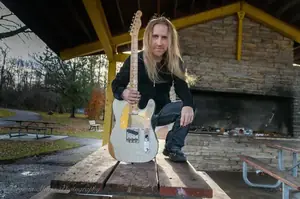
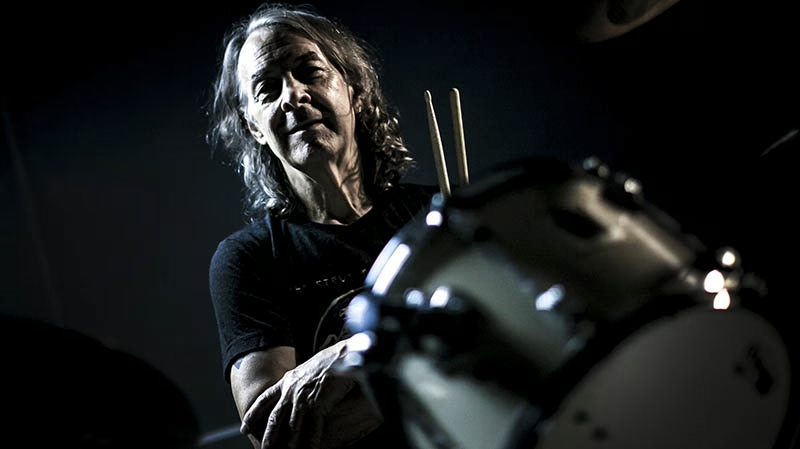
Holding the physical pressing of *Re Imaginos*, you feel the weight of a 40-year obsession. This isn't just another legacy act churning out a redundant acoustic set. It is a reclamation of a narrative that almost bankrupted a major label and fractured one of the most intelligent bands in rock history. Albert Bouchard, the rhythmic engine and a primary architect of Blue Oyster Cult, is sitting across from me, looking remarkably unburdened for a man who spent decades haunted by a concept album.
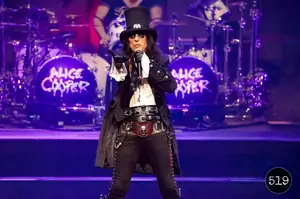
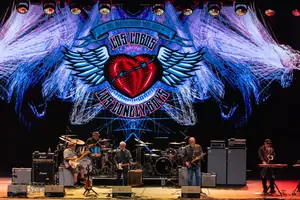
Bouchard’s career is a sprawling map of psychedelic detours, chart-topping hits and a surprising second act in the New York City public school system. He currently anchors Blue Coupe alongside his brother Joe and the legendary Alice Cooper bassist Dennis Dunaway. But the conversation always circles back to *Imaginos*, the sprawling, occult-tinged mythos that has finally been realized on his own terms.
The history of this project is longer than the careers of most modern rock stars. It predates the very name Blue Oyster Cult. When I ask him about the timeline, he leans back, tracing the lineage to a pre-fame era. "Oh yes, even before we were Blue Oyster Cult, really even before I knew Sandy Pearlman. He had been working on this stuff back in the 60’s," Bouchard says. It is a reminder that the BOC mythos wasn't just a marketing gimmick; it was a lifetime of labour for the late Pearlman.
One of the standout tracks on the new record is "Black Telescope". To the casual fan, it sounds like a fresh take on a psych-rock staple, but its origins are murky and domestic. It was originally "Workshop of the Telescopes" on the band’s 1972 debut. The evolution of the song is a masterclass in how Pearlman’s lyrics could transform a simple observation into something cosmic and sinister.
Bouchard explains the shift in nomenclature and intent. "That was Workshop of the Telescopes, it was one of the last songs that we had written for our debut album. At the time I didn’t realize that it related to the Blue Oyster Cult poem where we got our name from which eventually became a song that we recorded and changed the name to Subhuman on the Secret Treaties album. Originally why I re-titled it was because I was rearranging the song. I wanted it to fit into the format of the rest of the album. At the time we recorded it for the first album I thought it was about our neighbours across the street. He was a doctor and he had a very beautiful wife and we didn’t really know them but we used to watch them. Later when I was working on the Imaginos project with Sandy in the mid eighties, he mentioned that was supposed to be one of the songs and it was going to be on the second record," he says.
The decision to revisit this material now isn't just nostalgia. It is a correction of a historical record that got messy in the early 80s. When Bouchard was ousted from BOC in 1981, *Imaginos* was supposed to be his ticket to solo stardom. But the industry had other plans. The original 1988 release was credited to the full band, despite Bouchard having done the heavy lifting years prior.
"Exactly, we started working on it in 1982 as my solo record. I had been asked to leave Blue Oyster Cult so I kind of pivoted to the idea that this is going to launch my solo career. I gathered a group of guys that I wanted to play with and we recorded the album thinking that it was going to be done by the end of the year. I had never spent more than a few months on an album, even at the most extravagant. As luck would have it, we ended up spending a long time at it and by the time it was almost done in 1985 I’d already been working on it for three years and the band had gone on to play with other people and do other things. So the album came out to good reviews but it didn’t sell very well," Bouchard admits.
The financial narrative of the original record is staggering. We are talking about an era of excess where a label would sink three-quarters of a million dollars into a project that didn't have a clear radio single. It was a beautiful, expensive disaster. Bouchard reveals the industry politics that finally got the record on shelves.
"The record company was reluctant to release it in the first place and the only reason they did was because Blue Oyster Cult agreed to absorb the cost of the record which was very substantial. I was told it was three quarters of a million dollars. I had given a copy of the rough mixes that I had to a big fan, I’m not going to say who it was, and he said 'Can I put these out, can I share this with people?' I said I don’t really have the legal right to do this because Sony/Columbia still owns the copyright on the recording so you can’t say this is my version and he said 'What if I say it’s the demos?' I said whatever you want to do, you just can’t make money off it, that’s for sure, they will come after you and they might come after you anyway," he says.
And so, the "Imaginos Demos" became a staple of the grey market. For years, fans traded hissing tapes and low-bitrate downloads, trying to hear Bouchard’s original vision through the digital mud. "So they put it up as demos, it was on the net for a while on a bit torrent site and that got taken down and then finally they stopped doing that. It’s readily available but the problem with that is it doesn’t sound very good. They’re rough mixes and I think they were copied from a cassette so it’s a copy of a copy of a copy so I always hoped I would get a chance to remix it," he says.
But Sony wasn't interested in looking back. When the massive BOC box set was being compiled in 2016, Bouchard saw an opening. He wanted to fix the audio legacy of his most personal work. The label’s response was a cold reminder of the bottom line.
"In 2016 they put out the box set and I said, can I go in and remix some of mine, we can put them in as bonus cuts, we can have an extra disc, it was value added and they were like no, they’re not really interested, that was almost the worst selling record. The first record and Club Ninja were the two that were actually worse selling than Imaginos," Bouchard notes.
There is a divide between commercial viability and cult devotion. To the suits, *Imaginos* was a line item that didn't move enough units. To the fans, it was the high-water mark of the band’s intellectual ambition. Bouchard is honest about the record’s identity crisis.
I had been asked to leave Blue Oyster Cult so I kind of pivoted to the idea that this is going to launch my solo career. ...The record company was reluctant to release it in the first place and the only reason they did was because Blue Oyster Cult agreed to absorb the cost of the record which was very substantial. I was told it was three quarters of a million dollars. ...It’s readily available but the problem with that is it doesn’t sound very good. They’re rough mixes and I think they were copied from a cassette so it’s a copy of a copy of a copy so I always hoped I would get a chance to remix it.
"In sales, yes, that’s true and then other people say it’s not a real blue Oyster Cult album and they’re correct, it’s not. Really it’s an Albert Bouchard solo in disguise but I didn’t get to launch my career and as a matter of fact, by the time the record came out, I had already started another career as a school teacher," he says.
That pivot to education wasn't just a fallback plan; it was a rigorous academic pursuit. While his former bandmates were navigating the hair-metal era of the late 80s, Bouchard was in the trenches of New York academia. He didn't just walk into a classroom; he earned his way there, even when the system made it difficult.
"I actually had to go to two schools at once because I really wanted to go to Hunter. There was a guy named Arthur Harris there who used to be the arranger for the Eugene Ormandy Philadelphia Orchestra and he was supposed to be very hip, real cool guy, amazing musician and I wanted to take classes with him. I had already gotten sixty credits from Clarkson College of Technology when I was going there in the sixties. Hunter College did not have an engineering department so they would not accept my credits. I needed to get this job and I was working as a paraprofessional which is like a teacher’s aid and they don’t make that much money. I was living in New York and needed to stop borrowing money from everyone I knew to pay my rent. So I went to Empire State College where they accepted the Hunter credits and the engineering credits as well. It was a great experience and I learned a lot. I already knew a lot but after that I felt I learned everything I needed to know about music," Bouchard explains.
This dedication eventually led to a surreal moment of recognition from the highest office in the land. It’s a far cry from the pyrotechnics of a rock arena. "That was fantastic. The National Association for Music Education which I belong to, they were notified by 20th Century Fox that the Give a Note Foundation, something I’ve always contributed to, were going to give me a grant for three thousand dollars. While they were giving me the cheque, Fox News were there filming that and a performance by my students for the local news. The next year I got an e-mail from the government saying I was invited to the teacher of the year ceremony with Obama. They were asking for my social security number and I’m thinking this must be spam, it can’t be real so I put it aside and ignored it for a while. A short while later I got a call from the Give a Note Foundation saying it’s real, we submitted your name, you’re going to Washington! So we went to Washington and I got to meet Obama and say a couple words with him so that was cool," he says.
Even during his teaching years, the pull of the stage remained. Bouchard spent time as a hired gun for 60s legends, proving his versatility beyond the heavy psych of BOC. He toured with Peter Noone and Spencer Davis, bringing a professional drummer’s discipline to the pop-rock circuit.
"I got a gig with Peter Noone first as a drummer and then I played with The Mamas and the Papas, Billy J Kramer and Spencer Davis. Peter Noone is a young guy, he’s still going strong with Herman’s Hermits. I went on tour with him for weeks at a time and we would get up in the morning and go for a run, just the two of us, he was an athletic guy. Eventually I would get a call from the guy who would hire me, he says, Spencer Davis needs a musical director, do you want to put a band together for him and I said sure. So I called my brother Joe and said 'Spencer Davis wants a band to play on the east coast, can you do Steve Winwood?' He says, 'Can I do Steve Winwood? Of course I can, I can sing like him too'. So I got a bass player I know and a really good guitar player and we toured off and on for about nine months," Bouchard recalls.
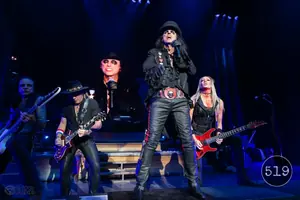
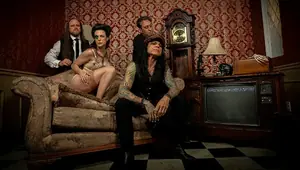
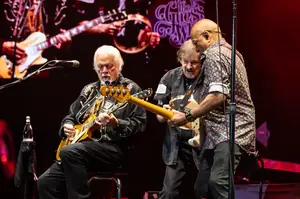
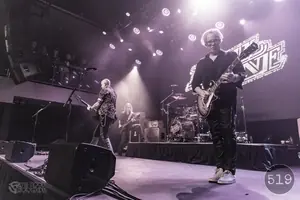
Today, his primary creative outlet is Blue Coupe. It is a supergroup that actually earns the title, featuring his brother Joe and Dennis Dunaway. The dynamic is one of mutual respect mixed with the inevitable friction of three perfectionists.
"That’s my main gig, with Dennis and my brother Joe. That’s a fun group and of course I’ve always admired Dennis and working with him. I always thought he was the genius behind some of the greatest Alice Cooper songs. He’s relentless and sometimes it’s aggravating because he’ll say well, we could do it this way or that way or the other way and we’ll do each one and then listen to them and he’ll say, I don’t know, what do you think? I’m like, why are you giving me so many options, just tell me what you want me to do. So then he says well what do you want to do? (Laughing). We were just going to be basically an oldies act in the beginning because we have so many songs that people love to hear and BOC and Alice Cooper band have so many songs they never play so we were going to play some of these deep cuts, these nuggets that people don’t get to hear that often. We also had the ace in the holes like School’s Out, Eighteen, Burning for You and Reaper," he says.
The band almost included The Doors’ Robby Krieger, a move that would have made Blue Coupe the ultimate classic rock Voltron. Bouchard recounts the near-miss. "We wanted Robby Krieger to join our group, I have his number, I’ve known him for years. I first met him in 1967 when I first came to New York City and Alice Cooper group knew him from L.A. around the same time. So I called him and he said, 'I don’t know, my plate is really full, Ray (Manzarek) has all these gigs he wants me to do'. I said, 'Oh, I heard Ray was retiring for health reasons' and he goes, 'Nah he’s gonna go out, he doesn’t want to stop. Even though he has some health issues he’s going to keep going' which he did. So he said, 'I can’t really do it but what I would love to do is, I have a little studio in my house, I’d love to play some guitar if you guys are making a record'. I said, 'Oh great! I’m going to call you in two weeks.' So I talk to the band and say, 'Guys, were making a record, Robby wants to make a record with us.' And they’re like, oh, ok, and Dennis says, 'I’ve got tons of songs.' And I said I’ve got some and my brother says 'I got nothing, I just put out my first solo record.' So we recorded an album and Joe only did two songs and both were fantastic. One of them was You (Like Vampires) which is our most popular song and the other was Angel’s Well, a song that was written by Jim Caroll for Blue Oyster Cult and they never recorded it and Joe found the lyrics and said oh, this is hot!"
Blue Coupe also leaned into the meta-humour of the BOC legacy. The infamous "More Cowbell" SNL sketch is a blessing and a curse for anyone involved with "Don't Fear the Reaper", but Blue Coupe chose to embrace it with a track recorded live in Hamilton, Ont.
"Dennis said, you guys should write a song called More Cowbell. Well he ended up writing the song and he’s telling me about it. He wrote it right before we did a gig in Hamilton Ontario and I asked, what’s this song you’ve got? So he plays it and I said, wow, that’s great, so you go, 'You got a fever' and the audience is supposed to go 'Yeah!' and we say, 'What do you need?' and they reply 'More cowbell!' So I said it’s an audience participation number, and he says yeah, of course it is! I said well, we want to record it for the new record, right? He said yeah, yeah. Well we have the studio booked for February, when are we going to do another live gig? He says, oh yeah, this is the only gig we’ve got. I said we’ve got to do it tonight! So we practiced it that day and went to the sound check and arranged to have a twenty-four track there to record the show and practiced it some more at the sound check. We played it that night and it wasn’t quite as good as we wanted so we asked the crowd if we could play it again because we want to put it on the record for sure and we got it on the second take," Bouchard says.
The history of Blue Oyster Cult is inextricably linked to the New York art scene, specifically Patti Smith. Long before she was the "Godmother of Punk", she was a poet in Sandy Pearlman’s orbit. Bouchard reflects on the "what if" of Smith joining the band as a co-vocalist.
"That was Sandy Pearlman, I think Sandy really discovered her. Before he got involved with her she was a poet and she was kind of making the local scene. Sandy got to know her and he said, you should be a rock star and she said but I don’t really sing. He said, doesn’t matter, you just got that thing. I met her right after that and he came to the band house one time and he said listen, I think you guys should add Patti Smith to your group to be the co lead singer with Eric. Eric was like, no way, we’re not having any girls in the band! It would have been great, and she had performed with us in the past and I perform with her even still to this day. There’s always the chance of that and she’s a dear friend," he says.
Bouchard’s memories of the road are a "Who’s Who" of rock royalty. He recalls the Black and Blue tour with Black Sabbath, particularly his admiration for Ronnie James Dio. "The Black and Blue tour was kind of crazy, it was the first time I really hung out with Ronnie Dio since when I was in high school and he was a bit older than me but his band would play all over upstate New York and I was in Watertown. They would come to town and play The Armoury and I was very impressed, he was always great. I was sorry to see him stop playing bass because I loved the way he played. He would play with a pick and strum the bass like he was strumming an acoustic guitar, it was very percussive. He would mute all the strings except for the string he wanted, and the drummer was great, Gary Driscoll, a really heavy drummer. With David Feinstein on guitar they were an amazing power trio, the first power trio I ever saw, way before Cream and Hendrix and all of that stuff, I’m talking 1963," he says.
The elephant in the room is always his departure from BOC. It was a messy divorce that took decades to heal. Bouchard is candid about the ego and the pressure of those years. "Our relationship is good. For a long time I felt what happened, happened, now I’m a teacher, I’m making more money than you guys are. It maybe wasn’t what I thought I would do, I always thought I was going to just do music. I had hit records, nobody can take that away from you. I remember somebody back in the day when we were Soft White Underbelly say all you need is one hit and you’re set, and I thought ok, cool," he says.
The reconciliation began in the mid-90s. "I was trying to reconcile with those guys and I remember calling Eric Bloom and saying you know, I think we should get together and talk about what happened when I got kicked out of the band and he says, 'Oh why do you want to dredge that stuff up? I don’t want to talk about it, come on, it’s over.' Then I called up Don and asked if he wanted to talk about it and he said yes I do. That was in 1995 so we did get together and had a very nice talk and I apologized for losing my temper and all of this other stuff and he said I’m sorry I wasn’t a better friend to you so that’s when it started. I thought it was weird that Eric didn’t want to talk about it but then years later when I was on tour with them in England where the whole mess happened I remembered what happened that night. They had a vote, how many want Albert to leave and Eric Bloom said, 'I just want to go on record and say I think we’re making a big mistake here, but Don wrote the hit, I’m not going to go with you Al.' Don and I were best friends and we got into this disagreement where it wasn’t just that one night, it was over the course of six months. I think it was close proximity for me, I felt like I was ignoring my family and really going above and beyond and not being appreciated and I guess he felt the same way, he was doing the same thing. Everyone has to make sacrifices but you always think that you’re the one making the biggest sacrifice and that was on me," Bouchard admits.
With *Re Imaginos*, Bouchard is finally seeing the validation he craved. The new arrangements breathe life into songs that were previously buried under 80s production. "Well, it’s doing really well. I’m working on the follow up now. I would have to say that it’s very gratifying to see people really like it and I’ve probably said this before, it’s like a correction. It’s not meant to replace the other record, some people say I like this song better on this one but this song here is better on the one I made. I think that there are certain things that I’m very proud of like the arrangement of the song Imaginos, I think it’s way better than anything I’ve made before, any version of that song and especially the one on the Blue Oyster Cult version because that’s the worst song on the record. It was too fast, it wasn’t melodic enough, it didn’t really capture the essence of the story. I love it now, when I do it live I’m going to do the Patti Smith thing where I talk about Sandy Pearlman in the middle in a poetic kind of way. Black telescope I’m very happy with because that almost seemed like a throw away on the first record," he says.
He draws inspiration from modern sources, too. The dark, cinematic scope of the *Outlander* score and the recent *Godzilla* cover by Serj Tankian have influenced his perspective on his own work. "I got the inspiration for that arrangement from the Outlander series. Bear McCreary, he does the music for that and he also did the music for the latest Godzilla movie where Serj Tankian covered our song Godzilla, that’s fantastic. I love System of a Down, I have all their records and to hear him singing Godzilla is mind blowing. BOC’s version of the song is the original of course but it’s very comical, nobody got fooled by the guy in the Godzilla suit. When you hear the new version it doesn’t sound comical, it sounds kind of scary," Bouchard notes.
One of his most enduring contributions to rock is "Cities on Flame with Rock and Roll". He remembers the exact moment he heard it on the airwaves, a memory tied to Alice Cooper. "That was the first single, it was the first time I ever heard my voice on the radio, and this is an odd thing, when we heard it, we were all in Eric Bloom’s van and we were driving across the George Washington bridge and we were going from Long Island to a theatre in New Jersey to see Alice Cooper live for the first time, and they were doing their Killer tour. It was in the winter so it was probably right after the record came out, and it was on WABC radio. Dan Ingram was spinning it and he says, 'Well that was different!' That was just a weird story because it was the first time I met Dennis and here we are, fifty years later. Two months after that we played our first show with them. They liked us and a couple weeks after that we were playing shows in the south. We did the Killers tour and we also did Billion Dollar Babies with them," he says.
The *Imaginos* story isn't over. Bouchard is committed to a trilogy that spans three centuries. "I am. A lot of the songs are going to be songs that were already recorded by Blue Oyster Cult like Quicklime Girl, The Red and the Black is going to be on there, ME 262 always was planned to be an Imaginos song. There are other songs that maybe could be like Before the Kiss, it just seemed like it fit in some sort of context. Imaginos, the first record, takes place in the 19th century, the second album takes place in the 20th century and the third in the 21st century so that was what we were thinking. The 20th century was supposed to last with half lifetime you know, the nuclear destruction of the world. It only happened in Sandy’s dreams or nightmares I guess," he explains.
The emotional weight of this trilogy is tied to a final promise made to Sandy Pearlman. Bouchard spent Pearlman’s final hours by his side, a poignant end to a complicated partnership. "I did and I told him I would do the trilogy but I have to put it into context because he had just come out of a coma and he couldn’t talk. He could move his left side, he could move his left hand and left leg and he could blink his eyes and move his face but he couldn’t talk. I don’t know that he could process it that much but I know he knew who I was and he knew what I was saying because I would ask him something and he would blink to reply. I was there approximately 16 hours over two days in the hospital. I had never really talked to him that much in my whole life, even when we were working on the record because he was so talkative. I wanted him to get better, I wanted him to have something to look forward to. I said, 'You’ve got to help me, there’s a song Independence Day that we never finished. I’ve got the hook but what are the lyrics going to be?' I just started finishing that song yesterday morning and I went through a bunch of his writings and picked out stuff that just seemed to fit in that concept of this was a group of individuals that were unsatisfied with their country and they wanted to create a new one. That fits in with that whole thing with Croatia and Austria and that whole WWl situation. The Imaginos story is supposed to be about history but it’s a re-imagined history," Bouchard concludes.
It is a heavy legacy to carry, but Bouchard seems more energized than ever. He isn't just playing the hits; he is rewriting the past to ensure the future of the *Imaginos* mythos is as grand as Pearlman dreamed. And for a man who has been a rock star, a teacher and a historian, that seems like the only logical path forward.
Get Tickets