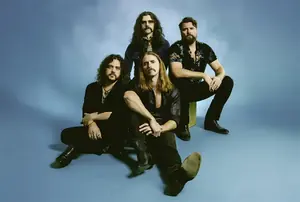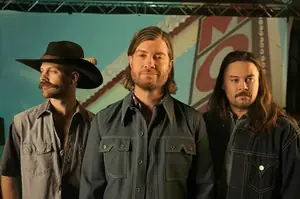


Standing at the back of the London Music Hall, you can almost smell the history of mid-sized venue sweat and spilled draught. It is the kind of room where legacy acts either come to die or prove they still have the engine to pull a heavy trailer. Lonestar, a band that has been grinding for more than 25 years, belongs in the latter category. They are survivors of the late-90s Nashville gold rush, a period when country music decided it wanted to be pop and actually succeeded.
The band is hitting the 401 corridor this month with six Canadian dates in June, including that stop in London on June 14. They are not just here for a nostalgia trip, though nostalgia is certainly the fuel in the tank. They are marking two decades of *Lonely Grill*, the album that took them from being just another hat-act to a household name.
Lead guitarist Michael Britt is the guy who has seen it all from the side of the stage. He is the technical anchor of the group, and when he checks in to talk about the 20th anniversary of their seminal record, he does not shy away from how close they came to the edge of the cliff before "Amazed" saved them.
The year 1999 was a pivot point for the band. John Rich had just exited the lineup, long before he became half of Big & Rich. The remaining members were staring down a career that looked like it might be stalling out in the breakdown lane.
"We had success with some number one songs before that, but at the time when we made the Lonely Grill record, we were kind of afraid our career was over because John Rich just left the band, and we didn’t know if it was going to be as good without John," Britt says. "We had a brand-new producer with Dann Huff, and we were trying to make an album that might just make sure we were still relevant and still could be a band. Then it turned out having a huge crossover to pop and was the number one song on The Hot 100, so that’s the reason we’re still around 25 years later. It was really just that one song because it was so big that people just never get tired of hearing that song even today."
But "Amazed" was not just a hit; it was a cultural anomaly. It sat atop the Billboard Hot 100, a feat rarely achieved by country artists in that era. It turned Lonestar into a wedding-dance staple for the next two decades.
And yet, the making of *Lonely Grill* was fraught with the kind of tension that usually breaks a band. Bringing in Dann Huff was a calculated risk. At the time, Huff was known more as a virtuoso session guitarist than the mega-producer he would eventually become.
Britt, being a gear-head and a player himself, was more than a little starstruck by the man behind the glass. The shift in energy was exactly what the band needed to move past the John Rich era.
"I think we’re really excited to work with Dann," Britt says. "He hadn’t had a lot of production credits at that point. I was a huge fan of his just being a guitar player and being able to work with someone that just had this youthful kind of vigour. He really had a great plan for this record, and it just felt like a team effort all the way around from the label to Dann. We were just all aboard, we are all in, trying to do something that would make everything not go away. It was a really fun record to make and I have fond memories of recording with Dann. He’s just such a cosmic professional with great ears and it was a lot of fun to make."
The technical precision Huff brought to the studio helped define the Lonestar sound—clean, melodic and unapologetically polished. But even the best production cannot save a mediocre song.
The story of how "Amazed" landed in their laps is a classic Nashville tale of one man's trash being another man's multi-platinum treasure. The song was circulating through the Music Row ecosystem like a hot potato.
Our big thing on tour is to get food we can’t get at home. ...That’s the big secret – we just tour to get food that we can’t get at home.
"It was just pitched to us and funny enough, that song has been pitched to different artists too," Britt says. "I think Blackhawk was one. Henry Paul once said that they turned down Amazed, and it happens to all of us. I think we passed on 'God Bless The Broken Road' that Rascal Flatts had. When these big songwriters come up with these songs they think are hits, they pitch them to the biggest artists at the time. Sometimes there’s just too many songs for an artist to cut, so they just get passed around a little and that was when we got lucky enough to have Amazed. And honestly, it fits Richie’s vocal range perfectly. Richie is such a great singer. As far as range, he can really belt it, and he’s got a lot of feeling in his voice, so that song was just perfect for him. It was pitched to us at a song meeting at the label one day and we all loved it. It never left our pile of songs that we wanted to record."
But Richie McDonald’s vocal performance is what anchored the track. He has a way of selling a lyric without over-singing it, a restraint that is often missing in modern country-pop.
The demo for the song was already a high bar. Bill Luther, a songwriter with a distinctively weathered voice, had laid down the initial track. It gave the band a template that was hard to ignore.
"I don’t know what was going on in the world at that time, but it was just it seemed like we were just getting a lot of great songs," Britt says. "When there are 12 people in the room listening, all 12 people can’t be wrong when everybody likes it. we knew it was a good song. We just didn’t know it was going to be that big. I don’t know if there’s any way anyone can tell it’s going to be that big. The singer on the demos was a guy named Bill Luther and he had this Rod Stewart kind of gravel in his voice. So just the demo alone was fantastic because he sounded great. So that it was just the matter of us trying to do the song justice after that demo."
And they did more than justice. They created a monster. But touring a monster hit for 25 years requires a certain level of mental fortitude and a genuine love for the road.
When Lonestar crosses the border into Canada, the vibe shifts. The audiences in the North have always had a different relationship with country music—it is less about the lifestyle branding and more about the hooks.
For Britt and the boys, the Canadian trek is also a culinary mission. There is a certain charm in a multi-platinum band hunting down regional fast food like they are on a high school road trip.
"We love playing in Canada," Britt says. "I mean, we’ve done it over the years quite a few times. Every time we go to Canada it just seems like a good time. Our big thing on tour is to get food we can’t get at home. When we go to California, we get In-N-Out Burgers, when we go to the Northwest we get Taco Time, and we’ll go to Canada and get poutine and things like that. There’s also Tim Hortons donuts and the stuff that we can only get up there. That’s the big secret—we just tour to get food that we can’t get at home."
But it is not all about gravy-soaked fries and coffee. The band has used their longevity to fuel a significant amount of philanthropic work. In Nashville, charity is not just a PR move; it is a labour of necessity.
Lonestar has spent decades aligned with St. Jude Children’s Research Hospital, a cause that is baked into the DNA of the country music community.
"We’ve been involved with St. Jude Children’s Research Hospital for years and years, and we still do things for them," Britt says. "Anytime we're asked to do anything for them we’ll go out of our way to do it. We’ve done lots of things with Wounded Warrior Project and there’s a group called the Adopt A Platoon where we would send care packages over to the troops when they’re deployed. We really don’t turn down any request to do charity stuff. We feel like we’ve been very fortunate and when people come to us, we do what we can to help them. Definitely St. Jude and Wounded Warrior have been the ones that we’ve done the most for."
The question that haunts every band of this vintage is: what comes next? Do you keep trying to catch lightning in a bottle, or do you settle into the comfortable theatre circuit of the "Greatest Hits" machine?
Richie McDonald is still writing, and the itch to record new material has not faded. But the industry is a different beast now. The gatekeepers have changed, and the attention spans have shrunk to the length of a TikTok clip.
Britt is realistic about the struggle of balancing the old with the new. He knows that when they play the London Music Hall, the crowd is waiting for those familiar chords of "Amazed" or "I'm Already There."
"We’ve been talking about it," Britt says regarding new music. "I’m not sure what the final outcome is yet, but Richie’s written some new songs, and we’re just trying to figure out a way to do it. I don’t know how many more albums people want from us. It seems like people love our old songs more. We still put out new songs to keep things fresh and because we have something to say, but it’s getting really hard putting new songs in shows because we’ve had so many hits—and that’s probably a very good thing. I know we’re going to put out at least one more song, because I know Richie has a song he’s itching to cut, but we’re not really sure if it’s going to be a full album, an E.P. or what we’re doing yet."
It is a high-class problem to have. Having too many hits is the kind of "failure" most Nashville hopefuls would trade their left arm for.
As they prepare to take the stage in London, the technical challenge remains: how to make a 20-year-old song feel like it was written yesterday. For Michael Britt, that is the job. And he is damn good at it.
Lonestar might not be the shiny new thing on the radio anymore, but they are a reminder that in the music business, staying power is the only currency that actually matters. And if they get some poutine along the way, all the better.