
Standing inside the London Concert Theatre on Nov. 20, the air feels heavy with more than just the usual scent of spilled domestic tallboys and floor wax. There is a ghost in the room. When Vinnie Paul died in June 2018, the metal community did not just lose a drummer; it lost its heartbeat. Hellyeah, the band Vinnie steered through years of industry cynicism and shifting trends, was suddenly a ship without a rudder.
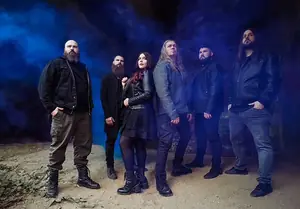
But the remaining members chose to keep the engine running. They released *Welcome Home*, a record featuring the final studio performances of the man himself. The current touring roster—vocalist Chad Gray, guitarists Tom Maxwell and Christian Brady, bassist Kyle Sanders and Stone Sour veteran Roy Mayorga on the kit—is less of a band right now and more of a travelling wake.
I caught up with Christian Brady to talk about the brutal reality of life on the road without the man who essentially built the house they are living in. The grief is still fresh, even if the tour schedule is relentless.
"We think about Vinnie every day," Brady says, leaning into the weight of the statement. "Vinnie was such a huge part of everything that was Hellyeah and his energy and spirit is always with us. Him being here with us, it’s just he’s missed every day, and even more than just the band as well. He was our brother. He was out here in Vegas so much. This actually became more of his first home than Dallas. He and I were always together. We hung a lot, even if it was just lunch or, texting or talking every day. We’d go see shows together and we were just always hanging out."
It is easy to forget that these guys were actual friends, not just business partners sharing a tour bus. Brady and Vinnie were Vegas staples. You would see them at the bars, at the local shows and just living the life that Vinnie Paul invented back in the Pantera days.
"So, he’s just really missed," Brady continues. "I think as a band, we’ve definitely bonded tighter amidst everything that’s happened and I think the chance to be able to get out and play again and carry on his legacy has been amazing. It’s really important to us to do that. We’re grateful that Roy has been able to help us with that as well. He knew Vinnie very well. So, he’s been a big part of us getting through that too. We’ve been able to all hang on the road and tell stories and laugh and talk about Vinnie and memories, and that’s been great."
The healing process in metal is loud. It involves distorted riffs and double-kick drums. Brady acknowledges that while the pain does not vanish, it changes shape over time.
"I think overall, time passes and you heal and you get in a different place mentally with it," he says. "It’s always there and then you’ll always feel that loss and that hurt. But things like that, being able to hang out together and tell stories and exchange memories and laugh and just remember Vinnie for how amazing he was and what an incredible person and talent and friend and band mate and everything that he was, he’ll always be with us."
And then there is the record itself. *Welcome Home* is not some posthumous cash-grab with scraped-together demos. It is a fully realized piece of work that Vinnie was obsessed with before his heart gave out.
"Vinnie is all over it," Brady insists. "All the drums are him. He finished all of his drum tracks before he passed and helped arrange almost everything. He was such a big part of that in the studio. A lot of people maybe don’t know that side or how involved he was, but he was heavily involved in the writing, arranging, and production process as well. So, he had a big hand in a lot of that early on, our arrangements of the tunes and putting everything together, all his drum parts. So, yeah. He’s all over the record."
The technicality of Vinnie’s drumming on this final outing is a point of interest for any gearhead. He was always about the "pocket," that elusive groove that made Pantera swing. On *Welcome Home*, you can hear him pushing the band into more melodic territory without sacrificing the crunch.
But how do you fill the physical void on stage? Bringing in Roy Mayorga was the only move that made sense. Mayorga has the pedigree and the respect of the community. He was not just some session guy hired to hit things.
"You can’t ever replace someone like Vinnie Paul and Roy’s not trying to do that and we’re not trying to do that," Brady explains. "Roy is our brother and friend and an amazing talented guy. Roy has another band. Luckily for us, they’re on hiatus right now because of Slipknot being out doing their thing. So, he’s available right now. The first show went so well that it only made sense for us to continue on with him playing with us. It just fit on a lot of levels. It fit spiritually, it fit musically. All of it connected."
The connection between the Stone Sour and Hellyeah camps goes back decades. In the incestuous world of American heavy metal, everyone has toured with everyone.
"Like I said, there’s that connection with Vinnie as well," Brady notes. "He toured with Vinnie back in the day with Soulfly and Stone Sour toured with Hellyeah just a bunch. So, they knew each other well. There’s a lot of love and respect there. It’s very important to Roy to honor Vinnie the right way too. He’s not looking to gain anything from this other than to pay tribute to a legend. You know what I mean? So, it’s been great having him. We would love to have him play with us until he can’t play with us anymore."
The stage chemistry is different now. It has to be. Vinnie Paul was a spectacle behind the kit—all flying hair and purple sparkle drums. Mayorga is a more clinical, intense force.
I was a huge Pantera fan. I heard Pantera for the first time when I was 16 and it blew my mind... when I got the gig and started playing with Vinnie, the 16 year old kid in me was definitely freaking out.
"The energy’s always has been there in this band because it’s a high energy band," Brady says. "When you got a guy like Vinnie behind you driving it, I can’t even describe it. It’s immeasurable. Sure, the energy has changed. Vinnie’s not there anymore. He’s always with us, he’s always there, but he’s not physically there hitting the drums behind us anymore. Roy’s is a different player, but he’s also a great player. Like I said, I think it’s really important to Roy to honor Vinnie and what he did and brought to the band."
For Brady, the weight of the Pantera legacy was something he carried long before he joined Hellyeah. He grew up in the shadow of the Abbott brothers.
"I was a huge Pantera fan," he admits. "I heard Pantera for the first time when I was 16 and it blew my mind. I think the first song I ever heard was This Love off of Vulgar Display of Power. Just a little punk ass teenager, just playing guitar for a few years, and then my buddy turned me on to them and it just blew my mind. I went out and bought both records, Vulgar and Cowboys. Yeah. I was a huge Pantera fan. I saw them live a bunch of times when I was younger."
There is a definitive irony in becoming best friends with your idol. It is the "Almost Famous" trope played out in the desert of Nevada.
"So getting this gig before I was in the band, I was great friends with Vinnie," Brady says. "We were really close. So, it was kind of a trip. But when I got the gig and started playing with Vinnie, the 16 year old kid in me was definitely freaking out. Yeah, it was such an incredible thing."
But what happens when the tour ends? The "Metal Family" is loyal, but the industry is cold. Without Vinnie’s name on the marquee as a permanent fixture, the future of Hellyeah is a giant question mark.
"That’s really hard for me to say at this point, April," Brady says, referencing our conversation. "We’re definitely going to continue to tour this record. That has to be done. The record’s put out and we got to support it. I think there’s a demand for it. The fans have been incredible. Our metal family, as we call them. They’ve been so supportive and just awesome throughout all of this. As long as they want to come see us play, we want to come play for them and support this record. As far as anything past that, I think that remains to be seen. I think we need to see where everything’s at when we get done with this cycle and where everybody’s head’s and where everybody’s hearts are at."
It is a refreshingly honest take. Most bands would give you a canned answer about "new horizons." Brady is admitting they are just trying to get through the night.
"I feel great about where we’re at right now and what we’re doing," he adds. "Personally, I would love to continue forward. I think that only further cements Vinnie’s legacy even more and honors him and what he helped create in Hellyeah. He was such a big part of creating this and getting it to where it’s at. I know he would not want to see that just end. As far as I’m concerned, I would love to be able to continue on. I think it’s something that we’re going to have to feel out and answer down the road when we get to that point."
Currently, the creative wells are dry. The band is focused on the performance, not the pen.
"No, not since the record, not yet," Brady says when asked about new material. "All of us always come up with ideas on our own. Tom does. I do. We just put them somewhere, maybe in our phone or just throw them down real quick and have them for later. You know what I mean? But together, no, we haven’t tried to write anything else yet."
One of the few things that keeps Hellyeah from being a standard groove-metal act is the interplay between Brady and Tom Maxwell. They have that Iron Maiden-esque synchronicity that is rare in modern metal.
"It’s funny. You would think that, but we obviously do some rehearsals before we go on tour," Brady says. "But Tom and I really clicked together as guitar players. It really fit well right off the bat. So, there was just a natural chemistry there that we both felt when we got in a room together and started playing and then got on tour and played together more and more and then got in the studio. It works. So, I think that what we each do complements each other."
And it is not just about the notes. It is about the beer and the bullshit behind the scenes.
"It also helps that we’re really close," he says. "Tom and I are really close friends and there’s a lot of love there and respect and friendship, brotherhood, all of that. So, I think that helps too. That helps with the connection and all of that, live and in the studio and just in any which way. So, yeah. Honestly, it was such a natural, immediate thing with he and I. But it didn’t take a lot of effort, honestly."
Looking back at the catalogue, Brady has his favourites. He was a fan before he was a member, which gives him a unique perspective on their discography.
"That’s a good question. I’ve never been asked that," he says, pausing to think. "Yeah. I would have loved to have been involved in Blood for Blood. Tom and I joined the band right after that was finished. They had already recorded that. So, I didn’t play on that record, and neither did Kyle. So, I would say if I had a chance to be a part of any record in the past that I didn’t get to be a part of, it would be Blood for Blood."
A big reason for the band's polish is producer Kevin Churko. The Canadian export has a way of making metal sound expensive without losing its teeth.
"Kevin is a huge part of what we do," Brady says. "He’s kind of like the sixth member of the band when it comes to writing and recording. He’s such a talent and he’s really great about bringing out the best in what you do and throwing out ideas when they’re needed and letting ideas develop on their own from us when that’s needed."
Churko’s The Hideout studio in Vegas is where the magic happens. It is a sterile, professional environment that contrasts with the band's chaotic energy.
"Just his whole production, sound, and his whole approach, it’s really become a huge part of our sound and what we do," Brady says. "So, yeah. Absolutely. Kevin’s a huge part of what we do. I personally love working with Kevin. I think he’s just an amazing talent and an amazing guy. Just a great guy and really, really wonderful to work with."
Brady’s own history is a bit of a Vegas anomaly. He did not just pop out of a garage; he was forged in the fires of the Strip’s professional circuit.
"I’ve definitely played in Vegas for years," he says. "I’ve done cover bands, I’ve done things, I’ve grown up basically on stage playing. So, sure. It’s definitely helped. Definitely. It definitely helps with how I perform and play and all of that."
But then there is the weird stuff. The avant-garde history that most metalheads would not expect from a guy in Hellyeah. We are talking about Überschall and the Blue Man Group.
"God. Nobody’s brought that up. That’s good," Brady laughs.
"I was. I did Blue Man Group for a year. I wasn’t one of the blue men. I was in the band. I played guitar in the band in the show at the Monte Carlo about before it became Park MGM. So, yeah, I was in the show for a year and I’d already known all those guys for quite a while and jammed with those guys for quite a while. Yeah. Überschall, I actually was in Überschall before I ever did Blue Man, but that was a really fun project. It’s still going. They still do it, but it just has different people in and out now."
It is a far cry from the mosh pits of Southwestern Ontario, but that experimental background is what gives Brady his edge.
"That was all instrumental improve and it was always, it wasn’t about just jamming and playing solos and hey, look at me. It was about creating a piece and textures and building something into a musical journey, if you want. You know what I mean? So, it was really fun. It was really experimental and really a cool project."
As Hellyeah prepares to hit the stage in London, the "musical journey" is a bit more somber. But with Brady and Maxwell’s guitars locked in and Mayorga holding down the backbeat, the legacy of Vinnie Paul is in safe, albeit grieving, hands.