
Revisiting this conversation from the summer of 2018 is to look at a pivotal moment for Heather Rankin. With her debut solo album A Fine Line making waves, she was stepping into the spotlight on her own terms, preparing for a headlining slot at the Kingsville Folk Festival. But this wasn't just another tour date. It was a declaration of artistic independence from one of Canadian music's most formidable family dynasties.
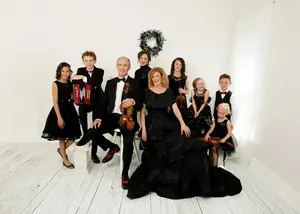
For decades the name Rankin was synonymous with a collective sound, a Celtic revival that swept the nation. Heather had traversed the country countless times, first with the entire family and later with her sisters. She’s seen it all from Windsor to Wawa. And yet, speaking from her Nova Scotia home, there was a sense that this new chapter of touring was fundamentally different.
“It's a bit more interesting now as an older person to, I don't know. You just see through different glasses,” she says. This wasn’t just about logistics or seeing new sights. It was about a recalibrated perspective. The relentless pace of a family band on a tour bus driving through the night had been replaced by a more mindful presence, an artist now more interested in the stories of the towns she was visiting, not just the stages.
The Kingsville gig itself was layered with family history. Her brother Jimmy had headlined the previous year. It’s a scenario that could easily breed competition, but Heather saw it as a testament to their distinct paths. The Rankin Family songbook was a shared language, but their solo dialects were entirely their own.
“I think we both offer something completely different,” she explains. “He does a lot of stuff with just one other guitar player and I travel with three three players. And, you know, I sing Gaelic and he doesn't.” It’s a crucial distinction. This wasn’t a rivalry; it was a diaspora of talent, each sibling exploring a unique corner of their shared musical universe. Life had led them in unexpected directions, and the result was a richer, more diverse legacy.
But the road to a solo career was a long and hesitant one. For years Heather’s creative outlets were fulfilled through the family group, theatre, or Christmas tours with her sisters Cookie and Raylene. A solo record was never really part of the plan. It was a path she never expected to pursue.
The catalyst was bittersweet, born from a period of profound change and uncertainty, particularly during her sister Raylene’s illness. As touring with her sisters became less frequent, Heather found herself with a growing collection of personal songs and no home for them. “It just sort of occurred to me that, you know, I'm writing and I don't really have a platform to share that writing,” she reflects. “So I thought, well, maybe I should, maybe I should start considering doing a solo record.”
That consideration led her to an unlikely collaborator: pop producer David Tyson, known for his work with artists like Alannah Myles. It was a bold move, a deliberate pivot from the traditional folk sound she was known for. “I never in a million years expected that I'd be making a record with somebody from the pop world,” she admits. And yet, the partnership clicked. Together they co-wrote seven of the 11 tracks on A Fine Line, creating a sound that was polished and contemporary but thematically rooted in her personal journey.
I never in a million years expected that I've been making a record with somebody from the pop world.
The album’s title became its thesis. Despite its pop production, a clear thread of vulnerability and introspection runs through the collection. “There's definitely a thread that runs through the music,” Heather notes. “You know, we all walk that fine line. You know, it's very fragile. A gust of wind can tip you one way or the other.” The songs became a document of a life in flux, mirroring the changes both she and Tyson were navigating.
This shift was most apparent in the lyrical content. Her work became deeply personal, a stark contrast to the material she performed with her family. “A lot of the music that I performed with my family was traditional music and it was sung from the perspective of men,” she says. “So, yeah, it is very much so more personal.”
Putting her own life out there felt like a risk. “You feel a bit naked when you're putting your personal feelings out there and referring to personal experience, but very liberating at the same time.” This vulnerability became her new strength, allowing her to connect with audiences on a more intimate level than ever before. It was a sound that surprised many, but it was authentically hers.
Nowhere is this synthesis of history and personal narrative more potent than on the track “Titanically.” The song was inspired by the incredible true story of the violin belonging to Wallace Hartley, the Titanic’s bandmaster, which was discovered in an English attic years later. Rather than simply recount the events, Rankin and Tyson made a brilliant creative choice.
“We thought instead of writing a song about that story, we would write it from the perspective of the violin,” she explains. “Because there's such an attachment between a musician and an instrument. And we imagine that the violin had a soul and imagine its grief being torn from the hands of the person who cared for it most.” The song becomes a haunting metaphor for grief and loss, its historical weight giving depth to a universal human experience.
The song’s ambitious video, directed by acclaimed filmmaker Thom Fitzgerald, was a feat of endurance. Key sequences were shot in a single day at Churchill House in Hantsport, Nova Scotia, followed by a harrowing underwater shoot in a public pool until three in the morning. “I'm not a swimmer, and I was jumping in fully clothed in a full-length dress in, you know, 12 feet of water,” she recalls. Learning to lip-sync underwater was a challenge that tested her resolve, but the result was a visually stunning piece of art.
Another scene required her to be buried in the icy mudflats of the Bay of Fundy at dusk in late September. “It was icy cold, freezing. I couldn't feel my legs and my arms by the end of it,” she says. “But it was, you know, pretty fun rolling around in the mud at the same time.” It’s a perfect anecdote for her career: finding joy and artistry amidst the cold hard work.
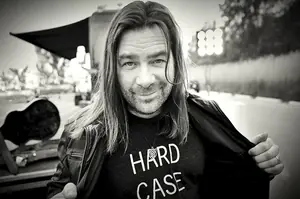
Her comfort in front of the camera extends beyond music videos. With cameo roles in films like The Hanging Garden and a comedic turn on the CBC series Mr. D alongside Alan Frew of Glass Tiger, she has proven herself a versatile performer. But it’s the theatre where she feels most seasoned, having recently performed in plays by Daniel MacIvor at Neptune Theatre in Halifax. Film remains an area she’s eager to explore more deeply.
Even the album’s cover art tells a story of artistic evolution. The stark black-and-white headshot by photographer Deborah Samuel captures a quiet intensity. “She really caught, like, it's almost like a, it's a Mona Lisa shot, in that you don't really know if I'm happy or sad,” Rankin says. It was a departure from the full smile she’d been taught to give the camera, a subtle signal that this project was something different, something more mysterious and complex.
And in a beautiful full-circle moment, the stunning dress she wears in the “Titanically” video has its own history. “That's a dress that I got for the Junos back in, I think it was '99, was when I wore it, or 2000,” she laughs. Pulled from a suitcase, it was the perfect turn-of-the-century piece, a tangible link between the height of her family’s fame and her powerful solo rebirth.
Ultimately, this conversation reveals an artist who has masterfully integrated all facets of her life. The sharp wit and resilience forged by a childhood with 11 siblings are still there, evident in stories of giggling through church services or confessing to smoking at age nine. “We have a great sense of humour,” she affirms. “We are all very witty, and we know how to work hard and we know how to party hard.”
In 2018, Heather Rankin was not just promoting an album. She was reintroducing herself, an artist who had found a powerful new voice by embracing vulnerability, exploring new sonic territory, and honouring a legacy while bravely charting her own course. It was and remains a compelling new chapter in one of Canadian music's great stories.
519 Magazine Archive: We are thrilled to officially unearth the 519 Magazine Digital Vault. This isn't just a re-post; it's a high-fidelity restoration of a pivotal era in music journalism. By pairing original print dates with modern retrospectives, we’re bridging the gap between historical rock-and-roll grit and the lightning-fast performance of today’s web. These stories—once locked in physical print and lost URLs—are now back, fully searchable, and optimized for a new generation of fans.
We are thrilled to officially unearth the 519 Magazine Digital Vault. This isn't just a re-post; it's a high-fidelity restoration of a pivotal era in music journalism. By pairing original print dates with modern retrospectives, we're bridging the gap between historical rock-and-roll grit and the lightning-fast performance of today's web. These stories—once locked in physical print and lost URLs—are now back, fully searchable, and optimized for a new generation of fans.