
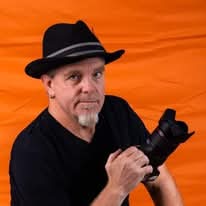
Sitting across from Udo Dirkschneider, you do not see a man ready to settle into the quiet indignity of a retirement home. At 69, the former Accept frontman still carries the physical presence of a steelworker, even if his stature is famously compact. He is the definitive voice of Teutonic metal—that gravel-gargling snarl that turned "Balls to the Wall" into a global anthem in 1983. But nostalgia is a trap, and Udo is too restless to fall for it.
His latest offering, *Game Over*, arrived Oct. 22. It marks his 17th studio outing under the U.D.O. banner, a staggering run of productivity that dwarfs his original tenure with the band that made him famous. The record is a heavy, socially conscious slab of German engineering, featuring a lineup that has finally found its footing, including his son, Sven, on the drum throne.
The record did not come together easily. While most veteran acts spent the lockdowns baking bread or screaming into the void, Udo was navigating the digital divide. The lack of a shared physical space changed the very DNA of the sessions.
"It was a little bit different during the pandemic, to begin the whole album during the pandemic time," Udo says. "Although that was the reason that we have more time, and we can put up a lot of songs. But it was difficult to do the recording and the whole process of the album. Normally, when we are coming up with ideas, we go in one room together and start arranging together with the producer but that was not possible. So that means we did everything over the Zoom, Skype, FaceTime, WhatsApp, stuff we did over the conference and that took time."
There is a distinct lack of "vibe" when you are staring at a bassist through a pixelated WhatsApp window. For a band that thrives on the synchronized chug of a Marshall stack, the latency of a digital connection is a creative killer. Udo admits the back-and-forth was a logistical slog that tested his patience.
"Then you say maybe you can change something here and then you have to wait for a link so you could listen to that, do another conference, and that took some time and then also the major recording in the studio," Udo says. "That was also not possible, it only allowed two people in the room at a time, so that was the sound engineer and one musician, also doing one by one. What can I say, not so easy and normally we would be working different but I think in the end I’m happy with the result. I think we have good songs, there’s a good mix up on the album. I hope people like it."
Despite the isolation, *Game Over* feels more like a collective effort than previous solo outings. The songwriting duties were democratized, moving away from the top-down dictatorship often found in legacy acts. Udo leaned heavily on his younger cohorts—Andrey Smirnov, Dee Dammers and Tilen Hudrap—to provide the melodic scaffolding.
"Everybody," Udo says when asked who handled the writing. "Let’s say of course on some songs the main idea came from Andrey, or from Dee, or from Tilen. For the first time, I was doing all the lyrics together with my son and also he came up here. There’s a lot of trust. He would come up with some melodies and asked, can you do this like this? Or he was changing some melodies of what I was doing. He says 'Yeah but you can do it different' and in the end it was a whole bunch of us working. Everybody was, okay, can we change it here? Can we use another harmony or whatever. So for me this album is definitely a bent album."
The inclusion of Sven Dirkschneider has clearly revitalized the elder statesman. There is a specific energy a son brings to a father’s work—a refusal to let the old man coast. But the making of the album was nearly derailed by a literal disaster. During the devastating 2021 European floods, Sven’s home and studio in Germany were swallowed by water.
"I was lucky before the flood happened we did all the melodies and lyrics for all the songs," Udo says. "That was not really funny at the moment, he can’t live in the house anymore. It not only flooded the cellar but also the basement, it was unbelievable. He might be able to move back to the house maybe next year in March or April."
There is a cruel irony in the timing. *Game Over* deals heavily with the existential threat of the climate crisis. While some metal fans prefer their lyrics to stay in the realm of dragons or motorcycles, Udo has always had a streak of blue-collar realism. Seeing his son’s life submerged while singing about the end of the world added a grim layer of authenticity to the project.
"In a way, I did it more on another one, but on this album it’s also a little bit in there," Udo says of the environmental themes. "But of course we definitely have climate change going on. If you are watching TV, you see all the fires going on in the south of Europe, also California and in Siberia and Russia. There’s also the floods that have happened in Germany, Belgium, the Netherlands, Italy, Switzerland. I think the title of the album fits perfectly now. If we are not doing something then it’s game over. So the title fits."
Sven has been the rhythmic spine of U.D.O. for six years, but his path to the kit was not a choreographed piece of nepotism. It was actually Biff Byford of Saxon who acted as the catalyst. During a stint where Sven was subbing for Saxon’s ailing drummer, the wheels began to turn in the elder Dirkschneider’s head.
"No, not really," Udo says when asked if he always envisioned Sven in the band. "The funny thing was we were looking for a new drummer, of course I had some people in mind and then I was in Berlin for some promotion and Saxon was playing. My son was replacing the drummer of Saxon because he was ill at this time and then I was talking to Biff and I said, well you know I have to look for a new drummer. He instantly said 'yeah while you’re working so far away, why don’t you take your son.' I said 'hey come on, are you sure.' He said 'yeah come on, if he can play with Saxon and stuff he can play the U.D.O stuff.'"
To be honest, nothing, I do nothing. The only thing I did seventeen years ago was stopped smoking... I never warm up before I go on stage. I never warm up before I start singing in the studio. I don’t know, I’m lucky, I’m really lucky.
The transition from father to employer is a minefield that many rock dynasties fail to navigate. Udo was acutely aware that the rest of the band might view the move with suspicion, fearing a "boss’s kid" dynamic that would ruin the road-warrior chemistry they had built.
"I was asking my son," Udo says. "I said 'You think you can do that? Or do you want to do that?' And it took awhile and then he came up and said, 'Okay I’ll do it.' He’s been in the band for six years now. He became in my opinion, a really, really good drummer. And he’s really into that and he’s doing a lot of stuff for U.D.O. I can say I’m really proud of him and what he did. In the beginning I was never thinking about how my son is playing now or sitting behind me now on stage."
The professional boundary had to be established immediately. In the tight quarters of a tour bus, family drama can be toxic. Udo set the ground rules early to ensure the band remained a cohesive unit rather than a domestic dispute on wheels.
"Yeah. The rest of the members were a little bit scared," Udo admits. "They were like 'oh no, the son of Udo is in the band.' But I made it clear directly from the beginning, I said 'guys this is a member of the band and if you have to do something in private, maybe do it in private and not in front of the band.' I don’t want to say it’s not a typical father and son thing, but it’s more a friendship. It worked perfectly."
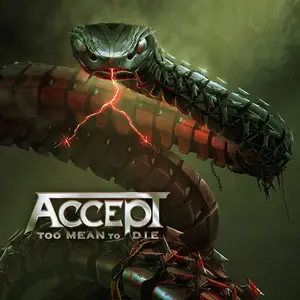
The Dirkschneider name remains synonymous with a specific brand of high-voltage rock. Recently, Udo contributed to a tribute project for AC/DC, covering "Shoot to Thrill." The connection to the Australian legends is deep; for decades, critics have compared Udo’s raspy delivery to Brian Johnson, though his roots are arguably closer to the snarling punk energy of Bon Scott.
"Yeah, Peter Baltes was asking me, 'is it possible to do one song,' but his son is in his band, you know," Udo says. "I said 'yeah Peter why not, I mean, which song is it?' 'Oh I’m doing a tribute for AC/DC' and I said 'yeah' and then I did it, so no problem at all."
The comparison to Brian Johnson is something Udo has lived with since the late seventies. It is a backhanded compliment that suggests he is the logical understudy for the biggest hard rock band on the planet.
"Yeah, but sometimes people are writing 'okay next time if AC/DC has a problem with a singer then Udo can replace the singer,'" he says with a shrug. When it is suggested he actually sounds more like Bon Scott, he nods. "Also, a lot of people were talking when I was younger, I was a little bit more in this direction. But I never did any copy of Bon Scott. But it was very interesting what people said."
Maintaining that signature rasp for over four decades should, by all rights, require a sophisticated regimen of vocal coaches and herbal teas. Instead, Udo treats his voice like an old diesel engine—it just runs. His lack of a warm-up routine is a technical anomaly that would make most opera singers faint.
"To be honest, nothing, I do nothing," Udo says. "The only thing I did 17 years ago was stopped smoking and the rest I don’t have any lessons. I never warm up before I go on stage. I never warm up before I start singing in the studio. I don’t know I’m lucky, I’m really lucky."
The AC/DC tether isn't just about the voice; it’s about the songs. Early in Accept’s career, the band recorded "I’m a Rebel," a track originally penned by Alex Young (brother of Angus and Malcolm). It remains a strange footnote in metal history—a rejected AC/DC demo that became an Accept staple.
"That was when we got to demo that for the 'I’m a Rebel' album," Udo says. "Our publisher came up and said, 'hey we have an A track demo from AC/DC but they don’t want to use the song, are you interested' 'Yeah.' 'Okay let’s have a listen' and then we said, 'oh yes, of course we want to do that.' It’s a little bit more softer than the original one, but it’s a little bit more funky in there. Sometimes I play that song as an encore. It just went worldwide, unbelievable. That’s on AC/DC then they didn’t use it."
Udo’s relationship with his own history is complicated. A few years ago, he embarked on the "Dirkschneider" tour, billed as his final farewell to the Accept catalogue. He promised to never play those songs again, wanting to let U.D.O. stand on its own merits. But the reality of the touring circuit—and the demands of promoters—eventually caught up with him.
"With the way the world is, I was too quick to say that I won’t play any Accept songs anymore, after three years and nearly 300 shows that we did," Udo says. "I also had enough U.D.O stuff. People are always asking about this, they want to definitely hear the classic stuff from time to time, so I do this, but it’s not really planned. We don’t have to rehearse the songs because we played them so many times and if we are in the mood, we do it and if we are not, then we don’t do it."
In North America, the pressure to play the hits is even more intense. For many fans on this side of the Atlantic, Udo *is* "Balls to the Wall." It is the "Smoke on the Water" of German metal—a riff so iconic it threatens to overshadow everything else he has done.
"Oh yeah of course it’s like history," Udo says. "In a way, all the people are definitely always asking for 'Balls to the Wall'. It was one of the biggest songs for Accept back in America. The promoters for example when we were talking about the American tour, we heard that Udo said he would never played any Accept songs and my management said yes, but U.D.O can’t do a tour without doing 'Balls to the Wall'. Then I said 'okay please tell the promoters no problem, I’ll play that one in America.' I know that the people want to hear that, it’s in a way you mentioned Deep Purple without 'Smoke on the Water', the people want to hear this."
He views the song as a hook, a necessary entry point for younger fans who might not have followed his 17-album solo journey. "Yeah but I’ve been out two times already with U.D.O on tour, they already know a lot of stuff with U.D.O but of course they wish they could hear more Accept songs. But anyway, I can live with the whole situation."
The split from Accept in 1987 remains one of the more civil divorces in rock history. While most bands dissolve in a flurry of lawsuits, Accept actually wrote Udo’s first solo album, *Animal House*, as a parting gift. They wanted to chase the polished, commercial sound of the American charts; Udo wanted to keep his boots in the mud.
"The album Animal House, was normally planned for after the Russian Roulette album, but they wanted to be more commercial, more American marketed," Udo says. "I didn’t want to do that. They said they didn’t need these songs, and if I wanted to do some more completely different stuff, I could take all these songs and do whatever I wanted with it. To me it was an easy start to do my solo thing and it was quite successful. Everybody says this Accept album - wow! Under the name Accept, I said 'yeah I’m lucky maybe.'"
While he remains on good terms with former bassist Peter Baltes, the relationship with guitarist Wolf Hoffmann is clearly fractured. It is the classic creative impasse—two titans who can no longer occupy the same theatre.
"Yeah of course, I worked together with Peter Baltes as he was on the We are One album," Udo says. "He left Accept but he has to tell the world why, I don’t want to do that. I know why but anyway it’s not my thing. For me, the most difficult thing is to work together with Wolf, there’s many reasons it doesn’t work. In the meanwhile I did a new album over 17 U.D.O albums, but of course the Accept history will always be there. But U.D.O can tour world wide, we can do headline shows, we have a really good reaction on U.D.O."
Udo is not afraid of the "symphonic" tag that has become a cliché in European metal, but he approaches it with a military precision. His collaboration with the German Army band, *We Are One*, was a masterclass in power over polish. He has no interest in the delicate, floral arrangements that define many symphonic metal acts.
"I’d always wished to do something with an Orchestra but not with a Symphony like violins and cello’s and all that stuff, it’s too soft and I don’t want to do that," Udo says. "For some reason, I met all these guys who were the best and then felt those were the songs I want to have and so we did an album together. It was still metal, heavy metal. I was really happy to do this, it was a lot of work but the end result, I was really happy with that."
The pandemic nearly killed the momentum of that project, but a rare outdoor show provided a glimpse of what the collaboration could be. It was a moment of normalcy in a world that had gone quiet.
"It was our plan to do this last year at the festival but because of the pandemic, it was not possible," Udo says. "Of course lots of people said 'oh no U.D.O. is coming out with this,' but then when the album came out it was like 'oh whoa what’s this.' Yes that was, the promoter came up and asked if we would like to do an outdoor show and I said 'yeah okay.' But in the end it really worked and then they showed the venue and it was 'Wow that looks fantastic' so we recorded and everything is done."
Udo Dirkschneider remains a man of the road, even when the road is closed. With *Game Over*, he has proven that the snarl is still there, the family business is thriving and the end is nowhere in sight. Check out UDO-Online.com for tour dates and music. Just don't expect him to warm up before the show.