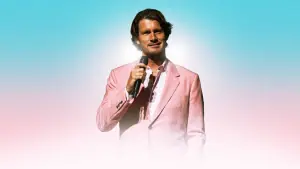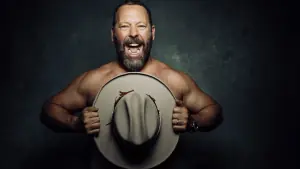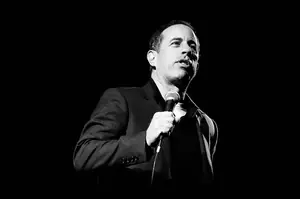

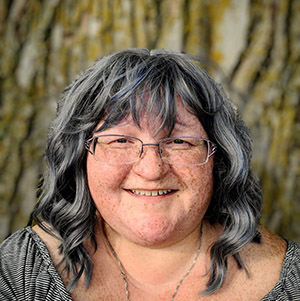
Sitting in the velvet-lined hush of Sarnia’s Imperial Theatre, you can almost smell the stale beer and desperation of the road—the natural habitat of Brent Butt. Most Canadians know him as the face of a billion-dollar sitcom empire, but standing in the wings, he still carries the jittery, observant energy of a guy who just stepped off a Greyhound in Saskatoon. He is here for a March 28 date, and while the venues have gotten plushier, the man remains anchored to the flat-horizoned boredom of the prairies that birthed his career.
Butt is the architect of *Corner Gas*, a show that defied the gravitational pull of Canadian television failure. It shouldn't have worked. It was a show about nothing in a place where nothing happens. Yet, it became a cultural juggernaut. When we sat down to talk, he wasn't interested in the glossy legacy. He wanted to talk about the mechanics of the mundane.
Our conversation started where he did: Tisdale, Saskatchewan. It is a town that looms large in the Canadian imagination now, though Butt is quick to point out the geographical discrepancies between reality and the Dog River of our screens.
"To the extent that I think where you grow up really has an effect on anything that you do creatively and artistically, but Tisdale is a much bigger town than Dog River," Butt says. "So, Tisdale is about 3,500 people. Dog River is more like the little towns that surround Tisdale, like Crooked River and Sylvania and Eldersley and Bjorkdale and Star City, and all the little towns."
There is a specific kind of creative fuel found in those gaps between the map dots. It’s a rhythm of life dictated by the local Co-op and the price of diesel. Butt didn't have to research this world; he lived it until it was under his fingernails.
"But that whole, small town, hanging out in the coffee shop, hanging out at the gas station, that’s what I did in Tisdale all the time," he notes. "Most of my friends worked at the gas station, and we would just hang out there and go for coffee. So, that part of it was kind of my life."
And that life translated into a success that felt impossible in the early 2000s. Before *Corner Gas*, the Canadian sitcom was a punchline—a graveyard of good intentions and low budgets. Butt entered the arena with the liberating expectation of total failure.
"No, I didn’t even think it was going to be successful in Canada, to be honest. Right? I don’t think any of us did," he admits. "Sitcoms don’t have a long glorious track record, especially at that time. We’ve had some more successes since, but the number of successful Canadian sitcoms that have been in existence prior to Corner Gas were very few and far between."
This lack of hope was his secret weapon. Without the pressure to "go big" or appeal to a global demographic, the writers were free to be weird. They were free to be Canadian.
"So, when we got the opportunity to do Corner Gas, I think we all went into it with the notion that very likely nobody’s going to watch this show, and I think that helped us in a way because it stopped us from looking at it like, what do we do to get a big audience?" Butt explains. "Because we just thought, we’re never going to get a big audience. So, let’s just do what we think is a good, funny show. Let’s satisfy ourselves and do what we truly find entertaining and funny ourselves because, at the end of the day, that’s all we’re going to have, and I think that translated into a very authentic show and people responded to that."
The success of the show opened doors that a kid from Tisdale had no business walking through. Suddenly, the "greasy nightclub comic" was hosting the Junos and living out adolescent power fantasies on a national stage.
"It was another one of those, 'look at this cool thing I get to do because of Corner Gas.' That falls on the list of cool things I get to do," he says. "I remember the opening bit that we came up with is that I would come out playing a double-necked guitar because the Junos is a music show. So, the notion I would come out dressed in a KISS costume, playing a double-neck guitar, and I do play guitar a bit, so I got to come out and it was like living a rock and roll fantasy. There’s 13,000 people in the stadium and I got really high KISS boots on and I’m playing a double-neck guitar and there’s flash pots going off. I got to have my little rock and roll dream."
But the glamour of the Junos is the outlier. Butt’s heart is still in the clubs, even if the clubs are now 1,000-seat theatres. His stand-up hasn't been softened by the sitcom money; it’s just been refined by the creeping reality of middle age.
"I really would not put the word focus in anything that I do comedically," he says of his current tour. "I go out and I’m all over the map. I talk a lot about travel and being a middle-aged guy now. I don’t think my sense of humour has changed a lot from the time I first started playing clubs when I was in my early 20s. I think my sense of humour is pretty much the same, and it’s all about just trying to find the comedy in the mundane."
The show didn't just give him a career; it gave him a life. He met his wife, Nancy Robertson, on set. It’s the kind of personal payoff that makes the long hours in the Saskatchewan sun worth it.
"It would be hard to even quantify that. I fell in love and got a wife out of the deal. I met Nancy doing the show," he says. "I didn't really know her before that. I knew who she was, but I didn't really know her, and as a live performer, it raises your profile. More people know who you are and more people are likely willing to come to your live shows, and so it's afforded to me to play some nicer, bigger venues. It's not always just some small comedy club somewhere."
The perks of the job are surreal. Butt recounts stories of meeting his idols with the wide-eyed disbelief of a fan who snuck backstage.
"It's hard to quantify the number of just interesting things that I've gotten to do. Throwing up the first pitch at Wrigley field at a Chicago Cubs' game, meeting Queen Elizabeth, meeting Michael J. Fox, who I've looked up to him since forever," he recalls. "Eugene Levy, I remember seeing Eugene Levy and Steve Martin walking down the street in Toronto, and I stood up and saluted because they are two comedy icons and then Eugene Levy says, 'Hey! I know you,' and they came over and started talking to me about Corner Gas and told Steve Martin, 'Oh, this guy does this great show,' and I was like, I couldn't believe it. Here's two of my comedy heroes and one of them is telling the other one who I am and that he liked my work."
Despite the brushes with royalty and comedy legends, Butt remains grounded. He views himself through a lens of blue-collar pragmatism.
"It's changed my life in so many ways. It would be difficult to quantify other than to just sit here and list a million really cool things I've gotten to do since, but at the end of the day, I always look at it like I'm still just a greasy nightclub comic and I get to go on the road and tour and it's still my very favourite thing to do," he says.
When the live-action series ended, the story of Dog River didn't die. It shifted into the world of animation. This wasn't just a gimmick; it was a necessity born of respect and logistics. The passing of Janet Wright, who played the formidable Emma Fillmore, changed the chemistry of the physical set.
"One of the reasons was that Janet, who's now passed away, her health wouldn't have allowed us to do more live action," Butt explains. "She was in the movie, but her health wasn't in a great place, and so we thought we had done 107 episodes of the live action. We did the movie. It felt like there's no reason to go back and do the same thing. If we were going to go back, if we were going to revisit Dog River, let's do it in a way that is somehow different, and yet keep everything that people like about the show. So, I have a background in illustration and cartooning, and it was a pretty easy leap to say, 'Well what if we tried animating?'"
I always liked being funny and trying to get laughs. I grew up in a house where that was a big part of the day. ... If I could ever make my older brothers or sisters laugh, that seemed like I had really done something then, because they wouldn't give it up easily to the little kid. ... I watched and I'd never seen somebody just standing there talking and being funny. ... That just changed my world, right there. From that moment on, that was the only thing that made sense to me. After watching that show, I went out and told my mom I wanted to be a comedian.
He leaned on industry veterans like Norm Hitchcock to bridge the gap between the soundstage and the drawing board.
"I'm also a big fan of shows like the Simpsons and Bob's Burgers. So, we said, 'What if we tried animating the show?' I was in a fortunate position in that one of the guys who wrote on Corner Gas, live action, the guy named Norm Hitchcock, he wrote on Corner Gas and years before that, he had written on King of the Hill. So, here's a guy who understand our show and he understands adult primetime network animation. So, I was able to talk to him and said, 'Listen, if we were to animate Corner Gas, what would we do differently? How would we do things different?' And he said, 'Don't do anything different.' He said, 'This is the perfect show to animate. Seriously. All you got to do is write more scripts. This show would work great in animation.'"
The animated format allowed for a broader scope of guest stars. It’s easier to get a Hollywood icon to sit in a booth for 30 minutes than it is to drag them to a field in Regina.
"Well, more guest stars, more cameos. That's always a fun thing to do," Butt says of the animated seasons. "That's one of the nice things we always did with the live action, but it was sometimes difficult to get people to participate with their schedules when we were asking them to come to Regina. It could sometimes be logistically difficult, and with animation, you just need their voice. It's much easier to get people to say 'yes'. Like, when we had Michael J. Fox do his cameo, I just went to New York where he was and brought recording equipment and I acted the scene out with them and gave him some direction and he recorded his voice. And sometimes you get people to come into either the studio in Vancouver or the studio in Toronto and, you know, it takes a half hour of their time. So, it's easier to get people on board. So, there's more of that coming up."
What makes *Corner Gas* unique in the era of binge-watching and complex narrative arcs is its stubborn refusal to change. It is a show built on the "reset."
"One of the things that I always make sure with Corner Gas is that every episode stands alone. Every episode resets," Butt explains. "So, by the time the episode is done, we're right back where we were and can start over. So, there's never any big story arcs that we talked about. They're all very small stories, and I think that's one of the things that people appreciate about the show. There's no growth."
That "no growth" philosophy is a daring artistic choice. In a world obsessed with character development, Butt recognized that the comfort of the status quo is what people actually crave. It’s the same comfort he found in a house full of seven kids, where comedy was the only currency that mattered.
"I always liked being funny and trying to get laughs. I grew up in a house where that was a big part of the day," he says. "We were all trying to crack each other up. There were seven kids and mom and dad. There were nine of us in the house, didn't have any money, and you really had to make your own entertainment, and there were two channels on TV, and usually those were pretty snowy."
In that environment, a laugh was a victory.
"It really comes down to entertaining yourself, and for me, it was always a big deal because I was the youngest. If I could ever make my older brothers or sisters laugh, that seemed like I had really done something then, because they wouldn't give it up easily to the little kid," he says.
The epiphany came at age 12, watching the *Alan Hamel Show*. He saw Kelly Monteith and realized that talking could be a job.
"I think early on, I got enamoured by the notion of trying to be funny and getting laughs because if I could make my older brothers and sisters laugh, I really felt like I'd accomplished something, and I liked being funny with my buddies at school and just hanging out. There was some natural ingrained sense of doing that, but then when I was 12 years old during summer holidays, I was home from school and there used to be a talk show that came on in the afternoon, the Canadian talk show or the Alan Hamel show. It came out of Vancouver, later became the Alan Thicke show, but it was an afternoon talk show. I was watching that, and they were announcing who the guests were and they said, 'and comedian Kelly Monteith,' and I didn't really know what that meant, but I knew comedian was a funny thing, and I always liked comedy."
It was a lightbulb moment that never flickered out.
"I watched and I'd never seen somebody just standing there talking and being funny. I'd seen sketch comedy and lots of sitcoms and funny movies and funny TV shows, but somebody coming out and standing and talking and being funny, I've never seen that and a blew me away, and I basically thought this is what I tried to do with my friends at school all the time," Butt says. "And that just changed my world, right there. From that moment on, that was the only thing that made sense to me. After watching that show, I went out and told my mom I wanted to be a comedian."
His first time on stage was a high school Variety Night. It was an instant hit.
"Well, my first stand-up performance was in high school. I did it at a Variety Night, and it went over gangbusters. They'd never had anything like that before. I didn't know what to expect or how it was going to go, but it went over great, and that just cemented it for me. From that point on, there was no turning back. I did it again the next year in high school."
But the real test came at a club in Saskatoon.
"Then after I graduated there was a club that opened up in Saskatoon that had a comedy club Amateur Night. So, I called up and said, 'I want to come down and try doing stand-up on Amateur Night,' and that was the first time doing it for people who didn't know who I was. And that first show at the club, I've always said it's probably the best show I've ever had. It's been 30-some years of trying to capture another show as good as that first show."
It’s a common trap for comics—the first-time high that you spend a lifetime chasing.
"That's not uncommon either. A lot of comedians, they say their first time up, whatever it is, the nerves or the performance pressure, the first show goes really well and then it's the second, third, fourth, fifth ones that you kind of struggle," he admits.
When he isn't mining his life for bits, he’s a consumer of an incredibly bizarre musical diet. His playlist is a chaotic mess of genres.
"Yeah. I like to play and listen to music. Whenever I'm on a flight, that's always what I'm doing. I have my headphones in. I just have my playlist on shuffle and all my favourite songs are on, but it's a very eclectic mix. Sometimes I'll laugh if I have my playlist of favourite songs on shuffle, and it'll go from Megadeth to Bucko to Dido to Glenn Miller. It's all over the map. I don't really have a favourite genre, turns out. I just like good songs."
He admits to being a fan who lacks the encyclopedic knowledge of a "music guy."
"I don't have any retention. Right? Or, it's like, I have friends of mine who really like music and to me, they know who did what song and what year and one of the things I've realized having satellite radio in the car, it'll say the name of the song that's playing and who did it, and there's so many songs that I've heard a million times in my life and I go, 'Oh, I could've never told you the name of that song or who the artist was.' So, it's kind of nice having this display. I'm learning all these songs that I liked from the '70s and the '80s, where it's like, 'Oh, I didn't know that's the person who did that or that's what the song was called.'"
He’s not just a listener; he’s a failed rocker.
"I do love music. I play guitar and play drums and a little bit of keyboard. I have a keyboard that I jerk around for fun. I was in a band in high school, but we were pretty bad," he laughs.
His musical highlights often bled into the show. One of the most iconic cameos in Canadian TV history involved The Tragically Hip in a garage.
"I remember when we had Tragically Hip on doing a cameo and they were playing. We referred to them as some local kids who I was letting practice music in my garage, and then we'd open the garage and then Tragically Hip are in there playing," Butt says. "That was pretty wild because these guys, they just didn't have any off button. Like, there's no going halfway for them. We were shooting this scene at 7:30 in the morning. They were still going full bore rock and roll, and Gord Downey was just bouncing out the song for all he was worth. They don't have the ability to downplay the song. There were maybe 80 of us in the studio getting this live concert, basically, from the biggest band in the country that usually plays arenas and here we are in our little studio, in my garage set, getting a private show. That was very surreal."
The show’s reach was so pervasive it even pulled in the highest levels of government.
"We've had three prime ministers on the show now, if you include the animated show. They had Daryl Fiddler. That was pretty amazing. He looks like he could still play," he notes.
Butt has a soft spot for the crowds in Newfoundland, who he claims are his toughest critics.
"It's hard to beat Newfoundland. I always say the toughest thing about going to Newfoundland as a comedian is that everybody in the crowd is 10 times funnier than you'll ever be, but they really appreciate comedy and really appreciate humour, and I find shows in Newfoundland to be a lot of fun."
As for Sarnia, he’s not just blowing smoke. He has a genuine appreciation for the city, backed up by fellow comic John Wing Jr.
"This sounds like I'm pandering to you because in regard to the Sarnia show I've played Sarnia a couple of times. A friend of mine, John Wayne Jr. is from Sarnia and very funny comedian, been on The Tonight Show a bunch of times. I called him up and said, 'Man, I just did a show in your hometown, Sarnia. It just killed. The audience, was amazing.' And he said, 'Yeah, I don't know what it is, man. That's still one of my favourite places to do a show. The crowds in Sarnia just get it.' And it's true. Also, for some reason, Winnipeg and Edmonton are very supportive of not just comedy, but any kind of live theater, live music. I don't know what it is, but those two cities, Winnipeg and Edmonton. They're just supportive and they want live arts to be going on in their city and they come out and they support and they get into it."
Don’t expect a lot of local pandering, though. Butt is a pro; he knows that a good joke travels, regardless of the area code.
"Not really. I don't have any real Sarnia-specific material. Between now and then, I might come up with a couple things, but it's difficult to do that," he says. "When you're on tour, going to different towns, different cities, it's hard to really change it up and make it very specific to each place. You know, you're doing a different town every night, and it's just logistically impractical."
For Butt, the venue size is irrelevant. He’s performed for the masses and for the absolute minimum.
"Man, I never even look at it that way. I always just look at it as an audience. Some people are in this room. We're all here right now. I don't even really think about where we are very much. The type of thing that I do, it can kind of work at a 3,000-seat theater or a 200-seat theater. You know, I'm fortunate that way," he says. "I've performed in front of 20,000 people and I've performed in front of 11 people, and actually I've performed in front of two people once at a club here in Vancouver."
That two-person show remains a highlight of his professional integrity.
"Back in the early '90s, there was a comedy show at a club downtown and it was just kind of starting out, the comedy thing, and there were nine comedians there and there was one couple that could come up, and we gave them the option. We said, 'Well, we're happy to give you your money back and didn't go. Or, if you want, we'll also do a show for you.' And they were like, 'Yeah, we'll do the show.' So, what we did was the comedians, instead of going up one after the other, we just stood around their table and we would all do a joke or two. We took turns and it ended being a very cool night."
That’s Brent Butt in a nutshell. Whether he’s standing in a garage with the Tragically Hip or hovering over a single table in a Vancouver basement, the goal is the same: the laugh. It’s a blue-collar approach to a white-collar career, and Sarnia is lucky to have him.
Get Tickets