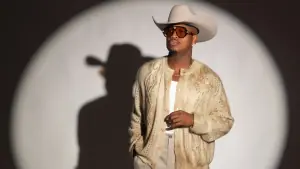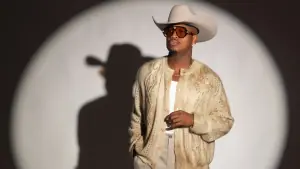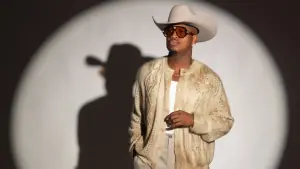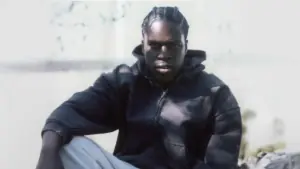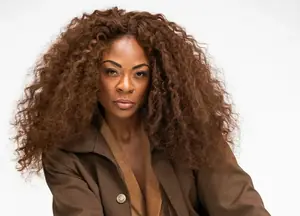

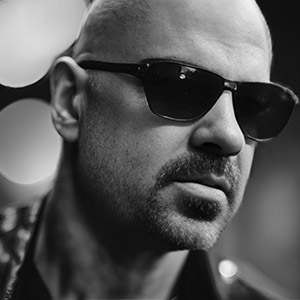
Sitting in the back of a dimly lit Toronto studio, the air heavy with the scent of expensive espresso and the ghost of analogue tape, you realize Dan Hill is not just a songwriter. He is a surveyor of the human condition who happens to have a penchant for melodies that stick to your ribs for 40 years. We are looking at the digital files for Something More, a "new" single that has actually been marinating in the vaults for two decades. It is a relic of a specific era in Canadian music, featuring a young Jully Black before she became the undisputed queen of R&B in this country.
The track is a collision of worlds: Hill’s seasoned, almost architectural approach to pop and Black’s raw, kinetic energy. It is the kind of recording that reminds you why the industry used to invest in development. But the story of why it took 20 years to reach your speakers is a cynical masterclass in label politics and the brutal expiration date the industry slaps on its legends.
Hill is remarkably unsentimental about the mechanics of fame. He understands the machinery better than most because he survived the transition from being the face on the record sleeve to the ghost in the machine. He tells me that the shift was born out of a cold, hard reality regarding how radio operates.
"Well Jully and I are, first and foremost, just really close friends," Hill says, leaning back as if recounting a war story. "For the first 20 years of my career, it was all about me. I was the artist. I was the star. I was the celebrity. When I crossed the 40 threshold, it’s very, very hard to get new songs on the radio. I don’t care if you’re Bruce Springsteen, Gordon Lightfoot, Joni Mitchell or Elton John, once you hit 40, radio will not play your new song."
It is a bitter pill, but Hill swallowed it and moved into the shadows of the booth. He traded the spotlight for the producer’s chair, a move that kept him relevant while his peers were being relegated to the "oldies" bin. He became the guy the labels called when their young stars needed a hit that actually had structural integrity.
"I did what is typical of many people in my situation, I crossed from being an artist competing against the likes of Celine Dion and Britney Spears, to being a songwriter and producer, whereby I was writing songs and producing for Britney Spears, Celine Dion, Rod Stewart, Michael Bolton," he says. "In the capacity of me now being the songwriter, producer, labels were always sending me their artists, because they needed hit songs."
This is how Jully Black entered his orbit. In the early 2000s, Black was the rising star at Universal, a powerhouse with a voice that could level a building but still looking for the right vessel for her talent. The label sent her to Hill’s home, hoping for a spark. What they got was a bonfire.
"Jully is one example of an artist at the time, who was signed to Universal as an artist," Hill notes. "Universal sent her to me because they were looking to help her write songs. She comes over to my place and we immediately hit it off. At this point, she was only 24. We had so many commonalities, even though we’re from different generations. With both of us being Black or biracial, and trying to find traction in the industry both in Canada around the world, I just immediately was drawn to her, and her to me."
The session was not just about professional synergy; it was a shared venting of the frustrations inherent in being a person of colour in a predominantly white Canadian industry. They were looking for an antidote to the cynicism of the era.
"We were just talking about all the stuff that was going on in the world back then," Hill says. "And just like now, there’s a lot of stuff going on that’s not the slight bit positive. I think we both really felt that we wanted to write a song that was inspirational and that had shimmering light. A bit of healing through positivity as a way to give people some hope and aspiration amongst all the ruin that we were being exposed to. That’s exactly why we wrote Something More. It happened very quickly. I just sat at my piano, Jully sitting next to me on the piano bench, and boom, the song was done in an hour. You can never really predict how relevant a song is going to be. And you certainly can’t predict how it’s going to be perceived 5, 10, 15, 40 years later."
So, why did a "smash" sit in a drawer for two decades? The answer is the classic industry pivot. Labels often get cold feet when an artist moves away from the "street" image they’ve carefully curated. In the early 2000s, the push for "authenticity" in R&B usually meant trading melody for grit.
"I went through the same thing with George Benson," Hill explains. "We wrote a song together that got shelved and eventually came out to become a hit single. Twenty years ago, Universal said Something More was a smash, but then, for reasons I’m not totally clear on, Jully or her label decided that they wanted to go a more hardcore street rap, hardcore Hip Hop route. The song got shelved."
In Hill’s world, songs have a way of haunting their creators until they find a home. He cites Anne Murray’s You Needed Me and Rod Stewart’s My Heart as examples of tracks that waited years, or even decades, to find their moment. The catalyst for Something More finally seeing the light of day was a chance encounter at the legendary El Mocambo.
"I was doing a show at the El Mocambo to promote the release of my last album from 2021 and Jully was there," Hill says. "It was so great to see her. And then she said, 'What about that song? We should do something.' Boom, the lights go off and here we are with Something More out 20 years later."
The track remains remarkably fresh, largely because the production was handled by a then-rising Adam Messinger. Messinger has since become a titan in the industry, but back then, he was just another talent in Hill’s circle.
"Well, that’s the great thing is, I produced this with Adam Messinger, who right now is probably the hottest producer/songwriter on the planet," Hill says. "He’s written and produced hits for Justin Bieber, Usher, Chris Brown. I was working with Adam, and we produced the song 20 years ago."
Hill has always been an outlier in the Canadian scene because of his willingness to be uncomfortably honest. His 1977 mega-hit, Sometimes When We Touch, is the gold standard for vulnerability, a song that Hill admits he was terrified to release because it defied the hyper-masculine tropes of the 70s.
"Sometimes When We Touch. I thought it was too personal," he admits. "I didn’t think anywhere in the world, anyone would be able to accept a man saying those kinds of words, especially not in 1977. Men were not supposed to be vulnerable, fragile, emotional, passionate."
The song was a middle finger to the "tough guy" aesthetic of the era. Hill and co-writer Barry Mann knew they were playing with fire by being that transparent.
"I broke every rule in the book, according to how a man was supposed to behave," Hill says. "Barry Mann who wrote it with me – we both thought, 'The only reason this song is not going to be a hit is because it’s too damn good. And it’s going to scare the bejesus out of people, because there’s never been a precedent of a man saying these kinds of words in a song before.' That was too personal."
Into my house walks Celine Dion in 1987. She’s 18 and she can’t speak English. At that time she’s only known in French Quebec. Well, after she sang the second half of the first verse, I knew that she was it.
That honesty has not faded with age. His recent work, specifically the single What About Black Lives, tackles systemic racism with a directness that most Canadian artists avoid. Hill uses a specific structural technique to ensure the message lands without sounding like a lecture.
"Yes, I do," Hill says when asked if music still has the power to shift perspectives. "I used a trick that Marvin Gaye used and that I also used in Can’t We Try, it is a technical songwriter’s trick. If the title of your song and the first line of the chorus is a question, what that does is it doesn’t make it so pedagogical. It’s opening up and asking the question for all of us to ask, as opposed to telling people how they should feel. I’m biracial. I have my own story. We all have our stories, regardless of our race or our family background. I’ve had a lot of stories related to me growing up biracial in a totally White neighborhood."
The song was a visceral reaction to the murder of George Floyd, but it was also a summation of four centuries of trauma. It is a heavy track, one that Hill found difficult to navigate emotionally.
"When I wrote What about Black Lives, it was initially spurred on by what happened with George Floyd, but really, it was just a symbol of what it would have been going on for the last 400 years," he says. "It was an emotional song for me to write. I have a hard time talking about these issues, but it was a necessary song for me to write."
Despite a career built on ballads, this was the first time Hill saw a significant breakthrough on urban radio in the United States. It was a validation of his lived experience.
"I have written about these kinds of issues in a lot of songs before, but none of those songs have been hits," he notes. "The hits are always my love songs - that being said, this was the first song that I released as a single that got a significant media response. It did very, very well on urban Black radio in America."
Hill’s perspective on the industry is coloured by decades of seeing the same patterns repeat. He watches current Canadian superstars like Drake and the Weeknd complain about Grammy snubs and sees a history they seem to be ignoring.
"The thing is, now I have this historical knowledge regarding racism that, understandably, people don’t have," Hill says. "For example, I have tremendous respect and admiration for both Drake and the Weeknd, but when they write about being snubbed at the Grammys, which they were because of their race, they seem to forget that this is always going on."
He points to his own 1979 Grammy loss as a prime example of the institutional bias that has plagued the awards for decades.
"In my new book, I’m writing about how I was nominated for Best Male Vocalist of the Year Grammys in 1979 for Sometimes When We Touch," he says. "I lost to Barry Manilow for Copacabana (At the Copa). I tell everybody to download both those videos and tell me who’s the better singer. Plus, Manilow also cut and released Sometimes When We Touch."
It is a bold claim, but Hill has the receipts. The vocal gymnastics required for his signature hit far outweigh the campy charm of Manilow’s disco anthem.
"It’s pretty clear that I’m a better singer than Manilow," Hill states flatly. "And so, I felt it was just important historically to let people know, including Drake and the Weeknd, that this stuff has been going on since time immemorial."
Hill’s musical identity was forged in a household that rejected the pop fluff of the day in favour of jazz greats and classical rigour. He was a child prodigy who found solace in the speakers.
"I was a really weird kid," he says. "I was totally transported by music ever since I was one-year-old. I would sit and listen to my parents’ music. All of us, for the most part, are initially introduced to music either through our parents or through older siblings. Since I’m the oldest, it was my parents that influenced me."
His father’s record collection was a masterclass in phrasing and emotion, featuring the likes of Ray Charles and Billie Holiday.
"My dad only liked Black jazz music, so I fell in love with Ray Charles, Billie Holiday and Ella Fitzgerald," Hill recalls. "They had to pry me away from the speakers. I was so hooked on this music; I would just sit at the speakers and rock."
By the time he was a pre-teen, Hill was already teaching guitar and writing songs that leaned into the "hyper-emotional" territory that would later define his career.
"By three, I’d memorized every lyric," he says. "My idea of how life went was based on the lyrics that I heard. Then I started studying classical guitar when I was seven. For some reason, I was really good at it and started teaching classical guitar when I was 10 - then started writing songs when I was 11. A lot of what I wrote was an outgrowth of what I was first experienced to. So, I was writing hyper emotional, passionate songs that played on that influence."
The shadow of Sometimes When We Touch is long, and while some artists grow to resent their biggest hits, Hill has reached a level of Zen about it. He knows he has other hits, but he accepts that the world sees him through the lens of that one song.
"I have written songs that have been hits that are just as big or bigger than Sometimes When We Touch, but since I haven’t sung several of them myself, people are always going to think I’m Mr. Sometimes When We Touch," he says. "The reality is Can’t We Try was the number 1 adult contemporary song of the year on Billboard in 1987. I have had songs as big as Sometimes When We Touch, but it is what it is."
The song’s cultural footprint is massive, extending far beyond the radio. It has become a global anthem, sung in soccer stadiums and spoofed by late-night hosts.
"As of two weeks ago, you can download a clip of 70,000 German soccer fans singing Sometimes When We Touch at a game," Hill says with a hint of disbelief. "A day doesn’t go by where there aren’t at least 15 different covers of that song. Even David Letterman made a spoof on Sometimes. I can’t get away from that song. It’s just this crazy phenomenon. It is one of the most played songs of all time and one of the most covered songs of all time. Dolly Parton says it’s the best song ever written. What can I say?"
The lyrics, which were once criticized for being too intense, were actually a literal transcription of a moment of overwhelming physical and emotional connection.
"I was young when I wrote it," Hill says. "This woman and I would start to touch, which I’d never done before with a woman, all the words went out the window. I was like I was a goner. I couldn’t even think. I was like in this crazy, spellbound haze, which is why I wrote, 'Sometimes when we touch, the honesty is too much,' because the minute I touched her, everything went haywire. Every single word in that song is based on what happened."
He even faced backlash from feminist groups for a specific line that was misinterpreted as advocating for violence, a controversy that only subsided when female icons began covering the track.
"And then when I wrote, 'At times, I would like to break you and drive you to your knees,' when it was a hit, all these women’s libers in New York boycotted the song saying it was advocating violence towards women," Hill recalls. "But the minute Tina Turner, Dolly Parton and Tammy Wynette cut the song, suddenly, it wasn’t a violent line anymore, it was a metaphorical line."
Hill’s history with Celine Dion is perhaps the most fascinating chapter of his career. It began when his original duet partner for Can’t We Try, Vonda Shepard, decided she didn’t want to be associated with a pop hit.
"When Can’t We Try was a smash in the States in 1987, the woman who sang the duet with me on the record, Vonda Shepard, decided she didn’t want to perform with me," Hill says. "She had no idea when she sang the song that it was going to be the hit it was and Vonda wanted to be known as a writer of her own songs. She felt Can’t We Try was not helping her to find her finding her identity as a songwriter. So, Vonda turned it down."
This left Hill in a bind, with high-profile TV bookings and no singer. Enter an 18-year-old Celine Dion, who at the time spoke almost no English.
"Suddenly, everybody wanted us to perform: Johnny Carson, Solid Gold, American Bandstand, but they want the original duet singers," Hill explains. "It was a problem for me. I couldn’t do Carson because they wanted Vonda and she wouldn’t do it. In order for me to do all these other shows and tour, I needed to find a singer fast to replace Vonda. So, into my house walks Celine Dion in 1987. She’s 18 and she can’t speak English. At that time she’s only known in French Quebec. Well, after she sang the second half of the first verse, I knew that she was it. That’s how I meet Celine. We did travel around the world doing Can’t We Try together and we established a great friendship. And then bam, her first English single was my song Can’t Live With You, Can’t Live Without You, which she sang with Billy Newton Davis."
The relationship culminated in Hill producing Seduces Me for Dion’s 1996 juggernaut Falling Into You. It was a high-stakes session that happened in the middle of the night at the Hit Factory.
"I also wrote a song called Seduces Me and I gave it to my best friend Dave Patel, who manages Celine," Hill says. "I wasn’t holding my breath because Stevie Wonder, Jon Bon Jovi, Fleetwood Mac and everyone was trying to get on her 1996 album falling Into You. I got this call from Celine from England in the middle of the night saying, 'I love this song and I want to record it on my new album.' She woke me up, I said, 'Okay, if you’re going to record it on your album, I have to produce it.'"
Hill was so confident in his vision that he offered to pay for the production himself if Dion didn’t like the results.
"There I am at 3:00 in the morning trying to figure out the key to cut the record," he says. "I got my guitar and I’m putting my capo up and down the fret, trying to figure out the key. I told Celine that I’d cut the record for her and do everything myself, just keep my recording of Seduce Me and follow how I sing it. I’ll meet you at the Hit Factory. All I need is an hour of your time. If you don’t like how I produced the record, then I’ll pay for the production. If you do like it, then pay me."
The gamble paid off. Dion arrived at 3 a.m., nailed the vocal in an hour, and the album went on to become one of the best-selling records of all time.
"I meet her at the Hit Factory," Hill says. "She says, 'I want to cut the vocal at 3:00 in the morning.' I go, 'Celine, if you want to cut it while we’re standing on our heads in a zoo, I’ll do it.' There we were at 3:00 in the morning and she cut the vocal in an hour. All I can say is that she did a brilliant job and went on to sell 40 million copies. I’m just very lucky guy. What can I tell you?
Get Tickets