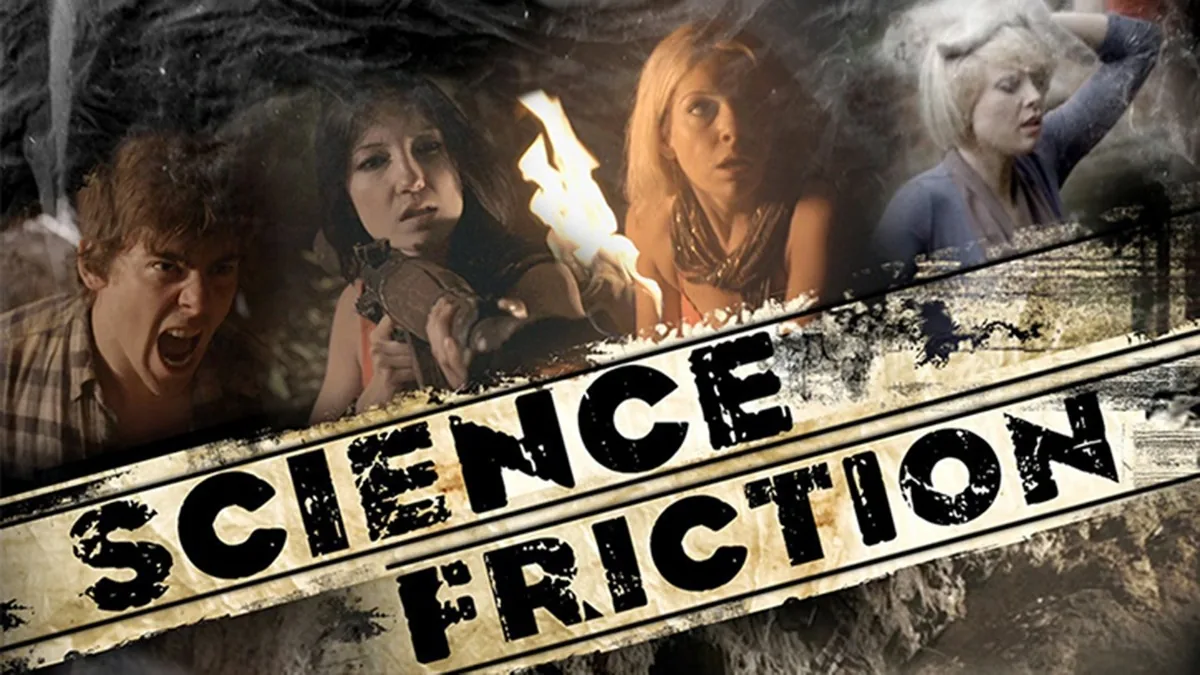
Looking at the raw transcripts from our May 2022 sit-down with Brian Dunning feels like unearthing a time capsule from a very specific moment of cultural anxiety. The world was just beginning to exhale after two years of pandemic-induced information warfare. The terms ‘misinformation’ and ‘disinformation’ had become blunt-force weapons in public discourse. And into this fog of distrust dropped Dunning’s documentary Science Friction, a film that wasn’t about the pandemic at all but managed to diagnose the very sickness that allowed the crisis of truth to metastasize.
Dunning, a veteran science writer and producer behind Skeptoid Media, laid out the film’s premise with a brutal simplicity. It’s an exposé on the television industry’s dirty little secret: the routine and deceptive editing of scientific experts to twist their words and sometimes make them say the exact opposite of what they believe.
It’s a practice that has festered for decades, particularly on networks that wear the veneer of educational authority. “You ask a scientist, 'Do archaeologists believe that aliens built the pyramid?' And they say no, and they explain why,” Dunning explains. “And the TV shows will then edit that sentence to make it sound like he said yes, we do think that aliens built the pyramids. This is a practice that's incredibly deceptive. It's unethical. It's immoral. It's straight up wrong.”
But this isn’t just a case of lazy filmmaking. It’s a calculated business model. The transition of outlets like the History Channel and Discovery from quasi-academic programming to sensationalist infotainment is one of the great bait-and-switch maneuvers in modern media. They built brands on the promise of authority and then leveraged that trust to sell spectacle. The ‘Frankenbiting’ techniques perfected in the petri dish of early 2000s reality TV were weaponized for non-fiction.
And Dunning himself had been on the receiving end. As a go-to talking head for shows exploring everything from UFOs to Bigfoot, he saw the sausage get made. “They only use the part where they ask you to explain the myth.” he says of the most common tactic. But it often goes further into outright textual manipulation. This firsthand experience gives Science Friction its sharp edge. It’s not an academic treatise; it’s a whistleblower’s report from inside the machine.
The film’s timing was everything. By 2022, audiences were acutely aware of how media narratives could have life-or-death consequences. The debates over virology, vaccines, and public health had shown how easily scientific consensus could be undermined by bad-faith actors. Dunning’s film served as a perfect microcosm of this larger battle, showing the exact mechanics of how expertise is laundered into nonsense for ratings.
One of the most potent points Dunning makes is about the very word ‘skeptic,’ which forms the root of his non-profit’s name, Skeptoid Media. The term has been poisoned, co-opted by conspiracy theorists to mean the rejection of all evidence. Dunning’s work is an attempt to reclaim its true definition. “This is scientific skepticism, where we take things and we simply apply a higher standard of evidence to them,” he clarifies. It’s about filtering information, not reflexively denying it.
We had many, many great stories that we were not able to include in the film because people didn't wanna burn any bridges.
So why does this happen? The answer is depressingly simple. It’s cheap. It’s easy. And it sells. Dunning contrasts the rigorous, high-cost production of a series like PBS’s Nova, which employs PhDs and researchers, with the alternative. “Why go to all that work if you're just a network show that has... the only standard you're held to is how many people watch your show that week?” he argues. “So you go the easiest route possible to bring in as many eyeballs, and you just go full sensationalism. There is no reason at all to get anything right.”
This is the cold economic logic at the heart of the problem. Misinformation isn’t always a grand conspiracy; sometimes it’s just the path of least resistance to profit. It’s cheaper to promote the fantasies in a book like Chariots of the Gods than it is to hire actual Egyptologists.
But the most telling part of the conversation came when Dunning detailed the challenges of making the film. The first roadblock was the experts themselves. “We had many, many great stories that we were not able to include in the film because people didn't wanna burn any bridges,” he reveals. For a career academic, the chance to appear on the Discovery Channel is a rare moment in the spotlight, even if it comes at the cost of their integrity. It speaks to a profound power imbalance.
The second challenge was even more damning. The producers and editors, the very people perpetrating the deception, refused to talk. “We even went so far as to offer to shoot them in silhouette and to put a voice synthesizer on them.” Dunning says. They all declined, fearing for their careers. It’s a code of silence born not of malice but of professional self-preservation. They know what they’re doing is wrong, but their job depends on it.
This creates a glaring bias in the film, which Dunning acknowledges. But the absence of the other side speaks volumes. It’s an admission of guilt through silence.
The conversation also touched on the public’s fundamental misunderstanding of science itself. People see science as a collection of immutable facts, not a process of constant refinement. “They say, 'Oh, science was wrong about this 50 years ago, so it's probably wrong today,'” Dunning notes. He counters with a brilliant reframing: “Yeah, science is kind of always wrong, if you wanna phrase it like that, but that's its core strength. That's... that's not a bug. That's a feature. It is the continually evolving best state of our knowledge.”
This disconnect is what the sensationalist shows exploit. They present a static universe of easy answers and shocking revelations because the messy reality of the scientific method doesn’t fit into a tidy television narrative.
So what’s the fix? Dunning rejects the idea of a top-down arbiter of truth. He’s not calling for censorship. Instead, he advocates for a competitive solution. “We have to do a better job getting out good information to compete.” he insists. This means supporting non-profit, mission-driven media that can prioritize accuracy over eyeballs. It’s a long-term cultural project, not a quick legislative fix.
The stakes are higher than just debunking alien pyramids. Dunning brings up volcanologist Dr. Janine Krippner, who deals with life-threatening misinformation during active eruptions. When people on a threatened island can’t tell the difference between a real evacuation order and a clickbait headline, the consequences are immediate and fatal. The same engine that produces ghost hunting shows can get people killed.
Revisiting this interview years later, Science Friction feels less like a documentary and more like an essential field guide. It’s a Rosetta Stone for the modern media landscape, showing us how to spot the seams where truth is cut apart and stitched back together into a more profitable lie. The film may not have stopped the practice, but it gave viewers something just as valuable: an inoculation.
519 Magazine Archive: We are thrilled to officially unearth the 519 Magazine Digital Vault. This isn't just a re-post; it's a high-fidelity restoration of a pivotal era in music journalism. By pairing original print dates with modern retrospectives, we’re bridging the gap between historical rock-and-roll grit and the lightning-fast performance of today’s web. These stories—once locked in physical print and lost URLs—are now back, fully searchable, and optimized for a new generation of fans.
We are thrilled to officially unearth the 519 Magazine Digital Vault. This isn't just a re-post; it's a high-fidelity restoration of a pivotal era in music journalism. By pairing original print dates with modern retrospectives, we're bridging the gap between historical rock-and-roll grit and the lightning-fast performance of today's web. These stories—once locked in physical print and lost URLs—are now back, fully searchable, and optimized for a new generation of fans.