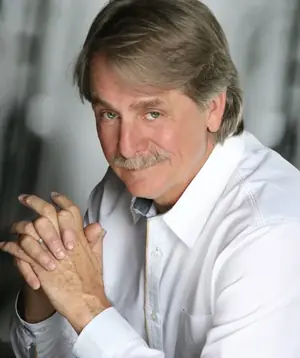

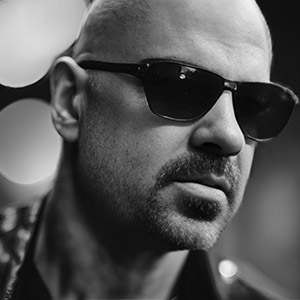
Greg Godovitz is the kind of rock and roll survivor who makes the rest of the industry look like they are merely playing dress-up. He is the quintessential Toronto wild man, a bassist and vocalist who anchored Goddo with a ferocity that defined the city’s greasy, high-volume glory years. But his pedigree runs deeper than a few gold records and some legendary bar fights. He was in the trenches with Fludd and cut his teeth in Sherman and Peabody alongside future heavyweights like Buzz Shearman of Moxy and Gil Moore of Triumph.
Holding his latest literary effort, *Up Close and Uncomfortable*, you get the sense that Godovitz has finally traded his Rickenbacker for a fountain pen, though the attitude remains unchanged. This is his second foray into the world of prose, following 2011’s *Travels With My Amp*. While the first book was a chronological slog through the decibels of his career, this new collection is something else entirely. It is a series of vignettes that feel less like a history lesson and more like a late-night conversation at a dimly lit bar in Yorkville.
Godovitz is candid about the timeline of the project, which hit the finish line just as the world was grinding to a halt. "My new book finished late in 2020," he says. "I wrote it in five or six different locations. I’m not very adept at writing at home, so, I have a tendency to travel."
There is a nomadic quality to his creative process that mirrors the touring life he led for decades. He did not just sit in a basement in Toronto; he chased the muse across the country and beyond. "I started in Canmore, Alberta for a couple of months, then I went to the Dominican Republic, up north to Muskoka, and finished it down in Picton, Ontario," he explains. "I always find it easier to write something when you’re in different locations."
The decision to pivot away from a standard sequel was born out of a realization that the traditional "part two" format was failing him. He had initially tried to pick up exactly where he left off, but the results were stagnant. "I don’t know if you’re aware of my first book, *Travels With My Amp*, that came out in 2011," Greg notes. "I started to write part two of that book, which ended in 1984, when Goddo first called it a day, and I started writing. I wrote 150 pages, and I just thought it was more of the same and it was pretty boring. So, I scrapped it, and then started writing short stories that just flipped around in time, because there was nothing in the first book about my early days, which was pretty much as messed up as my adult life."
By abandoning the linear narrative, Godovitz found a way to inject his signature wit into the pages. He realized that his life was not just a series of gigs, but a collection of absurdities. He began weaving in his experiences from his radio show, *Rock Talk*, and his interactions with the upper echelon of rock royalty. "I started writing stories about my early life, but then included rock and roll stuff—updates on Goddo, my radio show *Rock Talk*, which encompassed a lot of rock stars that I interviewed for a couple years," he says. "Things like hanging out with Jeff Healey and Steve Lukather from Toto introducing me to Ringo Starr. But the thing is, the stories for the most part, were really funny. And I realized I was writing a humour book."
But being the class clown of Canadian rock does not mean the work came easy. Writing comedy is a technical discipline that requires more sobriety than the average rock star possesses. "That’s why it took six years to finish it because being funny is one thing," Greg admits. "Writing funny is quite another—it’s difficult. You wake up, sober up, and you look at what you wrote the night before and go, this isn’t funny. So you have to start again."
The final push happened in Prince Edward County, a far cry from the smoky clubs of his youth. "I finally finished the book in Picton, Prince Edward County," he says. "Fortunately, we got it out in time for late Nov. or December. The book sold very very well and continues to do so."
Even with 800 pages of text now in the public domain, Godovitz feels the story is incomplete. He has lived too much life to fit into two volumes. "At this point I’ve written just under 800 pages," he calculates. "And it still doesn’t encompass the whole story. The first book started in 1964, when I started playing, it ended in 1984. So, it really only covered 20 years of my career. Some of the next 20 years was interesting, some of it was annoying and some of it was just boring, but there was enough stuff in there to keep it flowing, keep it interesting, and keep it funny."
There are massive gaps in the narrative that he still needs to bridge, specifically his time spent away from the Ontario bubble. "Then I realized when I finished this book, I’ve written nothing about the eight years I spent in Calgary," he says. "I’d written nothing about the five years since I returned to Toronto. I realized that there was another book to cover."
When asked if a third volume is truly on the horizon, Greg does not hesitate. He has found a new rhythm that does not require a Marshall stack. "Well, it seems that I have this natural aptitude I’ve got for writing stuff that people find amusing to read," he says. "I can’t see stopping anytime soon."
The motivation is partly driven by the grim reality of the modern music industry. For a man who lived on the road, the sudden silence of the pandemic was a death knell for his primary trade. "I don’t know if you’re a musician yourself, but the music business is finished," he says flatly. "The pandemic has put so many people out of work and in the poorhouse. I’ve got all my guitars, all my equipment, I got my band sitting around waiting, and we can’t do anything. So, I thought, what’s my drummer doing? He’s writing a book. What am I doing? I’m writing another book."
For Godovitz, the act of creation is a survival mechanism. It is a way to stave off the darkness that often claims aging rockers who have lost their audience. "If you got that ability, instead of just sitting around staring at the walls, or drinking yourself to death, you might as well do something positive for yourself, even if it’s just for you," he explains.
He is already looking at the calendar, trying to impose some discipline on his creative outbursts. "I hope that everything turns out, and I live long enough to finish this next book," he says. "I’ve been thinking that it took so long to write the second book—six years because of the nature of what the book was about. What I’m trying to do is condition myself to write a couple of pages every day, just that, and I could have the book ready for this year, or this Christmas coming up. So, that’s the game plan."
The working title for the next installment is a nod to his own self-deprecating brand of irony. "Then, I have written a trilogy, basically it’s a three-part series," he notes. "I’m calling the book, *The Idiots Trilogy, Part 4*. So, that’s the title of the new book. I have to write about books, a subject of a pandemic, because it’s what we’re all living through. I’ve managed to find humour in the stuff that I’m writing already about what we’re going through."
And while the world feels heavy, Godovitz finds the cracks where the light gets in, even if that light is a bit cynical. "There are certain elements of our new reality that are pretty funny when you think about it," he says. "It’s not all going to be about that, of course."
He is eager to revisit his Western Canadian chapter, a period that offered a fresh start away from the expectations of the Toronto scene. "I’ve already got stories coming in about the other things, like living in Calgary," Greg says. "I had a great eight years living out west. It was a whole new career for me, a whole new world. There was a lot to explore. There were a lot of incredible adventures that happened. It was women and new musical experiences. There’s still stuff to write about."
The divide between Eastern and Western Canadian music has always been a chasm, but Goddo was one of the few acts that managed to build a bridge across it. "Yeah, that's a good point," Greg agrees. "We were lucky in the Goddo touring days because our records were selling right across the country. We were hugely popular in certain markets up there. Winnipeg especially was a huge market for us. When I arrived in Calgary, I remember driving from the airport down to where we were going to live. And we drove by the Max Bell Centre, which is up on a hill, it's yellow and red, you can't miss it. I looked at my gal and I said, 'we put 7,500 people into that, the last time I played Calgary,' so a lot of people have this misconception that Goddo for instance, was just an Ontario bar band."
The "bar band" label is a badge of honour in Toronto, but it undersells the scale of their success elsewhere. "We were a bar band to Toronto because you could play in six different clubs every night of the week, or seven if you wanted to," Greg explains. "One night, you could be in Mississauga, the next night you could be in Pickering. It was all a hop skip and a jump away from the next packed club, it didn't matter if it was Monday or whatever. But then when we left Toronto, and started playing outside of Toronto, that's when things started taking off during these wonderful halls like The KEE to Bala, or the Port Dover Summer Gardens, those were all big dance clubs. And then it was a jump to going out west and playing clubs. The first time west, and then coming back. All of a sudden, we were in soft seat theatres, smaller arenas, or else we were playing the big arenas opening up for Rush or people like that."
Writing these memories down has provided a form of catharsis that performing on stage never could. It allows him to view his own life as a spectator. "Oh, absolutely," he says when asked if it is therapeutic. "Not only that, but when I was in Canmore about to start writing the second book, the first thing I did was take out a copy of the first book and read it. I was lying on the couch, reading it, and laughing out loud at my own writing. I can see why people like this because I’ve never re-read it after I wrote it. So, I didn’t really have to, but then I wanted to make sure I didn’t repeat myself. Now I have an opportunity, I have a copy of the new book sitting on the table in the living room. And I’ve been picking it up and reading a couple chapters."
We're never going to look at our fellow man the way we did before, because you don't know who's in their bubble. ... This is not some sort of false flag bullshit. This is real. We are having a global pandemic; people are going to die. And that's the sad reality.
The satisfaction comes from seeing his chaotic life translated into something coherent on the page. "Okay, this works," he says. "I mean that whatever the heck flowed out of my head is working on the printed page, I’ve enjoyed it. There are not too many mistakes and I think it’s pretty factual because I sort of remember everything."
While his first book relied heavily on physical evidence, the second was a dive into the murky waters of memory. "I had the advantage with *Travel With My Amp*, because I had all my diaries, pictures, concert ticket stubs, and I could really keep it chronological," Greg explains. "But this book, I didn’t have any aids. It was basically just remembering things from my childhood or remembering things about a recording session, a lot of it was pretty memorable stuff anyway, so it was a lot easier to write this one."
The level of detail he maintained during the peak of his career is staggering. He was a meticulous archivist in an era defined by excess. "I kept accurate daily diaries for almost 40 years," he says. "Whenever we did a concert, one of my crew guys would get me the ticket stub from the actual ticket and the poster, and then the next day we got the reviews from the newspapers. We also had fan letters."
This collection eventually found a home in the halls of academia. "My archives currently are at the University of Toronto, and they said that they’d never seen a more comprehensive archive from any artist," he notes with a hint of pride. "I had the first blurb from the Toronto Telegram, which doesn’t even exist anymore. My first band playing at a place called the London Fog, we were like a British Invasion band, and I cut that out of the paper and kept it."
His mother played a pivotal role in preserving his early history. "My mother kept a scrapbook of all my stuff, so the first book is really in chronological order," Greg says. But for the new book, he took a more literary approach, citing a high-concept influence. "The second book, not at all, it just jumps around in time and space. I don’t know if you’re a Kurt Vonnegut fan or not, but he wrote a great book called *Slaughterhouse-Five*. The hero of the book is a character named Billy Pilgrim, who becomes unstuck in time. So, one minute, he’s sitting at the dinner table, the next minute, he’s on the planet Tralfamadore in his geodesic dome, with his stripper name, Montana Wildhack. And I actually said this, 'I’m the Billy Pilgrim of this book.' I am unstuck in time. So, the next story could be about going to scout camp with a psychopath, when I was 11. And then it’ll jump to last year meeting Ringo Starr. That’s how the book went; it was just all over the place. And I liked it that way, it reminded me of Kurt Vonnegut. He’s my favourite author."
This non-linear approach allows him to revisit his earliest musical experiments, like the British Invasion-inspired group he started as a teenager. "I was 13 years old, for starters," he recalls. "Then, I met Brian Pilling, he was 14 or 15, and his brother Ed came back from England, he was 17. And we formed this band called The Pretty Ones. Now, the Pilling brothers would end by the time I was 15—they left to go back to England. And I couldn’t go because my parents said, 'No, you’re not going to go and live in England at 15. You can’t do it.'"
The paths diverged from there, leading Greg through the psychedelic and blues scenes of Toronto. "They went over there and ended up in a Cat Stevens band," he says. "I went into a blues band, then I went into a psychedelic band, Eddie Schwartz from *Hit Me With Your Best Shot* was our singer. That ended up back into a bluesy sort of psychedelic band."
Eventually, the Pilling brothers returned, and Fludd was born. It was a period of massive commercial success but internal creative frustration. "Then Ed and Brian came back, and we put Fludd together," Greg explains. "Now, we didn’t have the experience, but they became great songwriters. When you look at the eight top 10 Canadian hits that Fludd had, *Cousin Mary*, *Brother and Me*, *I Held Out*, *Get Up, Get Out and Move On*, fantastic songs that we were doing. I recorded all of those by the time I was 20. But the problem was that I was also writing songs and Fludd was Brian and Ed's band. Even though I was a boyhood chum and everything, they wouldn’t do my songs. So I finally said 'I have to get my own band together' and I left in 1975 and started Goddo."
Before Fludd and Goddo, there was the legendary Sherman and Peabody. It was a band that felt like a turning point for everyone involved. "I met the guys when I was 15," Greg says. "I answered an ad in the newspaper saying, looking for a singing bass player. I called the guy up and he said, how old are you? And I told him I was 16. Because I thought that made me sound older. I was only 15 and then I went down with my little Beatles bass and my Beatles haircut. These guys were, like, downtown guys. They were Jones and Gerard guys; they were a bit greasy."
Despite their rough exterior, the musicianship was top-tier. "They were playing the blues, but they were great musicians," he notes. "One of the guys to this day, John Bjarnason, is not only my chiropractor, but one of the best blues harmonica players ever."
The band eventually expanded into a powerhouse that nearly shared a stage with rock gods. "After that broke up, they became Whiskey Howl," Greg recalls. "Well first of all, we morphed into Sherman and Peabody, and then it was like a six-piece band by Buzz Sherman that ended up being in Moxy. He was the lead singer of the band and hence the Sherman and Peabody cartoon reference—and it was a killer band. We opened up for John Mayall, we opened up for Albert King, we were supposed to open up for Led Zeppelin, but we couldn’t find a guitar player that day. I went to the show, I was all pissed off because we should have been playing with Led Zeppelin. But it didn’t happen."
Sadly, the recorded legacy of that era is non-existent, lost to time and domestic mishaps. "No, we never recorded anything," Greg laments. "I remember that my father came down to a club in Yorkville and recorded it on his cassette player, and my little sister recorded overtop of it—like making noises and stuff."
Even his high school triumphs were not safe from the family tape recorder. "The day I left high school, I sang *Hey Jude* at the Christmas assembly, in front of 2,000 kids and I could sing it pretty well," he says. "At the end of it, we had the school orchestra come in, just like the Beatles playing in those big horn lines, then all the kids were singing the 'nananana, nannana' part. It was the only copy of that performance and my little sister recorded overtop of it."
By 1979, Goddo was a force of nature, exemplified by their legendary CityTV simulcast. It was a high-wire act of technical ambition and raw nerves. "At that point, for sure," Greg says of the band's peak. "A lot of stuff happened at ‘78 and ‘79. We were being managed by the same people that handled Long John Baldry and Angela Bowie was in there somehow."
The performance was captured at the height of their powers. "We were at the top of our game," he says. "*An Act Of Goddo* had just come out. Our third album was doing really well with overtures and everything. That was great. Unfortunately, that disc, which should be available at True North records, no longer exists. I’ve got a copy of it. You know, it’s all over YouTube and most people can just watch it that way."
The simulcast was a pioneering moment for Canadian broadcasting. "We were the first band that did the set up your speakers beside your TV, it’s going to be on CHUM-FM and on CityTV simultaneously," Greg recalls. "It was indeed live."
Behind the scenes, the glamour was nearly derailed by a wardrobe crisis. "I remember the leopard skin satin suit that I had made, it arrived 10 minutes before we went to air," Greg says. "I was standing there in corduroy pants and a Mickey Mouse sweatshirt, not even a T-shirt. I was losing my mind wondering where the hell is my suit. The girl came, brought it in. I was in it. I was screaming at her, she was like, pinning the hems on it before we walked on stage. It was just one of those great, horrible moments that you go through."
The chaos only added to the intensity of the set. "Oh? Well, there was a certain bit of nervous energy hitting that stage," he admits. "Plus, knowing the fact that we were playing live, if anything went wrong."
One of the most daring moments of the night was Godovitz sitting down at the keys, a move that was more about bravado than technical skill. "At the end, I do a song on the piano," he says. "First of all, I can’t play the piano. That is the only song I ever wrote on a piano. I wrote it out of an arena in Moncton, New Brunswick, when I was with Fludd. I went in for sound check and the piano was there, I sat down, and I wrote that song. I don’t know what the chord changes are. I just know how to do it."
Playing a grand piano on live television without being a pianist is a special kind of madness. "We’re playing live on television and I actually had the guts to play a grand piano on a live broadcast," Greg laughs. "I didn’t make one mistake, the gods were just sitting on my shoulders that day. But I knew it was going to be a great end, because we had that four-piece horn section that were basically doing streamlines behind it, so I knew visually it was going to be cool. And Thank God, I didn’t screw it up. But would I ever do that again? No."
That fearlessness was a hallmark of his youth. "Well, No. I was 26 or 27 when I did that, so, I was young, foolhardy, and riding around on the top of cars that were going 100 miles an hour jumping from balcony to balcony in hotels 30 floors up," he says. "I was fearless back then. In fact, everybody can read all about that in the first book; they always say it's incredible that I’m still alive."
The energy of Goddo was not a calculated move; it was a byproduct of the musicians' personalities. "I was like that when I was in Fludd when I was just the bass player," Greg notes. "I would sing harmonies, but I didn't sing any of the lead. So I had a lot of time to develop the moves. I used to say I was in the air more than I was on the ground. Then I saw Gino play with Brutus, and he was the same way. So, I thought if we're going to do a power trio, why not have two guys up front that really dig in!"
He has little patience for the choreographed spectacle of bands like KISS. "We never did any of that real choreographed stuff," he says. "Occasionally, I think somebody would get a picture of us standing next to each other. But we never did that KISS stuff, like rocking back and forth with a guitar. I always thought that stuff was crap. We never used flash bombs and stuff like that. Occasionally, the roadies would throw them in, but I thought, when you get bigger applause for your flash bombs than you're getting for your music, something's wrong. So, let's save the bullshit and just be a great rock band. We'll get our encore our way. That's what we did."
Despite his critique of their stagecraft, he recognizes the impact KISS had on the industry. "Oh, very much so," he says of being a fan. "But that’s their shtick. KISS came up with a million tons of dynamite onstage, God bless them for it. It looked great on them. In fact, when I was with Fludd, we played the first two KISS concerts in Canada with them. I didn't even know who they were. They showed up at the Victory Burlesque Theatre and they had their makeup on and just I'm looking at them confused. They were about 6 or 7 feet tall with these huge boots on—they arrived at the gig looking like that—then we watched it that night. They had some flash pods. Gene did the fire breathing thing and the blood coming out of his mouth, but that was pretty much it. It wasn't what it became. But you could tell that they were going to be huge. You’re looking at this and going 'Holy smokes, this is like a Japanese monster movie come to life.' I don't own any of their records, but you know, I certainly appreciate what they did."
For Godovitz, the proof was always in the physical exertion. "Yeah, pretty much," he says. "If I didn't come off the stage to the point where I could wring out my socks, to me, it wasn't a gig that I had performed my best. First of all, I'd have to be helped out of most of my clothes, because they were sticking to my body. My shirts would be clinging to my body with sweat. But it's when I took off my socks and could wring them out. So, you could see sweat pouring on the ground from my socks. I used to be able to flick my hand and I could hit the girls in the front row with my sweat from my hand and arm. All of a sudden, I'd be looking out and there were Alice Coopers in front of me because all their mascara was running down their face. It's the thing that was pretty funny."
The Goddo archives are currently being revitalized by none other than Eddie Kramer, the legendary producer behind Hendrix and Led Zeppelin. "There's a bunch of stuff," Greg says. "I've got all the stems for the albums. I always thought that we released everything we recorded, but we didn’t. I found at least another 20 songs that people don't know. And now, of course, we’re doing some work with Eddie Kramer, the famous English producer. He has remixed the first *Goddo* album. I don't know if you know who Eddie Kramer is, but he brought us Jimi Hendrix, and he did four KISS albums, Led Zeppelin albums, *Frampton Comes Alive*, Traffic, Stones, Beatles and everybody who’s a legend. We became good friends. He remixed the first Goddo album and it sounds phenomenal. I think there's a track available on my Greg Goddo YouTube of *Under My Hat*, which everybody should hear with headphones, because it's a real Eddie Kramer mix."
The remixing process has unearthed vocal layers that had been buried for decades. "Yeah, it's pretty good," Greg says. "When Eddie was remixing the first album, he was doing *Under My Hat*, we found two tracks of vocal harmonies that we didn't use on the original. It was me singing the lead. Then we had double tracking of the lead vocal and singing the third and fifth harmony so that there were four voices. They're all mine, doing all the harmonies and I looked at Eddie and said, 'We never use any this on the original. It was just really vocal that was it.' He says, 'Well, you're going to use it now,' and now that song is a completely different animal."
There is a sense of "what if" regarding his collaboration with Kramer. "I wish I would have met him 40 years ago, but timing was only right in the last couple years," Greg admits. "He would have thought I was nuts back in the day because he's a pretty laid-back kind of guy. I was like a pinball that someone just shot into the machine, bouncing on all the rubbers and everything. I was a human pinball back then. I’ve calmed down a little bit."
The pandemic has forced this human pinball into a state of forced stillness. "We have a lovely place and everything, but you can only look at the wall so many times before you start crawling up them, which is why I continue to come up with ideas and write things down, pick up a guitar and see if something comes out," he says. "I’m just trying to stay busy, man. And of course, right now, I'm doing two or three of these interviews a day. Am I getting tired of hearing my own voice? Yeah."
But retirement is not in the vocabulary. "I haven't even started yet," he declares. "I've had an idea in my mind for a number of years about writing a stage musical involving rock music. That's next for me—I'm going to write this—it’s a really original idea that's never been done before."
As for 2021 and beyond, Greg is skeptical about a return to normalcy. "I'm hoping that we get out of this," he says. "I have to be honest, if this ended, if the vaccine came out tomorrow, and next month, we got a clear sign, would I go back to a club and play? Would I go back to a club to see a band? Would I go to a baseball game? I have to think the answer is 'no.' I don't think so. We're never going to look at our fellow man the way we did before, because you don't know who's in their bubble."
The suspicion of the pandemic era has left a mark. "I've got my daughter, etc. from the immediate family, but you don't know," he explains. "If I go over to her place and there's somebody new, I'm going to leave my mask on because I don't know that person. I don't know who they hang around with, and that suspicion, I think, is going to stay with us for a long time. People that don't think this is real; it's been a few million people that have died because of this. This is not some sort of false flag bullshit. This is real. we are having a global pandemic; people are going to die. And that's the sad reality. Dude, I still have my front row Blue Jays season opener tickets from the 2020 season on my fridge. I am the biggest baseball fan, I would die to go to have a hot dog and sit in the stands and scream at the Yankees. But I'm not dying to do it."
His love for baseball is deep-rooted, tied to memories of his father and his own brushes with the pros. "My dad was there on the first day—it snowed," Greg recalls. "It actually snowed on the players. I think I was out on tour at that point, so, I never got to go, but my dad and I went to ball games all the time. I just loved it."
The Blue Jays even integrated his music into the stadium experience. "Then we became friends with a couple of the guys," he says. "I put a picture on my phone of Kelly Gruber reaching out to me going, 'Hey, you're at the ballpark, man, this is cool.' Then of course, he used to play my music there all the time, which I just loved. *So Walk On*—if they have a guy going to walk, they play a bit of that. If somebody got thrown out of the game, they would play *Was It Something I Said*. Cecil Fielder didn’t care what music was being played for his walk-up so they used my song *Too Much Carousing*. I'm sitting in the bloody stands and all of a sudden, here comes the beginning of my song and Cecil Fielder walking up and I’m going 'This is fucking great.'"
The conversation eventually turns to Windsor, where Godovitz has a family tie to a local landmark. "My uncle owned Abars Tavern in Windsor," he notes. "Yeah, you remember it?"
While he spent plenty of time in the city, he never actually played his uncle's venue. "Whenever I was playing in Windsor, I'd go and visit him in my Winnie, but we’d never get to play," Greg says. "God bless him, he was a great uncle, but when I told him the kind of money that we were looking for, he goes, 'I don't pay that. I pay a couple hundred bucks.' You can't even get my uncle for a couple hundred bucks and here we are charging thousands of dollars, so we never got a chance to play there. I would have loved to play there for him. I have some great memories of playing in Windsor back in the day though."
The Windsor-Detroit energy was a vital part of the circuit, largely thanks to the influence of CKLW. "Totally did," Greg says of the Detroit vibe. "CKLW was the big AM station with Rosalie Trombley, who really ran the music business. If she liked you, and you got played in Detroit, and that was big time back then."
The pressure to impress the "Girl with the Golden Ear" was immense. "Oh, yeah," he laughs. "Fludd did pretty good with CKLW, I remember that.