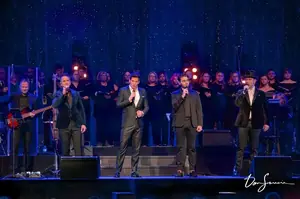


Looking at the raw transcripts from a 2018 conversation with The Tenors is to look at a machine operating at peak efficiency. The trio, having navigated the choppy waters of a significant lineup change, was deep into the cycle for their holiday album Christmas Together. This wasn't just another record. It was a reaffirmation of their brand, a consolidation of their power in the lucrative and notoriously difficult Christmas music market.
And they understood the assignment completely. The holiday season for a group like The Tenors is the Super Bowl. It’s when their specific blend of operatic power pop sensibility and nostalgic warmth finds its most receptive audience. They spoke of the season not just as a commercial opportunity but as a deeply personal touchstone. Christmas is about “family… celebrating… nostalgia and great food and incredible memories from the past,” they explained. It’s a time “where miracles seem to happen and magic isn't just for kids.”
But that magic requires meticulous architecture. The real labour is in making the familiar feel fresh without alienating the traditionalists. Tackling songs that are practically woven into the cultural DNA of North America is a high-wire act. They confirm this wasn't a casual affair. “Oh, 100%,” they say of the weight of expectation. “Whenever we come up with an album, we start with many thoughts and many selections on a page, and we kind of, you know, see what works together and we narrow it down.”
This process led them to a carefully curated balance. They knew their audience wanted the grandeur but also craved something new. The solution was to create what they called an album with more “hills and valleys”. This wasn't just a throwaway line; it was their entire artistic thesis in four words. It’s the dynamic principle that governs their live shows and their records, moving from a whisper to a roar, creating an emotional arc that is the core of their appeal.
So you get the unabashed classicism of a track like “I'll Be Home for Christmas,” which they consciously styled to evoke a specific era. “It almost feels like you're getting wrapped inside this warm Christmas blanket and transported back in time to that golden age of music in the forties and fifties where Christmas seems to live on forever,” they note. It’s a perfect description of their unique selling proposition: manufactured nostalgia of the highest order delivered with impeccable vocal talent.
And then there’s the valley. The counterpoint. They took a standard like “God Rest Ye Merry, Gentlemen” and inverted expectations. They stripped it down completely, creating their first-ever a cappella recording. It was a gutsy move that showcased their pure vocal chemistry without the shield of a massive orchestra. It demonstrated a confidence in their blend and individual timbral qualities.
To bolster that track, they made a savvy collaborative choice, bringing in beloved Canadian artist Johnny Reid. It was a brilliant piece of cross-genre pollination, connecting their pop-opera base with Reid’s legions of loyal country and roots fans. It was a signal that The Tenors weren’t an isolated classical-crossover act but an integral part of the broader Canadian music ecosystem.
There are songs in here like I'll Be Home for Christmas where it almost feels like you're getting wrapped inside this warm Christmas blanket and transported back in time to that golden age of music in the forties and fifties where Christmas seems to live on forever.
Of course, the orchestral bombast is never far away. Their work with the Toronto Symphony Orchestra and a team of Oscar and Grammy-winning producers underscores a commitment to a premium product. This is not pop music on a budget. The sonic architecture is designed to be immense, to fill theatres and arenas with a wall of sound that feels both luxurious and emotionally overwhelming. It’s a direct appeal to an audience that wants to feel the music physically.
They spoke of the strange alchemy of recording Christmas anthems in the sweltering heat of a Canadian summer. “Sometimes the reality is that we're recording these things in June and July when it's very hot outside,” they admit. “We decorate the inside of the studio with Christmas gear and it's an amazing process.” It’s a peek behind the curtain that reveals the sheer professionalism required to channel yuletide spirit on demand.
But for all the polish and production, there is a critique to be made. The very safety of that “warm Christmas blanket” is both their greatest strength and their one artistic vulnerability. The music is so impeccably executed, so perfectly calibrated for mass appeal that it rarely risks offending or challenging the listener. It is designed for comfort, not confrontation. A valid artistic choice but one that inherently limits its critical edge.
This 2018 interview also caught them in a reflective mood, looking back on a decade of work. Their gratitude felt genuine, palpable. “Our life right now is what dreams are made of,” they state with a sense of awe. “We're always carrying that attitude of gratitude because we were all just young, aspiring singers… We always dreamt of a day of being on stage in front of a giant audience and having them sing our songs back to us.”
The scale of their success seemed to still surprise them. Singing for the Queen, sharing conversations with prime ministers, selling over a million albums. These weren't just career goals; they were markers of a journey that had surpassed their wildest imaginations. “To surpass our imagination, I think was unexpected for some of us,” they confess. It’s this humility that grounds the soaring vocals and epic arrangements in something relatable.
And for all their global travel, they held a special place for Windsor. It wasn’t just another tour stop; it was a place with history. “Christmas wouldn't be the same if we weren't closing the season in Windsor because it becomes, somewhat of a tradition,” Victor Micallef explains. Having filmed their Under One Sky PBS special in the city, they felt a genuine connection. “We feel like it's family.”
This local connection is the secret ingredient. It’s the relationship with the audience, the litmus test of their material. They revealed that the final arbiters of their work are closer to home. “The true litmus test for these songs is our family, our wives, and our moms, because they're quite honest with us,” they say. It’s a charming and telling admission. If a song passes the Mom Test, it's ready for the world.
As they prepared for that Windsor show, they promised a spectacle. They were working with a choreographer on a version of the Eagles’ “Please Come Home for Christmas,” a clear sign they were pushing beyond the stand-and-sing format of their early days. They jokingly pitched it as a “Christmas extravaganza” complete with monster trucks. While the monster trucks were a gag, the ambition was real.
Revisiting this exchange years later, it’s clear this was a pivotal moment. The Tenors were proving their resilience and doubling down on the formula that made them a Canadian institution. They were masters of a specific emotional language, and Christmas was their most fluent dialect. The passion was undeniable. As they put it simply, “Teamwork makes the dream work, and longevity is the key.”
519 Magazine Archive: We are thrilled to officially unearth the 519 Magazine Digital Vault. This isn't just a re-post; it's a high-fidelity restoration of a pivotal era in music journalism. By pairing original print dates with modern retrospectives, we’re bridging the gap between historical rock-and-roll grit and the lightning-fast performance of today’s web. These stories—once locked in physical print and lost URLs—are now back, fully searchable, and optimized for a new generation of fans.



We are thrilled to officially unearth the 519 Magazine Digital Vault. This isn't just a re-post; it's a high-fidelity restoration of a pivotal era in music journalism. By pairing original print dates with modern retrospectives, we're bridging the gap between historical rock-and-roll grit and the lightning-fast performance of today's web. These stories—once locked in physical print and lost URLs—are now back, fully searchable, and optimized for a new generation of fans.