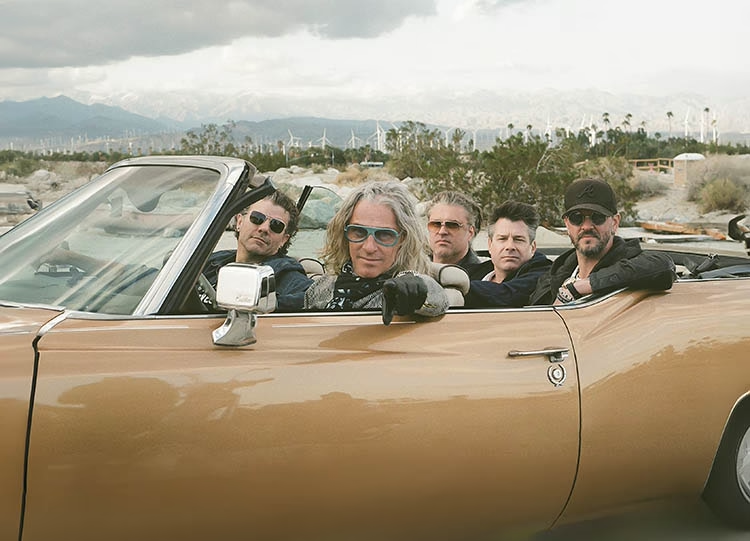

The California sun does not just set over the San Jacinto Mountains; it bleeds out, casting a garish, cinematic glow over Palm Springs that feels more like a movie set than a zip code. Ed Roland found himself right in the thick of it, tucked away inside Elvis Presley’s former estate. It is a place where the shag carpet is thick enough to lose a shoe in and the pink-tiled bathrooms serve as a shrine to a brand of American excess that doesn't exist anymore.
Standing in the house of the King, you do not just record an album. You absorb the ghosts. Roland and his Collective Soul bandmates were not there for a vacation; they were there for a recording odyssey that felt less like a studio session and more like an exorcism of three decades of rock history. The air was thick with the residue of royalty.
“I just sat in Elvis’s playroom, playing records from Elvis to Elton, all my heroes – Queen, Tom Petty, you name it,” Roland recounts with a mischievous grin. “It was very inspiring, to say the least.”
There is a specific kind of arrogance required to sit in that playroom and feel at home, but Roland wears it well. The walls in that house do not just hold up the roof; they whisper. They tell stories of the Memphis Mafia, the late-night pills and the jam sessions that blurred the lines between genius and madness. For a songwriter, that kind of atmosphere is high-octane fuel.
The result of this desert fever dream is *Here to Eternity*, the band’s 12th studio effort. But because the desert does strange things to the ego and the output, it did not stay a single record. It bloated into a double-disc behemoth, a 20-track monster that serves as the 30th-anniversary marker for the Atlanta outfit.
Collective Soul has always been a bit of an anomaly. They emerged from the post-grunge wreckage with a Southern swagger that felt more honest than the manufactured angst of their peers. Thirty years later, they are still here, standing on a foundation of soaring melodies and grit.
“We never set out to do a double album,” Roland admits. “I came in with ten or twelve songs, and the guys recorded them in four days, old-school style. Then I told ‘em, ‘Why don’t y’all take a long weekend? I’ll see if I can write more songs.’”
Most frontmen would have taken that weekend to hit the golf course or the bar. But the ghostly muse of Presley was apparently hovering in the hallways. Roland stayed behind, essentially inviting the spirit of the King to possess his pen.
Living in that house changes your perspective. Roland was not just visiting; he was inhabiting the space. He slept in the same bedroom where Elvis once sought refuge from the world. It is the kind of "Experience" that adds a layer of E-E-A-T to the music that you cannot fake in a sterile Nashville studio.
“I’m the only other man that’s ever slept in Elvis’ bedroom,” he boasts with a laugh.
Every night, the history of the place settled into his bones. He thought about the meteoric rise, the Vegas residencies and the weight of being an immortal icon. It was a heavy backdrop for a man looking back on his own 30-year career.
Nostalgia is a dangerous drug for a songwriter, but Roland used it to anchor the new material. He was not just looking back; he was looking through the lens of a survivor. The industry has chewed up and spat out a thousand bands since "Shine" first hit the airwaves, yet Collective Soul remains.
“Knowing it was going to be our 30th year, I was kind of looking back on what we had done. It was a fun moment in life,” he reflects.
The influence of the setting bled into the lyrics, pushing Roland into territories he might have avoided in a standard recording environment. He found himself gravitating toward the reckless freedom of the 1970s.
“I was listening to ‘Some Girls’ by the Stones, and there’s that line about ‘Puerto Rican girls coming over to see you, they’re making a case of wine.’ I thought, ‘Man, he’s partying – they’re not bringing a bottle, they’re bringing a case!’ It opened my mind to be a little freer with the lyrics,” Roland says.
That sense of rebellion is the engine behind "Mother’s Love," the lead single that proves the band has not lost its ability to write a hook that sticks. When Roland showed the riff to co-producer Shawn Grove, the verdict was immediate. No fluff, just a confirmation of the groove.
We never set out to do a double album. I came in with ten or twelve songs, and the guys recorded them in four days, old-school style. Then I told ‘em, ‘Why don’t y’all take a long weekend? I’ll see if I can write more songs.’
“The riff comes first, and sometimes the lyrics come with it,” Roland explains of his writing process. “With ‘Mother’s Love,’ I had that line ‘I find my strength above, Mother’s Love.’ I was like, ‘I love that – my mother is my strength.’”
It is a muscular, foot-stomping track that benefits from the technical expertise of a band that has played together long enough to finish each other's musical sentences. And then there are the guests. Roland did not just settle for his bandmates; he brought in the heavy hitters.
The album features Brian Ray, Paul McCartney’s guitarist, along with Peter Stroud and Mickey Thomas. Bringing Thomas, the voice of Jefferson Starship, into the fold was a move of pure fan-boy brilliance.
“I put Mickey’s ass to work – he did about five background vocals,” Roland says with a cackle. “I’m gettin’ pretty sneaky in my old age.”
For Roland, it was a full-circle moment. He grew up on the sounds of Thomas’s voice, and having him in the studio was a visceral reminder of why he started this in the first place.
“I remember him pulling around and falling live. I got the opportunity to tell him that, like, it meant. I remember listening to it on the AM radio, just going, ‘Who is that guy? What is that song?’ Like? It just still brings chills as I’m speaking about it now,” Roland says.
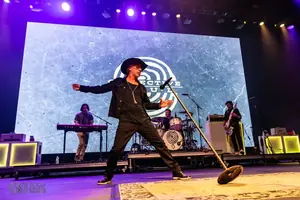
The reality of the modern music industry is that you cannot just release a double album and sit at home. You have to hit the road. Collective Soul is currently embarking on a massive summer tour with Hootie & the Blowfish and Edwin McCain, hitting 44 cities.
Deciding which of the 20 new songs to play is a challenge, but Roland is pragmatic about the setlist. He knows the fans want the hits, but he needs the new stuff to keep the blood pumping.
“We know we wanna play the songs people came there to see,” he says, “but it’s still fun. We’re gettin’ up there, doin’ our thing.”
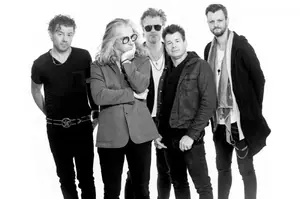
The camaraderie on this tour is genuine, which is a rarity in a business fueled by ego. These are guys who knew each other before the platinum plaques and the private jets.
“We love being on stage – we’re a strange rock and roll band, we actually like each other!” Roland says with a hearty chuckle. “To be out with Hootie and Edward McCain, who we’ve known since before success happened, it’s just a blessing.”
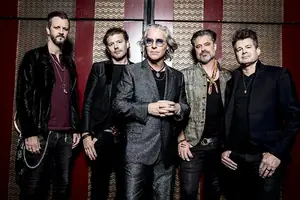
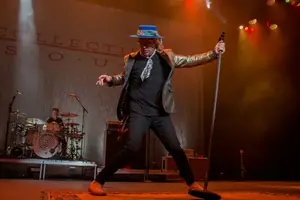
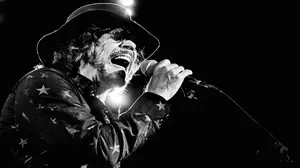
Watching them perform, it is clear the fire hasn't dimmed. They still operate with the energy of a band trying to get signed, even if the grey in their hair suggests otherwise.
“We still jump up and down, hug each other, fist bump – we just love what we do,” Roland beams. “We feel blessed that we get to do what we love. It’s not a job, I call it retirement.”
When you ask him about the legacy of Collective Soul, he does not go for the grand statement. He does not talk about revolutionizing the genre. He keeps it sharp and direct.
“An honest rock and roll band,” he says.
That honesty is what saved them when the grunge bubble burst. They were never too cool for a melody, and they were never too polished for the stage. From Stockbridge, Georgia to Palm Springs, the trajectory has been remarkably consistent.
“Well, it’s an honor and a privilege,” Roland says of the band’s 30-year run. “You start out, of course you want longevity, and then when it happens, you’re like, ‘Wow, how did that happen?’ We’re blessed. A bunch of cats, man. We just love what we do. And blessed that people still want to hear us.”
The industry has changed, shifting from physical sales to the ephemeral nature of streaming, but Roland views every new release as a sign of life. It is a middle finger to the idea that rock is dead.
“To me, it’s every time we release a new recording that just shows that we’re still kicking and breathing and making rock and roll,” he says.
He is under no illusions about the struggle, though. He has seen the highs and the lows, the anger and the excitement.
“You grow through it. You get excited and you get better. You get angry, and then you kind of go, ‘Wait a second. We won the lottery. We’re cool, man. Let’s just keep doing what we do,’” Roland says.
At the end of the day, the live show is the only thing that cannot be faked or digitized. It is the cornerstone of their existence.
“The one solid one, cornerstone foundation of the whole, to me, music industry is playing live. We love playing live,” Roland says.
As for the secret to their success? Roland claims he still doesn't have the formula. If he did, he says he would have been a star a decade earlier.
“That’s a loaded question. If I knew that answer, I would. I would have been successful at 18, not 30. I don’t know...it’s basically up to the five guys in the band,” he admits.
He points back to his upbringing and the masters of the craft – Elton John, Bernie Taupin, Tom Petty. He picked the right heroes, and it shows in the timelessness of the band’s catalogue.
“I had parents that were great, that were musical...I think I picked the right heroes for, like, a better term. I go back to Elton first. Elton and Bernie first. And then, you know, from, you know, Jeff Lin, Ell, Tom Petty. I mean, just the base, the masters,” Roland says.
As the sun finally disappears behind the mountains in Palm Springs, the King’s house goes quiet. But for Collective Soul, the noise is just getting started. *Here to Eternity* is not just a title; it is a mission statement for a band that refuses to fade away.