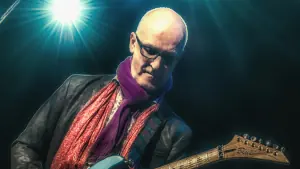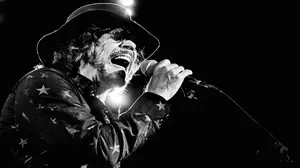


Walking into the Chrysler Theatre on Mar. 9 feels less like attending a concert and more like witnessing a high-stakes homecoming. Kim Mitchell is back. This isn’t just another stop on a circuit; it’s a headlining slot for YUNITY Bluesfest, a two-night stand engineered to funnel cash into the Windsor Cancer Centre Foundation and Transition To Betterness. It is loud, it is local and it carries the weight of a legacy that refuses to gather dust.
Mitchell is the quintessential Canadian rock survivor. He’s the guy who managed to pivot from the progressive, weirdo-rock friction of Max Webster into a solo career that basically soundtracked every lakeside patio from Kenora to Cornwall. But sitting down with him, you don’t get the sense of a man resting on his laurels. He’s still chasing the high of the stage.
For Mitchell, the live environment isn’t just a job requirement. It’s a biological necessity.
"It's just sort of the most comfortable thing I do," he shares. "I love transmitting musical energy with a band to an audience. I think it's a pretty magical thing that we humans do."
There is a specific, jagged electricity in a Mitchell set. He doesn’t just play the hits; he inhabits them with a technical proficiency that puts younger players to shame. Even after five decades, the pre-show jitters haven't evaporated. He feeds on them. He views the concert hall as a temporary autonomous zone where the outside world stops existing.
"We all get together with one common thing, and that is to sort of escape into Rockland Wonderland and let this musical energy that's being transmitted wash over us," Mitchell explains. "It's just a nice way of escaping for two hours because there's a lot going on in the world."
That "Rockland Wonderland" isn’t just a lyric or a catchphrase. It’s a mission statement. In an era where everything is polarized, Mitchell sees the stage as a rare piece of neutral ground. He views live music as a unifying force that bypasses the noise of daily life.
Windsor is the perfect backdrop for this specific brand of escapism. For Mitchell, this city is the site of his musical baptism. Long before the platinum records and the radio ubiquity, he was a working stiff in the local trenches.
"My paying career, like as a musician, where I started to make $150 a week, started in Windsor," he reminisces. "Just a bunch of memories of Windsor rush back - sitting at the Tunnel Barbecue, eating pie and walking downtown Windsor, playing the Metropole Supper Club."
The Metropole wasn’t just a gig; it was a grind. It’s where he learned how to hold a room. He talks about those days with a gritty nostalgia, recalling the reality of sleeping on air mattresses in basements just to keep the dream afloat. It’s a far cry from the sleek production of his modern tours.
The Windsor fan base is vocal, persistent and fiercely loyal. They don't just want him to play; they feel like they own a piece of his history. Mitchell is quick to point out that while he hears the calls, the mechanics of touring are rarely in the artist's hands.
It's just sort of the most comfortable thing I do. I love transmitting musical energy with a band to an audience. I think it's a pretty magical thing that we humans do.
"On social media, I often get people asking, 'Hey, when are you coming to Windsor?'" Mitchell explains. "And all music consumers need to know: It's not up to the artist. We don't just sit there and go, 'Okay, let's go play Windsor.' You have to have a promoter ask the band."
When he does show up, he’s bringing new textures with him. His 2020 release, *The Big Fantasize*, was a curveball. It’s atmospheric, moody and decidedly less "Go For Soda" than his previous output. The record exists because of a full-circle moment with producer Greg Wells, a man who has worked with everyone from Adele to Katy Perry but started out in Mitchell’s band at age 17.
"He paid me a visit at my house in Toronto, and I did the typical thing - assuming he's a successful guy, I thought, 'I've written some songs, Greg. That's the last thing a producer wants to hear.' But because he was in my band at 17, he responded, 'Yeah, man, absolutely' when I asked if he'd listen to my stuff," Mitchell shares. "So I gave him the metaphorical 'USB key of shame' with some songs on it. Two weeks later, he got a hold of me and said, 'Please come to Los Angeles. Let's record this.'"
Recording in Los Angeles provided a creative jolt. While some critics find the city’s "industry-first" attitude exhausting, Mitchell found the professionalism and the infrastructure of the L.A. studio scene to be exactly what the project needed.
"Some people dislike Los Angeles. They'll say, 'Oh, the waiter is just an aspiring actor.' It's what the town is about, right?" he says. "I love the creativity of that place, and I think the studios there are very inspiring and well set up. They have to be."
But you can’t talk about Kim Mitchell without the ghost of Max Webster looming in the corner. The band hit its 50th anniversary in 2023, a milestone that forced Mitchell to look back at a catalogue he had spent years ignoring.
"There were many years prior to this year, 2024, where I never gave much thought about Max Webster. As a matter of fact, I wouldn't listen to the songs anymore. It was just part of my life I wasn't in anymore," he shares. "But with social media, people keep bringing up the band's name and mentioning it. I realized this band had an effect on some."
That "effect" is an understatement. Max Webster was the ultimate "musician’s band"—complex, weird and undeniably tight. But for those hoping for a reunion tour, Mitchell is the bearer of bad news. The ship hasn't just sailed; it’s been decommissioned and turned into scrap metal.
"No. Everybody's retired," he explains. "The keyboard player, Terry Watkinson, he's totally retired from music. He just paints his art now. Gary McCracken, the drummer, he's completely retired. Paul Kersey, the first drummer, he's totally retired. Mike Tilka, one of the bass players, is not retired. He actually lives in Florida and Toronto and plays a lot, but he kind of does jazz gigs. That Max Webster ship has sailed a long time ago."
He leans on a classic rock trope to drive the point home, referencing the most famous "no" in the history of reunions.
"You know, when people talk about that stuff, sometimes I remember the quote from Robert Plant. When someone asked, 'Do you think Led Zeppelin will ever tour again?' And this isn't my case, but I like what he said. He said, 'Led Zeppelin? Are you kidding me? In a couple of years, I'm going to need help crossing the road.'"
Mitchell’s sound, that strange blend of progressive hard rock and accessible hooks, didn't appear out of thin air. It was forged in the border-town radio culture of Southern Ontario. Growing up in Sarnia meant he wasn't just listening to Canadian content; he was being fed a steady diet of Detroit grit.
"I think most bands' influences and inspiration come from what they grew up on, what was going on in their household. But it's for kids. It's an accumulation of that along with the life you have led," he explains. "That's where it comes from, so it was kind of like what I was listening to at the time. I was an aspiring guitar player. I was taking lessons. I was studying music. I was jamming a lot. And that's just where it kind of went."
The Detroit influence is the secret sauce. While Toronto bands were often looking toward London, the Sarnia and Windsor kids were looking across the river.
"Well, that's what I was born and raised on, Detroit rock, so yeah, that influenced me for sure," he says. "There was no local Sarnia scene. It was all Detroit radio. I remember walking around Sarnia with a radio, just one earplug since there wasn't even stereo then - I'm that old. I'd be listening to CKLW, which was actually a Windsor station, and later WRIF in Detroit. That's in my DNA, along with Motown, which I also loved."
However, the "Rock and Roll Duty" comes with a physical price tag. Mitchell isn’t a kid anymore, and a 2016 heart attack served as a brutal reminder of his mortality. The road is a meat grinder, and his doctors aren't exactly cheering from the front row.
"Truth be told, my gastroenterologist hates when I go on the road because after 50 years of 2:00 AM shows and coming off stage, it's a terrible lifestyle," Mitchell admits. "I do recommend being a musician, but a touring musician's life, unless you're at a level like Bryan Adams where you have a chef 24/7 and you're a vegetarian, it's tough. You come off stage, say, in Vancouver after a late show if you're from Windsor. You're starving when you get off, and the options are limited."
Despite the dietary hazards and the late nights, Mitchell is far from "burnt-out." He approaches his 2024 dates with a sense of responsibility to the people who bought the tickets. He’s not interested in being a museum piece.
"I want this to be fun. I want to give a good show. I want to take care of myself because I think it serves the audience better than a burnt-out old dude walking out on stage going, 'Oh god, here we go,'" he says. "That's not me. I want to go out on stage and think, 'Yeah, I'm older, but check this out. I'm ready to give it my all for you.'"
In the end, that’s the Mitchell ethos. He’s a guy who survived the Metropole, survived the 1980s and survived a heart attack, all while keeping his sense of melody intact. He’s still the kid with the one earplug, listening to CKLW and dreaming of the next big riff. Windsor is lucky to have him back.
Get Tickets