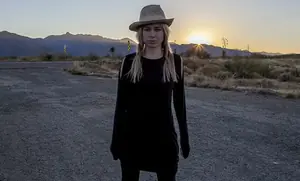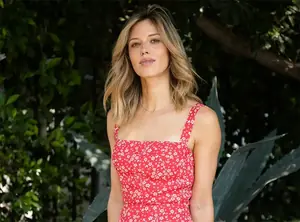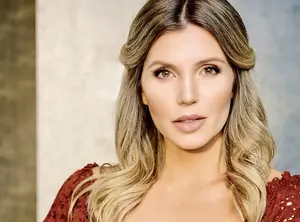

Sitting at a desk cluttered with press kits and half-empty coffee cups, you realize the industry has changed when a TikTok star becomes the most interesting person in the room. Mair Mulroney is not just another face in the digital crowd. She is a composer, a singer and a legitimate screen presence who has managed to navigate the brutal transition from major label casualty to independent powerhouse. With a following that rivals mid-sized nations and a recurring role in the Dhar Mann universe, she is currently leaning into the grit of the indie film circuit.
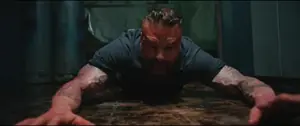
Her latest project, *Unchained*, hit Amazon Prime on July 2. It is a raw, bone-crunching look at the underground fight world. While some might dismiss it as another digital-direct actioner, Mulroney brings a level of physical commitment that most actors would outsource to a stunt double. This is not her first time on a call sheet, but it marks a definitive shift in her career trajectory.
"I would say as the lead role, yes," Mulroney says when asked if this is her first feature starring vehicle. "I’ve had starring roles, but more of a co-star thing where I’m not the main protagonist, so this is pretty exciting."
And it is exciting. Watching the screener, you can see the wear and tear on her character, Aella. The plot is a cynical take on the "audition to stardom" pipeline, turning a hopeful job search into a claustrophobic nightmare. It is the kind of narrative that feels uncomfortably close to the real-world exploitation often whispered about in Hollywood backrooms.
"My character is a girl who’s pretty down on her luck," Mulroney explains. "She comes from a military background. She’s just having a hard time finding a job and she sees this audition notice for a film that’s casting a fight film and because she has martial arts experience and fight training, she thinks, 'Oh, well, maybe this could be a good job opportunity for me.'"
But the opportunity is a trap. The film pulls a bait-and-switch that sends the protagonist into a spiral of forced combat and survivalism. It is a heavy lift for any actor, requiring both emotional vulnerability and the ability to look like you can actually take a punch.
"So she goes to the audition and it turns out that it’s all a ploy where the casting is not real," Mulroney says. "They’re just trying to see if you have flight experience, then they end up kidnapping these girls who go to the audition and throw them into this world of underground fighting. You have to fight to survive and obviously my character’s trying to escape and she definitely can’t compete with most of the girls at first. She’s in a very interesting state of mind for half the film and then she starts to come into her own and develop her skills."
The film features a cameo by Eric Roberts, who plays Aella's father. Roberts is the patron saint of independent cinema, lending a certain gravitas to every project he touches, even if his screen time is brief. In *Unchained*, his presence is felt through the lens of memory.
"No, but I was there for the filming of it so I was sitting right next to him while they were filming," Mulroney says regarding her time with Roberts. "He wasn’t actually acting with me because that was a flashback scene for when I was a little girl."
The narrative leaves several threads dangling, particularly regarding the paternity of Aella and the murky history between the Roberts character and Rhett Shepherd. It is a bold move to leave so much to the imagination, but it suggests a confidence in the material that looks toward a larger franchise.
"No, it’s not, and they wanted to leave that open for a potential sequel," she says about the unresolved plot points. "I think that was our main idea because we filmed this before the pandemic and we were going to release it in 2020 and then we were expecting we’ll put this out, get some interest in it, and then go into a sequel for it. The industry kind of shut down and that didn’t really get to happen. Hopefully with the release now it gains enough attention where people do want to see a sequel and want the finished story because that would be a lot of fun to do. It would be great to work with a lot of the cast members again, the ones that, you know, survived."
Mulroney did not just fall into the role. She was part of the creative orbit during the development phase. Producers Ilia Constantine and John Bryan, along with director Raphaello, were looking for a fresh angle on a dark subject.
"A good friend of mine is Ilia Constantine and also John Bryan, and they’re the producers of the film," Mulroney says. "Ilia was actually a co-writer of the film and the director, Raphaello, have a really good working relationship. They had been throwing the idea around for this film that they wanted to make, and because we’re friends and we’re all in the industry, we were tossing ideas back and forth. When they had a rough outline of the script, they sent it to me and I was like, 'Yeah, I think that this is a really cool kind of take.' I always thought about it as a different take on sex trafficking, you know? So I was interested in it and they said, 'Well, do you want to be in it?' I said sure, cool, and they said, 'Great, you start training on Monday.'"
The training was not a Hollywood vanity exercise. It was a litmus test. If she could not handle the physical labour of the fight choreography, she was not going to get the part.
"So I started fight training with a couple of other girls, Svetlana Constantine was also in it," she recalls. "She and I started training pretty early together and I didn’t know what role they had in mind for me. I thought I would just be one of the fighting girls or something like that or maybe a smaller part. I thought maybe I would be playing Maricris’s role at one point and then they finalized the script and said, 'We want to cast you as Aella, the lead role.' I think a lot of that had to do with me going through the training and making sure that I wasn’t going to give up halfway through and be like, that’s just too much, too physical type of thing."
When it is pointed out that the casting process mirrored the actual plot of the film—testing her mettle before throwing her into the ring—she laughs at the irony.
"Yeah, it’s like art imitating life quite a bit or vice versa, which happens a lot actually," she says. "That’s very funny, I’m glad you noticed that."
One of the standout performances in the film comes from Larry L. Andrews. He plays the kind of unsettling, low-level creep that makes your skin crawl. It is a specific type of character acting that requires a total lack of vanity.
I always thought about it as a different take on sex trafficking... they said, 'Well, do you want to be in it?' I said sure, and they said, 'Great, you start training on Monday.' ... I didn’t know what role they had in mind for me. I thought I would just be one of the fighting girls... then they finalized the script and said, 'We want to cast you as Aella, the lead role.'
"Everybody knows a Larry for sure," Mulroney says. "Oh, God, he is a character in real life. He’s a really nice guy actually, he’s very sweet, but he did stay in character a lot, especially for the first half of the film. I’m the type of person who can turn it on and off really quickly so there’s not too much methodology that goes into it. For me, as soon as they yell cut, I’m buddy buddy with everybody for the most part but not everybody works that way. So he was respectful of that and was like, 'Hey, if I need to really creep these girls out and be a creeper, I’m just going to be a creeper the whole time.' That’s how he behaved for the first three quarters of shooting. When we started getting towards the end, everybody was comfortable and we really got to start to know him as a person. He was interesting to work with for sure."
But Mulroney is not just an actor. She is a musician with a sharp ear for composition. She actually ended up scoring the end credits for *Unchained*, though it was not a guaranteed gig. Director Raphaello is known for being protective of his film's sonic identity.
"No, I wasn’t asked, I guess because I had never worked with Raphaello before and he’s very particular about what the score is going to be," she says. "So it was like, okay, she’s a musician, great, but if it doesn’t fit, it doesn’t fit, so I am not going to make any promises. I said, Yeah, but I think you’re going to want this one. So I, I wrote it and co produced it with my production partner, Marc Solomon and I thought it would be a great fit so I sent it to them. I sent them a couple others for soundtrack stuff, more instrumentals, but we didn’t end up going with that, but they did end up using the actual song for the end credits of the movie which became like a theme song for it which was really cool. It just happened to fit perfectly."
Her history with music is long and varied. While many actors claim to be musicians, Mulroney has the credits to back it up, even if some of the commercial work is more about vocal talent than songwriting.
"I haven’t written jingles for commercials, I’ve done more soundtrack work though on other films and stuff," she clarifies. "What I’ve done for the jingles is I’ll play it, I’ll sing it if I’m in the commercial and whatnot, and then demo some vocals and stuff, but a lot of times it’s somebody else who’s written it and then they bring me in to be the talent, so to speak."
Her entry into the industry was a classic Hollywood tale of early success followed by the harsh reality of the corporate machine. She was signed to major labels before she was old enough to drink.
"I had done some commercial modeling and a little bit of acting when I was in high school and I knew that I wanted to be in entertainment and college was not going to be a thing for me," she says. "Quickly it transitioned into music and I got my first distribution deal by the time I was eighteen or nineteen. That was with Warner Music Group and they went over to Universal after a couple of years and I was with them for a few years and that’s what brought me out to LA."
But the gloss of a major label deal often hides a darker underbelly. For a young artist in Los Angeles, the wrong management can be a career killer.
"Once I got here, the music industry is very, very tough, especially for a young person," she admits. "It can be really toxic, it just depends on who you’re surrounded by. I unfortunately was not very lucky to have good management or label reps so we had a bit of a falling out and that left me like, 'Alright, well, I’m going to do the independent thing.' I needed more income and it turned out that I just fell into acting through music. I met a talent manager who ended up auditioning me and signing me to an agency and immediately I started working really consistently. It definitely took over the music for a while and then I was able to mesh the two together and I feel like there is a good balance now, but for a while it was just acting and I was like, 'So am I an actor now? Like what’s going on?'"
Part of that acting work included high-budget music videos. She famously appeared in a Katy Perry production that was as physically demanding as any action film.
"Yeah, I’ve done a lot of music videos, that’s for sure," she says. "Oh, yeah, that was a really fun shoot. It would get really hot during the day and I’m wearing this latex suit type of thing, and then it would be freezing as soon as the sun went down, so you’re sweating, and I know this is gross, but your sweat is trapped in this latex and then it freezes, so I was so cold I had little welts all over me. They rented out Magic Mountain for three days to do that but it was really, really cool. It was an awesome set and I’m still friends with a lot of the people I met there."
Her musical evolution continues with her project *Keep it Simple Stupid*, a collaboration with Marc Solomon. It represents a more mature, less manufactured version of her sound.
"Yeah, I did, I’ve released several EPs and I’ve taken a bunch of them down because that’s not really where my head is anymore," she says. "I don’t think it’s the right representation of me, but I did release one and now I just release more singles. I have a musical project with Marc Solomon called 'Keep it Simple Stupid'. That’s our band name because we tend to over think everything that we do, but that’s a fun project that has a lot of good songs there."
One of her most striking visual pieces is the video for "Fallin", directed by Hussain Najam. The cinematography is lush, a far cry from the quick-cut aesthetic of social media.
"Oh, thank you so much! That was a friend of mine who directed that, Hussain Najam," she says. "He was the director of cinematography for a short film that I did that won a bunch of awards in the festival circuit."
While some might point to *Greetings from Los Angeles* as her standout short, Mulroney has a soft spot for the grittier work she has done with Najam.
"No, it was a different one, but 'Greetings from Los Angeles' was super cool," she says. "That was really one of my favorite shoots to date because I just got to do so many cool things and go to visit so many cool places. Javier was an amazing director and just the sweetest guy in the world. The one that Hussain did is called 'Candy and Ronnie' and that one is a little bit of a darker piece, but it was really well shot. So he hit me up and said, 'Hey, I would love to do a music video for you. Do you have any ideas?' and I said yeah and we shot that and it ended up turning out pretty well."
Then there is the Dhar Mann phenomenon. For the uninitiated, Dhar Mann is a YouTube juggernaut that produces moralistic short films. To some, they are kitschy; to others, they are essential viewing. For Mulroney, they have been a massive engine for visibility.
"Yeah, it’s a pretty incredible story honestly," she says. "They reached out to me a couple of years ago when they were first starting to do these inspirational shorts mainly for Facebook. It was Dhar Mann doing the voiceover and he would have these actors acting out the scene but it was usually more M.O.S. (silent shot) than anything, then transitioned into scripts and eventually started to evolve. But yes, they reached out a couple of times and said, 'Hey, you have this look that we want for this particular sketch, would you be willing to do it?' It was a very small skeleton crew at the time, but still very professional. Everybody was really nice and I just enjoyed the people so they kept calling me for more and more videos and it was a lot of fun."
The scale of the operation is staggering. What started as Facebook shorts has grown into a Burbank-based studio empire with production values that rival traditional television.
"Over COVID it really developed into something completely out of this world," Mulroney notes. "They ended up working out of a penthouse in downtown Los Angeles. They bought a huge studio in Burbank this past summer and opening it up, Dhar Mann Studios. The sets in there are insane. They’ve got two different apartments, they have a plane, a courthouse, a school. It’s really incredible the growth that’s happened and now they’ve got multiple filming crews around the clock and it’s really taken off. We have over 20 billion views worldwide on all social media platforms. It’s just mind blowing to know from its inception, where it came from and how quickly it got to where it is, just mind blowing."
The numbers are difficult to wrap your head around. Twenty billion views is not just a digital metric; it is a cultural shift.
"Yeah, it’s pretty nuts," she says. "A lot of it I think comes from Facebook too because of the sharing ability. I have videos that have over three hundred million views on there. It’s absolutely mind blowing. For young people, for kids, if I’m going anywhere and there’s children around, it’s a mob because they all watch the videos. It’s like their new Disney Channel kind of thing, it’s really cool. I’m so proud of everybody involved, honestly."
Her own TikTok growth is equally impressive. She is on the verge of hitting the million-follower mark, a milestone that solidifies her status as a digital native who understands the value of the short-form clip.
"Honestly I’m hoping I hit a million today," she says. "I’ve got 5,000 more followers, and I just posted a new video this morning so I’m thinking I’ll be at a million by the end of the day."
TikTok has become a sanctuary of sorts, a place where the toxicity of older platforms is replaced by a more chaotic, playful energy.
"Yeah, there’s a good chance of that," she says when asked if people are migrating from Facebook. "I think it’s fun, it’s light hearted, It’s very easy to go viral. I guess who’s to say that it’s easy because I don’t know how exactly the algorithm works, but you can do something silly and fun and millions of millions of people will see it, like it and share. It’s definitely not as much of a toxic community where you’ll always get some comments that aren’t super nice or whatever, but I would say 98% of them are just supportive people who are bored and want to have fun and watch something silly or connect with people or do a funny dance or make a funny skit and it’s kind of a cool platform in that regard."
Looking ahead, Mulroney is dipping her toes into the *Star Wars* universe with a project titled *Sands of Fate*. While it is technically a fan film, the pedigree of the people involved makes it feel like an official Lucasfilm production.
"I think COVID put a halt on certain ones that I had filmed my parts in and then it goes into the post production thing," she says. "I have one project that I’m so excited about, it’s a Star Wars project that’s called 'Sands of Fate'. It’s coming together pretty well. I actually just saw la little teaser this morning that they put out on their Instagram page. I’m excited for that one to come out."
The project is being handled by Escape Velocity Content, a company with ties to Ryan Reynolds and a crew that spends their day jobs on the sets of *The Mandalorian*.
"No, it technically falls under the fan film category because it’s not owned by Disney, but the people who are working on it all work for Disney," she explains. "They work on the Mandalorian and stuff like that and the production company is Escape Velocity Content, and they are partnered with Ryan Reynolds and his production company so it’s very high quality work and you really are in the Star Wars world when you show up to set."
The attention to detail on these sets is what separates the professionals from the hobbyists. For Mulroney, the experience was indistinguishable from a major studio shoot.
"It’s unbelievable, the droids, the characters, the costumes," she says. "Some of the actors are from the Mandalorian and stuff like that. One of the actors plays C3PO, his name’s Chris Bartlett. Tim Martin, our director, is also a really famous sculptor, and he works on the Mandalorian and creates all of their characters. It’s a cool place. It feels very real and is about as close to the real Star Wars world as you’re going to get."
Mair Mulroney is a rare breed in the current entertainment climate. She is an artist who has survived the old-school label system and mastered the new-school digital economy. Whether she is fighting for her life in a cage on Amazon Prime or dancing for a million followers on TikTok, she is doing it on her own terms. And in this industry, that is the only way to stay unchained.