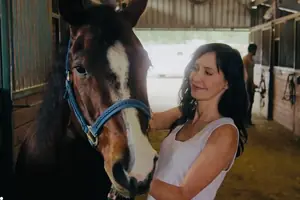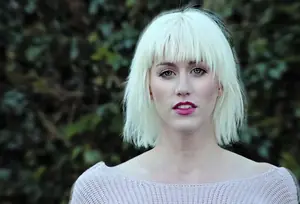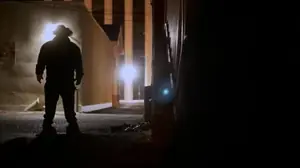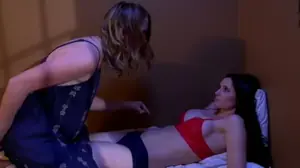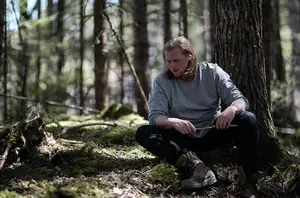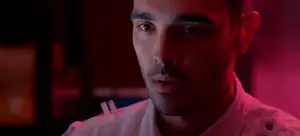
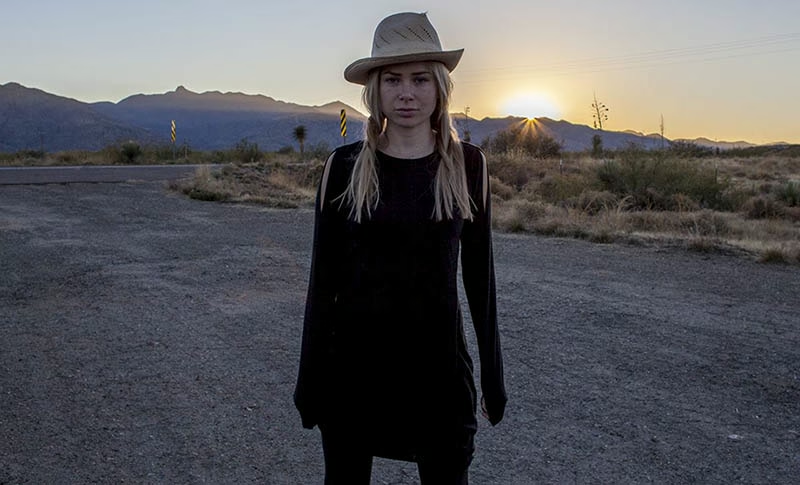
I am sitting at the critic’s desk with a digital screener of *Hollywood.Con* queued up, and it is impossible not to think about the sheer survival rate of child actors. Most burn out before they can legally buy a drink in a Vegas lounge. But Mika Boorem is the outlier. You remember her as the terrified Megan Rose in *Along Came a Spider* or the stoic Margaret in *The Patriot*. She was the face of early 2000s coming-of-age cinema, moving from the heavy drama of *Hearts in Atlantis* to the sun-drenched surf of *Blue Crush*. Now, she is behind the lens, steering her first feature film as a director and producer.
The film is a frantic, satirical look at the industry that raised her. It is currently streaming on Amazon Prime, a move that reflects the current reality of mid-budget indie distribution. Boorem is visibly relieved to have the project in the wild.
"Yes I did which is so exciting," Mika says regarding the release. "It’s nice to have it out in front of audiences and hearing people’s experiences with it."
The title itself, *Hollywood.Con*, is a bit of a meta-joke. It refers to the con artists who populate the industry, trying to manifest movies out of thin air and sheer audacity. In a sea of generic titles, Boorem wanted something that would pop in a search engine.
"We were trying to think of a different name and we’re thinking, what is it that no one else has because when people are looking for the movie and looking stuff up, we want something different that will stay different for a while. So that’s what the *Hollywood.Con* is about," she explains.
But getting the film to the screen was not a straight line. The production hit the brick wall of the global pandemic just as they were ready to launch. For an independent filmmaker, a delay like that can be a death sentence for a project’s momentum.
"Absolutely, it’s been an interesting process too because we were originally going to release it in the theaters basically when the pandemic hit so apart from the regular life things with the pandemic, we also had to figure out what’s going to happen with movie theaters and do you wait or whatnot," she says.
The pivot to streaming was not just a backup plan; it became a lifeline. The original distribution strategy was actually quite brilliant, albeit unconventional. They were looking south of the border to build a base before tackling the domestic market.
"Having it on Amazon has been fantastic for us, it’s such a nice home for it," Boorem notes. "Our original plan was that we were going to release it in over 2,000 theaters in Mexico and then bring it to the US which is sort of a different distribution plan. Usually people if they’re doing the theater route will start domestically in the US and then start moving outward Internationally, but because the movie has a lot of Latin flavor to it, and a lot of Spanish in it, we thought that would be something fun, quirky and independent."
The film’s aesthetic is grounded in its locations. This was not a backlot production. Boorem took her crew into the thick of it, capturing the grit and colour of the Yucatan and Central America.
"Yeah, we did. We filmed all over. For an independent film we were extremely all over the place," Mika says. "For the part in Mexico we filmed in the Yucatan, in Mérida and in Cancún and then we also filmed in Arizona, and Texas. We filmed a little bit in Guatemala and we came to California and I think that’s it."
The narrative heart of the movie actually finds its roots in Guatemala. It is a family affair, co-written with her father, Benjamin Boorem. He is a gemologist by trade, and the script pulls directly from his real-world exploits in the jade trade.
"Yeah, absolutely. It was actually a really interesting time. I went to the Tucson Gem and Mineral Show with my dad and it’s either the largest or the second largest in the world and goes on for about two weeks," she tells me. "When I attended the show with him, people for whatever reason were not having enough access to this Guatemalan Jade so my dad took it on as a challenge. He said, 'We’ve got a week and a half before the show’s over. Let’s get down there and we’ll find all this Jade that people are wanting right now and then we’ll bring it back and sell it before the show’s over.'"
That impulsive trip turned into a cinematic odyssey. They flew into the heart of Guatemala, navigating terrain that most Hollywood types only see on a green screen.
"So we flew to Guatemala and we drove all over. We went all the way to the coast, we went up into the mountains, we were just all over the place and we were talking to different people about the Guatemalan Jade," Boorem says.
They eventually struck green gold in a remote village. It is the kind of luck that feels scripted, but in the gem world, it is just Tuesday.
"The Guatemalan Jade is really cool, there are all these different colors," Mika explains. "We ended up finding this village that had all of this Jade and they had a specific buyer that they always sold to but he hadn’t returned in ten years so they had just been stockpiling this Jade. We ended up buying 300 pounds of Jade from them that we brought back to the Tucson Gem and Mineral Show but also while we were sitting there they brought out these pieces of Jade that were gorgeous. They were like the Imperial Jade, dark green emerald color and they looked just enchanting."
But there was a catch. The most beautiful pieces came with a morbid history. The villagers offered them "tomb jade," which carries a weight of folklore that even a pragmatist might find unsettling.
Something that I thought I could bring to the film and would be really enjoyable as a director would be to have a great cast that people are familiar with in a different light than maybe you’ve seen them in films before. They’re playing sort of more offbeat, quirky opposite of typecast, which I really enjoyed when we were piecing it together to brainstorm with my friends about what do you never get to play? What will be fun? What have you always wanted to play? Do you want to be the whatever? Let’s do it, we’ll fit it in and we’ll make it happen.
"They started telling us these are from the tombs and we are like whoa, what do you mean these are from the tombs? So they went into the part of the Mayan folklore, the part where they believe that if you put the piece of Jade in the mouth when people pass away, the soul passes through the Jade and then something that helps them go to the afterlife, I’m not sure the exact specifics of all of that," she says.
It is the kind of detail that makes the film feel authentic. The idea of "enchanted jade" becomes a driving force in the movie’s plot, mirroring the real-life tension of the Boorems' trip.
"Basically it has this kind of ethereal, wonderful aspect to it for them. But these were from the mouths of corpses so no I can’t take those back home, I can’t sell those, weird things could happen," Mika admits. "I think also too if that’s some of your heritage and stuff, if there were curses to be involved it probably wouldn’t be quite as bad if you took them from the tomb but I think if you get further removed, then that’s where the curses could really pick up, I don’t know."
And so, the cursed jade of the Yucatan became the engine for a Hollywood satire.
"So in the film, the part of enchanted Jade which plays such a big part of the Latin America part of the making of a movie within a movie, that was the major influence of his experience of being in this village and them trying to sell us that and the whole experience," Boorem says.
There is a technical beauty to jade that Mika appreciates, a metaphor for the filmmaking process itself. It starts as a rough, unremarkable stone before the polish reveals the value.
"It was funny too because Jade when you polish it is obviously very beautiful, the black Jade, the orange Jade, the green Jade, but a lot of times it just looks like a dirty river rock, like a piece of cement. When we were traveling back, people were like, 'What? That looks like river rock.' It looks ugly until you get in there and polish it," she notes.
Transitioning from acting to the director’s chair is a heavy lift. Boorem had cut her teeth on music videos and shorts, but a feature is a different beast entirely. It requires a stamina that a three-day shoot simply cannot prepare you for.
"Directing *Hollywood.Con* is my full feature and then I’ve done music videos as well. It’s so different doing a full feature though, obviously in length of project but also there’s just a lot more moving parts," she explains. "The short films that I’ve done before, most of them have a four day shoot, three day shoot, a week shoot and the music videos are really fun too because you have that quick turnaround, which is cool. So you get the instant gratification which the first time I started getting into music videos I was like, 'Oh my gosh, cool!'"
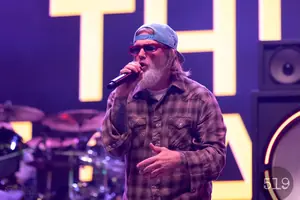
One of those pandemic-era projects was a video for Travis Tidwell, titled *Catch Me if You Can*. It earned a nomination for a Josie Music Award, which is a massive nod in the independent circuit.
"We actually shot a music video during the pandemic too called 'Catch Me if You Can' and the artist is Travis Tidwell. We got that up on Country Music Television, which is awesome and then it was just nominated for a Josie Music Award which from my understanding is the largest independent music awards, and it was nominated for music video of the year. So I hope I get to go to the award show in Tennessee and get my cowboy hat out and all my tassels, it sounds like fun!" she says.
Boorem seems to have a knack for blending southern rock sensibilities with cinematic visuals. The Tidwell video was a logistical puzzle, bringing together crews from three different states during a time of heightening health protocols.
"Everyone had different opinions about what was going on with the pandemic and about what they felt comfortable with. Everyone was wonderful and it worked great, but my dad and I had to manage different comfort levels with different people during that time period so it made it very unique to film during the pandemic," Mika says.
And while music videos offer that quick hit of success, the feature film allows for a broader reach. It is the difference between a gallery showing and a public mural.
"The difference with making the full feature versus the short films too is because I feel like with short films they’re so fun that you get to do something thematic and just sort of pick a tone. It doesn’t even necessarily have to have a full ending on it or anything like that. A lot of times you don’t get a very broad audience with short films. I feel like music videos you do but with short films specifically, most of the people who are watching them are people who are really into film or they study film, that type of thing. The cool thing about the full feature is it’s just so much broader, you’re hitting such a larger audience and getting in front of the masses on Amazon which is amazing," she notes.
There is a specific moment in *Hollywood.Con*—a musical interlude featuring Heidi Jo Guthrie in the desert—that stops the frantic pace of the comedy. It is an artistic gamble that pays off, giving the protagonist a moment of clarity.
"Yeah, she’s a family friend and I love that song. The song is specifically about strong women and it’s very empowering," Boorem explains. "I think at that point in the storyline my character has sort of grown into herself and is no longer operating under this facade of pretending to be someone else and a lot of the story is her trying to find that footing so the song fit perfectly there."
The film also features Billy Bob Thornton’s band, The Boxmasters. It adds a layer of indie credibility to the project, making it feel less like a standard comedy and more like a curated piece of art.
"When I heard the song I was like, Oh, that’s really cool, and I think one of the great things about independent film is you have these opportunities to layer the project with things to make it special and unique and so I love her and I love that song. We already have the musical element of Billy Bob Thornton with The Boxmasters where they have their cameo and their songs in there. So I was like, this is another cool layer where we could add more music in and have it be something else that when you see it, oh, that’s an interesting artistic touch," Mika says.
The cast is a collection of Boorem’s history. Most notably, Tom Arnold appears as a zany character, a full-circle moment for Mika, who played his daughter on *The Tom Show* when she was just 10.
"I’ve known Tom since I was 10 years old. I played his daughter on the WB TV show *The Tom Show*. It’s wonderful to collaborate on the level of going from playing his daughter and acting under him on his TV show to then directing him, how cool! Of course with somebody like that, they’re so talented they sort of do what they do and you are like, oh, that’s funny. You’re not overly directing somebody who has that skill set of just being hysterical so that was really rewarding to be able to collaborate with him on that," she says.
She leaned heavily on her network, casting friends in roles that subverted their usual types. It gives the film a loose, improvisational energy.
"A lot of the other actors are all people that I had worked with in the past on films prior, they were different colleagues, so something that I thought I could bring to the film and would be really enjoyable as a director would be to have a great cast that people are familiar with in a different light than maybe you’ve seen them in films before," Mika explains.
But how did she survive the meat grinder of child stardom? We have seen the headlines for decades. Boorem credits her survival to a lack of interest in the "scene" and a deep focus on the craft.
"That’s so nice, thank you for saying that. A couple of things, I think that one would be I was never overly interested in the glamour premiere, Hollywood side of it. I always liked more the actual what people are doing, how are they collaborating, that sort of inner working wheel of projects which is why I think it was a natural progression to move from acting into directing. I just wanted to get more and more involved with how things function and how they work. And then I think also too there’s a few different scenarios that I’ve seen firsthand with people with some of that stuff. If you see people being affected firsthand it makes you think, oh wow," she says.
Her family provided the guardrails. Without a pushy "stage parent" in sight, she was free to pursue the work on her own terms.
"I was very fortunate with my family being super supportive and I think offering guidance on stuff but never feeling like I had to act or do anything that I didn’t feel like, I didn’t feel pushed into anything," Mika says.
She used that perspective to sharpen the satire in *Hollywood.Con*. The film mocks the ladder-climbing and the absurdity of networking in Los Angeles.
"Yeah, so the movie’s a comedy and I took anything funny that I had seen people do in terms of networking and just quirky characters because the Hollywood sections of satire and the ladder climbing stuff, I took that and just turned the volume up on it. I thought, what could we do that would just be over emphasized. They say to write what you know but I think that if you do write what you know, you can mix enough authenticity into things so that people who are in the industry of the movie stuff, or people who are in the industry of the geology stuff, there’s enough realism in both of those that hopefully it kind of strikes a chord where they can relate to something in there and that connects with them," she explains.
Looking forward, Boorem has a slate that is as diverse as her acting resume. She is working on educational films, a modern noir and a music documentary that uses archived footage. But the project that seems to carry the most weight is a historical piece set in the 1920s.
"Then there is a large scale historical piece that is about a young boy who travels across the United States by train in the late 1920s," she says. "He jumps trains and he travels to these different cities looking for work and there’s just beautiful vignettes to see, he meets people, and struggles just to survive, to become an adult and then moves on from place to place. Eventually by the end of it, he’s fully developed into this young man who’s had this whole experience that you’ve seen throughout the film. And the story is so beautiful, it’s based off of a real story. With the pandemic, we have to wait till things simmer down."
As the industry reopens, Boorem is ready to hit the ground running. She is no longer just the kid from the Mel Gibson movie. She is a filmmaker with a point of view.
"Yeah, absolutely, I’m ready to make lots of movies," she concludes.
You can find her at hollywoodcon.net or mikaboorem.com. Keep an eye on her. She has already survived the hardest part of show business; now she is just having fun.