
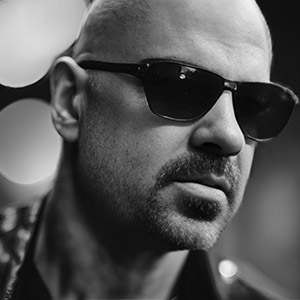
In the high-stakes world of documentary filmmaking, where budgets are thin and the Canadian broadcasting landscape is a literal minefield of rejection, Stephen Paniccia is the outlier who actually made it through the fire. I’m sitting in a darkened theatre, watching the credits roll on his latest work, and it’s clear this isn’t just a career trajectory. It’s a survival story. Paniccia has moved from the gritty streets of Windsor to the polished floors of the Emmy Awards, but he hasn’t lost that border-town edge.
His win for *Buffy Sainte-Marie: Carry It On* wasn’t some fluke of the prestige TV machine. It was the result of a decade spent in the trenches. Producing documentaries in Canada requires a level of masochism that most people can’t fathom. You aren't just making art; you are fighting for every frame.
“I’ve been working for White Pine Pictures for 10 years and I’m the hands-on Producer for the company,” Paniccia shares.
That "hands-on" descriptor is doing a lot of heavy lifting. In the doc world, that means you are the one fixing the lighting at 3:00 a.m. or negotiating access to a subject who hasn't answered their phone in weeks. Paniccia’s tenure at White Pine Pictures has turned him into a Swiss Army knife of production.
The Buffy project didn't just fall from the sky. It started with the kind of intellectual curiosity that defines the best production houses.
“The company got involved with Buffy Sainte-Marie when our head of Development Andrew Munger read Buffy Sainte-Marie: The Authorized Biography by Andrea Warner. He brought the idea to our Executive Producer and they reached out together to Buffy Sainte-Marie and her Manager – Gilles Paquin and the rest is history,” Paniccia explains.
History, in this case, meant capturing the essence of an icon who has spent decades being misunderstood by the mainstream. Paniccia’s approach wasn't about hagiography. It was about proximity.
“Buffy Sainte-Marie was the kindest, most down to earth celebrity I’ve ever met. She was very creative,” Paniccia recalls.
But kindness doesn't make a movie. Logistics do. Paniccia had to figure out how to visually represent a life that spanned the folk revolution of the 1960s and modern digital activism. This meant turning a tropical paradise into a smoky Manhattan basement.
“I was lucky enough to spend a week with Buffy, filming with her at her home in Hawaii where we turned a hotel ballroom into a 1960’s NYC coffee house. I also got the chance to film with Buffy in LA, NYC and Toronto, so I consider myself very lucky to have had the opportunity to spend so much time with her while we were filming the documentary,” he says.
The technical audacity of that Hawaii shoot is worth noting. Documentarians often have to fake the funk, but turning a Hawaiian ballroom into a Greenwich Village haunt is a specific kind of production design flex. It speaks to Paniccia's ability to manipulate space and time on a budget.
Then came the Emmy. It’s the kind of validation that usually changes a person, but for a guy from Windsor, it seemed more like a surreal detour.
“It’s an experience you never forget. It’s an honour just to be nominated but to be there and to be given your award by fellow Canadian Paul Shaffer, there’s just no words,” he shares.
There is a poetic symmetry in Shaffer handing over the trophy. Both men represent a specific Canadian export: the tireless, multi-talented professional who thrives in the American spotlight without losing their northern soul.
It’s an experience you never forget. It’s an honour just to be nominated but to be there and to be given your award by fellow Canadian Paul Shaffer, there’s just no words.
But Paniccia isn't just the "Buffy guy." He has a history of leaning into uncomfortable truths. His film *Toxic Beauty* was a brutal look at the chemical sludge we smear on our faces every morning. It wasn't pretty, and it wasn't supposed to be.
“Are cosmetics making us sick? Five surprising facts that you probably don’t know,” Paniccia shares, citing the core questions that drove the project.
Investigative documentaries are a legal and financial nightmare. You are going up against massive corporate interests with deep pockets. To pull that off, you need a producer who can handle the heat. Paniccia credits his ability to stay cool to his roots in the Windsor theatre scene.
“I think living in Windsor, we were very lucky because there was a lot of local theatre growing up, which shaped my love of the stage,” he reminisces.
Windsor is often dismissed as a lunch-bucket town, but its proximity to Detroit gives it a cultural hybridity you don't find in Toronto or Vancouver.
“Besides all the great community theatre in Windsor, we had access to all the large productions that also came to Detroit, which made Windsor a great place to live for arts and culture,” Paniccia explains.
That exposure to the Detroit circuit—big, loud, professional productions—set a high bar for a kid from the suburbs. He didn't just want to watch; he wanted to build.
“I started in theatre in grade 10 acting and then moving backstage into lighting, sound and stage management,” he shares.
This is where the "hands-on" producer was born. If you can manage a stage during a live performance where everything is breaking, you can manage a film set.
“When I first got into film and I started being a Production Manager, many of the actors I worked with could tell I came from theatre, just in how I handled situations, live theatre is fast paced, stressful and as a stage manager, you have to stay calm and know what’s going on everywhere, on stage, backstage and work with everyone to get it done. Similar to a Production Manager and Producer,” Paniccia says.
The transition from the stage to the screen is often rocky for most, but for Paniccia, it was just a change of medium. The stress remained the constant.
He also draws a direct line between his professional stamina and his loyalty to the Detroit Tigers. It’s a bleak but fitting metaphor for the film industry.
“In this industry you get a lot of no’s, with only a few broadcasters and sources of funding in Canada, you have to take the good and the bad and the ups and the downs just like the Tigers,” he explains.
In Canada, the funding pool is a puddle. You are fighting for the same handful of dollars from the same handful of gatekeepers. An Emmy doesn't grant you a lifetime pass.
“Even though you have an Emmy nothing comes easy, you still have to go back to the beginning just like the start of a new season, it’s the same when you start a new project,” he shares.
That lack of ego is rare in this business. Most producers would be coasting on their laurels by now, but Paniccia seems to view every new project as a rebuild year.
He attributes this groundedness to his parents. In a city like Windsor, community isn't a buzzword; it's a requirement for survival.
“Growing up in Windsor, I was lucky to have a lot of experiences thanks to my parents who were always part of the community,” he says.
His parents weren't just bystanders; they were active participants in the local fabric.
“They were always volunteering for different organizations and events which allowed me to have a lot of experiences. They showed me that you should be involved and give back to your community. And this has helped me in both my personal and professional life,” he shares.
That community-first mindset is likely why his documentaries feel so human. Whether it’s the life of a folk legend or the dangers of talcum powder, there is a sense of responsibility to the audience.
His latest project, *Plastic People*, just hit SXSW. The reviews from the big trades like Variety and The New York Times have been glowing. It’s another deep dive into the things we ignore—this time, the microplastics colonizing our bodies.
Paniccia isn't slowing down. He’s just getting better at the game. He’s the guy who knows how the lights work, how the money moves and how to keep a legend like Buffy Sainte-Marie comfortable in a fake coffee house.
The industry might be full of "no’s," but Paniccia has figured out how to make the "yes" count. And as long as he keeps his Windsor grit, he’ll keep winning.
This profile originally appeared in the Apr. 2024 issue of 519 Magazine.