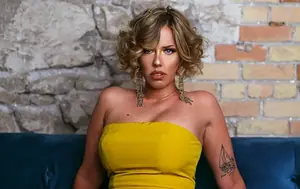

Sitting in a dimly lit corner of a Halifax pub with the salt air of the Atlantic clinging to the windows, you can feel the weight of the last two years in the room. It is a heavy, almost physical presence. For Christine Campbell and Blake Johnston, that weight has finally been pressed into the grooves of their debut self-titled record. It is a slick, blues-rock-infused collection of piercing yet passionate vocals and soulful guitar riffs that are sure to please the most discerning of music fans. But this is not just another East Coast indie release. It is a survival document.
The pedigree here is not in question. Both have been staples of the Nova Scotia circuit for years, grinding through bars and festivals with a relentless work ethic. The transition from solo acts to a unified front under the Campbell & Johnston banner felt inevitable to those watching from the front rows of the Marquee Ballroom or the Carleton. When I ask about the timeline of this partnership, Campbell is quick to trace the lineage back to a specific summer heat.
"Well, we played on the same bill a lot in previous rock bands that we each spearheaded separately and then I went solo and Blake started being a gun for hire," Campbell says. "Our very first show together was at the Dutch Mason Blues Festival here in Truro back in 2013. Over the next two years, we started helping with each other’s projects and this is our first project where we’re both co-piloting."
Co-piloting is an apt term for a duo that manages to balance high-octane guitar heroics with vocal arrangements that actually have something to say. But the world had other plans for their 2020 launch. Between the global shutdown and the arrival of a new family member, the "Atlantic bubble" became more than a geographic designation; it was a cocoon.
"We had a baby," Campbell says, dropping the news with the kind of casual exhaustion only a new parent can muster. It is a massive shift in any artist's life, let alone two musicians trying to launch a career-defining project during a once-in-a-century health crisis.
"There was a world pandemic," Campbell says. "A lot of strangeness this last couple of years. Man, I never in a million years would have thought so much would change, but despite all the challenges, we’re both in a very positive place. Our little guy is amazing. Our album, we’re so happy it’s finally released. We delayed it because of the whole pandemic thing but now we finally released it and although our dates got canceled once again, we’re still excited about it. I think the light at the end of the tunnel is just coming through and there are campaign packages that we’re sending out. We raised ten thousand for it and we had all these little perks and stuff that we’re sending out to people so although we can’t play live music right now, at least there’s something to do."
The technical history of *Campbell & Johnston’s Black Market Band* is a study in perfectionism meeting a brick wall. Recording began in the "before times," Sept. 2019 to be exact. They tracked the bulk of the music in a feverish two-week sprint, but the devil, as always, was in the details.
"We started in September 2019, did most of the music within a couple weeks, and then Chris and I were going in and doing vocals," Johnston says. "We had rented a specific microphone for Chris’s voice that we could only get at a certain time, so we did her vocals during that time. February, we went in and finished the last little bit of Don’t Leave me Hanging and that was pretty much the last thing that we had to do and then March happened."
And when March happened, the clock stopped. Or rather, it slowed down enough for Johnston to start second-guessing the very work they had spent months perfecting. This is the danger of the home studio era: the ability to "fix" what might not be broken.
"Once the pandemic started, okay, the future is sort of unwritten," Johnston says. "I started agonizing over the guitar solo on Bittersweet and I wanted to replace it so I did that at home and that took about a month of trying to get a solo that I was happy with. I ended up scrapping it and going with the one that we did in September/October. We started just picking even though it was done because we didn’t know when we were going to be able to release it. We thought let’s maybe go in and do that little thing that we thought about doing and then we said no."
But the delay did allow for one crucial addition. The record needed more of Johnston’s vocal presence to truly justify the dual billing. A suggestion from their management led to a last-minute studio session in Jan. 2021 that finally rounded out the tracklist.
"Christine had been saying that we should probably have another song where I sing if we’re going to have both names on it and I thought we don’t necessarily need it," Johnston says. "Then we started working with a girl named Tiffany Martin, who has been helping out in the managerial area and she said the same thing. The song we put on, Fool For You, we’ve been kicking around for about a year so we went in January and did that. That’s when we decided alright, we’re going put it off until May, just to make sure that was done."
The result is a tight, seven-song collection that blurs the line between an EP and a full-length. In an era of bloated 20-track streaming filler, Campbell & Johnston have opted for the classic rock model: all killer, no filler.
"Anyway, it’s here and we’re slowly building a studio and figuring out the people we work the most efficiently with," Campbell says. "One person based out of Windsor SLR studios, Marty Bak, he’s awesome, he mixed and mastered everything. We also love working with Charles Austin and Frank from Ocean Floor. We’re just trying to do as much as we can here and slowly build our own little studio so that we can eventually become completely independent but along the way, we’re trying to figure out the best way to record and get a return and a turnaround."
Johnston is quick to defend the record’s length, pointing to the giants of the 1970s who valued brevity over quantity.
"I would say it’s almost a half hour running time," Johnston says. "I would look at it like a lot of Zeppelin albums, I think In Through the Out Door was seven songs, and a lot of them were eight, eight or nine tunes so I feel like we can call it an album without taking artistic liberties with that term."
And yet, despite the classic rock DNA, don’t expect a vinyl pressing just yet. The economics of the Atlantic music scene are brutal, and the duo is playing the long game.
"We thought a lot about that, it’s very expensive," Campbell says. "I think down the road, we’ll probably release another EP or at least a few singles or something and then eventually put them all together and release that on vinyl."
The live show is where this material is designed to live. They have cultivated a flexible roster of musicians to ensure the "Black Market Band" can adapt to any stage, whether it is a small club or a major festival circuit.
Man, I never in a million years would have thought so much would change, but despite all the challenges, we’re both in a very positive place. Our little guy is amazing. Our album, we’re so happy it’s finally released. We delayed it because of the whole pandemic thing but now we finally released it and although our dates got canceled once again, we’re still excited about it. I think the light at the end of the tunnel is just coming through...
"Yeah, we kind of have two bands," Campbell says.
"We have A string and B string," Johnston says. "It’s not that first string is better than the second string, it’s just who we usually call first, who we’ve been working with for a certain amount of time and then if that doesn’t work out, we always have had the backup thing."
"Blake played a lot on the album, a lot of the bass and things like that, because he just had a vision and so, a little bit of everything," Campbell says.
The creative chemistry between the two is obvious, but it is also calculated. They are both "picky," as Campbell puts it, which leads to a rigorous vetting process for every riff and lyric.
"For this project I guess the change was we found the stuff that we were both working on that work together for each other, you know what I mean? We’re both very picky," Campbell says.
"The change was natural, it wasn’t a sit down and specifically talk about how things had to change, you work within the parameters of whatever you’re doing," Johnston says. "So if she had a song that she was working on, we would go about finishing that song the way that it had to be done. For me it was different because I can write things that are in a higher key because I can get her to sing it. So for me it’s just like adding a couple other, I guess weapons to the arsenal, right? She has some tools that I just don’t have like vocal range wise so for me it changes."
"He sings pretty high though," Campbell says. "I think sometimes it’s easier for me when we’re kind of just chewing the fat to go over songs vocally in a certain setting whereas Blake relies on his adrenaline sometimes, but Blake is much better demoing than I am. He’s produced other albums that are great projects so he’s able to do that side of things and that way I’m able to get songs out of me before I suddenly decide I don’t have the confidence to keep singing them and I don’t like them."
The shift from Campbell’s classically trained piano roots to this raw, blues-based rock is perhaps the most striking evolution. Her previous work flirted with different genres, but here, she seems to have found her centre. It is less about "finding" a sound and more about stripping away the distractions.
"I do feel like for a while I’ve been playing a lot of different styles, I’ve got a serious case of A.D.D. and a lot of different backgrounds in music where I started from so slowly you’re just kind of chiseling at the marble your whole life and people are giving you feedback on how you seem to them," Campbell says. "So I think over time I heard a lot about blues and Joplin and that kind of raw, soulful sound. I love seventies and sixties rock, which is very blues based so I think over time, yeah, I’ve just been sculpting out what is naturally in there. Instead of finding something or becoming something, you’re just digging away at what you really are, it’s neat. I feel like we’re finally sculpting out a sound and I think we’re just scratching the surface."
But don't call them a "blues band" in front of the local gatekeepers. Johnston knows the territory well enough to avoid the labels that come with the "purist" scene in the Maritimes.
"The blues scene that’s around here is pretty purist," Johnston says. "A lot of those people would laugh us off if we said we were blues. They’re very picky and again, they would kind of scoff at us for saying we’re blues, which I’m fine with, it doesn’t bother me. At the end of the day, I feel like we’re wearing clothes that fit us and we’re dressing our age, you know what I mean? We’ve put together an album that without sounding arrogant, it looks good on us. And it’s something that I feel in twenty years, take any one of these songs off this record and when I’m 50 or 55 I could still sing You’re so Heavy, where some of the things I’ve done myself previously over the last 10 years, no, that was indicative of me being a young man, which is fine. I think this is the first time that we put something together where that scene that she’s talking about, late sixties, seventies, blues rock, soul rock, we would fit in and I think in those days the music did have a bit of more of a timeless quality to it. I think that’s what we were trying to do is something that represented us well now, but that also gives us room to grow."
"There’s a lot more roll to the rock, which I’ve always wanted," Campbell says. "I don’t think I’m at the point in where I want to jump in the crowd with three inch heels and scream profanity in my choruses so yeah, I guess age appropriate in a sense but in another way, I’ve always been trying to dig at this type of sound. I feel like there’s something happening and it’s also nice because it bridges the gap between the acoustic show and the electric. The previous albums were really hard to get consistently tight because we just play every type of stage that there is and we do well at it. It could be a folk festival or a metal festival, but then you’ve picked the songs that go with it and so then you’re never really consistent. Nobody significantly recognizes you as one style and that’s a hard thing to market out there if you’re something different every time. It took me a long time to realize that."
"There’s still guitar solos and keyboard solos all over the record, you know what I mean?" Johnston says. "It might be a little bit more easy listening than some of the things we’ve done prior but we still turn up to 11 when that section of the song comes."
The influences are worn proudly on their sleeves. From the Big Sugar-infused groove of "You’re so Heavy" to the Hendrix-inspired riffs, the record is a culinary blend of rock history.
"There’s a lot of Big Sugar influence for sure," Campbell says.
"There’s definitely some Lenny Kravitz and Jimi Hendrix in that song as well and a couple of other tunes with the same thing riff wise," Johnston says. "I mean, that’s what you’re doing right? We’re all working with the same spices when we cook, it’s just how much of each you’re putting in there."
Johnston is a bit of a musicologist when it comes to his own writing, often to Campbell's chagrin. He is willing to pull back the curtain on the specific grooves that inspired the record's standout tracks.
"She sometimes gets mad at me cuz I’ll say exactly where I got a specific piece of inspiration," Johnston says.
"You’re giving away the mystery," Campbell says.
"Well, either way, Don’t Leave me Hanging, this is the only one I’ll give away," Johnston says. "This one to me was Amy Winehouse and the Rolling Stones, those were the two. Amy Winehouse I’m no Good and The Stones Beast of Burden were the two songs that I could listen to that groove in and I can play that Beast of Burden riff on guitar for you know, 15 minutes, it just feels so good and I wanted something that felt like that. I wanted the drums and bass to be able to carry you through that song and to have a bounce and those were the two songs that gave me that feeling."
"I didn’t realize Beast of Burden actually was the influence though Stones is definitely a big influence on both of us, even when I was in labor that’s all I could listen to," Campbell says. "I always say he’s like the Yang to my Yin and I feel like we’re the same unique species but totally different within that species. We kind of fill in the gaps with each other and even all the bands that we’ve loved in the past, you can tell we’ve had a lot of the same influences but it seems like we’ve liked them all at different times except for The Stones. That’s one of the very few that we can both totally agree on."
"Maybe Amy Winehouse and Sam and Dave but I think that’s not that surprising either, Amy Winehouse being probably the most left field, non guitar based and Sharon Jones when we were mixing the record," Johnston says. "Sharon Jones and the Dap-Kings, that kind of Daptone Records sound but a bit more polished, not so Lo Fi."
"I would say there’s certain things that I like that you’d be surprised about but I don’t know if they’ve influenced this specific album," Campbell says. "If anything I would say I’ve more gone down the avenue that’s a little bit more expected or understood for this one."
The pandemic has been a double-edged sword for the pair. While the lack of touring has been a financial blow, the forced downtime provided a rare window for Campbell to experience motherhood without the pressure of an immediate return to the stage.
"It’s the greatest thing of all, it really is like I never imagined something so wonderful in my life," Campbell says. "It’s my center of gravity, this is the happiest I’ve ever been in my whole life. It’s hard to tell, is it the pandemic or the motherhood that’s causing more of it, but I definitely have a new appreciation for live music and socializing, I miss it. But I am so grateful because the silver lining of this is I had a maternity leave with our little man where originally we were booked a month out of pregnancy. I gigged right into my ninth month so there was no time off and of course you know you don’t have incentives as a full time musician so basically I was just booking like crazy trying to make sure that we got paid. So it was good and I valued the time off."
But while Campbell found peace in the pause, Johnston found the creative vacuum of lockdown more difficult to navigate. The "free time" promised by the pandemic turned out to be a mental fog for many in the industry.
"One other thing is we bought a house and we’re renovating and be honest, half the house has not been unpacked yet so we’re just waiting on that before we can get our studio reorganized and hopefully should be well upgraded from the last time but still very modest," Campbell says.
"The creative part of it has been just terrible as I haven’t been able to read a book, write a song, and I’ve talked to several people, peers of ours in the industry that feel same way," Johnston says. "I’ve got a whole bunch of backburner songs I’m going to do but I don’t think I read one of those books or finished one of those songs."
Campbell is more optimistic about their stockpile of material.
"I don’t think that’s totally true, though, I’ve definitely started a bunch of different songs but we haven’t really demoed them and we do have a lot of other songs that between waves we were getting ready to try out at the shows but then everything went on lockdown again and we couldn’t get in the room to jam them out," Campbell says. "You got to do that and try to get them as tight as you can before you go live. We have songs for the next recording pretty well there which is the first time ever, and the beginnings of some stuff. I expected to do a bunch of co-writes on Skype or Zoom and that hasn’t really happened."
"We co-wrote a song with Erin Costello, which is I think the only thing in the last few months where we sat down and said we’re going to leave here with a song regardless and that actually went quite well," Johnston says. "And again, I’m not speaking for her. For me, I have found it difficult to get my head in the game every time I sit down to do it. I don’t know what it is about the landscape out there, but mentally, I think some of it is we get the ball rolling again and then the rug gets pulled out."
As the "Atlantic bubble" begins to show signs of permanent expansion, the duo is looking toward a summer that might actually involve real audiences and real stages.
"I hope so but nothing basically until July when things are going to kick off again," Johnston says. "It’s hard to even trust it. I keep waiting to see my parents in PEI and every time we get really close, they cancel opening the border again. So it’s been kind of a bummer but I do think once the vaccine rolls out, what can you do? You can’t live in your basement forever. Other places are opening up. I think that’s going to happen. I just don’t feel like anybody guessed it was going take this long but hopefully July onwards, and then a lot of festivals have deferred to the following summer. I think it’s going to be like the roaring twenties, we’ve all been cooped up, tired and we’re all dying to connect again and we’re not going to take it for granted."
You can find the new record and the latest updates on their upcoming tour dates at campbellandjohnstonmusic.com. In a world that turned upside down, Campbell & Johnston have managed to stay upright, and they’ve got the songs to prove it.