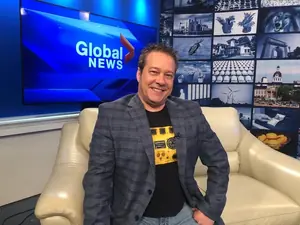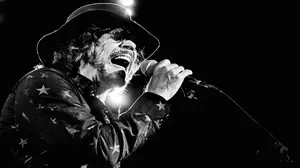


Sitting across from Kevin Shea, you don’t just hear stories; you smell the stale beer of the Horseshoe Tavern and feel the damp chill of a Montreal December. The Windsor-born author is a titan of hockey lore now, a best-selling scribe whose name is synonymous with the Hockey Hall of Fame. But before he was the gatekeeper of the Stanley Cup’s history, Shea was a front-line infantryman in the Canadian record industry’s golden age. He was the man tasked with making the impossible happen: getting radio programmers to care about a teenager named Whitney Houston and convincing a nation that a three-piece grunge band from Seattle was more than just noise.
Shea’s trajectory is a masterclass in the art of the pivot. He started where so many great Canadian media minds do, at the University of Windsor, grinding through a Communication Arts degree without a clear map. He eventually landed at CKWW radio, a move that set the stage for everything that followed.
"Yeah, definitely was," Shea says, reflecting on the weight of his music career. "So I went to university for Communication Arts at the University of Windsor, not really knowing what I wanted to do. In fact, I wanted to be a sports broadcaster but it led me to a job at CKWW radio, and my radio career went on from there. So I was in Ottawa, early ‘80s, ‘83, I think it was, and a pop adult station, kind of a softer, top 40 station, was not doing particularly well. And the rumor was that it was going to go to Music of Your Life. And so I thought, 'Oh my God, there’s no room.' First of all, it’s not a format that I enjoy on a personal level. I do to some degree, but not that I want to work in. But also there’s no room for a music director there, which was a big part of my job."
The shift from radio to the label side happened by the kind of serendipity that only exists in the pre-digital era. It was a phone call from RCA Records that changed the geometry of his life. Suddenly, the guy choosing the hits was the guy selling them.
"And so I had made some nice contacts through the music world," Shea explains. "And just by absolute fluke, the representative from RCA Records called and said, 'Hey, listen, I’ve always respected what you do. And wondered, we’ve got a job opening in Ontario in Toronto, to be the regional promotion representative, and I wonder if you would be interested in interviewing for the job.' And I said, 'Boy, your timing is unbelievable. I don’t know how long this job is going to last but sure, I’m open to it.' So the interview was on Boxing Day on whatever year it was, I don’t recall but again, mid ‘80s and it was in Toronto. So I was in Windsor at the time, came up to my way of train with my mom, went to the interview at the Royal York Hotel and realized that, 'I’m not sure, it seemed to go fairly well, but I’m not sure it’s what I want to do.' And sure enough, they offered me the job and I thought, 'Well, you know what, let’s not look a gift horse in the mouth here.' And so I accepted the job and I started working for RCA Records. It was ‘84 actually, pardon me, ‘84."
The mid-80s were a frantic, neon-soaked era for Top 40. Shea found himself in the middle of a roster that read like a Billboard year-end chart. It was a time when regional promotion meant physical presence, hand-delivering vinyl and convincing programmers that the next big thing was already in their hands.
"So it was a great time for Top 40 then, it was Pointer Sisters and Rick Springfield and Hall & Oates and so many more," Shea recalls. "It was a really, really fun job. It had a lot of country music as well, Charley Pride and Alabama, Dolly Parton, The Judds, Vince Gill and on and on. So it was a great job. The person who I was replacing was moved up into the national position and I was in charge of all of Ontario to try and get records on the radio. Shortly thereafter, MuchMusic was making its debut so I had to get videos played on MuchMusic, and then when artists came into the territory to make sure that I met them. I told them what was going on in our territory with their music, took any winners backstage or people who were to be part of a meet and greet, whatever it happened to be, those sorts of things. And it was just a delightful job."
But the transition wasn't just about the artists; it was about the psychology of the industry. Shea had spent years as a music director, the gatekeeper being courted by promo men. Now, he was the one doing the courting.
"I had been on the other side, I’d been a music director for a number of years, and had these same people sitting across the desk from me, trying to get me to play records, inviting me to shows and stuff," he says. "It was really different. But something that was somewhat familiar to me to take the job on the other side as the promo guy. And so I was with RCA for four years. I went to Warner’s from there to be the national promotion person. I was with Warner’s for three years. I went to MCA Universal after that for two years. And then I went to a company called Attic Records to be their vice president of promotion and publicity and I was there for nine years. So it was a wonderful, wonderful, wonderful career, full of passion, hard work at times, out every night in a bar or a club or a concert venue of one sort or another. But I mean, to be there with music that you, for the most part, love was really, really special. Met a ton of artists who, when I look back now, some of the greats whoever recorded. I was there at the debut of Whitney Houston, for example and things of that sort. So it was a really special time in my life and I treasure every moment that I was in the music industry."
The Whitney Houston story is a particular piece of industry lore. Long before she was the voice of a generation, she was a teenager being shepherded by Clive Davis. Shea was there when the industry was still trying to figure out if she could cross over from R&B to the pop mainstream.
"Yeah, so we had a conference," Shea says, leaning into the memory. "I can’t even remember what it was, pardon me with the dates but, again, mid ‘80s, somewhere in there, ‘87 maybe, something like that. And at the conference, they would always bring artists in to perform and people that you were to meet and trying to get you ready for the next quarter in or next quarter or year for the record company. So it was a great time and they had a surprise for us and none of us knew who it was or what it was and so they introduced Clive Davis with this young, lovely girl. And she was green as green can be but boy oh boy, when she sang a couple of songs for us, it was extraordinary. But she was a teenager then and it looked like a teenager and she really wasn’t Whitney Houston then, she was the aspiring Whitney Houston."
There is a technical critique to be made here about the "showcase" format. Often, labels would force young artists to sing to pre-recorded tracks in sterile environments, a move that can strip away the soul of a performer. Shea saw Houston navigate this hurdle at De Blue Note, an R&B club in downtown Toronto.
"And so to hear some tracks from her upcoming album, 'You Give Good Love' and... I’m trying to think of the other song that we heard at the time but anyway, 'You Give Good Love' was one and they said that was going to be the first single," Shea remembers. "And I didn’t know if that was going to go over, this is just me on a personal level, I didn’t know if that was going to go over in our territory. It was good song but it wasn’t really really pop. But sure enough, it went to number one and went further... Oh, I sorry, I’ve missed a really good part of it. So anyway, that was at the conference and then they contacted my boss and said, 'Would you do a showcase for Whitney for the new album?' And sure enough, he delegated it to me. So I booked De Blue Note, which was an R&B type club in downtown Toronto. And for a special evening from whatever, four till six o’clock to meet Whitney Houston, but really nobody knew who she was at this point."
The struggle to fill that room is a testament to how fickle the industry can be. Today, a Houston ticket would be a holy grail; in the mid-80s, Shea was practically begging people to show up.
"And so we had cassette copies of the album and we had already sent it out to all of the music directors, to the journalists, to the club DJs, whatever," Shea says. "But my response... We sent a very nice formal invitation to everybody to come down and meet Whitney Houston, the future superstar of music or whatever we called her. And I had a terrible time getting people to come out. They didn’t know who she was. It was four o’clock in the afternoon, blah, blah, blah, who knows? I begged, I cajoled, I finally had to fill the club. We had some people certainly, but I had to fill the club with club DJs which is fine, don’t get me wrong, but you’re not going to break a record necessarily by the guy who’s playing at the local, at the time, it would be O’Toole’s, but maybe it’d be a kicking... Sorry. I can’t even think of an approximation. But anyway, sure enough, she came out and she was singing to track, which is always a tricky thing. I was there at the soundcheck and she was just incredible, but to sing to track, it’s not necessarily the way that you introduce the artist, singing along to an instrumental track."
Yet, when she stepped into the light, the "average teenager" vanished. The transformation was immediate and undeniable.
"Anyway, she came out and she was unbelievable," Shea says. "And she looked much more like the Whitney Houston we’ve come to know, she went from looking like an average, ordinary teenager, to all of a sudden dressing up and had the makeup on and really looked great and people just couldn’t believe it. And they could hardly wait to get back to wherever their job was to write about this new sensation or to go back to the radio station and give that song a second listen to or whatever it happened to be. And I mean, she blew up in the United States first, there’s no doubt, but we had a great, great introduction to Whitney Houston here in Toronto and it spawned the first single 'You Give Good Love' and then it went on from there and later on to 'How Will I Know.'"
It is the classic industry myth: the small room where everyone claims they were present. Shea has the receipts, though many others don't.
"Anyway, we had three or four number ones in a row from Whitney Houston," he notes. "And it all started at this little showcase where we couldn’t even get people to come out to see her and the people now, it’s one of those sort of stories like The Police or someone like that where there were 30 people in the place, but now there’s six million who say they were there that night, it was the same thing. People who I know were definitely not there, who are now saying 'Oh, Yeah, I was there at the very beginning.' And, 'Jeez, I wish I’d kept the autographed cassette.' Or whatever it happened to be and it was like that. I took around a Polaroid camera and had pictures of her with these people. And a lot of people just kind of said, 'I’m good, now. I’m just talking. Thanks, anyway.' And didn’t even get their picture taken, now I’m sure they’re really kicking themselves."
If breaking Whitney was a lesson in star power, breaking Blue Rodeo was a lesson in Canadian grit. The band was a Queen Street phenomenon, but the suits in the mid-80s didn't know how to market a group that sounded like a collision between country and psych-pop.
I pulled a rabbit out of my hat and said, 'Okay, I’ve done a few stunts before but it was time to pull another one out.' I said, 'Why don’t I fly into Montreal dressed like a baby, do the whole baby motif and play the record nonstop throughout the morning so that everybody from their staff as they’re coming into work that day, is going to see a guy dressed like a baby standing in front of their radio stations playing the song over and over again.' ... But the fact was we got it off the ground in Canada because I dressed in a diaper in December in Montreal and had some fun. So it didn’t start out so well but it ended very, very well.
"Oh, my God. Absolutely," Shea says of the Blue Rodeo struggle. "So Blue Rodeo was the sensation of Queen Street in Toronto. Playing at the Horseshoe Tavern. The regulars would line up, up and down that sidewalk to get into see them perform. They were the act to see on a live basis, but no record company was touching them because the format was such that, it didn’t fit comfortably into rock. It didn’t fit comfortably into country. It had elements of pop. It just didn’t fit in. And so for the most part, A&R people, artists and repertoire people try to fit things into a box and try to presuppose where things are going to go, 'Oh, this would be great to take to Album-Oriented radio,' or whatever and figuring out where it’s to go. And they couldn’t with Blue Rodeo because it just defied that, they had a really interesting sound that at the time really, really was unique. But there was something there because they packed the club every single time without a record deal."
The band was eventually signed to Warner’s, largely due to the tenacity of publicity person JoAnn Kaeding, who Shea describes as a "piranha" on the A&R reps. But the initial rollout was a disaster. The band insisted on a title track that radio ignored.
"Anyway, finally he came around and he signed the band and all was good," Shea says. "And we got the album, but the band even then was very strong in their opinion of what they were all about and where they wanted to go and so they wanted to go with the title track to the album. Anyway, and we didn’t think that was necessarily the right track to go with but the band said, 'Nope, that’s the track.' And we put it out and they literally got no radio play. I was, at that point, the manager of national promotion. And we couldn’t get anybody to play it. Well, that’s not true, we got one station, CHUM FM played it, because Ingrid Schumacher, who was one of the disc jockeys there, was married to the drummer of the band and so she was able to get them some late rotation on CHUM FM. And that was the only radio station in Canada who would play the track. So we would huddle together and talk about strategies and where did we go wrong, and did we sign, did we go wrong in signing the band or whatever it happened to be?"
The salvation came in the form of a ballad called "Try." It was a risk; record company dogma suggested you don't lead with a slow song. But with the band on the verge of being dropped, Shea and his team went all-in on a grassroots campaign involving "blue bucks" and t-shirts.
"Anyway, we decided we would go with 'Try' after all, and we had a whole campaign we put together, a marketing campaign, we got it together beforehand to try and fuel the fire a little bit," Shea explains. "Record stores, we would get the record store a box full of things, t-shirts and posters and pre-albums and things like that. And if one of our representatives walked into their store, they would get a blue buck for every person in the store, every employee in the store who was wearing the Blue Rodeo t-shirt, and they would get 10 blue bucks if the poster was up and they would get 30 blue bucks if they were playing the sample copy, blah blah blah. And the winner would get, I don’t know a pizza party or something like that, the store that had the most blue bucks at the end of it could reimburse it for a pizza party or some prize, I don’t even know what it was."
The tipping point was the video. Jim Cuddy used his film industry connections to craft a visual that MuchMusic couldn't ignore.
"At the same time, Jim Cuddy, lead singer of the band or one of the lead singers in the band had his side-job besides music and working with a film company," Shea says. "And so he was able to talk his colleagues into staying and working overnight using the equipment at the film company to put together a video for 'Try.' And they came up with a video and it was pretty good. Not just pretty good. I mean, we liked it when we saw it but MuchMusic for whatever reason added it into Heavy Rotation immediately without ever having the band on the air before that. They loved the video for some reason. And so between fueling the fire with retail and a song that was definitely their signature song at the time. We knew it from when they played the Horseshoe. When it came out, the radio stations started to play it slowly, but it took some time to get the momentum going. But then it took off, plus the video play that they got on MuchMusic. All of a sudden there was a juggernaut, and it went and we got to, I don’t know where it ended up on the charts, probably top 10 or something like that on top 40 Radio, on Adult Radio, and even some rock radio as well. And it established the band, thank goodness. And they were able to take off from there, but it sure didn’t look very good. It was dire straits before that. So that was the Blue Rodeo story."
But if you want to talk about "dire straits," you have to talk about Nirvana. In late 1991, hair metal was still the king of the airwaves. Shea was at MCA Universal when a demo for *Nevermind* arrived. The US office was screaming about a track called "Smells Like Teen Spirit," but Canadian rock radio was cold.
"Oh, boy, oh, boy. There were so many," Shea says of his difficult pushes. "I mean, for all the successes, there were probably 30 failures for every one success that you had. There were some that you really loved on a personal level, but you couldn’t get any traction on it. So this is a good story, it starts off poorly, but it ends fairly well. So if you’ll bear with me with this one. When I was working at MCA Universal, I was the director of promotion over there and we got this demo from MCA for a band called Nirvana. And we listened to it and it’s pretty good, we figured it was college fair. But it had that sound, it didn’t sound like anything else that was on the radio because what was on the radio at the time was that ‘80s hair farmer rock. It was Ratt and it was Quiet Riot and Great White and stuff like that. So there was nothing like Nirvana on the radio at all. Maybe the odd time on an alternative station or at least a modern rock station like 89X in Windsor or The Edge in Toronto but even then, and they weren’t going to touch Nirvana at that point."
Shea decided to pull a stunt. He looked at the album cover—a naked baby chasing a dollar bill—and saw a costume opportunity. He flew to Montreal in Dec. 1991 to camp out in front of CHOM-FM.
"So, Kevin, what do you think, what’s your team going to do?" Shea says, reenacting the boardroom tension. "And I pulled a rabbit out of my hat and said, 'Okay, I’ve done a few stunts before but it was time to pull another one out.' I said, 'Okay so, I’ll tell you what, the front cover of this album is a baby, a naked baby chasing after $1 bill. If anybody’s going to play this record, there’s a station in Montreal called CHOM,' C-H-O-M, 'And I think they’ve got a new music show, they’re a little bit more adventurous in their programming than stations like Q107 in Toronto and I think, who knows? I’ll tell you what. Why don’t I fly into Montreal dressed like a baby, do the whole baby motif and play the record nonstop throughout the morning so that everybody from their staff as they’re coming into work that day, is going to see a guy dressed like a baby standing in front of their radio stations playing the song over and over again.' And everybody from my staff said, 'Yeah right, you’re gonna do that?' I said, 'Yeah, I’ll do it. I’ll do it for sure.' They said, 'Well, if you think you can get some traction, go for it, Kevin.'"
The reality of the stunt was colder—literally. Shea was a grown man in a diaper, a t-shirt and pantyhose, standing in the Montreal winter with a boombox.
"I go, 'Okay,'" Shea says. "So I got a baby blanket that my grandmother had knit and crocheted, I guess, and I went to a costume store and got a large diaper and a large soother and I bought it, and I got some baby booties somewhere and a little t-shirt that barely fit and this was December. I figured, 'Okay. If I’m going to stand outside like that, I better wear some nylons.' So I got pantyhose, I guess I should say. They aren’t nearly as warm as I thought they might be, that’s for sure. And I had a boombox and a bunch of, I don’t know if it was cassette singles or CD singles or whatever, a bunch of them and I flew into Montreal the night before and asked them to give me a wake-up call at five o’clock, because I wanted to be in front of the radio station at 6:00."
A missed wake-up call almost derailed the plan, leading to a frantic dash through a hotel lobby that likely scarred the desk clerk for life.
"So I go to bed and I wake up naturally and it’s quarter to six," Shea says. "It’s like, 'Oh, my God, my alarm didn’t go, I didn’t get a call.' I jump in the shower really quickly, pull on my diaper and all the things like that and run down to the front desk with my box of music and I’m kind of giving the hotel desk person shit, pardon my language, but hey, 'I didn’t get my call and I’m going to be late.' And they can barely stifle a laugh, because here’s this man, this grown man, whatever I was at the time, 40 years old or whatever it was, dressed like a baby waiting for his taxi to come to take him to the radio station. Anyway, all good, I got there, setup the crocheted blanket in front of the radio station and hit play and 'Smells Like Teen Spirit' played over and over and over again and I was standing there with the soother holding a sign that said, 'Smells Like Teen Spirit by Nirvana. This baby needs a home on CHOM.'"
The stunt worked because of the proximity to Dawson College. The students saw the "goof" in the diaper, heard the song and a grassroots fire was lit.
"And I stood there, and I got lucky. I got really lucky," Shea admits. "Sure the staff came in at that point, but what I didn’t realize was that Dawson College was just around the corner from where I was standing at the time. Pardon me, sorry for that. And the kids loved it. First of all, they couldn’t this goof was out front dressed like that, but they loved the song. So everybody wanted to get a copy of it. So they took it with them and then they would tell their friends and next thing I knew there were hundreds, literally hundreds of people standing around me and they blocked the street, so traffic couldn’t get by. The local traffic reporters and the helicopters were flying over reporting that there was some man dressed like a baby on Green Avenue and the crowd has blocked the traffic there. So it was all over the news."
MusiquePlus arrived. The program director at CHOM made a deal. If the callers liked it, it stayed. If they hated it, Shea would never mention Nirvana again.
"Thank God all those kids from Dawson College, plus others, called the radio station like crazy, the phones, when I say literally they didn’t, but they blew up, they got a ton of phone calls," Shea says. "And it was all pro 'Smells Like Teen Spirit,' CHOM FM added the song. And when they found out the CHOM added it, Q107 added it after that and CFOX in Vancouver and it just started to spread from there. Now, I wasn’t the only one breaking it, in the US they were breaking the song at the same time. So don’t get me wrong, I wasn’t doing this in a vacuum by any means. But the fact was we got it off the ground in Canada because I dressed in a diaper in December in Montreal and had some fun. So it didn’t start out so well but it ended very, very well. And even now, on anniversaries like the anniversary of Kurt Cobain’s death or something like that, I get called to quote about how, I didn’t hold a gun to their head, but how I forced them into playing the song by dressing up and pulling a stunt on them and that sort of thing."
Shea ended up with pneumonia, but the record went triple platinum. Shortly after, he moved to Attic Records, where his first project was "Weird Al" Yankovic’s "Smells Like Nirvana." Life, as Shea puts it, works in mysterious ways.
His time at Attic and later The Song Corporation brought him into the orbit of Kim Mitchell during the *Kimosabe* era. Mitchell, a Canadian icon, proved to be a kindred spirit because he didn't want to talk about the grind of the industry.
"Absolutely. Well, I don’t have much, he wasn’t with us at first, he was with Alert Records at the time," Shea says of Mitchell. "Attic Records got sold and it was part of a larger company called The Song Corporation, and one of our first signings was Kim Mitchell, at that point. I had a great title, VP of promotion and publicity for now The Song Corporation, which Attic was part of their company as well. But we had one promo rep, it was a shoestring operation to begin with, just because we were a fledgling operation. So I spent a lot of time with Kim at that point, the album was 'Kimosabe,' and taking him around, we had success, but nobody remembers that album anymore, including Kim, although I think he really, really liked it. I got to spend a fair bit of time with him and he’s just such a great, great guy. And we talked about hockey and family and barely talked about music. He said, 'I talk about music all the time, Kevin.' And so we just veered off and talked about other things and just really got to know the guy and really care for him. He’s a wonderful, extraordinary musician, great songwriter, like so much about him, but he’s just a really, really solid guy too, and very, very funny. So really enjoyed my time with Kim Mitchell."
The record industry of the 80s and 90s was fueled by "tchotchkes"—promo items designed to catch a music director’s eye in a sea of weekly releases. Shea’s favorite involves The Tragically Hip and a literal block of horse manure.
"Oh, God. Sure. There’s so many of them, but I’ll talk about one specifically, but just before that," Shea says. "You want to get the attention. So there’s so many records, songs, I guess I’ll say, that are released to radio in any one week. It’s a whole different game now but I’m talking about during my time in the music industry. So you have to stand out against all of your competition. And while I was trying to get my songs, whether I’ll say Warner’s at the time, I might have had five or six releases that week that would go to top 40 radio just as an example. And PolyGram might have had three, and CBS might have had seven, and Capital had blah, blah, blah. So you have to stand out, they can’t all get added, a radio station might typically add three or four records a week. And they may have received 20 or 24 that week, plus ones from the week before that were getting some momentum and stuff as well."
To promote *Road Apples*, Shea decided to take the title literally. He found a farmer in Cobourg, froze some horse manure and sent it to Quebec to be acrylicized into blocks.
"I said, 'Well, okay, Road Apples is just a nice term for horse manure,'" Shea recalls telling his executives. "'Yeah we kind of knew that,' or some people, 'Oh god, that’s gross.' I said, 'Well, okay, so what about if I can find a way to acrylicize horse turds, pardon my language, and put it on a nice little plaque or something like that? We could give it out to all of the key people. Would you guys be open to that?' And everybody’s killing themselves laughing, 'You got to be kidding me. How are you going to acrylicize shit?' 'Well, let me figure it out. I don’t know, but let me figure it out.' They said, 'Well, if you can do it, I think that’d be very cool. How much it’s going to cost?' I said, 'I’ll get back to you.'"
The final product featured a plaque that read: "The Tragically Hip Road Apples. Thanks for helping us get this hit together." But Shea had the spacing adjusted so it looked like "get this shit together."
"But I still got mine somewhere and treasure it," he says. "It was wacky, there was only one person who returned it. A buyer for Rob Lands which was Sam the Record Man and she refused to put it on her desk. She thought it was disgusting, but everybody else loved it, loved it, loved it. And just thought it was the greatest thing to have this piece of horse manure in an acrylic block on their desk to commemorate their support of the Tragically Hip. So that was my favorite tchotchke or whatever you want to call it at that point."
The connection with The Hip went deeper than promo stunts. Shea found common ground with Gord Downie through a shared obsession with hockey. During a Juno dinner in Vancouver, the two spent the night debating Bobby Orr and the Boston Bruins instead of deconstructing lyrics.
"With The Hip? Well, they were somewhat like Kim Mitchell in a way, that they talked about music all the time," Shea says. "So that when they were away from the on-stage or behind stage, it was refreshing for them to talk about other things. So when they found out that I was a hockey guy, especially Gord Downie, we glommed on to each other and we talked hockey. So I mean, I can just remember one special dinner at the Junos in Vancouver where we were at some restaurant, we had the upper room, it was private, and he was talking about the Boston Bruins and I was talking about the Toronto Maple Leafs and we were comparing notes and who was the best fighter? And what did I think of Bobby Orr, and where did he sit in the pantheon of greatness? And afterwards he embraced me, and me him. 'Hey, thanks, man. This has been so much fun. And it’s so great to not have to sit here and explain lyrics to a song or why we did what we did or whatever as far as music goes, or why I do what I do on stage. It was so great to talk about hockey.'"
The music career came to a crashing halt in Jan. 2001 when The Song Corporation folded. Shea, ever the strategist, managed to secure his severance just before the company’s doors were locked for good.
"The company didn’t last very long," Shea says. "The owner of the company, Alan Gregg, who actually managed the Tragically Hip as well, co-managed with a guy named Jake Gold, he came, sat us down and said, 'The experiment is over, I’ve failed you. And each of you is going to be called into the office to find out if you still have a job or not.' And he got teary eyed and left and we went back to our offices and waited for the phone call. And sure enough, I got called in, said 'Look, Kevin, we’re going to have to close down the creative side of the record company. We’re going to keep the distribution network but your job is now redundant. And so you’ve been with Attic/Song Corporation for nine years, so we’re going to give you nine months of severance. Would you like it in one check or would you like it in monthly installments to the end or even every second week, bi-weekly, sorry, payments all the way through.' At first I said that was the best thing because that would be better for me. But then when I went back to the office, one of the ladies from accounting came in and said, 'So what happened?' I say, 'Yeah, I lost my job,' and she said, 'Yeah, that’s too bad.' She said, 'Did you take the lump sum or did you take the ongoing payment?' I said, 'well, I took the ongoing payment.' She said, 'You fool. We’re taking in trays and garbage pails back to Grand & Toy for God’s sake to get our money back, there’s not going to be any money.'"
This led to Shea’s second life. He had already laid the groundwork at the Hockey Hall of Fame through a series of successful compilation albums, including one licensed from *Wayne’s World*.
"Well, it turns out that both of my ideas flew," Shea says of his early hockey-themed records. "Not exactly the way that I had explained them, but the hair farmers one I lucked into a meeting with a guy named George Gross and his father had been a sports editor of the Toronto Sun newspaper and George Jr. met me one day and we got talking and he said, 'Oh, I own a...' I guess I’ll call it a licensing company. I said, 'Oh, yeah. Like what?' He said, 'Well, I mean, for example I own the rights to Wayne’s World.' And oh, my God, the light bulb went on over my head. I said, 'Look, I tell you what, I’ve got a compilation of ‘80s rock that’s coming out. How much would it cost me to license Wayne’s World and what do I get?' He said, 'Well, you get the name Wayne’s World and you get two pictures of Wayne and Garth from Saturday Night Live.' And I said, 'What else?' 'Well, that’s it. You license two photos and the name.' 'Sounds great, How much?' And he told me, I can’t remember what it was, and went back to attic records and said, 'Okay, this compilation can really go, we can call it Wayne’s World. Here’s what we get.' Blah, blah, blah. They loved it."
The transition from the music business to the Hockey Hall of Fame was seamless because Shea was already a "hockey junkie." He started volunteering his time to identify players in old archives, a skill that eventually turned into a full-time career and a prolific book-writing journey.
"Like I said, it was just fun for me," Shea says. "And then one day they said, 'Look, I know you’re probably not going to be into it, but we’ve got a contract coming up to go through all of the photo archives and identify all the players in them. And we think you’d be great, especially for the older photos in the archive. Would you be open to it?' I said, 'You’re not going to believe this guys, I got laid off on Monday and I have no job. I’ve got my own little record company. Sorry, my own little publicity company. But I don’t have a job.' They said, 'Well, we’re not gonna be able to pay you much, we certainly can’t pay you the same as you were making before.' I said, 'It doesn’t matter. I would love it, thank you.' So I started at the Hockey Hall of Fame and here I am, that was 2002 and here I am. It was full-time for a while, and then I went to the Princess Margaret Cancer Foundation, but I still did all of their magazines and their writing and stuff like that. And so here we are 18 years later and I’m still with them. Now I’m back full-time again. So it was a fortuitous break for me and just the way sometimes doors open, and you have to take advantage of the opportunity when it shows itself and that was that."
Looking back, Shea’s life is a series of chapters written in the ink of his passions: radio, music, hockey and a deep commitment to the Princess Margaret Cancer Foundation following his father’s passing. He is a man who didn't just witness Canadian culture; he helped build it, one diaper-clad stunt at a time.
"Look, I’ll extend it beyond that," Shea concludes. "So I mean, I love radio, I love, love, love radio. And so grew up with CKLW and all of the rockers from Detroit, so WRIF, W4, WABX. What else? Did I miss one in there? Anyway, those are the three biggest, plus oh and CJOM and Windsor, which I had been involved with for Junior Achievement when I was a teenager as well. So I was hugely into it and just a radio junkie. So while I was going to university, I was working at CKWW radio. And in fact, they were paying for my education. If I got certain marks, they would pay for the whole thing. If I got B’s they would pay for, I can’t remember what the percentages were but 80% or whatever. So I was working pretty close to full-time hours at the radio station while I was going to university to get my degree in Communication Studies. So it was dream for me hoping that I might be able to get a job in radio someday. And here I’m already working in it at the time and I had teaching assistants who had never been inside a radio station try to teach us how to edit tape together and I was helping them along because that was part of what I did for a living was working in production. So radio was a passion. Music was a passion. Hockey’s a passion. My dad died of prostate cancer and although I wouldn’t say it’s a passion in the same sort of way, but I love my father and all the things that he did for me and to infuse a passion for hockey and all of those things into me. So at some point, I wanted to consider that maybe there was something bigger than hockey and music and all of these things, as much as I love them. I wondered if maybe there was something bigger and more important that I should get involved with and I got lucky and threw a blind resume out there. And sure enough, I got the job at the Princess Margaret Cancer Foundation. So I did that for eight years as well, while I still continued to work for the Hockey Hall of Fame in evenings, and write books, and do all of those things as well. So I’ve had four careers and each was a passion in its own way. So I’ve been blessed beyond belief, Dan.