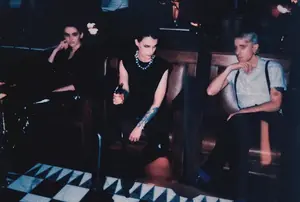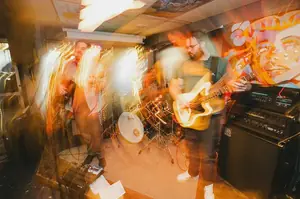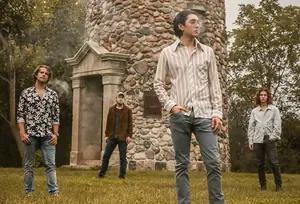

Standing in the back of Meteor in Windsor, the air feels heavy with the scent of hops and the low-frequency hum of an idling PA system. It is the kind of room that demands a certain level of grit from any band that steps onto its small, elevated stage. Winnipeg’s Tunic does not just meet that demand; they over-deliver with a sonic violence that feels surgically precise.
Hailing from the frozen, isolated prairies of Manitoba, this trio has spent years carving out a reputation in the underground for being one of the most punishing live acts in the country. Their latest offering, *Wrong Dream*, which hit shelves on April 28, is a sharp pivot from their previous work. It is more expansive but no less abrasive.
When I catch up with frontman and guitarist David Schellenberg, he is candid about how the band’s internal dynamics shifted during the creation of this record. The inclusion of a new collaborator changed the DNA of the songwriting.
Schellenberg says, "The recording process for the new record is totally different than anything we've ever done. We for the first time ever, we made a record with a new bass player and which was a fill-in bass player named Drew Riekman who plays in a band called Blessed, and he sort of co-wrote the songs with my drummer Dan and I. And we went to Providence, Rhode Island, to track it with Seth Manchester, who has a studio called Machines with Magnets, who has worked on a bunch of great records by artists like Lightning Bolt and The Body and Big Brave."
The choice of Seth Manchester is a flex in the noise rock world. Machines with Magnets is a holy site for anyone who wants their records to sound like a panic attack in a steel mill. Manchester’s reputation for capturing the raw, unvarnished ugliness of a performance is exactly why Tunic sought him out.
But the speed of the session caught the band off guard. Most indie acts want to linger in the studio, over-analysing every snare hit. Manchester had other plans.
"Seth has a very different approach than we've ever worked with before," Schellenberg notes. "We did a lot of individual tracking of the drums, sort of just hitting one drum at a time to make it sound as clear and crisp as possible and as big as possible and Seth works very fast, which I've never done. I was like, we should take two weeks to make this record and he says, 'If this record isn't done in five days, I'm not doing it.' I was like, 'Oh, okay.', and so we were done in four and a half."
That efficiency is evident in the final product. There is no fat on *Wrong Dream*. Every note feels like it was fought for. Manchester’s influence on the texture of the record cannot be overstated. He brought a specific, distorted sheen to the tracks that makes them feel larger than life.
Schellenberg is quick to praise Manchester’s intuition, especially considering the producer was dealing with the chaos of new parenthood during the sessions.
"Seth is a genius, and he has truly golden ears," he says. "He's starting to get known for this really amazing blown out sound that he can produce through some compressors and some gear that he has and we took full advantage of that. I should say also that when we made this record that Seth’s first child was two weeks old and he showed up every day just exhausted and would say, 'Let's just do this.', but still it was just amazing. He’s talented at hearing sounds and coming up with the right tones and everything."
The record also serves as a document of a massive personal shift for Schellenberg. The pandemic was a reset button for many, but for the Tunic frontman, it was a total overhaul of his lifestyle and his relationship with the "starving artist" trope.
The romanticization of the broke musician is a tired narrative, and Schellenberg seems to have moved past it. He found a new rhythm in the mundane, waking up before the sun to write while the rest of the world was still asleep.
"A big chunk of it was written during the pandemic, but also I was sober for a year and a bit then," Schellenberg explains. "I had sold my shares in the business that I owned for the last seven years, which is a bar, and then I started a new job. I started for the first time ever making a livable wage and was able to afford things, but also had to work 9 to 5. So I spent a lot of time writing this record at about 7:00 in the morning by myself, which is also the first time I ever did anything like that. I would wake up around 6:30 and have a shower, then I would go downstairs into my basement studio and work on music for probably an hour and a half to two hours before having to log into a remote job."
This transition into the "real world" of 9-to-5 employment creates a friction that is rare in punk. Usually, the genre rails against the machine from the outside. Schellenberg is writing from the belly of the beast.
And it is a strange place to be. Balancing the anti-establishment roots of punk with the necessity of a paycheque is a tightrope walk.
Seth has a very different approach than we've ever worked with before. We did a lot of individual tracking of the drums, hitting one drum at a time to make it sound as clear and crisp as possible and as big as possible. Seth works very fast, which I've never done. I was like, we should take 2 weeks to make this record and he says, “If this record isn't done in 5 days, I'm not doing it.” I was like, “Oh, okay.”, and so we were done in four and a half.
"I just never experienced it," he admits. "The sort of mundane existence of just going to work and coming home, and that's your life, without touring, without having something to throw all the money that you don't have into and just hoping that it works out. There's a very good tweet that I read during the pandemic from an artist named Devin, and I'll butcher his project name, which is Minca, I believe. He just said, 'So wait a second. Y'all just work your jobs every day? You don't, like, spend all your free time writing the album and then playing shows for 15 people?' And I was just like, 'Yeah, that's what I want to do, but...'"
That tension is the engine behind the track "Disease." It is a scathing look at the financial insecurity that plagues the creative class and the realization that the system is designed to keep you on the treadmill.
Schellenberg confirms the inspiration for the track: "Yes it is, a hundred percent. The song Disease is pretty blatantly about living within capitalism and sort of coming to terms with that, and understanding that I didn't have any financial security. I was making 12 to 16 thousand per year. And then I was just like, 'This is wild. I can see how people just get stuck or how they just let money shape their life.'"
Visually, Tunic has always been striking. They do not rely on the typical punk aesthetic of grainy VHS footage and neon skulls. Instead, they opt for something more cinematic and unsettling.
Their collaboration with Italian director Sara Dresti happened almost by accident, born out of a random encounter on tour.
"Sara saw us play in Italy, in Bologna, and she just DM’d us on Instagram," Schellenberg says. "She just had really cool work, and I liked it and we're always looking for people to collaborate with. We never actually met her. Maybe I did speak to her for a second. We played this wild show outside in Bologna on a Sunday evening in a beautiful park. It was very strange that we were allowed to do that and we were the only band, so that was also weird. But there was a great turnout and so I guess Sara was there and then she just wrote to us and we decided to work together."
The distance did not hinder the creative process. If anything, the lack of physical proximity allowed the visuals to take on a life of their own.
"For Rituals, the first video she did, she just ran with it and I sent her some stuff that I liked. And then with Disease, I just explained the concept of the song lyrically and she found some images there and wrote me a real beautiful email about the subject matter and how it makes her feel, and then she created the video to that," Schellenberg explains.
There is a minimalism to Tunic’s output that feels intentional. Most of their tracks clock in at under two minutes. It is a "get in, break things, get out" philosophy that prioritizes impact over ego.
"No absolutely not," Schellenberg says when asked if the brevity is for radio play. "It's kinda like do it as fast as possible and be done, jam everything that we can in a two minute window and not really worry about it. I would rather leave people wanting more than less. We really took that to heart. We used to go on tour and play 11 minutes a night back in the day. Nothing like driving 12 hours to play 11 minutes, but yeah, I'd always rather leave people wanting more than less. And so we really took that for songwriting. And then as far as the early videos go, that was just working on a 50 to 100 dollar budget to make those things."
While the songs are short, *Wrong Dream* is actually their most substantial work to date. It is a 30-minute record that feels like a marathon because of the sheer density of the sound.
"The last two records are both 21 minutes long and this one is two songs less than the other two and about 10 minutes longer," he notes.
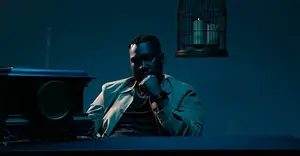
One of the standouts on the record is "My Body, My Blood." The accompanying video, directed by Torin Langen, is a nightmare-fuelled masterpiece that perfectly complements the track’s heavy themes.
"That was a guy named Torin Langen who lives in the Kitchener/Waterloo area," Schellenberg says. "We played a show at a brewery there; I can't remember what it was called. But anyways, Nate, the guy that did the show introduced us to Torin after and he says, 'I make music videos.' and I was like, okay. Cool. I think he sent us something that he made and I was like, 'This would actually be perfect for My Body, My Blood because it's so creepy and so wild.'"
The video’s DIY nature only adds to its effectiveness. "It's got great response and we're just so happy. Torrence shot that in his living room. It was just amazing visually and so we wanted to work with him on that," he adds.
Lyrically, "My Body, My Blood" is one of the darkest moments on the album. It deals with the aftermath of toxic power dynamics, both in business and in romance. It is a song about the erosion of self-worth.
"Oh, that song is about being in a variety of relationships that are abusive both mentally and physically and sort of feeling worthless and that feeling of getting talked down to," Schellenberg says. "I had an ex business partner that would absolutely treat me like shit and it didn't really matter who I was to him even though we were equal partners. Then sort of just sometimes being afraid of the person that you're romantically involved with."
Where does Tunic fit in a world that wants everything categorized and labelled? They are too weird for the hardcore kids and too aggressive for the indie crowd. They exist in a sort of genreless void, and Schellenberg seems perfectly fine with that.
"Oh, I don't know if we do," he says of the current musical landscape. "Sometimes we're not hardcore enough for the hardcore bands, and we're not straightforward enough for some of the more punk stuff, and we're a little more, to toot my own horn, a little more arty than that."
He leans into the "arty" descriptor, though he avoids the more pretentious labels like avant-garde. "Yeah, so I don't know. We've been doing this for a long time and people like it. If people didn't like it, I would still do it. We're just a loud heavy band that makes weird music, and I see us sort of occupying a space with all these US based artier, noisy rock projects."
His own musical journey started in a much softer place. The transition from the delicate indie rock of the mid-2000s to the abrasive noise of Tunic was a gradual evolution driven by boredom.
"I was a huge indie rock nerd," he says. "I went to CD plus every Saturday and bought a new indie rock CD, as a teenager, and doing anything from Sufjan Stevens to Wolf Parade to The Moldy Peaches and then I just got bored with that and now I've pushed into the world of noise and punk and more lately ambient is what I listen to more than just regular rock bands."
That ambient influence is starting to bleed into the music. The final track on *Wrong Dream* hints at a prettier, more melodic future for the band—or at least a version of "pretty" that still feels like a bruise.
"Yeah. I just didn't really think I was capable of writing something that resembled anything on the prettier side and so it took until this record where I felt comfortable to even attempt that," he says.
Tunic hits Meteor in Windsor on Monday, May 8. If you have seen them before, you know what to expect. If you haven't, prepare for a physical experience that leaves you ringing for days.
"So much yelling, so much sweating," Schellenberg laughs. "I actually really love playing Meteor. I really like that room and I really like Shawn who does the show. It's a severely underrated scene, I would say, in that chunk of town. And so we'll just be red hot coming in from Detroit that day, well rested, I hope, and you know, curse and just sort of fuck shit up and punish people with noise and that'll be it.