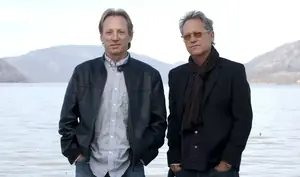

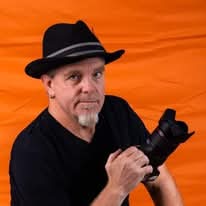
Sitting in the sterile, high-ceilinged boardroom of Vancouver’s 604 Records, you get the sense that Jonathan Simkin and Dallas Smith are the last of a dying breed. They represent a specific era of West Coast grit that doesn’t exist in the polished, algorithm-driven industry of today. Simkin, the legal shark who helped steer Nickelback into the stratosphere, and Smith, the Default frontman turned country powerhouse, have a rapport that feels less like a business partnership and more like a decades-long ceasefire. Their new podcast, *Sticks and Stones*, is the natural byproduct of this chemistry—a sprawling, unscripted look at the collision of professional hockey and the music business.
The title is a clever nod to their dual obsessions: hockey sticks and The Rolling Stones. But the project didn’t start with a high-concept pitch in a boardroom. It started with a comedy wing. 604 Records had already branched out into the humor market, and the infrastructure was just sitting there, waiting for a personality-driven vehicle to occupy the space.
Simkin explains the genesis of the network: "One of the divisions of 604 is a division called Comedy Here Often, which does comedy records and that division started a podcast. And it wasn’t a network at that point, it was just two people doing a podcast but it started to get popular and then other comedians started approaching us and saying, 'Hey, we have a podcast idea, could we maybe go on your YouTube channel?' and it just kind of grew organically. Suddenly we had a podcast network and at that point I had been thinking about doing something."
It took a few nudges to get Smith on board. The two have been talking shop for 20 years, so moving those conversations to a microphone felt like a formality. Simkin continues, "I remember a few times calling Dallas and saying, 'Man, we should really do a podcast.' and one weekend, I was just sitting in my office and came up with the name and threw it off of Dallas and he said, 'Yeah, I like it.' and it just kind of happened."
The podcast avoids the trap of being a dry, stat-heavy sports show. It’s messy. It’s loud. It’s the sound of two guys who have seen the bottom of enough beer bottles to know that the best stories happen in the margins. Smith is quick to point out that they aren’t trying to compete with the analytical nerds at TSN or Sportsnet.
"Yeah, I’ve heard you say this before, Jonathan," Smith says. "Our intention is we’re not going be super in depth with analytics and stuff. We’re above casual fans I would say as far as knowledge, but our podcast is mostly about that relaxed sort of sports chat and how it intersects with music. A lot of our stories individually and how they come up, how we’ve known each other, they just come up as these conversations happen with people."
And those stories are deep. To understand why Simkin is the way he is—a "loose cannon" with a sharp legal mind—you have to look at his origins. He didn't come from a white-shoe law firm. He came from the street. There is an authenticity to Simkin that most industry suits lack, largely because he’s lived the life of the artists he represents.
"I actually started out as a criminal, and I’m not even kidding," Simkin admits with a bluntness that would make a PR agent wince. "I was a juvenile delinquent and had a real substance abuse problem that led me into a lot of hot water and I actually got into trouble as an adult, but it was the best thing that ever happened to me because I had court ordered rehab and psychiatric care."
That brush with the law at 17 defined his trajectory. He went to Osgoode Hall with a chip on his shoulder and a desire to represent the underdog. "That’s when I was 17 and I’m in my 50’s so it’s a long time ago," he says. "But that’s what kind of got me interested in doing criminal law because I wanted to help people so when I was in law school at Osgoode Hall, all I did was take mostly criminal courses. When I came back to Vancouver I opened a practice that was basically a poverty law practice, criminal law, refugee law. My wife’s also a lawyer and she joined me at some point and that’s what we did. The entertainment thing was a complete accident."
The accident happened in 1992. Simkin moved into an apartment building where his neighbours were signed to Nettwerk Records. At the time, Nettwerk was the epicentre of the Vancouver sound, boasting a roster that included Sarah McLachlan and Skinny Puppy. Simkin was the guy at the party who looked like a roadie but could read a contract.
"I moved into an apartment building in ‘92 or something and my neighbors were in a band that was signed to Nettwerk Records and not a famous band, but I started hanging out with them," Simkin recalls. "I would go to parties with them and meet all these musicians and Network was at the time a really happening label so Sarah McLachlan, Skinny Puppy and Grapes of Wrath, I’m meeting all these bands. Typically some guy at a party would be like, 'Hey man, are you really a lawyer? You don’t look like a lawyer, that’s cool man, I got this contract.'"
His standard response was a reality check. "And I would always be like, 'Dude, Here’s my card. If you get busted for pot or you get busted for drunk driving, give me a shout. I don’t do that kind of law,'" he says. "Over time people kept asking and I guess I was able to relate to artists. Finally I said, 'You know what, maybe this is God’s way of telling me there’s something else I should be doing with my life' and the first artist I took on in that capacity was Matthew Good."
Simkin’s pitch to Good was classic West Coast bravado: no results, no pay. "Somebody gave me a tip, you should go check out this artist, which I did, and I loved him," Simkin says. "I said, 'Hey man, I don’t know what I’m doing, I’m the first to admit it, but I think you’re great. Give me six months to get you a record deal and if I don’t get your record deal, then you don’t have to pay me a dime and I’ll put it in writing.' I got him a deal and then all of a sudden, I was Matthew Good’s lawyer. Holly McNarland called and then The Age of Electric, and so on. It’s kind of a crazy story because it was very accidental, but that’s how it led me to the entertainment business."
This accidental career eventually led him to a struggling band from Hanna, Alberta, called Nickelback. They were looking for a lawyer who wouldn't charge them $1,000 just to pick up the phone. A contact at SOCAN pointed them toward Simkin, describing him as a "smart loose cannon."
"Yeah, because that’s when I was just starting to become the guy on the West Coast, the lawyer," Simkin says. "They actually went to a different lawyer and that lawyer was very expensive like most lawyers are, so they went to SOCAN and said, 'Hey, we went to the lawyer you recommended but he wanted $1,000 just to even talk. Is there anybody else you know who might be more cost effective?' And apparently the woman said, 'Well, there is this Jonathan Simkin. He’s a bit of a loose cannon but seems pretty smart.' and that’s how I met Nickelback. They came to my office with a contract that they had been offered by a manager and that’s how the relationship started."
While Chad Kroeger and company were off becoming one of the biggest rock acts on the planet, Kroeger spent his downtime producing other bands. One of those projects was Shock the Day, the precursor to Default. Dallas Smith wasn't the original singer, but once he joined, the energy shifted. Simkin remembers seeing them at Studebaker’s, a legendary Vancouver "shithole" that served as a proving ground for the local scene.
"That’s right," Simkin notes. "They’d be touring for 10 months and come off the road and everybody else would dive into their domestic life and Chad’s idea of time off was producing other bands. One of those bands was a band called Shock the Day, which was the precursor to Default and Dallas wasn’t involved in that band but at some point Dallas joined the band. I papered up this little deal for Chad and Shock The Day and as usual, nothing happened because usually back then nothing happened and I remember Chad called me maybe three or four months later and said, 'remember Shock The Day? Well, they got a new singer and apparently he’s got an amazing voice and he’s real good looking too.' He said, 'They’re playing Studebaker’s tonight, do you want to come?'"
The show was a revelation. Despite Smith’s nerves, the talent was undeniable. To get the band off the ground, they needed capital. Smith’s family stepped up, providing a $25,000 loan that funded their first real studio sessions with Kroeger and Joey Moi.
I actually started out as a criminal, and I’m not even kidding. I was a juvenile delinquent and had a real substance abuse problem that led me into a lot of hot water... it was the best thing that ever happened to me because I had court ordered rehab and psychiatric care. But that’s what got me interested in doing criminal law because I wanted to help people.
Smith recalls the early DIY hustle: "I’ll bring in your wife again Jon. She would take us out and we would do some shopping and style us a little bit, right? So we did up this deal and we worked on some songs and at that point, Chad and Joey Moi, they had this duo-tang with a presentation that they were going to sit down with my folks and all the guys that were in the band and present them with like, could you loan us some money, here’s what we’re going do with it. So my mom said, 'Hey, we don’t want to be the ones that don’t make the connection if something cool happens.' They didn’t have a lot of money but they got some money from somewhere and they gave us each a loan for five grand a piece and it paid for studio time and Chad and Joey’s work, production and all the engineering and stuff. I think it was $25,000 and it came with a little bit of marketing, here’s what Chad’s going to do, he’s going to try to shop the songs as he goes across radio, and all that stuff."
The breakthrough came when the song "Deny" won a local contest at CFOX-FM. Suddenly, the phones started ringing. Simkin was one of the few lawyers in Canada with the connections to secure major US deals, alongside Chris Taylor in Toronto and Chip Sutherland in the Maritimes.
"Yeah, that was a different time in this business," Simkin says. "At that point in my career I was mostly making my living getting Canadian bands US record deals and there weren’t very many of us doing that in Canada. There was me, Chris Taylor and maybe Chip Sutherland out on The East Coast. So if you were a band from The Maritimes, Chip was probably your lawyer. If you were a band from the middle of the country, Toronto, Manitoba, Chris Taylor was probably your lawyer, and if you were on The West Coast, I was probably your lawyer. Once in a while we would steal from each other like, I got Len - Steal My Sunshine, somehow, and Chris got Nelly Furtado, that’s what we did."
The success of Default was a turning point. They signed with TVT Records and had a global hit, but Simkin realized he had left money on the table by not owning the rights. When Kroeger brought him Theory of a Deadman a few years later, Simkin changed the model. That was the birth of 604 Records.
"So we did this deal with Default and I started sending the disc around to people I knew in the industry and we ended up getting them a deal with TVT Records which was shocking and we ended up getting a massive worldwide hit," Simkin explains. "In a funny way it was the genesis of 604 because Default was never on 604 but it got my brain turning. 'Oh man, if we had structured that deal with Default a little bit differently, we could have made way more money or we could have had four records worth of rights.' So when Chad met Tyler Connolly from Theory of a Deadman a few years later and came to me and said, 'Hey, I met this band and here’s the cassette, what do you think?' and he said, 'You know, if you like it we should do like we did with Default.' I was like, 'No, this time we’re going to do it differently.' We started a company, signed Theory to a production agreement for four records, we weren’t really thinking label at the time, and the rest is history. That was how 604 started."
Simkin attributes his longevity to a mix of opportunism and an understanding of leverage. He didn't set out to be a mogul; he just reacted to the moments that mattered. When Carly Rae Jepsen’s "Call Me Maybe" became a global phenomenon, he used that momentum to fortify the entire label.
"In a weird kind of way, it’s true," Simkin says. "I think if there’s a lesson to my career, it’s to be open to things. I think the keys to my success in the industry have been understanding when to seize a moment, understanding an opportunity that’s right in front of you, and number two - understanding the value of leverage. Those are really the two main things of my career. For example, when 'Call Me Maybe' blew up, we took the opportunity of having the biggest song in the world and right away my mind was on how can I use this to benefit the label as a whole and to benefit all of the artists? My career has been funny that way, it’s been more a matter of reacting to things. I didn’t sit there when I was young and go, I’m going to own a record label. I didn’t even know that was a job."
Dallas Smith’s transition from post-grunge rocker to country superstar was equally reactive. It wasn't a calculated pivot so much as a slow evolution. While touring with Default, he found himself warming up his vocals to Keith Urban and Rascal Flatts.
"It wasn’t a switch that just turned on," Smith says. "I was actually working on some of the first record while we were working the last Default record, not knowing that was going to be officially the last Default record. Also, when we were doing the back end of the touring, four or five years leading up to my first trips to Nashville, I was going out doing rock shows but I was vocally warming up to Keith Urban records and Rascal Flatts. It just happened slowly. The guys knew while we were touring that I was up and down in Nashville and working on something else. It wasn’t a conscious 'I’m going to do this now', it just kind of happened. I just made a record with Joey and this is where it led me."
Today, the two are partners in more than just a podcast. They co-manage artists like Andrew Hyatt and Jojo Mason, though they maintain separate management umbrellas. "We both are," Smith says of their management roles. "We both work together managing Andrew Hyatt and Jojo Mason who are both on 604 as well." Simkin clarifies: "It’s not under that umbrella though. Dallas doesn’t work for 604. Dallas has his own management company, I’ve got my own management company, and we partnered on those two acts."
But you can’t talk about Simkin or 604 without addressing the elephant in the room: Nickelback. The band has become a cultural punching bag, yet they remain one of the most successful acts in history. Simkin views the hate as a bizarre byproduct of the band's normality. In an industry that rewards self-destruction, Nickelback is boringly professional.
"Of course Nickelback is the biggest selling musical group of the last 20 years," Simkin says, defending his flagship clients. "They’ve sold more albums than Coldplay, they sold more albums than U2 in that period of time. That always sort of counters the hate thing. Obviously some people really don’t like them but obviously a hell of a lot of people really do love them, so I don’t know, it’s complicated and we’ve been living with it for 20 years."
He notes that the band has developed a thick skin. "I think it was more hurtful for them early in their career," Simkin admits. "I think they probably stopped caring about $700 million ago and it’s not just about the money. I’ve been asked so many times how to explain it and I don’t have an explanation. I think part of it is people like their rock stars tormented, people like their rock stars to be drug addicts, people like them overdosing and being brought back to life. I mean, that just seems to be how people like they’re rock stars, they like them dead and Nickelback are shockingly normal."
Simkin’s frustration with the "douchebag" narrative around Chad Kroeger is evident. He sees a guy who is genuinely grateful for his success and fiercely loyal to his fans. "Chad gets interviewed and here’s a guy who’s happy, he’s happy doing what he does for a living," Simkin says. "They all are shockingly down to earth, normal guys and I think that’s got a lot to do with that. I think that gets misinterpreted as Chad does an interview and he’s just a happy-go-lucky kind of guy and people are like, 'what a douchebag.' How was he a douchebag? I’ve got to tell you, I’ve never seen a guy who cares more for his fans. I’ve been at dinners where we’re getting interrupted every ten minutes and I’m getting pissed off and said, 'Chad, you want me to tell them' and he’s like, 'No buddy, that’s how I make a living, this is why I live the life I’m able to live.' He’s so conscious of that, he cares so deeply about his fans. Even their shows, they don’t do these big crazy rock shows with explosions just for the hell of it. They do it because it matters to them that their fans leave a show saying I got my money’s worth."
Smith, who toured extensively with the band, echoes this sentiment. "And it costs them a lot of money to do that," Smith adds. "Default did a ton of touring with Nickelback in the early days and that was one of the bigger things I took from it was how down to earth all those guys were. In a different environment we could have been an absolute mess, but I’ve always really admired their approach to how they deal with fans and just everybody in the industry in general. I’ve tried to model myself, the band, and the guys we use to put on my show with that same environment, it’s important."
Simkin reveals that a documentary is in the works to address the phenomenon. "Well, it could be worse, they still have a huge legion of fans," he says. "They’re actually recording right now which is great, I’m excited. I just think it’s one of those things. Funny enough, there’s a documentary coming out about the band next year and it deals with that a lot. Why do people hate on them? A lot of people weigh in on it in this documentary and it’ll be interesting to see what their reaction is to that. But I think the guys personally are sort of over it."
The loyalty within the Nickelback camp is legendary. They don’t fire people unless there’s a serious substance issue. "Even their crew, once you’re in with Nickelback, it’s very hard to be fired because they’re not like that," Simkin says. "I think the only thing that gets you fired is cocaine. Like, if they find out people were doing those kinds of drugs, you got to go. Other than that, I’ve been their lawyer for 25 years, they recently parted ways with their manager, but he had been their manager for 21 years. Most of the crew have been there for over a decade, some of them two decades. They’re very loyal guys and that itself is so rare in this business."
That same sense of loyalty and shared history is what makes *Sticks and Stones* work. The podcast has been well-received, particularly by those who appreciate the unpolished nature of the conversations. "It’s been good," Smith says. "I get a lot of interactions on social media about it, I’m not looking for the validation but it was a lot of family members and friends that I come across who send me messages of parts that they liked of each episode, so it seems to be going over well."
For Smith, a highlight was interviewing Brendan Batchelor, the voice of the Vancouver Canucks. "Having the ability to sit down with the Canucks color man for the AM radio station, Brendan Batchelor, just being a Canuck fan and being able to sit there and actually talk to the guy whose voice you hear and connect with them in that way and hear some funny stories, that was probably one of my most memorable experiences so far."
Simkin felt the same fanboy energy. "The Brendan Batchelor one for me was pretty big too, and it’s funny because I’ve had big rock stars on and all sorts of people but I’m used to rock stars, those are the people in my world," Simkin says. "It’s not like I take that for granted, I have so much respect for musicians, but when we’ve dealt with people in hockey, we had Kole Lind who’s a Canucks prospect, played a couple of games for the Canucks this year, I was nervous for that. I did my research, I really wanted to impress him and be like, 'Hey, you know, I did a little work here to find out who you are.' Same with Brendan, that was a thrill, when Brendan came into the soundstage and just introduced himself, I’m so used to that voice because he’s the play-by-play guy for the Canucks and to hear him right across the room for me was a thrill because you feel like you get to know someone when you hear them so many times on the radio. That one was a real thrill but I liked them all."
The podcast has benefited from the downtime of the pandemic, providing a creative outlet while the live music industry was in a coma. As things open up, the schedule might get trickier, but the commitment remains.
"I think it’s going be more about Dallas’s schedule at a certain point, because once touring starts opening up then obviously he’ll be on the road and part of the reason it’s worked out is because of the pandemic," Simkin says. "That was part of the reason I think for me at least why I decided it was a good time to do it. It’s like, what the hell else are we going to do? We’re all stuck in our houses anyway, we might as well do this now or else, we’re never going to do it. Obviously if Dallas is on the road for three months, that’s going make it pretty hard to do it."
Smith isn't worried about the logistics. "But I’m only a laptop away, right? So there’s always a way if we wanted to do it," he says. Simkin adds, "We said to each other at the beginning that as long as we’re having fun, we’ll keep doing it and so far, we’re having fun." Smith concludes, "There’s still tons of people I want to talk to so yeah, we got a ways to go."
The pandemic has been a double-edged sword for the duo. While the live side was "devastated," the record business—and streaming in particular—has been "screaming."
"The touring side and the artists that we both deal with and their careers, the live side is devastated," Smith says. "So there’s that part of it. But as far as Jon can speak to this, I have some ownership in some of my music and I’ve benefited off of that on the record side. So yeah, the record business is just screaming."
Simkin admits to a bit of survivor's guilt. "Boy, I could talk about this for an hour," he says. "It depends what we’re talking about. From a business perspective, it’s been great, which I feel weird saying because I know how many people are suffering and how many people are all screwed up right now."
Smith is more pragmatic. "It’s fine to say that, I’ve got a buddy of mine, Steve, he does a lot of renovations and builds and he’s never worked so hard and made so much money in his life, right? It’s weird how it affects so many people in so many different ways."
Simkin’s guilt stems from seeing friends in the industry struggle while his label grows. "I feel bad for the people whose livelihoods are completely dependent upon touring and that doesn’t just mean artists, that means booking agents, that means venues, it’s been horrible for them," Simkin says. "Maybe it’s just a Jewish thing, the feeling of guilt." Smith adds, "A lot of them are your friends, right? That’s the thing."
604 Records was uniquely positioned to weather the storm thanks to the massive facility Simkin built in the wake of "Call Me Maybe." Having an in-house soundstage and studio allowed them to keep producing content when the rest of the world stopped.
"A lot of them are and that’s been hard, but for us from a business perspective, we’ve done great this year," Simkin says. "And I mean, we’re lucky in a few respects. Number one, after 'Call Me Maybe', I built this facility in Vancouver that has a soundstage and studio so we’ve been able to keep going throughout the pandemic, obviously at a greatly reduced capacity because of all the protocols, but still, we’ve been able to continue making videos, continue making records. So, thank God I built that place a few years ago. Obviously I didn’t know a pandemic was coming but really, that part really saved our ass in a lot of ways. Streaming has been really good. We actually have hired five people during the pandemic and then of course the big irony of it all is I haven’t met any of them."
Despite the business success, the personal toll has been high. Simkin, who once thought of himself as anti-social, realized just how much he missed the casual interactions of the office. "From a personal perspective, it’s been hard," he says. "I don’t think I realized just how much my social life was tied into my work. I always thought of myself as anti-social because I don’t go out a lot at night. But then the pandemic has really taught me, no, I am a social person, it’s just that the social stuff I do is the stuff at work. I mean, I would go to my office and the first thing I would do is walk around the building, 'Hey, what are you guys working on? Hey, what’s going on here', walk into the studio, see if something’s being recorded. It has really gutted me, the part of not having that anymore."
For Smith, the focus remains on the "ecosystem" of live music and the thousands of people who make a living behind the scenes. "Oh, yeah, like I was touching on earlier, there’s no shows, there’s no guarantees, the musicians in my band, the techs that we use, the agents, the whole ecosystem on that side, fencing companies, stage companies, sound companies, you name it," Smith says. "All the vendors that go and make their money for the year at these events every year, selling whatever they’re selling, you know, it’s a whole ecosystem there that is completely gone. So it’s coming back, thank God, so hopefully this is the last interview we’ve got to talk about this stuff.
Get Tickets