
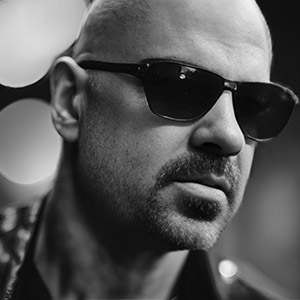
Bill Welychka is a name that carries a certain weight in the Canadian media ecosystem. For anyone who grew up glued to MuchMusic during its golden era, he was the calm, knowledgeable presence amidst the chaotic energy of Queen Street West. He wasn't just a VJ; he was the guy who could sit across from a rock god and make it feel like a chat at a local pub. Holding the physical copy of his new memoir, *A Happy Has-Been*, you can feel the weight of those decades in the industry. It’s a thick, glossy invitation into a career that most journalists would kill for, but Welychka handles it with the casual grace of someone who has seen the circus and decided he prefers the quiet of the sidelines.
But even the most seasoned veterans can get stung by a stray comment. A few years back, a co-worker in Ottawa decided to label him a "has-been." It was meant to be a jab, a reminder that the bright lights of national television had dimmed into the local news beat. Welychka didn’t retreat. He didn't get defensive. Instead, he took that label, polished it up and turned it into the thesis of his life story.
The book didn't start as a grand plan to cement a legacy. It was born out of the weird, stagnant air of the COVID-19 pandemic. Like many of us, Welychka found himself looking backward when the forward momentum of the world stopped. He was a frequent guest on podcasts, asked to dig through the crates of his memory for stories about the artists who defined a generation.
"I never really set out to write a book…that's the odd part!" Welychka admits. "I have been asked for years about a book. I used to think 'No one is gonna care.' But during Covid, I kept getting asked to be a guest on podcasts…I started recounting stories I had totally forgot about."
And that’s the thing about Welychka. He’s spent so much time chronicling others that he almost forgot he had a narrative of his own worth telling. The title of the memoir is a direct middle finger to the cynicism of the media world. It’s a reclamation of a term usually reserved for the washed-up and the bitter.
"A co-worker once referred to me as a has-been. It was in Ottawa and I was a weather presenter for the CTV affiliate," Welychka explains. "It hurt a bit, but I realized, maybe it's true! The HAPPY part of the title is important to 'the story'. I'm the happiest now than I've ever been."
There is a certain irony in calling a man a has-been when his resume reads like a Rock & Roll Hall of Fame induction list. We’re talking about a guy who went toe-to-toe with Mick Jagger, David Bowie, Prince and Johnny Cash. These aren't just names; they are the pillars of 20th-century culture. Yet, when you talk to Bill, there is zero ego. He speaks about these encounters with the wide-eyed wonder of a fan who somehow got a backstage pass and never left.
"I have been so blessed. I am humbled by all the world travels and grateful I had the chance to meet everyone I ever wanted to. And then some!" Welychka says.
His secret sauce as an interviewer was never about the "gotcha" moment. In an era where media thrives on conflict and viral clips, Welychka’s style is a throwback to genuine human connection. He learned the craft from the best in the business—the Mount Rushmore of Canadian broadcasting: Denise Donlon, Erica Ehm, Christopher Ward and Steve Anthony. These were people who understood that an interview is a living, breathing thing.
"I never approach an interview as an interrogation…question, answer, repeat. It has to be a conversation. The interview can take a million directions in the first 20 seconds. I love that journey!" he explains.
But the industry changed. The shift from the art-centric focus of the 1990s to the clickbait-heavy 2000s wasn't kind to the purists. Welychka saw the writing on the wall as music journalism began to cannibalize itself. The depth was replaced by surface-level noise, and the artist’s voice was drowned out by the demand for scandal.
"I became disillusioned with music journalism," he explains. "It became less about the art, the artist, creativity and more about the 10 second soundbite with a tabloid approach."
It was this shift that eventually led him away from the music beat and into the world of news. It was a pivot that required a complete retooling of his professional identity. Moving from the vibrant, neon-soaked halls of MuchMusic to the structured environment of a news desk is no small feat. Yet, he kept that same disarming warmth. He realized that whether you are talking to a rock star or a local politician, the core requirement is the same: you have to actually care.
I did my career backwards. I started off nationally in a major market and by design, I would end up in a smaller market with a localized audience...I'm the happiest now than I've ever been.
"I think I am honestly interested in people," he says. "I don't make the interview about myself. I am respectful and LOVE doing it. I think any interview subject senses that, and they're more apt to 'give' more."
Looking back at the MuchMusic years, it’s hard to overstate the cultural impact. Before the internet flattened the world, Much was the connective tissue of the country. It was the only place where a kid in rural Saskatchewan could feel the pulse of the Toronto indie scene or the Vancouver grunge explosion. Welychka was at the centre of that unification.
"MuchMusic is often credited with creating a 'star system' with its music artists. Someone could be in Newfoundland and learn about a band in BC. We brought the country together," Welychka says.
The memoir isn't just a highlight reel of celebrity anecdotes, though. If it were, it would be a shallow read. The real strength of *A Happy Has-Been* lies in its vulnerability. Welychka pulls back the curtain on his own internal struggles, specifically his battles with depression. In a world that often demands a "show must go on" attitude, his honesty is refreshing and, frankly, necessary.
"It was very cathartic," Welychka says of the writing process. "I open up about depression. People have thanked me for that. If one person learns something about mental health, then the entire exercise was well worth it."
His advocacy extends beyond the page. Welychka has used his platform to champion the White Ribbon Campaign, focusing on ending violence against women. It’s a cause rooted in his upbringing and a deep-seated belief in the power of empathy. He isn't just a talking head; he’s a man who understands the responsibility of having a voice.
"I was raised by a single mom," he explains. "I believe I absorbed many feminine qualities. I have no problem admitting that. I believe in passion, compassion, empathy, nurturing...It's GUYS that need to talk to guys to get the message out that there is NO room in our world for abuse of any kind towards women."
When you look at his career as a whole, it’s a bit of a zig-zag. He didn't follow the traditional ladder. Most people start small and aim for the national spotlight. Welychka hit the national stage early and then decided to find his peace in smaller markets. It’s a move that confuses the career-obsessed, but for him, it was a survival tactic that turned into a lifestyle.
"Even though I didn't, be willing to work ANYWHERE for your first couple jobs," he advises. "Be willing to relocate to northern Ontario or to an eastern province small town."
He’s still got that itch for the big interview, of course. Paul McCartney and Lady Gaga remain on his bucket list. But his perspective on who actually deserves the limelight has shifted. The older he gets, the less he cares about the fame and the more he cares about the folks who keep the world spinning while the cameras are off.
"As a society, we tend to put the wrong people on pedestals," Welychka reflects in the book. "It's important for me to elevate people around me, and doctors, nurses, first responders, teachers, volunteers. THESE are the people that need to be on a pedestal."
There is a profound sense of contentment in his writing. He isn't chasing the next big thing because he’s already found it in his own backyard. He’s a man who has made peace with his past and is genuinely excited about the present.
"I did my career backwards," Welychka writes in the book. "I started off nationally in a major market and by design, I would end up in a smaller market with a localized audience...I'm the happiest now than I've ever been."
*A Happy Has-Been* is more than a memoir; it’s a manual for how to survive the media industry without losing your soul. It’s proof that you can be successful, famous and still be a decent human being. Welychka has cemented his legacy not just through the famous people he interviewed, but through the integrity he maintained while doing it.
He is currently on an extensive book tour across Ontario, reconnecting with the audience that has followed him for decades. From Napanee to Windsor, the reception has been nothing short of a love-in.
"Check out the new dates for the 2024 book tour, sponsored by Tourism Kingston!" Welychka enthuses. "I am hoping for the same love and beautiful connections made from last year. It was a great pleasure to have visited Barrie, Peterborough, Ottawa, Kingston, Hamilton, Welland and Belleville for the 2023 book tour. I saw some old friends and made many new friends and heard some beautiful sentiments expressed from complete strangers. It was a blast...THANK YOU!!"
If you want to catch the man in person, the tour continues through the spring:
- April 16: Stratford, Waterloo and Cambridge
- April 17: Burlington and Mississauga
- April 18: Newmarket and Richmond Hill
- April 19: Toronto
- April 27-28: Ottawa International Book Expo
For those who can’t make the drive, his digital home at billwelychka.ca remains the best place to keep up with the journey of a man who is perfectly content with where he’s been and exactly where he is.