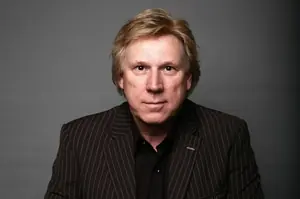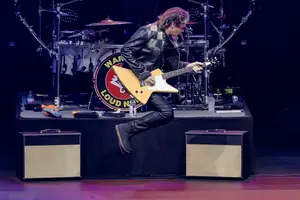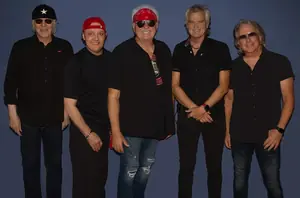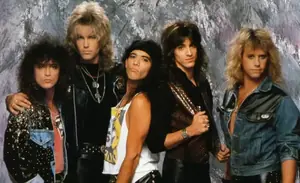
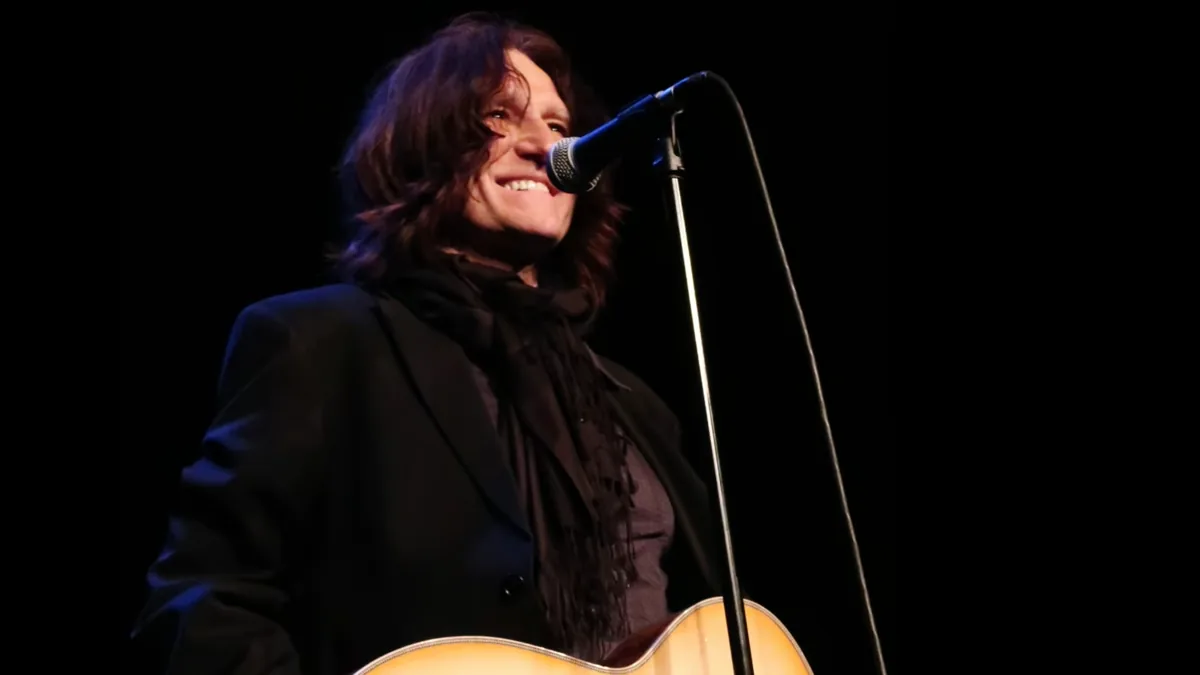
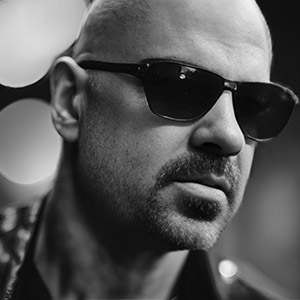
Looking back at these archival tapes from Jul. 12, 2013, the raw grit in John Waite’s voice isn't just from a lingering cold. It’s the sound of a career artist fed up with the machinery of the music business. There’s an unmistakable edge there, a friction that defined his entire trajectory from The Babys to Bad English and into a solo career marked by a stubborn refusal to play the game.
The entire genesis of his then-new album, Live All Access, was born from this exact friction. It started with an almost comical insult in his own hometown of Lancaster, England. He was set to play a historic theatre, a place where Charles Dickens and Niccolò Paganini had performed, a venue he hadn’t seen since he was seven. A proper homecoming. But the local HMV record store didn’t carry a single John Waite record. Not one.
And when his label was pushed, they sent a pathetic two copies overnight, never bothering to restock them once they sold. It was a slap in the face that crystallized everything wrong with the dying major label system of the 2010s. Waite’s reaction was pure, uncut rock and roll pragmatism. “It really felt wrong to me. I felt like I was dealing with idiots,” he says on the tape, the frustration still palpable years later. The solution was simple and direct: buy back his own catalogue and release the new album himself.
This wasn't just a business move. It was a declaration of independence in an era when the industry was in freefall. Borders was gone, department store music sections were being shuttered and the physical record was becoming an artifact. Waite saw the writing on the wall and decided to just bypass the crumbling infrastructure entirely, selling signed copies directly to fans. It was about taking back control, about establishing complete autonomy over his art and his legacy.
But what about the record itself? Live All Access was a deliberate middle finger to the polished, predictable live albums that clogged the market. Waite is clear about what he was avoiding. “It's not a greatest hits. It's not like one of those things that you get, like, that's corny. It's not like hit after hit after hit and look at us do this, and then there's a drum solo, and then there's more hits,” he explains. This was meant to be a document, not a product.
To capture that raw energy, he took a page from the 70s playbook. He booked a church in a blue-collar part of South Philly, bought three kegs of beer per night and threw the doors open for two nights of what sounds like glorious, sweaty chaos. It was an exercise in manufacturing a moment, ensuring the crowd was loose, loud and part of the performance. The goal was to capture lightning, not to perfectly replicate studio tracks.
The song selection followed the same ethos. Tracks were chosen not for their chart positions but for their energy, for the moments where the band and the audience locked in. He talks about a specific show in Manchester, New Hampshire, as one of those 10 magical gigs in a lifetime, a night where he had to consciously hold back to avoid oversinging. That’s the kind of performance he was chasing, where the emotion was so high that restraint became the real art.
This philosophy extends to his view of his own back catalogue. He speaks of The Babys with a mix of fondness and bitterness. It was his entry point, his shot at being taken seriously as a writer and singer. But it came at a cost. He felt the band was mistreated by its label, a classic tale of a talented act chewed up by the industry machine. He calls it “the price of an education.” While he wished the reformed version of the band well, he was resolute about not going backwards. He had nothing left to bring to it.
It really felt wrong to me. I felt like I was dealing with idiots.
The same could be said for the supergroup Bad English. It was a rocket ship that burned bright and fast. They had one massive record, but the label’s demand for a quick follow-up proved fatal. The band was exhausted after a year on the road, and the pressure fractured the chemistry. Waite’s description of making the second album is harrowing; he says it “almost killed me” and that he came out of it weighing about 105 pounds. It was a gallant attempt that ultimately broke the band apart.
His solo work, particularly the album No Brakes, was the antidote to all that. It was spartan, direct and fueled by the kinetic energy of New York City. He talks about writing lyrics on the breakfast table for songs he was going to sing that same day. The collaboration with guitarist Gary Myrick was key, creating a lean, powerful sound that stood in stark contrast to the often-bloated production of the mid-80s.
Waite’s artistic sensibilities have always leaned toward the simple and profound. He disdains overproduction, comparing it to white noise. “When somebody starts dressing things up and overproducing things, they're kinda cheating,” he says. “They're trying to sell you something that isn't what it is.” He finds more truth in Japanese line drawings, the poetry of Walt Whitman and the raw honesty of early Humble Pie and Free records. For him, the most brilliant things are the most simple.
That search for honesty is the throughline of the entire conversation. He’s brutally candid about aging in a business that fetishizes youth. He has no interest in being a legacy act, trotting out the same hits for 30 years. He sees growth and wisdom as essential tools for an artist, not liabilities. His contempt for clinging to a bygone era is visceral and hilarious.
“To try to pretend you're 25 for your whole life, you look an idiot. You know? You just look like a fucking idiot, and that's just how it is,” Waite declares. He wants his work to reflect the depth he’s gained from life, from reading Jack Kerouac to processing the loss of his father. It’s about being a total human being, not a “Mickey Mouse cut-out rock and roll singer.”
This perspective also informs his relationship with Nashville. His work with Alison Krauss and the country-tinged ballad “If You Ever Get Lonely” wasn’t a calculated genre-hop. It was a natural extension of his blues and country roots, the very pillars of rock and roll. He saw the storytelling in country music as a kindred spirit to his own lyrical focus.
It’s a critique, however, that his most potent solo work, like the albums Temple Bar and his personal favourite, When You Were Mine, remains criminally underappreciated by the mainstream. While he hit the bull’s eye commercially with massive singles, the deeper, more literary records he made after stepping away from the 80s inferno are where his true artistry shines brightest. They are the sound of a man who got exactly what he didn't want and then spent years building what he did.
His story about leaving New York for California wasn’t about chasing a dream; it was about self-preservation. He was “burning the candle at both ends” and knew he had to step away from the fire before it consumed him. Yet, ironically, his best writing about that period came after he left, looking back at the city that nearly broke him.
The interview captures Waite at a fascinating crossroads. He’s just released a live album that celebrates his past on his own terms while simultaneously feeling a powerful inspiration for a new studio record. He sounds comfortable in his own skin, possessing the energy of his youth but guided by the wisdom of experience. He’s not just surviving; he’s in complete command.
He understands his place in the pantheon. He came up in the 70s, a time he describes as being populated by “giants” like The Who, The Beatles and The Rolling Stones. He rode the wave of 80s hard rock, defining a sound that was far removed from the synth-pop that often characterizes the decade.
And even as he reflects, his focus remains on the work ahead. The excitement in his voice when he talks about having the “key” to a new album is genuine. He’s looking forward to the struggle, to the process of creation.
Ultimately, this conversation from 2013 paints a portrait of an artist who has earned his scars and his freedom. John Waite’s career is a testament to the belief that good work endures, that integrity matters and that the best way forward is to simply be yourself, even if it means telling the whole damn industry to get out of your way.
519 Magazine Archive: We are thrilled to officially unearth the Rockstar Weekly Digital Vault. This isn't just a re-post; it's a high-fidelity restoration of a pivotal era in music journalism. By pairing original print dates with modern retrospectives, we’re bridging the gap between historical rock-and-roll grit and the lightning-fast performance of today’s web. These stories—once locked in physical print and lost URLs—are now back, fully searchable, and optimized for a new generation of fans.
We are thrilled to officially unearth the 519 Magazine Digital Vault. This isn't just a re-post; it's a high-fidelity restoration of a pivotal era in music journalism. By pairing original print dates with modern retrospectives, we're bridging the gap between historical rock-and-roll grit and the lightning-fast performance of today's web. These stories—once locked in physical print and lost URLs—are now back, fully searchable, and optimized for a new generation of fans.