
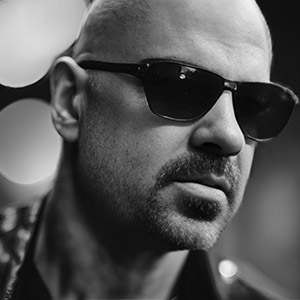
There is a specific, tactile thrill in the crackle of a needle finding its groove for the first time. It is a sound that Windsor filmmaker Syx Langemann knows intimately now, though he was late to the party. Bell Fibe-TV1 has a winner on its hands with his new project, and it smells like old cardboard, static and heavy-duty poly sleeves.
The series is called *Spinning Stories*. It is an eight-part deep dive into the obsessive, often messy world of vinyl record collecting in the Windsor-Essex region. But this is not just a dry inventory of rare wax. Langemann captures the quirks and personal histories of the shop owners, the musicians and the collectors who treat these plastic discs like holy relics.
Langemann did not set out to be a vinyl evangelist. The whole thing started almost by accident back in 2018. He was just looking for a subject, and Record Store Day provided the perfect backdrop for a quick documentary experiment.
“I grabbed a few cameras, a couple of people, and went down to Doctor Disc specifically and interviewed people through the day,” he recalls. And that was the spark. That single afternoon at the downtown shop ignited a fire that would eventually consume his shelf space and his production schedule.
The transition from observer to participant was swift. You cannot spend that much time talking to collectors without catching the bug yourself. It is a slippery slope from “just looking” to scouring the bins for a specific pressing of a 90s rock record.
“After that little documentary, I think that was 2018, I soon started to collect records,” Langemann shares. “Dave Hunter gave me a really good deal on one of his record players and dropped off a milk crate worth of used records that he had got from somebody else. And it kind of started from there.”
Mentioning the late Dave Hunter carries a heavy weight in this city. Hunter was the heartbeat of the Windsor-Essex community, a man whose influence stretched from the pages of *The Drive* magazine to the countless charity events he championed. He was a connector of people, and apparently, a connector of turntables.
Hunter passed away in 2023, leaving a significant void in the local cultural scene. For Langemann, the footage captured for the series now serves as a poignant, accidental memorial. It is one of the most grounded moments in the entire eight-part run.
“It definitely hits me personally,” Langemann reflects. “It’s interesting to see what, you know, one person’s connection with music and with their father.”
There is a specific episode where Langemann sits down with Hunter and his son, Sam. It is a masterclass in how music functions as a bridge between generations. Watching the interaction, you realize that the records are just the medium; the real story is the lineage.
“I think that was a pretty amazing afternoon to kind of talk through Dave’s history of, you know, music and collecting records, his memory of his dad, and then seeing that getting passed on to Sam,” he reflects. It is a segment that feels more like a family heirloom than a television segment.
But the series also has its lighter, more frantic moments. Every collector has a "Holy Grail"—that one elusive album that haunts their dreams and keeps them digging through dusty crates in basement shops. For Langemann, that white whale is the Clutch album *Elephant Riders*.
The hunt for that specific record provides a narrative thread that pulls the viewer through the episodes. It is a clever device. It keeps the stakes high for a hobby that, to an outsider, might look like just standing around in shops.
I realized that not only my own collecting important to me and my music listening, but it ended up being important to my kids. And my kids started to collect as well. So that was kind of something that was really unexpected.
“I guess you’re just gonna have to come out on Saturday and see if I found it or not,” he teases. “But let’s just say it’s a pretty fun tale.”
One of the sharpest observations Langemann makes throughout the series is the shifting demographic of the record store. The stereotype of the middle-aged man in a faded band shirt is dead. The new guard is younger, more diverse and significantly more female.
“Just honestly, how many people there were out there collecting, and there’s some huge, impressive collections out there,” he marvels. It is a testament to the format's staying power that it has survived the digital onslaught to find a new audience.
The data supports his claim. Vinyl sales have been on a steady climb for over a decade, and it is not just the boomers rebuying *Rumours*. It is Gen Z looking for a physical connection to the artists they stream on repeat.
“But I think, honestly, one of the most unexpected things, a lot of the collecting is done by a lot of younger people. There’s more women getting involved in collecting,” Langemann notes. This inclusivity is what keeps the culture from becoming a stagnant museum of the past.
Nostalgia is the engine here, but it is a complex fuel. It is not just about wanting to live in 1974. It is about the memory of a specific room, a specific person or a specific feeling that only a physical object can trigger.
“I think that nostalgia definitely plays a big part in why people collect,” Langemann observes. “You know, a lot of people bringing up the records of their parents or their family or just remembering a place and a time when they heard that music.”
This phenomenon even invaded Langemann’s own home. His kids did not just watch him film; they started flipping through the bins themselves. It turned a solitary hobby into a family activity, which was never the original plan.
“I realized that not only my own collecting important to me and my music listening, but it ended up being important to my kids. And my kids started to collect as well,” he shares. “So that was kind of something that was really unexpected.”
The series also gets into the technical weeds, which is where the real expertise shines through. There is a fascinating look at lathe cutting with local artist Robin Raymond. This is the boutique side of the industry—making records one at a time, essentially carving the sound into the plastic.
“What Robin does, and, you know, many people that are in just the lathe cutting end of things, is pretty amazing,” Langemann enthuses. “There’s a lot less hands between you and a final product, and it’s a pretty crazy process.”
Production was not a smooth ride. Langemann had to navigate the loss of his mother and the death of Hunter while trying to stitch together a narrative from a mountain of footage. Editing 50 different voices into a coherent story is a monumental task for any filmmaker.
“Those were two of the biggest challenges I had,” he admits. “But to kind of get into, like, the actual challenges of doing a production in eight parts, one of the biggest problems during this production was editing and trying to make these conversations between, you know, almost 50 people flow.”
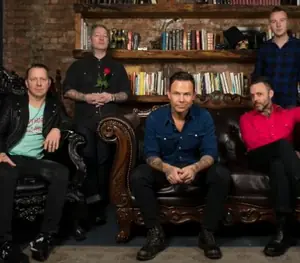
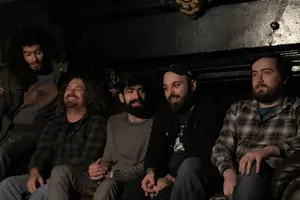
The result is a vivid portrait of a region that punches well above its weight class in terms of musical output. From the long-standing legacy of Doctor Disc to the heavy riffs of Gypsy Chief Goliath and Age of Wolves, Windsor's identity is baked into the series.
Langemann is very clear about the "why" behind this project. He wants people to buy music again. He wants them to hold it in their hands and look at the liner notes. He views it as a necessary rebellion against the ephemeral nature of the modern world.
“If people sit through the eight-part documentary series, I hope they’re inspired to collect music,” he says. “I hope that it’s vinyl. That would be a great thing to see, but just to have that connection with music again, and it kind of supersedes a whole bunch of the other stuff that’s going on in the world.”
There is a political edge to this as well. In the era of streaming, where artists are paid fractions of a cent, physical media is one of the few ways to actually put food on a musician's table. Langemann does not pull his punches here.
“I think that people are starting to see that streaming doesn’t help the musicians,” he argues. “Physical music formats like vinyl, like CDs, even tapes, or going to the shows, some of that is the best way to support those bands.”
Since he started this journey, Langemann’s own collection has exploded to over 750 albums. He has developed a morning ritual: coffee, a turntable and a few spins before the world gets too loud. It is a slow-living philosophy that he hopes others will adopt.
Windsor-Essex has always been a music town, but *Spinning Stories* gives that reputation some much-needed context. It highlights the infrastructure—the shops, the makers and the fans—that keeps the scene alive.
“We have a very music rich area and a lot of musicians,” he says. “And I think that when I was the idea of starting up this documentary, I really wanted to highlight this, and I really hope that this documentary gives new perspective and appreciation for the region, for other people.”
As for the future, Langemann is not done with the camera or the crates. He has a dream that sounds ambitious, but in a city with our manufacturing history, it might just work. He wants to see Windsor become a hub for the actual production of these records.
“I know there’ll be some more filming and there’ll be some more stories,” he says with a smile. “But wouldn’t it be great if we had our own little record pressing plant here? You know, you can always dream.”
*Spinning Stories* is currently available On-Demand on Bell Fibe-TV1. It is mandatory viewing for anyone who has ever spent three hours in a basement looking for a specific B-side. Go watch it, then go buy a record. Support the scene.