
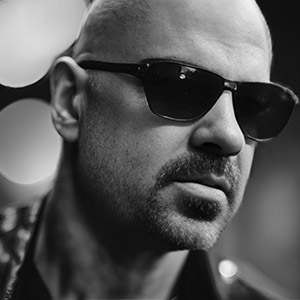
It has been a long, quiet stretch since the world had a collective reason to hit the dance floor. But as the fog of the last few years lifts and the venues start humming again, the timing feels right. It looks like we can finally, safely, dance again. If you did not catch that reference, you are probably reading the wrong magazine.
The "Safety Dance" by Men Without Hats is not just a song. It is a cultural relic of the early 1980s that has managed to outlive the very synthesizers that birthed it. I remember standing in the crowd at Ontario Place in Toronto during those formative years. The air was thick with the scent of the lake and the electric hum of a band on the verge of global domination. It was an epic moment, watching Ivan Doroschuk command that stage just as the track was beginning its ascent.
Now, 40 years later, Doroschuk is not interested in merely resting on his laurels. He is back to do it all over again. This includes a complete deconstruction of his biggest hit, now titled "No Friend Of Mine." It leads the charge on a new EP of cover songs titled *Again (Part 1)*, which serves as the appetizer for a full-length meal of original material.
In a recent conversation, Doroschuk sounds remarkably at peace. He is a man who has navigated the peaks of the Billboard charts and the quiet of the Pacific Northwest. He is looking forward to the tour and the release with the clarity of a veteran who knows exactly who he is.
When I ask him about the new EP, which dropped in Sept. 2021, he gets right to the point. Doroschuk says, "Again (Part 1) is five cover songs. We do songs by David Bowie, Lou Reed, the Rolling Stones, the Tragically Hip, and we reinvented our biggest hits 'Safety Dance' - we re-imagined it, as they say."
The decision to lead with covers is a classic industry move, a way to re-establish the brand's sonic palette before dropping the new stuff. And there is definitely more coming. Doroschuk confirms the roadmap for the release cycle. He says, "Part two is going to be 12 original songs coming out early next year. This is just the setup for it."
This EP is the essential bridge to the future. It is not a standalone project but a calculated entry point into a larger narrative. Doroschuk explains the structure of the project simply. He says, "Yes, it is. The full album is Men Without Hats Part 1 & 2. This is Part 1."
The timing of a comeback is always a gamble. But for Men Without Hats, the global pause actually provided the necessary friction to create. While most of the world was struggling to find a rhythm in lockdown, Doroschuk was already retreating into his own self-imposed exile.
He describes the serendipity of the timing. Doroschuk says, "It just came together. Before this whole thing kind of broke out, we had decided that we were going to take some time off to make a record. We just built a studio on top of the Malahat on Vancouver Island and spent eight months holed up, we didn’t even see things go by, we were totally isolated already. This was in the works for us. It was pretty fortunate."
There is a specific kind of magic that happens in an isolated studio. You can feel it in the reverb of the new tracks. When you are perched on the Malahat with a view that stretches forever, the music starts to absorb the environment. It is a return to an old-school philosophy of recording that has mostly been lost to the era of remote file sharing.
Doroschuk leans into that nostalgia. He says, "It was a pretty old school way of making albums. Renting out a house, building a studio and just staying there until the records finished. That’s how it was, we were, like I say in the press release, the only company we had a family of 13 peacocks that we watched grow as we were laying down tracks."
The pandemic, which crippled so many touring cycles, was almost an afterthought for the band during the production phase. They had already planned to stay off the road. It was a rare instance where a global crisis aligned with a creative schedule.
Reflecting on that period, Doroschuk says, "We were booked to do this and we had taken the summer off, we had decided not to tour. We had not taken any engagements for the summer or the fall, so it really didn’t affect us. Now we’re getting back out on the road. We’ve done shows already and we’re heading down to the states to just start touring down there so it didn’t really affect us that much. We were lucky in that way because I know it affected a lot of people more adversely than us."
When you listen to the EP, there is a striking balance between the vintage synth-pop DNA and a modern, polished sheen. It sounds fresh. It does not feel like a group of guys trying to recapture their youth in a garage. There is a technical precision here that only comes from decades of knowing how to manipulate a waveform.
Doroschuk attributes this to their roots. He says, "We definitely have a way of doing things, I guess it goes back to our influences, which is one of the reasons why we’re doing this cover EP. We wanted to show people who influenced us and who we like and it’s mostly what we learned along the way."
The standout, of course, is "No Friend of Mine." It is a risky move to mess with a song that is embedded in the collective consciousness of the 80s. But this version feels like a sequel rather than a remake. It has a cinematic quality, like a dark return to the village from the original music video.
Everything feels great. It’s like a fresh beginning for us now. Everything’s falling into place now. It’s been a while but things are slowly getting back to where they were.
Doroschuk has a very specific vision for the narrative of the track. He says, "That’s our first single 'No Friend of Mine' and we’re getting a good reaction. I didn’t know how people would take it, it’s an iconic song and you don’t really want to play with it too much. But this is such a different version. And it is kind of like I say in the press release, it’s the way I see it as we’ve gone back to the West Kingston where we filmed the original video and the Jester is now the mayor of the town, and he’s married to the crazy blonde chick, and they have this huge family and so I go back 40 years later to see how they’re all doing and this is the soundtrack to that visit. If there’s going to be a video that’s what the video will probably be."
Fans of the original will remember Mike Edmonds, the actor who played the jester. He was the heart of that medieval-punk aesthetic. It turns out the connection between the band and the actor has remained intact over the decades.
Doroschuk says, "I’m in touch with Mike Edmonds who played the jester and we’re in constant communication, and he’s up for it for sure."
The process of dissecting "Safety Dance" was not just a whim. It was part of a larger, more intimate project. Doroschuk has been experimenting with stripping these massive pop anthems down to their bare bones. It is a bold artistic choice that risks losing the danceability that made them famous, but it reveals the strength of the songwriting.
He explains the origin of the new sound. Doroschuk says, "It was part of a bigger project that I’m working on as well, which was a re-imagining of the Men Without Hats catalog, on just vocals and piano, just taking the songs and playing them just by myself singing and playing piano. Doing like a remix, almost these are like, keeping the vocal line as intact as I can, and coming up with a different chord structure underneath it. It really worked with 'Safety Dance', it worked with a lot of those songs, too. It’s something that people will be hearing parts of it as we go along. But 'Safety Dance' worked."
The reaction from the public has been immediate. There is something about that melody that is hard-wired into people. Doroschuk recounts a story from a friend that proves the song still has its hooks in the culture. He says, "A friend of mine wrote me the other day and said that somebody had played 'No Friend of Mine' at work and everybody was singing along and it was the first time they’d heard it. So it’s got that magic. It’s good."
Looking back to the early 80s, it is easy to assume every hit was a calculated strike. But the reality of the music industry is often much more chaotic. When Doroschuk wrote the original, he had the confidence of youth, but no idea that he was creating a permanent fixture of pop culture.
He admits to the ego required for the job. Doroschuk says, "Well, I can remember that back in those days, I thought that every song I wrote was a legendary song. I wouldn’t be in this business if I didn’t, that’s the way musicians think, and that’s why we always want to play our new stuff and not the old hits. It’s always the next one’s always going to be the better one. It wasn’t even the first single, it wasn’t even our first choice for a first single."
The path to the top of the charts was not linear. In Canada, the band initially pushed a different track from the *Rhythm of Youth* record. "Safety Dance" was actually the second attempt at a breakthrough.
Doroschuk recalls the early chart success. He says, "We released 'I Got The Message' off the Rhythm of Youth record first in Canada. I don’t know what kind of chart action it would have gotten in Canada. We put the 'Safety Dance' next and it went to number 12 in Canada, and we were totally stoked. We were like WOW. We made the top 40 in Canada with two songs. It was enough for us. We were put back in studio, the record label that we had signed to agreed to do another record, and we were on top of our game. Then they asked us to do the remix of 'Safety Dance', and we said okay, I guess so, we just did it because that’s what people were doing in those days, and went and started making a record and then the safety dance, remix went number one on Billboard, and the rest is history."
That remix was a staple of the 12-inch era. It gave the song the breathing room it needed to dominate the clubs. It was long, experimental and drew from an unlikely source of inspiration: the burgeoning hip-hop scene in New York.
Doroschuk says, "I can still remember making it, it was fun. We had nothing to really go by and those days I was kind of channeling Grandmaster Flash with the rap stuff. The 12 inch remix, it was a new thing back then. So we just played it by ear."
It is a fascinating parallel. At 14, I was trying to get into bars to see Grandmaster Flash and failing miserably. Men Without Hats at Ontario Place became my substitute, and in many ways, they were more impactful. The energy of that live show was undeniable. It turns out Doroschuk was just as much of a fan of the hip-hop pioneer as I was.
Doroschuk says, "That’s great. I’m a big Grandmaster Flash fan myself. I saw them, got to meet them when they played in Montreal, a while back. I remember that Ontario Place concert, that’s an iconic concert in the history of Men Without Hats. That was a defining moment in our career."
It is a shame that the high-definition cameras of today did not exist back then to capture those moments. We are left with grainy memories and a few bootlegs. Doroschuk agrees. He says, "Yeah, well, the memories are good."
The song’s longevity is staggering. It has appeared in commercials, movies and television shows for four decades. But for Doroschuk, the pinnacle of pop culture validation came from two animated slackers on an MTV couch.
He laughs about the *Beavis and Butt-Head* appearance. Doroschuk says, "It always takes me by surprise. The place that I’ve enjoyed the most over the years has always been a Beavis and Butt-Head doing their critique watching the video and saying who does this guy think he is Michael Jackson. That has always been number one on my list."
Despite the massive success, Doroschuk remains grounded. He recognizes the rarity of his position in an industry that usually chews people up and spits them out within 18 months. He says, "I’ve been blessed, I’ve been doubly blessed and I’m just really extremely fortunate. We have the greatest fans. I’ve said it before but our fans are always pushing the catalog on other people and we’ve been very fortunate as bands go."
One of the more surprising tracks on the new EP is a cover of the Tragically Hip's "Blow at High Dough." It is a quintessential Canadian anthem, and Doroschuk treats it with the respect it deserves. It is a nod to a fellow Canadian legend, and a reminder of his own roots.
Doroschuk says, "I’ve always been a big, Tragically Hip fan and I’m Canadian, so I represent. And I saw the first tour I saw them play this song. I went to see them live because of this song. I saw them the first time around, both Gordon and I had a big thick head of hair. It was a good concert. They’ve had a great career. They’ve done everybody a great favour by making music."
Even though he has spent the last two decades on Vancouver Island, the Montreal influence is still a major part of his identity. That city’s unique blend of French and English culture is what gave Men Without Hats their original edge.
He remains a Montrealer at heart. Doroschuk says, "I do. I grew up there. I still consider myself a Montrealer or even if I’ve been here 20 years, and I grew up in French, I went to school in France. So a big part of me is Québécois. It’s the reason when we moved out here, I sent my son to a French school."
The decision to raise his son in French was about more than just language. It was about heritage and connection. He says, "It wasn’t really to have him be bilingual, it was more to have him understand who I was, so that we’d be able to connect on a deeper level."
That Montreal vibe was famously personified by Bonhomme, the mascot of the Quebec Winter Carnival, who appeared in their visuals. It was a bizarre, brilliant bit of branding that only a Montreal band could pull off.
Doroschuk says, "No, I don’t recall asking anybody anything. I look back on it now and sometimes I think what was I thinking but it’s definitely endured. I figured if that guy can get people to come out and party in the streets in the coldest city in North America and in the middle of February, you might be able to sell us a few records."
The current iteration of the band is a family affair. It is Ivan and his brother Colin at the centre, keeping the legacy alive while bringing in fresh blood to handle the modern production requirements.
Doroschuk breaks down the lineup. He says, "That’s myself, my brother Colin doing everything else that I don’t do and Sho Murray from the band Shocore, who is playing guitar. He’s also the engineer and Colin and I produced the record. Sho is the Co-producer and engineer on the record. Colin’s daughter, my niece Sahara Sloan has joined the band as vocalist and keyboard player. So that’s it and we are augmented live by Adrian White on drums."
With a new label, Sonic Envy, and new management, the infrastructure is finally in place for a sustained comeback. It feels like a clean slate. Doroschuk says, "There’s a new label, it’s called Sonic Envy. I have new management, it’s also the same company that manages us also now and it’s good, everything feels great. It’s like a fresh beginning for us now."
The transition back to the spotlight has been surprisingly smooth. For some, the pressure of a legacy is a weight. For Doroschuk, it is a comfortable suit. He does not suffer from the stage fright that plagues so many of his peers.
He describes the feeling of returning to the stage after a long hiatus. Doroschuk says, "It does for me. I mean, it might not be like that for everyone. I know some performers that you wouldn’t believe the stage fright that they have and it’s just something that I’m lucky I’ve never had. I’ve always been very, very comfortable on stage. I remember just over 10 years ago, starting off on Vancouver Island at Rifflandia Music Festival here on the island, and I hadn’t done a show for 25 years 30 years. And I remember standing in the wings, the stage is the band doing the intro to me coming on and I just remember thinking Wow, it’s like riding a bike. I didn’t feel butterflies, nothing. It was just seamless. But that’s just me, other people are a lot different. I know people who still throw up before every show."