
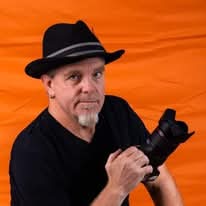
Holding the physical copy of *Tommy Solo in the 21st Century*, you feel the weight of a career that has outlasted most of the venues it was built in. It is a "best-of" collection that serves as a middle finger to the ephemeral nature of the digital age. Solo is a London fixture, a man who has seen the industry’s guts spilled on the floor more times than he cares to count.
And he is still here. But he is not just playing the hits; he is documenting the survivors. His podcast, *Tommy Solo’s Famous Friends*, just hit its 32nd episode, serving as a digital archive for the journeymen of Canadian rock. We sat down at a corner booth to discuss the grit required to stay relevant when the business itself seems designed to starve the artist.
The conversation starts with the absurdity of the modern "live" experience. We are currently living through a period where major acts are charging premium prices for fans to sit in cars and watch a projection. It feels like a hustle. Solo, ever the pragmatist, takes a breath before weighing in on the drive-in concert trend.
"Well, you have to give people credit for trying," Solo says, though his tone suggests he is not entirely sold on the gimmick.
But the frustration runs deeper than just the medium. It is about the wealth gap in the arts. The artists charging a hundred bucks for a parking spot are not the ones wondering how to pay the rent. They are the elite, insulated from the reality of the local circuit.
"Yeah, but it is what it is," Solo says. "We’re in a world of trouble, if we’re in a world without music. I soured on the business side of music a long time ago because the music business has always sucked. It’s reinforced for me when I’ve talked with people on my podcast that they had their day in the spotlight and hardly any of them have any money from that because the record deals were all about the record company and the guys in suits were getting all the money. It wasn’t impossible in the day to make a deal where you hung on to your publishing and you made some money, but very few did. A lot of the artists that are out there now who got deals still haven’t paid back their advance."
This is the cold reality of the "loan" system. Solo avoids the trap of the starry-eyed dreamer. He understands that a record deal is often just a high-interest debt disguised as a dream. He recalls a pivotal moment in the early 80s when the carrot was dangled, and he had the sense to walk away.
"I was offered a record deal back in the early 80’s and lucky for me, I had an uncle who was an entertainment lawyer," Solo says. "He advised me not to sign it and I said, why not? He said the money they’re offering you is a loan and if they choose to not promote your album, you’re going to be in debt for that money. So I said, well can’t we change it? He said, I tried but they said the kid’s not Elvis, what do you want?"
It is a brutal assessment. But it saved him from the fate of peers who ended up owning nothing of their own labour. He points to Ken Tobias, a songwriter of immense talent who found himself caught in the gears of the Los Angeles machine.
"I talked to Ken Tobias and he’s an example of someone who did get lucky," Solo says. "He hung on to his publishing rights for a while and he had a huge hit in the 70’s with a song called 'Stay a While' that The Bells recorded. He was subsequently signed by Bill Medley of The Righteous Brothers and he was down in L.A. trying to make a go of it there and between him and his brother they had a legal battle to get out of the contract and he ended up giving away the publishing rights to that song."
And that is the heartbreak of the industry. You write a hit, and you end up trading the rights to it just to buy your freedom. Solo has bypassed this by leaning into the independence of the local scene, even if that scene has its own set of indignities.
"So I’ve been playing music for the love of the music for some time now and I think that’s all you can do," Solo says. "We’re in a different time now; we don’t know what normal is going to look like down the road. I was perfectly happy to just play festivals and private events. When the attention is on you and people are there just for the music that makes it worthwhile for me. To play in some bar with no stage 10:00 to 2:00 and it ends up being 11:00 to 2:00 because the bar doesn’t feel it’s busy enough to start on time, then at the end of the night because they haven’t done their job, from my perspective anyway, nine out of ten of these bars just expect people to show up just because you’re there. They expect you to do all the promotion. When was the last time you heard anything on the radio from a bar promoting entertainment?"
The critique is sharp. Bars have stopped being partners and have become landlords who expect the tenant to bring the party. And the digital landscape offers little relief. If you look for Solo on Spotify, you will find a ghost town. This is a deliberate choice.
"I’m not putting any of my new stuff on Spotify," Solo says. "The CD manufacturer I dealt with in the past would automatically put my stuff on Spotify, Apple Music and all these other streaming platforms and at first I thought that was cool because I thought sooner or later you’re going to get paid. But you know, I check my metrics every few months or so and almost without fail."
The numbers are insulting. He mentions being listed among the top 100 Canadian artists for streaming in China, a statistic that sounds impressive until you look at the cheque.
"I’m lucky to get twelve bucks a year for that," Solo says. "From what I understand a lot of artists are switching over when they have the legal recourse to do so and they’re going over to Bandcamp, because Bandcamp has a better remuneration model. They’re actually paying, if you spend twenty bucks I get sixteen, something to that effect. So, there’s some hope that maybe we can get some money out of the business that way."
in 2007 my son passed away and that was like a bomb going off in my living room. The hardest thing for me at the time was that he used to tell his friends at school that his daddy was a rock star. At a certain point I thought the least I could do was try and live up to what he thought I was. So I decided then and there that I was just going to play what I wanted to play and I was going to really dive head first into doing my own thing.
But the real rot in the streaming world is the "farm" system. Solo pulls back the curtain on the industrial-scale manipulation used by major labels to rig the charts.
"The top artists on the streaming platforms, their people have streaming farms," Solo says. "It’s an office loaded up with devices streaming 24/7 so they might have a thousand phones that are all streaming the artists current hit all day long. They do this to the point where they get over a million streams and once they get to that plateau they get sponsors. You might have noticed that when you see a concert tour, it’s not The Drake Tour; it’s the Budweiser Tour Featuring Drake. That’s really the only way that artists are getting any money from streaming."
So why release a compilation CD now? In an age of digital noise, a physical disc feels like an anchor. Solo says it was the fans who pushed for it, even as he tried to pull away from the grind.
"Well, people keep asking me for more music, and it seems the more I’ve pulled away from it, the more they’ve pulled me back in," Solo says. "We had the Junos here a couple years ago and at that point I decided I was done playing in the bars so I put it out there that I wasn’t happy with the business as far as that scene and the next thing I know I’m getting calls to play a set for CBC as part of Juno week. And then I get called to perform at The Forest City Music Awards. So, it seems the more I try to remove myself from certain situations, the more I get pulled back in. Basically the compilation is for the people, the people that care. That’s my greatest joy, seeing people appreciate my music. That’s the thing I haven’t been getting in the bars. I found myself getting irked when playing a bar that has a big screen TV and the game is on and everyone is watching the game. Why do they have a band when the focus is on the game? We’ve all heard how the internet has devalued music. Well if it’s free, it’s not that important."
It is a valid technical critique of the hospitality industry. If the music is background noise for a hockey game, the art is being treated as upholstery. Solo is betting on a return to form.
"My hope is that we’re going to get back to a level of appreciation and enthusiasm," Solo says. "I feel that people are going to miss what they don’t really have when it comes back."
Solo’s history in London spans 40 years, but his roots are in North Bay. He was forged in the "journeyman" fires, a term coined by Danny Marks of Bluz FM.
"I’ll put it the way Danny Marks (Bluz FM) describes me; he calls me a journeyman musician," Solo says. "I guess that’s ultimately how I ended up in London. I wanted to do something with the music, I wanted to be a rock star and North Bay was a stop along the way for rising artists. There were a couple of bars in North bay that bands like Max Webster, Helix, Triumph, etc. would pass through there on their way wherever else they were going. They would have Saturday afternoon matinees and invite local talent up. I got out there and I jammed with a lot of those bands and that really lit a fire under me because I knew that there was something more outside of my little pond, if you will. The first opportunity I had, I went to Toronto and I got a job as a waiter at the café in The Harbour Castle Hilton and that was a really popular place for top shelf entertainers to stay. On one of my first days, this waitress says to me, don’t you know who that is you just served? That’s Harry Belafonte. Well it was a little too late to say anything; I had just given him his bill. A little while later, a few members of his band came in and they sat in my section. So I said to them, I’m new to town, what do I do to get into a band? They just said the obvious, check the want ads."
And so began the hustle. From answering ads in *The Toronto Star* to stashing a 1963 Gibson SG in a locker at Union Station, Solo lived the life of a gigging pro. He joined a show band, got bored, returned to North Bay, then landed in Kitchener with Karen McCall.
"That was neat, we recorded a single, but I got tired of being a spoke in somebody else’s wheel," Solo says. "I wasn’t really happy in her band and I met a band in St. Thomas when we were playing there and they basically recruited me right away. It was a short hop to London and I’ve been here ever since."
He tried to quit. He got married and thought he was done. But the bug is a parasite that never truly leaves. He formed The Free Ride Band, a cover outfit that tore through the 90s with Collective Soul and STP tracks across Southwestern Ontario. But the transition to original material was stalled by a tragedy that would have broken a lesser man. In 2007, Solo’s son passed away.
"He just turned twelve and that was the most devastating thing that could have happened and it did," Solo says. "The hardest thing for me at the time was that he used to tell his friends at school that his daddy was a rock star. At a certain point I thought the least I could do was try and live up to what he thought I was. So I decided then and there that I was just going to play what I wanted to play and I was going to really dive head first into doing my own thing. I recorded the What’s Goin On EP in 2008 and it got some attention, we got some radio play on the Moose FM stations in Northern Ontario. The song that got the most attention and still does in China was Di Da and strangely Danny Marks played that one a couple of times on BLUZ FM and I don’t get it. I don’t consider it a blues song but who am I to tell people what to do with my music?"
Music became a tribute. Solo began experimenting with covers, but only on his terms. He tackled "Hooked on a Feeling," aiming to bridge the gap between B.J. Thomas’s vocal gold and the "Ooga Chaka" hook of the Blue Suede version.
"The covers, I had never recorded a cover song under my own banner and it started with Hooked on a Feeling," Solo says. "I always wanted to record my own version of that song because if you listen to the old classic versions, B J Thomas, his voice is golden. If you listen to the musical arrangements behind him they’re not all that great, so the song is all about his magical voice and the strength of the song. The Blue Suede version with the Ooga Chaka Ooga Ooga, that was a great hook. Both of those singers, their voices sold the song and the hook in the Blue Suede version. It just happened I started playing with Ed Pranskus, the original drummer with Thundermug. Ed has been praised by drummers around the world, Graham Lear thinks Ed is amazing, Robb Reiner from Anvil looks up to Ed."
Working with Pranskus was a revelation. The drummer is a "machine" with the rare ability to match tempo to a singer’s breath.
"He set the tempo on Hooked on a Feeling when we recorded it and I was just giddy," Solo says. "I felt like I could sing it the way I always wanted to sing it and I arranged the guitar parts the way I always thought they should have been. If you listen to the guitar solo in the Blue Suede version it’s very rudimentary and almost awkward. Not to put the guy down but it was an early version of the song and evolution happens. So I managed to pull off what I wanted to do with that song and I submitted it to the London Free Press and not only did they name the Introducing The Night Crew album as part of their top ten but they awarded us cover track of the year 2015 for Hooked on a Feeling."
The success continued with a 2016 cover of Redbone’s "Come and Get Your Love." Solo, ever mindful of cultural boundaries, made a specific artistic choice to alter the "hey" part of the song.
"We did the follow up album, Only Human, and we recorded that in 2016," Solo says. "I was thinking we should do another cover song but I didn’t know what. As it happened I was scrolling through YouTube and I saw Redbone on the Midnight Special performing Come and Get Your Love. I had forgotten they were all First Nations and at the beginning of the song they did a little pow wow session. Well we decided to cover it and do our own take on it and instead of the call and answer hey, hey part I decided to just do one hey because the original was part of the whole First Nations cultural thing. I decided I don’t own that because as far as I know I don’t have any First Nations blood. That song got the cover track of the year for 2016."
Then came the collaboration with April Wine’s David Henman on "Drop Your Guns." It was a moment of mutual respect between a veteran and a legend.
"Another song I wanted to record was April Wine’s Drop Your Guns," Solo says. "I played it live at a couple of shows and people really liked it. So I thought I’m going to call David Henman up, the original guitar player from April Wine and he invited me up to his house for coffee. We talked for a couple of hours and I told him I’d like to cover his song and the one thing he said is, I just don’t like to see people cover songs note for note. I said, well that’s not me, I like to put my own stamp on it and that’s what I was hoping, that you wouldn’t mind me making it my own."
The resulting track features Henman himself on slide guitar, recorded in his living room. It is a highlight of Solo’s recent output, blending his own composition style with the DNA of Canadian rock royalty.
"To not only have his blessing but to also have his participation in the recording process was awesome," Solo says. "Having said that, most everything else I’ve recorded since 2008 has been my own compositions and there’s been no better feeling than to have radio pay attention to that stuff and to have the appreciation of friends and fans."
But Solo’s legacy isn't just in the studio. It is in the "Rocking For Kids" benefit for the Children’s Health Foundation. After nearly losing his shirt on a solo-produced event, he partnered with Mario Circelli to keep the tradition alive at Rum Runners.
"One of my greatest joys in the last ten years or so is putting on the Rocking For Kids benefit for The Children’s Health Foundation," Solo says. "When we did it the last time I nearly lost my shirt doing it on my own. I booked a large venue and big production and we barely made enough to make a donation to the foundation. Mario Circelli said look, next time don’t do it on your dime, let us get involved. So this year we did it at Rum Runners and Mario arranged for a deal on the venue and he lined up all of the entertainment other than my band which was the headliner. David Henman came down and performed three songs with us as well which was pretty cool."
The podcast, *Famous Friends*, was born from the isolation of the pandemic. It was a way to reach out and touch the history he had been a part of for decades. He managed to secure an interview with Tommy Hunter, a feat that still has him buzzing. But it is the stories of the overlooked that resonate most.
"My podcast came out of the idea that you’ve met all these people over the years, you know people from The Stampeders, April Wine, so now we’re in the middle of this pandemic you better get on the phone and do something," Solo says. "I thought we’re in lockdown, you’re going to catch people at home. The majority are people I’ve met during the years with a couple of exceptions. I never met Tommy Hunter but there were a few people that recommended that I talk with him. I got his contact information from James Reaney and when I made the initial call to see if he would do it and he said sure, I was over the moon. The best thing for me with the podcast is seeing people’s reactions. Walter Zwol, he fronted the band Brutus, he was the first Canadian artist signed with EMI. He was given some opportunities and had marginal hit with a song titled Ooh Mama Mama that was produced by Jack Richardson. New York City was a song he toured around Europe with as a solo artist. The thing is, like a lot of artists who signed a deal, the record company didn’t give him the support he deserved and eventually his career kind of floundered. He’s a happy guy in his life today but nobody’s really heard him in a long time. The reaction that episode got from people who were happy to hear him again and know that he’s doing ok, that was satisfying."
The podcast also captured the final thoughts of Greg Simpson, a music business titan who passed away just two weeks after his interview with Solo. It serves as a stark reminder of why this documentation matters.
"Greg Simpson, that was some serendipitous situation," Solo says. "We just had him work as stage manager and MC of the Rocking For Kids show and I’ve known him since he hosted an open mic at Kipling’s years ago. He was someone who worked in the music business for decades and when I talked to him he said over the years he made hundreds of dollars (laughing). Two weeks after I interviewed him he passed away. The outpouring of appreciation from people who were able to listen to his interview after he passed was incredible. I get out of it what the listeners get out of it and that’s what keeps me going. I’m running out of famous friends but people keep suggesting people for me to interview so I’m going to keep going with it as long as I can."
And that is the essence of Tommy Solo. He is the man who stays. He is the one who remembers the names of the guys who got screwed by the suits and the ones who just wanted to play a matinee in North Bay. He is a journeyman in the truest sense, and London is lucky to have him.