
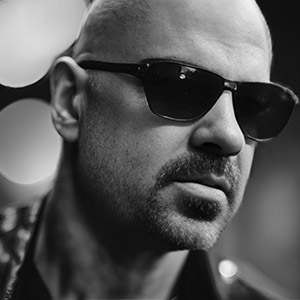
Sitting across from Lew Temple, you don't see the weathered prisoner Axel from *The Walking Dead* or the homicidal mania of a Rob Zombie regular. You see a man who has mastered the blue-collar art of the character actor. He’s a grinder. A survivor. And while the rest of Hollywood was clutching their pearls during the initial lockdowns, Temple was leaning into the chaos with the practiced ease of a man who hasn't known where his next cheque was coming from since the 1990s.
We’re talking about his latest turn in *Limbo*, a film that feels like a fever dream directed by a law professor with a penchant for the macabre. But before we get into the guts of the movie, we have to address the elephant in the room: the global freeze that turned the industry upside down. Temple doesn't sugarcoat the hit. He’s lived through enough pilot seasons to know that "postponed" is often code for "dead in the water."
"No doubt about that," Temple says, leaning back. "When it all started, I had committed to a television series that I was going to do and, for sure, two films, and they both were postponed. Just the idea of not knowing. That being said, I will say this, Dan, that an actor’s setup, fundamentally, his or her day-to-day is the unknown. That becomes your friend a little bit, the wisdom of the unknown. So we might be a little better prepared for how this has come down than some others, or at least that was my line of thinking. I felt like I was even in a better place to help serve other people that were on the ledge and missing a few paychecks. I get that because I lived that day to day. You often at times don’t know your next job, or you’re in the job and you don’t know where the next one’s going to be, or out of work even when you’re working."
It’s a gritty perspective. Most A-listers were filming TikToks in their mansions, but the character actors were doing what they always do: pivoting. Temple sees the struggle as a form of conditioning. If your entire career is built on the volatility of the gig economy, a pandemic is just another Tuesday.
"Some of us, if you look at it that way, you might have had a better preparation for it," he explains. "Not to say that it’s cool, because it isn’t and it wasn’t, that’s for sure. But at this point most of us are going stir crazy being in the house and ready to go out to work, which interestingly enough is starting to happen for sure with the independent films. Many of them are leaner and meaner than the big studios or the networks, the television networks, so that the indies seem to be getting out in the water first. With safe protocols, maybe also the work in Canada, I think, is going to bounce back a little bit sooner, from what I’m hearing, because it might be a little less union protocol to have to answer to. It is coming back. It will be different, but I think that everybody is just trying to be really safe."
But it isn't just about the logistics of the set. It’s about the cultural shift. Temple watches the world like a scout—which, as it turns out, is exactly what he used to do. He sees the parallels in sports and the arts, the clumsy restarts and the inevitable evolution of how we consume stories.
"We’re seeing this with our athletics, too," he observes. "The teams are getting back into the sports and they’re trying to make it happen. And they’re falling down, there’s some things that have happened that have been difficult, to say the least, and they’re just trying to deal with it. I don’t expect that we won’t experience that as well. It’ll be new and different, but I think it’s going to be great. I think we will come out of this with some new storytelling ideals, some new storytelling techniques. Even as an audience, I think maybe we’ll change some of our tastes and our palates."
He admits he’s been grounded in Los Angeles, keeping his sanity through a rigid adherence to his calendar. It’s a discipline that keeps the "stir crazy" at bay.
"I’m not sure that’s an answer to your question," he says with a shrug. "It’s grounded me. I haven’t been anywhere other than in the Los Angeles vicinity, the typical, maybe some day trips to the ocean, for sure. I have tried to be really active. I’m a student of my calendar, so I’ve maintained a to-do list every day."
That list included a massive literary undertaking. At the suggestion of his wife, Temple turned a classic Western novel into a community event.
"One of the very first things my wife said, 'You’re going to go crazy and that means I’m going to have to witness that or be a part of it, so you have to get a project. I suggest you read online, for free, the book Lonesome Dove, Larry McMurtry’s cattle drive up to Montana from Texas.' So I read that every day, 102 days, 102 chapters. After a few, I was like, 'People are going to get tired of my voice, I’m tired of my voice.' So I invited a bunch of friends to come in to read, and then I put it up on YouTube, so it’s out there. We did that."
And the work didn't stop there. Between the self-tapes and the scripts, Temple has been keeping the engine running, even when the borders were slammed shut.
"I got commissioned, I got to write a script, a South Texas fishing tale. I’ve read a lot of scripts, read a lot of books. I’ve kept up on my reading and I’ve had some auditions, some self-tapes for when things do come back, maybe I’m a consideration for a couple television shows, for sure. There has been three movies that have approached me to come work. Two of them just didn’t feel right, one was too early, and one was in the UK, which I can’t even travel to right now as an Americano. We’re not even allowed in the UK, or Canada I don’t believe for that matter. The restrictions are real and we're going to get through them though. I’m hopeful, let’s put it that way. I’ve tried to be industrious through all of this. And I hope everyone, in one way or another, during this pause can say, 'Look what I did. I did this. I did this 5000 piece puzzle, look at that. I framed it.' Something. I’m sure we all have something."
There’s a fascinating silver lining here for the indie world. With the tentpole blockbusters vacating the release calendar, smaller, more cerebral films like *Limbo* are finding an audience that might have otherwise been distracted by the latest CGI explosion. It’s a democratization of content.
"Well said," Temple agrees. "I think you’re exactly right. Not just that, because there’s a taste for it, because people are watching more right now and they’re devouring content. And eventually, they’re going to get to indies and they’re going to say, 'That’s a pretty good story. That was done really well, my gosh. I really took a ride on that.' I think a movie like Limbo gets more eyeballs, more viewing and more consideration than it might in previous times."
But it’s more than just eyeballs. The lack of work for the heavy hitters has created a bizarre marketplace where an indie production can suddenly afford a legend.
"Movies that are going out and being done, I know for a fact two of them that I spoke to, have been able to attract A-list talent that normally they wouldn’t. These are small movies that reached out to some big players, 'Hey, I’ve got a few days if you’d like to come work. We’ll be real safe.' 'Yeah, I want to get out of the house, I’m coming.' That’s changed the whole dynamic of that movie. All of a sudden with a big guy right in the middle of it that they would have had otherwise no other way of attracting that guy, but just the circumstances."
It’s a resurrection of sorts. For years, the mid-budget indie was an endangered species, squeezed out by the prestige TV boom and the death of the arthouse theatre.
"I do think indies, in a certain way, are resurrecting themselves because before that, with the advent of television, independent films were starting to fall down quite a bit," Temple notes. "There was no place to see them, the art houses were going away, and there’s so much to see in streaming and binge watching television, it’s hard for an indie to find their patch of grass."
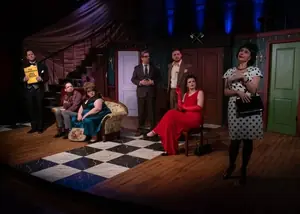
Now, let’s talk about *Limbo*. Watching the screener, you’re struck by the art direction—it’s a timeless, sterile purgatory that feels more like a bureaucratic nightmare than a lake of fire. It’s a courtroom drama where the stakes are literally eternal.
"Yeah. It’s a great premise and I’m hoping that A, everyone sees it and B, that everyone talks shop, coffee tables, over the theme. It’s the 12 Angry Men of your soul. It’s a courtroom drama and your soul is on trial, and in this case, my character Jimmy, his soul. It’s the examination of your life and how you’ve lived it, and the choices that you’ve made. They don’t pull any punches, they put it on full display. And at the end, which way you’re heading, north or south? I have a defense attorney from up above, an angel, Cassiel, and the prosecuting attorney across the table is from down below, from old scratch himself, has sent up one of his fallen angels to come get my soul."
The film leans heavily on its dialogue, embracing the "legalese" of the afterlife. It’s a gamble that pays off because it anchors the supernatural in something mundane and terrifying.
"There’s a lot of legalese and a lot of courtroom drama, as it goes, so it’s a good old-fashioned courtroom drama with a twist, no doubt. From the depths of hell, there are people brought up to testify and witness, and there’s from heaven some others that are sent down to speak on my behalf. You get caught up, as you do in courtroom dramas, how’s this going to go? We all love a good courtroom drama. And then there’s a twist, which I’m not going to allow to you right now, or your audience. But there’s this twist that I’m hoping you don’t see coming, this reveal, and it will really make you think, 'Ah, wow. Oh.'"
But don’t expect a dour, religious lecture. There’s a streak of dark humour running through the film, much of it courtesy of the legendary Richard Riehle.
"The movie has a lot of dark humor," Temple says. "There’s some literal humor, some jokes. There’s a courtroom stenographer, played by Richard Riehle, who’s fantastic. He tells jokes left and right in the courtroom, and they’re not very funny but the way he tells them is, so there’s a certain amount of dark humor. There’s drama. You get to see the life that my character Jimmy has lived through flashbacks and active scenes that are outside of the courtroom. But other than that, you’re in purgatory. The director-writer, Mark Young, he really set up this studio, the sound stage, the art direction, the shot composition, the lighting, it’s really a bizarre place. It’s timeless. So I just applaud him for all that he’s done because he really takes the audience to a place that they can envision purgatory, the waiting room, even worse than the DMV. It’s great, and I’m excited for you to see it, Dan."
Temple’s partnership with Mark Young is one of those rare director-actor synergies that produces consistently heady results. This is their fourth outing, and you can feel the shorthand on screen.
"I did," he says, recalling his reaction to the script. "This is my fourth project with Mark Young, the writer and director. He and I have a real similar taste in film and in storytelling, and he writes outside of the box but very heady material, and he spins things. It’s quite intellectual, his work, and I always appreciate it. And I’m thankful that he appreciates me, and he typically either writes something for me or at least asks me to take a look at something. When he sent me the script, I read it, I was like, oh yeah, this is delicious. I like this."
Interestingly, Temple didn't initially gun for the lead. He was eyeing the prosecution.
"I was interested in the role of Balthazar, who plays the prosecuting attorney for Hell, and he said, 'Yeah, you could knock that out of the park. But I’m thinking I want to go a little bit younger,' because the guy, he’s really hard-boiled and he’s jaded, and he’s seen it all, done it all. He’s really dismissive, no empathy. But he wanted to cast a youth in that role, somebody very James Dean with teen angst and father issues, father being God. And he cast this young man, Lucian Collier, who is delightful and perfect. It was a perfect choice, and you’ll see."
It’s the 12 Angry Men of your soul. It’s a courtroom drama and your soul is on trial, and in this case, my character Jimmy, his soul. It’s the examination of your life and how you’ve lived it, and the choices that you’ve made.
Instead, he took on Jimmy, a role Young had tailored specifically for his sensibilities. It was a production that required a "bring your own guacamole" mentality—actors who could show up and deliver without the luxury of endless rehearsals.
"Then he said, 'I sort of wrote Jimmy for you.' And I said, 'Oh, of course you did. Yeah, I see that. Yes, of course I’ll do that.' That was a no-brainer, and I loved the story. And I loved the prospect of going after this thing, which was challenging because we didn’t have a lot of time, we didn’t have a lot of rehearsal time, it’s a lot of dialogue. It requires a certain rhythm, it requires a pacing, and it also requires performers who are self-sufficient, so in other words, we didn’t get to fine-tune or tweak a lot of things. So we needed actors to come in and bring guacamole for the chips, and they did. It was great. I give Mark a lot of credit for his casting, and his casting director, Shannon Makhanian, who just seemed to put the right people in the right place. These actors, they just all delivered the mail, to be sure. It was really great, it was fun."
Temple has a habit of drifting toward the darker side of the human condition. It’s where the "layered" stories live. He’s not interested in two-dimensional villains; he wants to find the "beautiful little baby" buried under decades of bad choices.
"I feel like those are always the layered story," he says of his darker roles. "I try to always find the good in my characters, and then where did they go wrong? Where can I present them to an audience to show them where it went wrong? There are some characters I’ve done that don’t have any redeeming quality. That’s work, that’s tough. The darker stuff, I think it’s just more layered, it’s more complex, and it’s more fun, frankly, and you’re doing more work."
In *Limbo*, the challenge was internal. Jimmy is a man of violence, but purgatory doesn't allow for physical outbursts.
"This particular role, he doesn’t have a lot of redeemable qualities on the surface, but when we start to see his life, we recognize why he has a propensity for violence, that’s Jimmy. Yet Mark was really great at keeping me penned in. In purgatory, you don’t get to have outbursts of violence, you don’t get to hit, you don’t get to throw things, you don’t get to push and shove and break through. So you have to do this in other ways, with your emotions, and be confused, and be in disbelief and be bewildered and afraid and angry, and then hopeful. Then get engaged in the trial of your life, we’re going to win, and there’s this other thing, and then get close and this might actually happen. All those were incredible, great challenges to get to do as an actor, so that’s what I look for in the darker characters, for sure. Also, believe it or not, I try to find something likeable about the guys that I present. And again, not always. Sometimes you just can’t find that. But typically, we all were little boys at one time, all beautiful little babies at some point, so if I have to go back that far, sometimes that’s where it starts and ends, right?"
Of course, we can't talk about Lew Temple without talking about *The Walking Dead*. As Axel, he was the heart of the prison arc, a character whose "you follow me?" catchphrase became a staple. Temple’s entry into that world was almost accidental, a byproduct of his reputation in the horror community.
"No doubt," he says, acknowledging the passion of the fanbase. "That’s a great description of the audience. On the show, we refer to the fans as the audience because we think they’re more than just fans. They participate in the show, and there’s this symbiotic relationship. What they need to happen, somehow we deliver, and it just seems to work. That show came across my desk as a graphic novel, comic book, years before, because as you mentioned, I’ve got a bit of a pedigree in the horror genre through Rob Zombie and whatnot. This comic book came across my desk, The Walking Dead, and I thought it was very cool and very violent. And someone referenced, 'This is going to be a television show.' And I said, 'No way, can’t put that on TV. You’re not getting away with that.' And I guess they are."
He actually auditioned for both Dixon brothers before landing the prison-bound Axel.
"They invited me to come in and audition for the role of Merle, and I did. And thankfully, they hired Michael Rooker for that role. A few weeks later, they asked me to come in and audition for the role of Merle’s brother, who didn’t have a name at the time or even any dialogue. Just read Merle’s lines again but do them different. And thankfully, they hired Norman Reedus to do Daryl. So by the time Axel came around, they were well aware of me and they thought that would be a good fit, and I was happy to be offered that opportunity."
And that famous handlebar mustache? That wasn't a character choice—it was a Disney mandate.
"At the time, I was doing a movie for Disney called The Lone Ranger. I had a big western handlebar mustache, and I wasn’t done filming. The two schedules were going to have to coordinate, and I was nervous that I’m going to go do this television show, they’re going to want to shave this mustache off and I’m not going to be able to grow it back. They assured me they weren’t, so that’s how the mustache came to be on Axel in The Walking Dead. But that show is amazing, and for all the reasons that you can imagine. Just a collaborative effort, there’s no hierarchy, there’s no divas. The producers, the writers, the directors, the cast, the crew, camera, wardrobe, hair, makeup, everyone’s pulling on the same side of the rope. And I think that’s attributable to why the show does so well."
But in the world of Robert Kirkman, no one is safe. Temple knew the end was coming, even if he tried to bargain for his life.
"They tell you that, you don’t believe it though, because that’s not how they invite you in," he says with a wry smile. "They don’t actually say, you’re going to get killed on this show. They actually say the opposite: you’re going to be here for a long time, we’re so happy to have you, and we can’t wait for you to get started, whatever you need. And just help us, we’ve been looking for your help for a long time. They make you feel so welcome and part of the family. You don’t think it’s going to end. When it does, you’re like, damn, that’s right. People die on this show."
The notice was short. Three weeks to process the end of a career-defining gig.
"For me, they let me know three weeks in advance, and you do what I like to call the denial bit, where you try to talk them out of it like, no, don’t take my guy. What about this Allen character? He’s a real asshole. Why don’t we take him out? And finally, they’re like, no, it’s going to be you, Lew. And you’re like, okay. You resign yourself to the idea that you’ve got a job to do. I look at it as honoring your character. You should honor the life of your character and do a good job in sending him out. That was my whole approach to acting."
Shooting that final scene—a sudden, mid-sentence bullet to the head—was a surreal experience. The production schedule meant he had to die and then come back to life to film the "pre-death" scenes.
"Yeah, it was," he says of the shock. "Then you don’t want to telegraph it. That’s the hardest thing, is to go to work every day as if it’s not happening. For instance, I actually shot the scene, it wasn’t the last scene I ever did, I actually shot the scene then had to go to work the next day and shoot a couple other scenes on the front of it. I had already been killed off, now we got to shoot the rest of the episode. You’re trying not to let it affect you, but it does, not just as a performer but as a friend on set, because you really have built these relationships. It’s hard on the cast and crew because you’re a teammate, and you’re doing a certain job on that team. And they recognize, shoot, every time we lose one of our teammates, our team’s a little weaker, so it’s a link in the chain. How are we going to replace this guy? How are we going to replace this actor? And they do, they replace them. The next guy or next gal comes in and does a great job, because they invite them in. They select well, there’s protocols in place. They do a great job. I haven’t had many experiences that are better than The Walking Dead, as far as the build of the show."
The fame that followed was its own kind of madness. Suddenly, a trip to the local coffee shop became a press junket.
"That's crazy. At the time, I really wasn't aware how visible you become when you're on the show, to the point where even going to a Starbucks you're recognized. People are wanting to say hello, take pictures, buy you a cup of coffee. People are giving their camera to my six-year-old daughter to take a picture of me and this guy. It's crazy. The support is so great, and so honest, and as you said, so passionate. People think they want to know spoilers, but they really don't. Nobody wants to really know, that's why they watch the show. That's why it's called fishing and not catching. We want to have that experience. I think that's a big part of it as well."
The convention circuit keeps that connection alive. It’s a nomadic family reunion that spans seasons and spin-offs.
"For sure. It's like a family reunion, and it's really because the show's grown so much. When I started the show, Season 3, long time ago, we were new blood. The show hadn't really evolved past the survivors. They had been at Hershel's Farm for the entire Season 2, and they hadn't really brought a lot of new players in. All of a sudden, The Prisoners were there, people were really excited to see some new faces, new blood. Then at Woodbury, and then they end up in Terminus, and down to Alexandria and then Hilltop, so the show has just exponentially grown. Now, we have all these brothers and sisters and stepbrothers and stepsisters, and cousins of this family reunion at these conventions. Because you're still watching the show and you're part of the audience now and you're like, oh dude, you're doing such good work or, man, how'd you get away with that? We never got to do that in my day. It's interesting, and it's really a lot of fun, and there's a ton of mutual respect. It is fun. Everyone's got their core family, but then it's bigger than that. You're always part of the family. Somehow, Negan and I will always be attached based on The Walking Dead."
Temple is one of the actors who truly embraces the fan interaction. He doesn't see it as a burden; he sees it as a focus group.
"Yeah, and I think the show promotes that," he explains. "From my experience, AMC and the production, The Walking Dead, they want us to be supportive of the audience. They appreciate us. They don't want us dragging in Monday morning tired because we've flown all night to get back from a convention. They're not an advocate of that. In fact, if that happens once or twice, they'll let you know and they put a stop to that. They are still the boss. But they don't mind us engaging with the audience, and they appreciate the fan base as much as we do. I always like being out because I think it truly gives you a pulse of what you're doing, how your work is, how is the show's work, what's ringing true, what's not. The audience will let you know. They'll say, you guys are flat boring. Too much talking, not enough Walkers. Okay, I hear you loud and clear, all right."
He notes that not everyone is built for the spotlight. Some, like Andrew Lincoln, were simply too busy carrying the weight of the show to mingle.
"I certainly appreciate it. Most of us do. There's a few, for instance Andrew Lincoln, he has a lot of work to do. When I was on the show, and up until Season 5, all roads led through him, so it was a huge load he was carrying. He didn't actually have a lot of time to be able to go and do those things. And he has a certain privacy that he maintains, so he may be somebody that's not out a lot. Someone like Jeff DeMunn, who played Dale, he's a rather natural private and shy person, so maybe he doesn't expose himself, just by asking who he is. Melissa McBride, who plays Carol, is quite shy, and yet she still goes out and mixes up with the audience. There's personality traits too, but for the most part, I think the cast is really available."
Then there’s the Rob Zombie connection. Temple has been a mainstay in Zombie’s world, from the grimy country-horror of *The Devil’s Rejects* to the masked brutality of *31*. He even ended up with a record deal out of it.
"I did The Devil’s Rejects, for sure, where I played Adam Banjo, who was a musician. And I actually put out an album for that film, called the Banjo & Sullivan Custom Release. I wrote 10 songs with a buddy of mine, Jesse Dayton. We went to Pedernales, Texas, at Willie Nelson’s studio, and recorded this album of all original bluegrass country songs. We got a record deal with Universal on that, and it’s really great. The next would be Halloween, Rob’s first Halloween. That was a character, Noel Kluggs, which wasn’t easy to find his redeeming qualities. The third movie I did, I made an appearance in Rob’s only animated feature, called The Haunted World of El Superbeasto, as my character Adam Banjo from The Devil’s Rejects, so I did that. And then I did a movie that he did, it’s not his most recent but the one before that, called 31, where I played a character named Psycho-Head. And that’s probably the least redeeming character I’ve ever played. You talked about the dark side, I talked about wanting to find likeable qualities in my characters, this guy had none. So it was a tough job, but I think we were able to pull it off. Rob Zombie is a hell of a storyteller."
Working with Zombie is a masterclass in preparation. The rocker-turned-director doesn't do "gray areas."
"I’ve seen it, I have," Temple says of Zombie’s progression. "You always understood, first and foremost, he’s a performer. If you go to one of his concerts, you’ll recognize that immediately. His energy on stage, his performance on stage is second to none, so you recognize he knows what performance is. When he’s directing, he understands what a performance requires, and preparation, so he can walk the walk, let’s say. Also, he’s a huge fan of the genre, and he knows it. He grew up with it, so he has really great taste for what he likes. I always say about Rob, he wants what he knows and he knows what he wants. There’s not really any gray matter in between. I saw him progress from being someone that knew he could tell a story with the help of others, a huge respect for actors and filmmakers, DPs, sound department, wardrobe, makeup, and then continue to gain competence in that realm. I can even do better. And then also have the confidence in his ensemble of cast members that he can just put in and push play and know that they’re going to bring it, and bring something great to the party, and that avails him to go work with newer actors that he hasn’t worked with. He’s really smart that way. He knows his audience, he knows what their needs are, their desires and their expectations, so he’s able to deliver. He’s a great filmmaker, he’s a great storyteller, he knows how to tell stories."
It’s that reliability that keeps directors like Zombie, Mark Young, and the late Tony Scott calling. They know Temple is a "team player" who can pivot on a dime.
"Well, I feel like they recognize they can ask me to do things," he says. "They know I’m going to bring something. Rob always says, 'You’re the actor, I wrote it, but you’re the actor and I brought you in to do something with it. So thank you.' And I do, I take a lot of pride in preparation. But I also want to serve the story, first and foremost, so if I’m off track, let me know and I’ll adjust. They also appreciate that. I’m a guy that is able to adjust rather quickly or pivot. There was another director that I’ve worked with quite a bit named Tony Scott who, God rest his soul, he’s passed away, but he did a lot of action movies. And I had done three with him: Domino, Deja Vu, and Unstoppable. I fit a certain character that these guys have a need for, and then they like to mess around with that a little bit. Rob will say, for instance in the last two he’s like, 'I don’t want you to be just the good guy. I want you to be the real jerk in these two movies, and see how dark we can get you. I want you to be a real piece of work during this film.' Let’s see how much we can push the envelope. He has confidence and comfort in doing that with someone like me, and maybe the other directors do too. I think that I’m a team player, I’m likeable on set, I try very hard and I think I deliver, and some directors probably appreciate that. I’m a good teammate, yeah."
But pushing the envelope has its costs. Living in the skin of a character like Psycho-Head isn't exactly a vacation.
"Yeah, for sure, to the point where I'm like, 'Are you sure, Rob?' He goes, 'Yeah, keep going.' There were moments I would be like, oh my God, this guy. You got to go home with him because he's got to come back tomorrow. We're not done with him just yet. Psycho-Head was hard to live with, I can tell you."
It’s a far cry from his beginnings. Before the blood and the zombies, Temple was a minor league ballplayer for the Houston Astros. His transition into acting is the kind of "only in Hollywood" story that involves Charlie Sheen and a girl in a theatre class.
"I love that movie, but I love baseball more," he says of *Angels in the Outfield*. "You talk about passion, so that would be my first passion. I had been a player in the minor leagues with the Houston Astros. And then I was hired, when they figured out I really wasn’t a very good player, they said, you’re a good guy, getting back to being a good teammate. Would you like to coach? I did that for a while, and then I realized I’m picking up guys’ helmets, I’m not really into that. Then they said, why don’t you go scout? We’ll teach you how to go out and look for players, which I did for a long time. They were impressed and said, why don’t you come to the front office and we’ll teach you how to be an executive?"
He was on the corporate fast track in Houston when he literally followed a girl into a new career.
"I was in the throes of doing that, and this is a long story but it’ll sort out, I’ll try to get you through it. I’m in Houston, I’m an executive, I got a salary and expense account and a car. I’m traveling around looking for players. Then I see a girl walk into a building, and I’m single so I go to chat her up, maybe get a date. And it was her theatre class. I saw what they were doing on stage, and I said, 'Those are my people. That’s what I do.' Thinking I could do that, which I couldn’t. But in the meantime, there was a movie being filmed in Houston, Texas called The Chase, starring Charlie Sheen. On his nights off, which were often, he would rent the Houston Astrodome in preparation for Major League II, this movie he was going to go do. And he needed a workout partner, and I was perfect. So he and I were working out."
That connection led him to a fork in the road. He could be Sheen’s "caddy" or he could strike out on his own.
"Then he had a birthday party, I think his 30th birthday, and a bunch of executives came in, friends of his from Hollywood, and Charlie had kept saying, 'You should come do Major League II with me.' And I was thinking I should do that, I will. Then they said, you don’t want to be Charlie’s caddy. Why don’t you come and do our movie in the Bay Area in San Francisco, Oakland and Los Angeles. Come do Angels in the Outfield. I thought, why don’t I start out on my own? I’ll do that."
He took the leap, spending two months playing catch with Matthew McConaughey and realizing that the "nest" was about to be kicked out from under him.
"I went out and played catch with Matthew McConaughey for two months, and had one line I think in the movie but had a great time. During that course, I had taken my vacation, so I still had a job with the Astros. But the team got sold, and there was a new person running the team, and he called me, someone I knew, Bob Watson. And he said, 'Lew boy, you don’t have to hurry back.' And I was like, uh oh, I know what that means, so I did hurry back. And he said, 'Look, I’m not going to fire you, but I’m not rehiring you because I see this passion in acting you have, and I know baseball’s a lifetime pursuit. It’s eaten most of our lives up. If you stay in this game, you’ll never pursue that, so I’m kicking you out of the nest.' I was not happy about that, because all of a sudden now I didn’t have a job or an expense report or even a car. So I went to Brooklyn College to learn to become an actor, and his voice echoed in my mind, that baseball could call and offer me a job back in and I decided I’m not going to do that, I’m going to try acting. I really had two great careers that anybody would be ecstatic with, and I am as well. That’s a long answer to Angels in the Outfield, but it does serve a story, through Charlie Sheen and my baseball and the fact that I really played baseball, and helping him get his skill set up to go do this movie, and then another movie invites me. It just snowballed, and it’s really what’s great about life and about acting."
It’s an odd transition, but one that Temple views with a simple clarity.
"So odd. It so worked, yeah. Somebody would just go, well, at the end of the day it's always about a girl. I followed her. Maybe it's as simple as that. Maybe axioms are really simple that way. But the devil's in the details, so that's what I love about storytelling, the details."
As a former scout, Temple still has an eye for talent. He’s seen the greats before they were household names.
"I saw so many amazing players," he recalls. "The one player that I signed who did so well in his major league career, he made it to the major leagues and had a great career is a guy named Luis Gonzalez. He won a World Series with a single up the middle for the Marlins. I saw Chipper Jones as a high school boy, and he was such a great player. Mark Prior I can remember watching pitch at USC. We had guys in Houston, Craig Biggio and Jeff Bagwell, they were so talented, and just so many good players. For me, maybe the best guy that I ever saw was actually a guy that I played against. For me, it's Barry Larkin, the shortstop for the Cincinnati Reds. There's so many good players. We're playing baseball now, as you well know, your Toronto Blue Jays playing in Buffalo."
The idea of the "Buffalo Blue Jays" is a testament to the strange times we live in, and Temple applauds the Canadian caution that led to the relocation.
"I know. But I applaud Canada for holding tight with that, because as it's now shown, there's been a lot of problems. We're going to get through them, but these guys, they bring a team of 19 players that test positive all of a sudden into a city, and Toronto doesn't want that. I get it. It'll work itself out, they'll be the Buffalo Blue Jays this year."
Temple is no stranger to Canada, having filmed in Edmonton and Vancouver. He sees the Canadian film industry as a powerhouse that will likely lead the recovery.
"A little bit. I've been to Edmonton, and I have been to Vancouver filming. Canada's beautiful. It's a big place. Production is happening in Canada, I made mention of it. They're doing fine. Canada will be the front of film-making. They're pretty self-contained. They've got crews, they've got talent, they've got casts. There's a Canadian talent pool they can draw from. There's incredible infrastructure, as you know, to make films there. I think the financing works. Obviously, it's a little less expensive to film in Canada than in The States, so Canada's going to come out doing okay. They're going to be good."
So, what’s next for the man who has seen it all? He’s looking for wide-open spaces and stories that challenge the status quo.
"Well, we're going to get through this with health and safety and respect, it's everybody's choice to do so. And I'm looking for the best opportunity to go out and work again. I have, as I mentioned, turned down two projects. The one was in the UK, it's going to get pushed to April. I'm up for a TV show that could happen the end of August in Montana, the Big Sky Country. They're really looking to do production in low-populated areas, so it bodes well for the Western, for the period piece. They can get out in the big wide open spaces and feel like they're not exposing people. So look for a little more Westerns to be made, and of course, that's Calgary country. That's Montana, that's Wyoming, that's Winnipeg, Windsor, I don't know. I'm looking to get out and get busy going, and always pitching projects. There's an H.P. Lovecraft story that I've got a showrunner and a script and a bible, and I just want to get that thing going, because I love H.P. Lovecraft's stuff. I'm excited, I'm hopeful and excited, cautiously. But probably less cautiously, more hopeful."
Finally, there’s *Timecrafters: The Treasure of Pirate's Cove*, a project that sees Temple stepping into a producer role.
"What's next specifically, in September, I've got a movie coming out called Timecrafters: The Treasure of Pirate's Cove, which is modeled after The Goonies. It's an old-fashioned time-traveling pirate story, where the pirates are transported from 1700 battle in the ocean to seaside, modern day Renaissance Fair pirate days, where the pirates fit in with all the reenactors. And they're looking for their treasure, and our five young, 12-year-old heroes find it and hijinks ensue. It's a good family adventure film, which I'm really excited about because I helped produce it, which was a lot of fun. We've got Malcolm McDowell playing our villainous Captain Lynch, and Eric Balfour as our swashbuckling Errol Flynn type, and Denise Richards is our ingenue. I'm excited for that, Timecrafters.