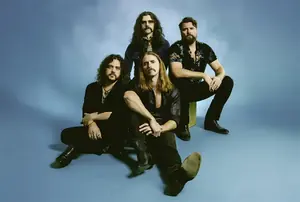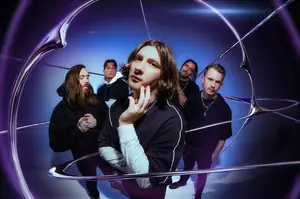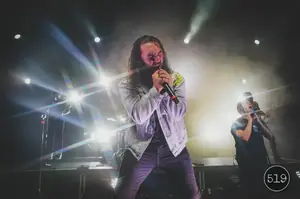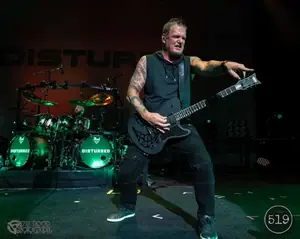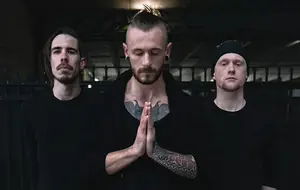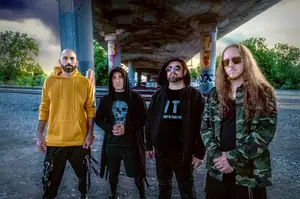

Holding the physical gatefold of *Sleeps Society*, you feel the literal weight of a rebellion. It is a heavy, matte-finished slab of defiance that smells of fresh ink and Sheffield grit. This is not just another metalcore record birthed from the sterile boardrooms of a major label. It is a product of a localized insurrection. While She Sleeps has spent the better part of a decade grinding through the gears of an industry that seems designed to starve its creators. Now, they are burning the old blueprints.
The Sheffield five-piece is not just playing shows; they are running a decentralized fan-state. By launching the "Sleeps Society," a member-based business model, they have bypassed the traditional gatekeepers who usually hover around the "honey pot" of artist revenue. This is a 1-to-1 relationship with their audience that makes traditional crowdfunding look like amateur hour.
I sat down with lead vocalist Loz Taylor to talk about the mechanics of this shift. He looks like a man who has survived the gauntlet of the touring circuit and come out with a clearer vision of the math behind the music. We started with the name itself. It is not just a title; it is a manifesto.
"With this record, the initial campaign was about us trying to let our fan base in on a few industry fractures, and just trying to say, look streaming now is not in 95% of all music, that’s sort of digested. That’s how we’re doing things now. We don’t really feel like the industry has taken that many steps to move with it. There are a lot of social media platforms, and a lot of things for bands to be doing. But these platforms aren’t really, especially streaming, paying back what they used to back in the day. Times have changed, and I think for us, we were just wanting to address our fan base and approach some of these different problems that we’re having, and just basically drop the smoke and mirrors and say, to our fan base, look, we feel like we have a new way of operating," Taylor says.
The honesty is jarring. Most bands at this level maintain a facade of effortless luxury, pretending that a million Spotify streams translates to a mansion. It does not. For a band in the heavy music sphere, those streams barely cover the petrol for the van. The "Sleeps Society" model is an attempt to fix the sustainability leak before the ship sinks.
Taylor continues, "It’s going to be good for anyone that wants to get involved and will also work in favor of making our journey more sustainable, so that we can focus on what’s important."
But the rollout was not a quiet affair. They treated it like a political coup, complete with a broadcast that felt more like a call to arms than a marketing pitch. It was about transparency—showing the fans the gears behind the curtain and asking them if they wanted to help keep them turning.
"Initially out of the gate, we had a press conference at the forefront, addressing a few of those things, and just basically saying look, let’s rally together and if we’re an important band for you, then you can support us in this new way that we’re trying to create with the Sleep Society. It’s going to help sustain us and keep us going for another 10 years, if it works. That was the initial thinking behind it," Taylor says.
The gamble paid off. In an era where "community" is often a buzzword used to sell overpriced hoodies, While She Sleeps actually built one. They utilized Patreon, but they did not treat it as a digital tip jar. They treated it as the primary engine for their creative output.
"So far, it’s been amazing. It’s proven to be really successful for us. I think the model that we’ve created with that, although Patreon is how we run it, isn’t necessarily anything new. I think a lot of people in the past have used Patreon like a side hustle, just for anyone that’s interested, they jump in there. We’ve pulled that to the forefront of our campaign and said, 'Look, bands, like ours need to be thinking about using this as an engine to fuel the ongoing of the band and to keep them running because if you have people that care, there’s a place and a community that you can build that will help you make it more sustainable when at times it can be very, very difficult.' That’s what the thinking was behind it and that’s what we came out the gate with for this campaign," Taylor says.
The reality of the streaming era is brutal. Unless you are moving numbers that rival the population of a small country, the cheques are insulting. I have seen artists with gold records on their walls who are still working day jobs because the digital royalties do not cover the rent.
"Yeah, it’s insane. I think that, if you’re like Justin Bieber and the numbers really work in your favor, you’re not really sweating it too much, but it seems like genres like Punk Rock, Metal, Hardcore and Post Hardcore are the lifeblood of a lot of countries and they need the boost," Taylor says.
There is a cultural cost to this financial squeeze. If the underground can no longer support its artists, the next generation of innovators will simply find something else to do. We are at risk of losing the "Hendrix" of the 2020s to a spreadsheet or a soul-crushing retail job.
"They’re the soul of the underground scene and the demand is there, but it seems like those are the genres that are going to struggle with this balance of trying to find out how can we have this many listeners on the streaming platforms listening in, but on the other side of it doesn’t get reflected in that way. So I think bands are really starting to feel that pressure and starting to think outside the box as to how we can move within this industry to make it sustainable. The scary thing for us is, obviously, initially we’re thinking about ourselves, and how we can change our situation, but we want to be able to turn around to our children’s children that might be into new metal or rock or punk and be able to say, look, they were the best years of my life. I managed to sustain a career through it, we don’t want it to turn into a situation where, we’re trying to steer our youngsters who could be the next frickin Hendrix and steer them away from an industry that’s just turned to, not being able to work in," Taylor says.
This is not just a theory anymore. Other bands are watching While She Sleeps and taking notes. The DIY ethic, once confined to basement shows and zines, is now being scaled up to global proportions.
The message is hugely important and it’s even opened up conversations between our intimate family and our partners and close friends just by saying, we’re releasing this song that has mental well-being attached to it. It’s opening up conversations, it’s breaking down the stigmas, and that’s what we wanted. If it can help a handful of people in that way, then it’s done its job for us.
"We’ve already had a few people turn around and say that the model is working for them and they’ve tried to do what we’re doing. For us, it felt like we’re one of those bands that, the ethic behind the band is very punk rock and very DIY, and we’re not scared of sticking it in the elbow grease. So it just felt necessary to stick our neck out a little bit, address our fan base in this way and say, 'Look, from now on, we’re going to try and move it this way.' And they answered. They were really, really positive about it. We’re lucky to have the fan base we have to be honest," Taylor says.
Some might assume this pivot was a desperate reaction to the pandemic, which saw the live music industry go dark for months. But the seeds were sown long before the world went into lockdown. It started with their 2017 record *You Are We*.
"Definitely not. I think what birthed this idea for us was our record 'You Are We' which was two records previous to the new one. We released that through a pledge campaign and it was the first time we stepped out more independently than ever before. We were just in a situation where people will like working for our band and sticking their hand in the honey pot, so to speak. But there weren’t that many mistakes happening or things going wrong to come in and correct the mistakes. When that’s the situation you’re in, it’s crazy thinking that people are taking money from you," Taylor says.
The "honey pot" is a perfect description for the layers of management, labels and agents that often drain a band's resources. By going to a pledge model, the band learned that their audience was willing to carry the weight if it meant the music stayed pure.
"The thinking behind that campaign was to reach out to our fan base initially and say, 'Look, if you care about this band, we’re going to try and pledge the album.' At the time, it was a bit nail biting and we felt if this goes wrong, how the fuck are we going to release this record. But again, our fan base stood up, and people really got behind it and the thing is with the pledge campaign, if you don’t hit your target, then everyone gets refunded. And that’s it. But we tripled our target. Everyone was really behind this. It was a very successful record," Taylor says.
That success was the proof of concept. It showed that the middleman was not just unnecessary; he was an obstacle. When you cut out the bureaucracy, the connection between the artist and the listener becomes visceral.
"I think that for us, it sparked this whole journey, where we started thinking, if that worked so well, and previous records felt like they didn’t go that smoothly, then what are the pros and cons to doing it in both ways? And what are we gaining from this that we haven’t before? And I think it’s just that whole situation cuts out so many middlemen, you know we’re not saying that we can do it without anybody, because there’s definitely people that are really helping our band right now and they’re definitely important. But at the same time, if we want to create a product that’s made in house by us that go straight to the fan base, and I think when the fan base feels like they’re supporting you, and no one else, they really, really turn up and they really get it done. So I think that was the whole birth of this," Taylor says.
This does not mean they are elitist. You do not have to be a paying member of the society to enjoy the noise. But the society provides a foundation that allows the band to exist on all platforms more effectively.
"So you fast forward two years, and we’ve taken the elements of that and just really tried to think, where can we go with this? Obviously, for anyone outside of the Sleep Society, we’re not discouraging any of that, we’re very, very much appreciative of anyone, whether it’s listening on streaming platforms, turning up to a show, grabbing a shirt, keeping an eye on us and checking us out for when we come through your town - all of that is crucially important, and we love it. But for people who view us as their favorite band, they love it to the point of wanting to help us in this way, then that community is there. It’s helping us compartmentalize, how we approach our different audiences through social medias now through the Sleep Society, whether it’s just streaming YouTube, so it’s proven to be really good. And I think it was born from the 'You Are We' record and doing things in that way, that stemmed to where we are now with the release of this record and the campaign," Taylor says.
Musically, *Sleeps Society* is a departure. It is not just a collection of breakdowns and screams. There is a texture here that feels more industrial, more experimental. Holding the record, you notice the production credits. They are pushing into territory that sounds like a collision between a rave and a riot.
"I think that, again, going back to the 'You Are We' record, the album really gave us confidence in the fact that our fan base were really behind us and I think sometimes it’s quite easy to live inside the bubble of people blowing smoke up your ass telling you that you’re the best deal, and, you believe in that. We’ve been through a roller coaster of different things like dealing with throat surgeries and having to cancel tours - sometimes you just get sucked in and you’re in the smoke," Taylor says.
The sound has evolved beyond the rigid confines of metalcore. There are vintage synths that feel plucked from a 90s warehouse party, adding a layer of grime and energy that is often missing from modern heavy music.
"We all bring a lot of different genres to the table and like a lot of different styles of music. So we always wanted to branch away from just being a metal band. You’ve seen us experiment more now with vintage synth, at times sounding like Prodigy, it’s kind of crazy. Sean’s got into all this vintage synth sounds. I’m personally trying to do a lot of clean vocals as well as work on my screaming techniques. Because, again, I want to feel like I’m progressing. And I feel that because we have such a strong fan base, it’s letting us like do things that, if we were quite conservative in that way, we wouldn’t push ourselves and push outside the boundary. So we like a lot of different genres as people and we’re just trying to showcase that, trying to stay current and interesting. It keeps our fan base on its toes and not trying to rewrite the same record twice. Hopefully, that’s what our fan base is hearing and we’re just trying to push the boundary and keep growing as artists and musicians and keep trying to write songs that resonate with people and write lyrics that people connect with," Taylor says.
There is a specific sonic identity to While She Sleeps that keeps them from falling into the trap of sounding like every other band on a "Metal Essentials" playlist. Sean Long’s guitar work is the secret weapon—it is technical but never feels like he is just showing off for the sake of it.
"I think one thing that’s really special about our band is that when we set out, everyone has their influences, but we made a point of not wanting to sound like anyone else. My deal has always been, why would I want to sound like anyone else, I want to sound like me. So I think that’s something we’ve always had in our heads, let’s not try and sound like anybody else. I feel like, a lot of the time in metal core as a genre, it’s very easy to sound like a lot of other metal core bands. I feel like for a little while, metal core turned into a bit of a dirty word, how Emo did back in the day, it was cool for a bit, and then it changed up. But we’re very lucky the way that Sean Long plays guitar, and the way that we utilize our voices within the band means that no one else really sounds like us. Hopefully, in the future we can stand by that and that’s what makes a great band is the fact that, as soon as you hear them, you know that sound and you know what they sound like. So that’s something that we’re trying to polish," Taylor says.
The single "You Are All You Need" is perhaps the best distillation of this ethos. It is a face-melter that manages to be melodic without losing its edge.
"'You Are All You Need', for me feels like the perfect While She Sleeps song. It harnesses all the elements that to me make While She Sleeps who we are - and it’s heavy, it’s fast paced, it kicks in, but then it’s also very anemic and melodic. It has one of my favorite guitar licks on the album that melts my face every time I hear it. I think the one thing about Sean’s guitar playing is it’s not necessarily like showboating. It’s reserved on purpose. And the sounds that he produces is modest. But he’s always going for what sounds best, and so that specific section for me, when it kicks in there in 'You Are All You Need' just always melts my face. I could listen to Shawn play it forever. The messages are there, we try to bring positivity to people, but in a metal and rock way. I think that song is very typical While She Sleeps, and for that reason, I think it’s really great," Taylor says.
Then there is "Nervous," a track that tackles the isolation and anxiety that has become a global epidemic. It started as a raw acoustic demo from Sean Long during a particularly dark period.
"Nervous just came out of nowhere in terms of the demo. Shawn was going through a lot at the time, and I think that’s what’s important about this song for us all, but initially, Sean sat down with his acoustic guitar when he was going through a really shitty part of his life. And it really felt like he needed to write that chorus, he felt very, very nervous and he was anxious. He might have been depressed at the time. I think it’s all part of trying to find balance in his life. That resonates with all of us. We’ve all gone through stuff at times, and I think that it’s quite easy to overlook, if you have some sort of issue or, when you’re feeling your lowest, it’s quite easy to just feel like you’re alone in that and not really know how to talk to anyone about it, or resolve that what you feel is the problem," Taylor says.
The song has become more than just a track; it is a conversation starter. In a genre that often prizes toughness above all else, While She Sleeps is advocating for a different kind of strength—the strength to be vulnerable.
"For us, especially now that the pandemic is a thing, and the demo was being written sort of pre-pandemic, but as the pandemic has gone on, people are more isolated. The message is hugely important and it’s even opened up conversations between our intimate family and our partners and close friends just by saying, look, we’re releasing this song that has this, mental well being side of things attached to it. It’s opening up conversations, it’s breaking down the stigmas and that’s what we wanted, really. If it can help a handful people in that way, then it’s done its job for us. It feels like it’s necessary at the moment and hopefully it can feel like an anthem of the time. I think people need to really let go and feel like they’re not alone right now, even though they are probably isolated and a lot of people feel very similarly to how others are feeling. That was important for us to make sure we pushed it out in the right way and that people understood the message, and we hoped it could do good things," Taylor says.
The collaboration with Simon Neil of Biffy Clyro on the track adds a level of prestige that fits the song’s anthemic quality. Neil’s voice brings a different texture, a stadium-ready grit that complements Taylor’s delivery perfectly.
"We’ve got Simon Neil from Biffy Clyro involved, which for us is amazing. Matt Welsh, our guitarist said the other day that they’re like the UK version of The Foo Fighters - they’ve done hugely successful things in the UK and Simon Neil’s an amazing front man with a great voice. It was amazing to have him on board with a song and he firmly stood by the message that we’re trying to deliver. It really brought some fresh vibes to the table with the song. We gave him the structure and the demo and just said kind of have a go at it, don’t feel restricted in any way, just enjoy it and see what comes back. We pretty much left everything that he worked on in the song because he did a great job of ad-libbing in between what we already had down as the structure. His voice really lends itself to the more anthemic side of While She Sleeps. We thought it merged nicely with what we had going on already in terms of the lyrics and the voices. He brought some really positive energy and he was a pleasure to work with. So it was really special," Taylor says.
Ultimately, While She Sleeps is more than a band. It is a lifestyle. It is a refusal to play by the rules of a broken system. Taylor has been in this game for 20 years, and he has no intention of slowing down or selling out.
"Definitely, definitely, I’ve been doing it so long and it’s not for any other reason other than, we’re passionate about it; we love doing it. We haven’t gotten to where we are now by wearing sunglasses inside. For us, it’s about being as real as possible, really bringing down the smoke and mirrors and not trying to put ourselves on any sort of pedestal. It’s literally about the sense of community. I feel like if I wasn’t in While She Sleeps, I’d still be a part of this community in some way. I would still put rock shows on in my local hometown when I can. I’m still a part of this scene and it’s been a part of that community that got me involved with it in the first place. It’s definitely something that we feel strongly about. It’s definitely a way of life. I feel when you’ve been a vocalist for this long, and you’ve been in bands for this long - going on 20 years - it’s in your blood. We really don’t take it for granted in any way," Taylor says.
The *Sleeps Society* record is out now. If you want to be part of the future of the industry, you know where to go. The old world is dying. While She Sleeps is just building the new one.