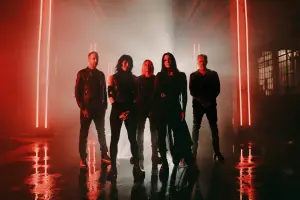


The Windsor-Essex music scene has a habit of producing grit, but rarely does it churn out something as surgically precise as I See Aura. Standing in the back of a cramped rehearsal space or watching their digital footprint explode, you get the sense that Josh Hinch, Mike VanCouter and Nick Predhomme are not interested in the standard local bar circuit trajectory. They are currently the most aggressive blip on the radar coming out of the Chatham-Kent and Windsor corridor.
The sound is a volatile cocktail of rapid-fire technicality and guttural vocal work, balanced against melodic interludes that feel almost too sophisticated for a band this young. They are the "ones to watch" in 2021, not because of hype, but because of a terrifyingly high floor of technical ability. We sat down with the trio to dissect their internal mechanics and where this machine is headed.
Labels in heavy music are usually a graveyard of sub-genres, but I See Aura seems to have found a home in the "progressive" camp. It is a tag that carries weight and expectation. When asked if the progressive metal label fits, the band points to the digital gatekeepers of the genre.
"There’s this guy Nick Nocturnal, he’s a YouTuber and he just did a Twitch stream and shouted us out," Nick says. "He did a review of our song Witch Machine and everyone in his stream was saying that we were prog core or prog metalcore so I think that’s what suits us best."
There is a certain irony in letting a Twitch chat define your identity, but in the modern era, that is where the ears are. The "prog-core" tag is accurate. You can hear the complexity in the time signatures, yet they never lose the visceral punch that makes metalcore work. The technicality is a tool, not the entire point.
The origin story of the band reads like a lesson in local scene networking and the strange intervention of social media algorithms. It started with a professional connection before it became a creative one.
"Actually, I played in The Silence Factory as a session bass player for a little while with Nick and that’s how Nick and I met," Josh explains. "We’ve been buddies for a while now and we’ve always wanted to play metal together. I met Mike a couple years before Nick but Mike was in a different metal band at the time and I was just hanging out while they were jamming. Later I forgot his name and was looking on Facebook for him and couldn’t find him and one day he just popped up on my friend suggestion and I thought, 'Yes! There’s that guy I was looking for!' Mike and I started getting together and jamming and then Nick popped in and started writing with us and that was the start of it."
It is a reminder that the Windsor scene is smaller than it looks. A missed connection on Facebook could have cost the region one of its most promising heavy exports. But the chemistry was clearly there from the first jam session.
Initially, the band attempted to fill out their sound with a more traditional lineup. They were a four-piece for a stint, but the creative friction eventually led them back to the lean, mean configuration of a trio.
"Yes we did actually but we didn’t think it was the right feel we were going for," Josh says regarding their time as a quartet. "Kyle did a great job and the chemistry was great, but it worked better with the trio and we just decided to stick to that."
There is a specific kind of pressure that comes with being a three-piece in metal. There is nowhere to hide. Every mistake is audible, and every member has to pull double duty to keep the wall of sound from crumbling. For I See Aura, this minimalism seems to have sharpened their focus rather than limiting their scope.
When you listen to their output, you hear the fingerprints of the modern Sumerian Records era. Mike is quick to cite the heavy hitters that inform his approach to the guitar and the band's overall structure.
"A lot of great metal influences for me that reflects all of us in this band," Mike says. "A big band recently I’d say is Spiritbox. Veil of Maya is a band I’ve listened to for the past ten years as well as Born of Osiris, they’re basically kicking ass out of Sumerian Records."
Nick is quick to point out the domestic pride in those influences. "Yeah, Spiritbox is a kick ass band out of Canada, they’re from Vancouver," he adds.
But the DNA of the band goes back further than the last decade of metalcore. There is a classicist streak running through the rhythm section that feels distinctly Ontarian.
"Yes, much respect to them," Josh says, acknowledging the Spiritbox nod. "My dad actually got me into Rush and when I was young started listening to Rush and just all kinds of progressive rock from that era like Yes, and Genesis. We steered into that progressive metal/rock. But we also were listening to Deftones, Tool all that new metal stuff a little bit. That’s basically our origins."
My dad got me into Rush and when I was young started listening to Rush and just all kinds of progressive rock from that era like Yes, and Genesis. We steered into that progressive metal/rock. But we also were listening to Deftones, Tool all that new metal stuff a little bit. That’s basically our origins.
It makes sense. The bassist is the one obsessed with Geddy Lee. That foundational love for Rush provides the structural integrity that allows their more modern, chaotic influences to thrive. However, a minor critique: sometimes the technical nods to 70s prog can feel a bit clinical in a live setting. They need to ensure the raw emotion of the Deftones influence doesn't get buried under the math of the Rush influence.
The band’s live history is brief but storied, largely due to the bizarre timing of their debut. They played their first real show during the height of pandemic restrictions, a period that will likely go down as the most awkward era in live music history.
"That would have been our second show," Nick clarifies when asked about a performance last fall.
"Well, yeah, we had a small house party," Josh notes.
Mike chimes in with the details: "It was a Halloween party."
"It was at our old singer’s house," Nick continues. "So the first guy that we mentioned earlier, Kyle, we used to jam in his house. Now it’s Josh and Mike’s place that they rent. We just did a little Halloween banger and played a show with a few friends. It was really awesome, and intimate. We played at Meteor in Windsor the week before Halloween last year. You could play shows if everybody was wearing masks and sitting down. It was really weird, yes, but it all worked out at the end of the day."
The image of a high-intensity prog-metal band playing to a room of masked, seated patrons at Meteor is the ultimate "2020" aesthetic. It is a difficult environment to build momentum in, yet I See Aura managed to translate that energy into a digital win with the release of their single, The Witch Machine.
The accompanying video for the track is a standout. It avoids the low-budget tropes of many local metal videos, opting instead for a polished, professional look that matches the complexity of the music.
"Our good friend Brian Santos, shout out to you brother," Josh says. "He killed it. He did such a great job helping us produce it and the editing was just was immaculate. With him also being a musician in a really amazing local alternative like progressive rock band, he really just put pulled it together really, really well for us. We were super impressed and he’s been shooting videos for a couple other upcoming bands too, so it’s good to see that business kick for him. He really deserves the recognition for sure."
The investment in high-quality visuals paid off. The numbers on streaming platforms began to climb almost immediately, proving that the band’s reach extended far beyond the Windsor city limits.
"Thirteen thousand hits on Spotify so far," the interviewer notes.
"I think it’s over fifteen thousand now," Nick corrects.
That kind of growth in a short window is rare for a band without a major label machine behind them. It has naturally led to questions about a full-length project. The band is currently in the thick of the recording process, though they are taking a methodical approach.
"Yeah, I would say so," Josh says regarding an album release this year. "Kind of working on it piece by piece."
"We have at least a few songs completed but we’re still in the studio," Nick adds. "This week I was supposed to hit Red Dragon in Windsor and do some drums for our next single which is going to be out soon, more details later. But for sure. I mean, a record would be great. If not this year, then certainly early next year or mid next year. All depends right?"
The mention of Red Dragon in Windsor is a nod to the local infrastructure that keeps this scene alive. It is a hub for heavy music, and I See Aura is using it to refine a sound that is already remarkably mature.
Despite their short tenure, the band has hit the ground with a level of professionalism that many veterans lack. They have merch, a social media strategy and a clear understanding of their peers in the local community.
"I would say you have a couple really solid bands," Josh says of the Windsor metal scene. "We have intentions to play with Among the Rest, they played our first show with us and they’re a great upcoming alternative rock or alternative metal, like metal core. And then we also played shows with Devils by Definition. They are awesome, so they’re good to keep an eye out for too. There’s a lot of really awesome talent in Windsor and the Detroit area."
But I See Aura is already looking past the border. Their ambitions are global, and they are doing the administrative heavy lifting now to ensure they can move when the world opens back up.
"Actually, we have to start working on our visas for Germany and to get in the States," Josh reveals. "We’ve got a couple buddies in the states that have been helping us with our media, and targeting ads to the right people. We want to tour the U.S. That’s the big gig that we really want to accomplish this year, if it’s feasible. I would say putting an album out, we’ll be doing it. Other than that, I would say we want to stay as independent as we can."
The mention of Germany is particularly astute. The European metal market, specifically Germany, has a long-standing love affair with technical, progressive heavy music.
"Oh, we have a little bit there but it hasn’t blossomed yet," Josh says of their German fanbase. "Our sound would suit well for Germany or so I’ve been told by other musicians that are touring and have told us where we can fit in and what our niche is. It would be ideal for us to get some international touring; I think this year would be our main goal."
It is a bold strategy for a band that has only played a handful of shows, but I See Aura isn't playing by the old rules. They are leveraging digital metrics and niche targeting to build a foundation that doesn't rely on local gatekeepers.
As we wrapped up our conversation, the band directed fans to their centralized digital hub. In an age of fractured social media, they are keeping their branding tight and accessible.
"We have a site that basically merges our YouTube page, all of our social media and connects everything," the band explains. "But you can find that through our Instagram page or Facebook and I believe our Twitter right now as well. In the bio, you can get our Merch through Shopify. So it’s pretty basic platform. It’s been great talking to you as well. Thanks Dan for having us, we really appreciate that."
The hunger for the stage remains the driving force, regardless of their digital success. The "Witch Machine" single is just the beginning of what looks to be a prolific year for the trio.
"We’ve got one more song coming out soon and we can’t wait for more live music again," Josh says. "We all miss it."
Whether it is a house party in Chatham or a festival stage in Germany, I See Aura is built for the long haul. They have the technical chops, the classic influences and the modern business sense to make a serious dent in the progressive metal scene. Keep your eyes on Red Dragon and your ears on Spotify; this trio is just getting warmed up.
Get Tickets