
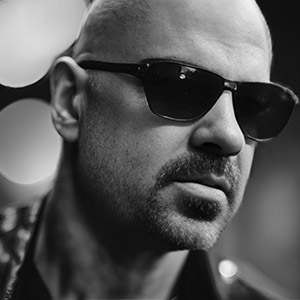
Windsor has always been a city of two faces: the gritty, industrial sprawl that defines the skyline and the surprisingly lush, soulful undercurrent that keeps its creative heart beating. The Bishop Boys—Austin Di Pietro and Andrew Adoranti—have spent the better part of their career leaning into the latter. They usually trade in the kind of warm, sun-drenched melodies that make you forget you are living in a border town known for salt mines and assembly lines.
But things changed. The world got quiet, then it got loud for all the wrong reasons. Sitting across from them on a grainy Zoom call, the shift in tone is obvious. They are still the same guys who met at F.J. Brennan Catholic High School, but there is a weight behind the eyes now. Their latest single, "Dark Days," is a sharp departure from the carefree vibes they built their reputation on. It is a pivot toward the serious, reflecting a world that, for a long time, felt like it was spinning off its axis.
When I ask about the genesis of the track, Austin Di Pietro is quick to frame it within the context of the global malaise we all shared. He says, "So our new single is called 'Dark Days'. As you can guess, it’s about the events of the past year and kind of a collective consciousness of feeling like we’re in dark days, but coming out of those dark days hopefully soon. It’s also meant to be a hopeful song as well."
It is a necessary pivot. You can only write about summer flings for so long when the streets are empty and the news cycle is a relentless barrage of tragedy. Most of their earlier catalogue felt like a curated story, a character study of youth. This is different. This is the first time the duo has allowed the outside world to bleed directly into the ink.
Andrew Adoranti explains the internal shift in their songwriting process. He says, "I think a lot of our songs up until this point have been based on past experiences, but maybe loosely, like we created a story with the lyrics, and it’s almost like we’re telling the story of a character. But I think this is the first time that we’ve really written something that’s completely based on current events."
Austin nods in agreement, acknowledging that they are consciously breaking their own brand. He says, "Even in our bio, it says most of our songs do with love, heartbreak and carefree summer vibes. So this is definitely out of the norm for us."
The inspiration was not just a singular event but a pile-on of societal fractures. We are talking about the isolation of quarantine mixed with the visceral imagery of the Black Lives Matter protests. It was a period where the digital world became our only world, and for many, that world was on fire.
Andrew points to specific lyrical choices that ground the song in this specific, agonizing timeline. He says, "Well, I think, first and foremost, the pandemic and being in quarantine, and kind of feeling isolated. Some of our lyrics, for instance, like live streamed and lonely, just show we’ve all had to adapt to a more digital world and our inability to communicate with each other. Also, the events with the Black Lives Matter protest, George Floyd, we talked about riots in the streets and in the song, so that was another inspiration."
For those of us in Windsor, the unrest in 2020 felt uncomfortably close. We live in the shadow of Detroit. When the sirens wail across the river, we hear them. When the smoke rose from the 1967 riots, Windsor residents watched the skyline burn from the riverfront without needing a news feed. Seeing history repeat itself on a smartphone screen while being trapped in a house created a specific kind of cognitive dissonance.
Austin felt that historical weight pressing down on the songwriting process. He says, "I think it drew some really stark parallels to the riots of 1967—we saw a lot of it unfold on the screen. And obviously, we weren’t around back in 1967, but we still hear stories about that; we see the pictures. So it drew some really scary parallels to that and seeing it come across the computer screen and seeing all the police brutality and whatnot. It was definitely scary."
The "Dark Days" theme isn't just a political statement; it is a visceral reaction to the loss of human connection. There is a specific kind of cruelty in being a musician during a lockdown. You see your peers performing into a vacuum, trying to bridge the gap through a camera lens, while the physical room remains cold and empty.
We hold this area really close to our hearts and I think our songs really reflect that. ...We try to feature the Windsor-Essex region because we feel almost like underdogs here. I feel like everybody kind of talks down on Windsor-Essex... But I feel we try to fight that notion in our music, writing and videos. So we hold this region really close and dear to us.
Austin elaborates on the "live streamed and lonely" sentiment that anchors the track. He says, "I think it is. For us, when we wrote it, it deals a lot with our own personal pain and our struggle in the pandemic, like live streamed and lonely, it deals with, the loneliness of being online and not being able to be with your friends. But we would see musicians live streaming themselves and connecting with an audience. But we weren’t even allowed to be together in a room. So that’s where that lyric came from as we saw everybody else live streaming, but we weren’t really allowed to do that. So it deals with personal struggle, but I think everybody can relate to it. Because we’re all kind of in the same boat this year."
Andrew adds that this shared trauma created a rare, albeit tragic, moment of global synchronicity. He says, "I think that the quarantine situation created an environment where we’re all collectively, probably for one of the first times in the world, going through the same horrible thing. I guess, in that sense, although it’s a personal song, our personal feelings are similar to almost everyone in this situation, because we’re all going through the same thing."
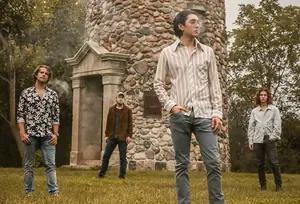
Visually, the band decided to lean into the aesthetic of isolation for the music video. If you watch it, the influence of Wes Anderson is unmistakable—the symmetrical framing, the saturated colours and the deliberate use of local architecture. It is a clever move. By using the "Windsor-Essex as a movie set" approach, they managed to make our backyard look like a stylized dreamscape.
Austin breaks down the visual direction. He says, "During the pandemic, we became inspired a little bit by Wes Anderson’s cinematography style. In Wes Anderson’s movies, he deals a lot with colours and really aesthetically pleasing backdrops. So we wanted to show that Windsor-Essex also has a lot of beautiful backdrops to offer. We wanted to feature those, but also show the meaning of the song which is why in the video, we’re standing six feet apart, the way the social distancing orders are. But, I think we wanted to show a lot of that and showcase Windsor-Essex while doing so."
Andrew notes that the lockdown actually forced them to appreciate the geography they often took for granted. He says, "I think that’s the point that we were trying to get across in the music videos that you know, now we can’t travel anymore, right? We’re locked down in Windsor at home. So it’s nice to see that there are beautiful places even within the place that we’re currently locked down in."
The commitment to the bit was real. They didn't just eyeball the social distancing; they treated it with the precision of a crime scene investigation. When I ask if they actually measured the gap between them for the shoot, Andrew laughs.
He says, "Yes, we did. We had a tape measure."
Austin chimes in with a detail that highlights their dedication—or perhaps their pandemic-induced perfectionism. He says, "At one point, actually, we forgot the tape measure and we had to go home and get it and bring it out to the shoot. So we were very exact about it."
The locations chosen for the video serve as a love letter to the region. From the healthcare workers mural on Tecumseh Road and Walker Road to the vibrant docks in Kingsville, the duo wanted to contrast the heavy lyrical content with a burst of visual optimism.
Austin details the location scouting. He says, "Half the locations like in the verses of the song, we wanted to showcase the meaning of the song. So I mean, 'live streamed and lonely', or 'front lines and fences', and 'God bless the superhero medicine man', we put ourselves in front of the big healthcare workers mural on Tecumseh Road and Walker Road, because we felt that that was the scene that best showcased that and it was also colourful. But throughout the video, there are also just colourful shots that we wanted to do to brighten it up a bit. And that showed the contrast between dark to light, the hopeful meaning of the song, so we went up to the Kingsville Dock because we heard that there were quite a few colourful buildings out there too. I think we got a teal building, a red building and quite a few different colours. So it shows those contrasts from dark to light."
Before the world ended, the boys were riding high on the release of their *Pelee Island* EP. It was a project born out of a specific kind of local magic—the kind you only find when you take the ferry across the lake and lose your cell signal. It was recorded with a frantic, lightning-in-a-bottle energy that stands in stark contrast to the slow burn of "Dark Days."
Andrew recalls the recording sessions for the EP. He says, "The Pelee Island EP is separate from Dark Days. That’s something that we released earlier. We had been previously going out to Pelee Island quite a few times. We performed at the Island Unplugged Festival. It was just a great experience for all of us having a bonding experience. So we wanted to devote an album to that. So we wrote some songs, loosely inspired, I think, by Pelee Island, but we recorded the album in really just a couple of hours, over the course of two days."
Austin remembers the sheer endurance required for those sessions. He says, "Yeah, two days. I think our recording engineer Derek said it was 12 or 13 hours, the one day that we spent just recording all the different instruments. And it came together, just like that, because there’s that magic of Pelee Island, I think is what brought it together too. We released it just before the pandemic hit. Actually, we did a release show on February 15 and then the pandemic hit the next month, and we didn’t even get a chance to really promote it with any more live shows. And then this song 'Dark Days' was written actually a couple months after the release show."
The timing was brutal. To release a project on Feb. 15 and have the world shutter by mid-March is a professional gut punch. For a duo that relies on the "bounce" of each other's energy, the physical separation of the lockdowns was more than just an inconvenience; it was a creative blockade.
Andrew admits the isolation took a toll on their productivity. He says, "That was hard being separated from each other because it made writing songs difficult getting together to practice, any kind of movement that we wanted to go forward with the band was really hindered because we couldn’t be in the same room at any time. And I think just the personal sense of it became really draining. Like, in terms of writing music, or even having creative ideas at some point when you’re just stuck into in your house for so long. It gets depressing, I guess. It’s a big block."
Austin explains that their chemistry is built on a feedback loop that Zoom simply cannot replicate. He says, "The way we write music together is we write sections of the song by ourselves, or one of us will write part of a song, and then we’ll bring it together to the other person, and then we’ll bounce ideas off each other. So, because that couldn’t happen, I think our writing output kind of diminished, because we go to each other for that sense of constructive feedback, or reassurance even to, when we think this idea is no good, we bring it to the other person, then they say, No, we really got something here, and then it turns into a song. I think Andrew had written the chord progression for 'Dark Days'. Then the first time we were able to get together for a few beers, like when the last lockdown started loosening up, is when we actually wrote the whole song. We wrote it in one night. It was really tough those first few months and really depressing."
Despite the "Dark Days," the Bishop Boys remain fiercely protective of their roots. There is a chip on the shoulder of every Windsor artist—a sense that they have to work twice as hard to be seen by the rest of the province. They embrace the underdog label with a sincerity that is refreshing in an industry full of manufactured personas.
Austin closes our chat by doubling down on his love for the 519. He says, "We both grew up in Riverside, and we both met in high school, at F.J. Brennan Catholic High School. So a lot of our songs are based on experiences had here. We hold this area really close to our hearts and I think our songs really reflect that. So whenever we do a music video, like 'Dark Days', or our first music video that we put out 'Might Be Alright'. We try to feature the Windsor-Essex region because we feel almost like underdogs here. I feel like, everybody kind of talks down on Windsor-Essex. Or not everybody, but a lot of people do, and they want to get out of here first chance to get. But I feel we try to fight that notion in our music, writing and videos. So we hold this region really close and dear to us.