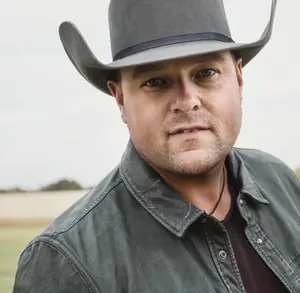
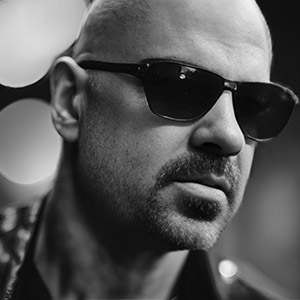
There is a specific kind of dirt that gets under the fingernails of a farmer in Standard, Alberta, and it is the same grit that coats the vocal cords of Drew Gregory. He is a man who exists in the friction between two demanding worlds. You can hear the diesel engines and the crackle of a Telecaster in everything he touches. He is stepping back into the light with "Neon Time," a track that feels less like a calculated radio play and more like a mandatory release of pressure for a guy who has spent too much time behind a steering wheel and not enough under a stage light.
The industry likes to put artists in boxes, but Gregory refuses to fit. He is a Western Canadian music staple who is just as likely to be discussing crop yields as he is discussing his latest chart position. It is a rare duality. Most artists play at being "country," but Gregory is living the logistics of it every single day.
He is not just some local act playing for beer money, either. The man has a trophy case that would make Nashville veterans blink. He is a three-time winner of the Country Music Alberta Award for Horizon Male Artist of the Year, taking the hardware in 2015, 2019 and 2022. He also walked away with the $50,000 top prize from the Project WILD Development Program in 2022. With over 22,000 spins on Canadian radio and 1.8 million streams, the data suggests that people are actually listening to what he has to say.
But the accolades are secondary to the labour. When you talk to him, you realize the farm is not a gimmick for the press kit; it is the heartbeat of his operation. He still operates out of his home base in Southern Alberta, balancing the seasonal demands of the land with the fickle demands of the music business.
"I still farm with my family in Southern Alberta. It’s always something I want to stay involved with," Gregory says. "I feel very fortunate to have two careers I couldn’t live without."
This dual existence provides a level of authenticity that is often missing from the polished pop-country coming out of the major labels. When Gregory sings about the working man, he is not doing character work. He is reporting from the front lines.
His latest offering, "Neon Time," was born out of the forced stillness of the lockdowns. When the world stopped, Gregory looked at what made his live shows work. He realized that people did not want ballads when the doors finally opened; they wanted to sweat. He wanted something that captured the kinetic energy of a crowded room on a Friday night.
"It's always been the rocking honky tonk songs that get the crowd moving," Gregory explains. "After explaining this to Bobby Wills from Willing Records one night, he hooked me up with Wade Kirby and Jim Collins, two legendary Nashville songwriters. Wade came in with the 'Me On Neon Time' hook, and with their pro songwriting skills and my years of experience playing the honky tonk bars, I think we wound up with a hell of a song!"
The collaboration with Collins and Kirby is a significant move. These are not just guys with guitars; they are architects of the modern country sound. Collins has penned hits for Kenny Chesney and Jason Aldean, while Kirby has a track record that commands immediate respect. Putting Gregory in a room with that kind of firepower was a gamble that paid off in melodic structure.
Gregory found the process of working with Kirby particularly enlightening. There is a technical precision to Nashville songwriting that can sometimes feel clinical, but Gregory found a way to marry that polish with his own rough-hewn sensibilities.
"Wade wants to get a great melody before even starting and then go to an even better melody when you hit the chorus and then have something even better mid-chorus that just makes the song undeniably great," he shares.
I’ve worked hard on my vocals and shows and the business, but it's always been important to me to have that believability in the lyrics.
The result is a track that moves with a certain inevitability. It feels familiar but not recycled. However, if there is a critique to be made, it is that the production on "Neon Time" is almost too clean. When you have a guy who records EPs in barns, you want to hear a bit more of that room hiss and floorboard creak. The Nashville gloss is effective, but Gregory is at his best when the edges are a little frayed.
Most of his creative breakthroughs do not happen in a studio booth, anyway. They happen in the cab of a tractor. There is a meditative quality to farm work that allows the mind to wander into lyrical territory. If you are looking for the source of his hooks, look to the fields.
"I can’t think of too many of my song ideas that didn’t come from long days in the tractor," he says. "I try to stay pretty true to the way I live in my lyrics."
He has been playing since he was 15, but his evolution as a songwriter took a hard turn when he discovered Eric Church’s debut, *Sinners Like Me*. That record was a pivot point for a lot of artists who wanted to bridge the gap between outlaw grit and mainstream accessibility. For Gregory, it was a lesson in believability.
"I’ve worked hard on my vocals and shows and the business, but it's always been important to me to have that believability in the lyrics," he says.
That obsession with truth led him to Muscle Shoals, Alabama, to work with producers Bobby Wills and Mike Pyle. Muscle Shoals is hallowed ground, a place where the dirt is literally part of the recording process. Gregory did not just send files over the internet; he went there to feel the floorboards.
"These guys were a blast to work with," Gregory says. He spent time soaking in the history of the town, ensuring he had a rapport with Pyle before the red light ever went on. It was about finding the soul of the song, not just the frequency.
The logistical nightmare of being a touring musician and a full-time farmer would break most people. It is a life of "constant chaos but a chaos filled with joy," according to Gregory. He operates on a strict, almost military schedule: farming during the day, music in the evenings and the road on the weekends. It is a punishing pace, but it keeps him grounded.
And he has the digital paper trail to prove it. Like every modern songwriter, his phone is a graveyard of half-finished ideas and hummed melodies.
"I generally need a lyrical hook," he reveals. "The phone’s voice memo app has become the most used app by songwriters."
Looking back at his trajectory, the 2018 EP *Good Place To Start* was the spark. It hit #1 on iTunes and signaled that he was ready for the big rooms. But then the pandemic hit, and the momentum shifted. Instead of fading out, Gregory pivoted to *The Barn Sessions* EP, a project that redefined his aesthetic.
"It was the last thing we released before the lockdown, and I’m not sure I had a chance to build on that success right away. But in some ways, I’m happy about the way things played out because we were able to do The Barn Sessions EP, which I never would have been able to do had we not been able to take the time we needed to build a temporary recording studio in a barn. And that album had the biggest impact in the way we’ll make music going forward," he reflects.
That barn-recorded sound is where Gregory found his true north. It proved that he did not need the shiny toys of a city studio to make an impact. The industry noticed, too. His peers in the Country Music Alberta Organization have consistently backed him, something he does not take lightly.
"I really respect the Country Music Alberta Organization and more so the people in it, so it means a lot to be recognized by that family for what we’ve been able to accomplish!" he says.
One of his most enduring tracks, "Better in A Bar," won the CMAB Horizon Song of the Year in 2019. Co-written with Aaron Goodvin, the song is an anthem for community. It is not a song about drinking; it is a song about the people you drink with.
"I wrote it with Aaron Goodvin, and I think we just both love being around people we love. In good times or bad times, I think it helps to be around people, and I think the song is more about that than it is about the bar itself," Gregory says.
That focus on people helped him navigate the intensity of the Project WILD Development Program. It was a high-stakes environment, but the education was worth as much as the cheque.
"Project Wild is an artist development program put on by Wild 95.3 in Calgary with some huge prize money on the line, but also some great education for those lucky enough to be in the top 12. We were fortunate to walk away with the $50,000 prize and learned so much along the way!" he says.
Now, with "Neon Time" circulating and a summer tour across the Western provinces on the horizon, Gregory is back in his element. He is a man who understands that whether you are planting seeds or dropping singles, you have to put in the work if you want a harvest. He is staying busy, staying honest and keeping the honky tonks humming. You can find him at drewgregorymusic.com, likely somewhere between a stage and a field.