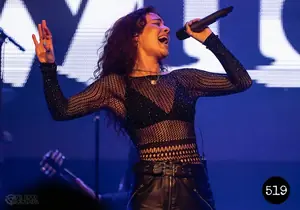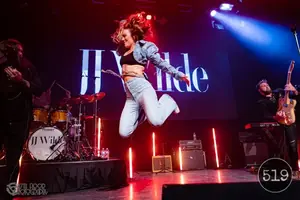

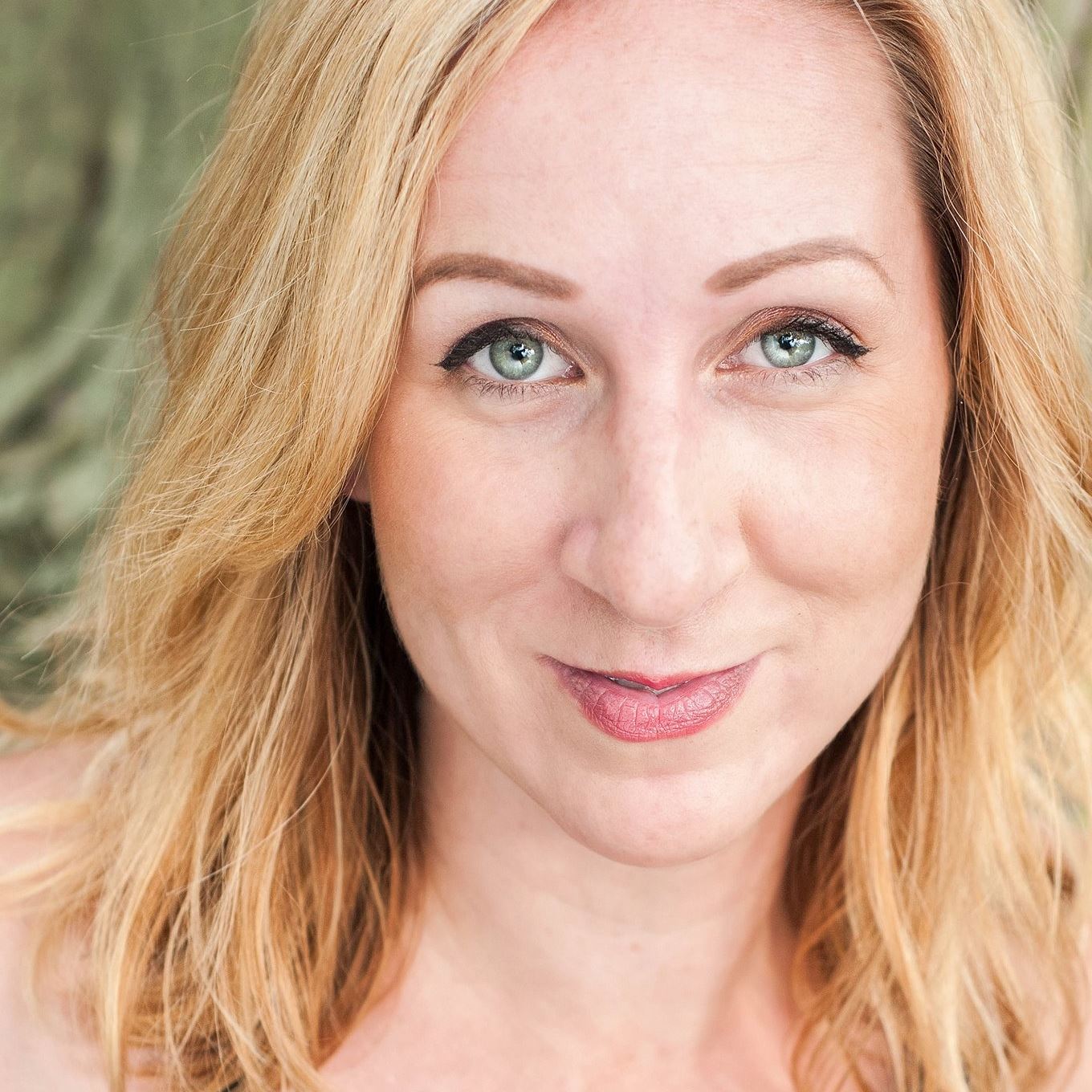
Sitting across from JJ Wilde, you don’t get the sense of a manufactured industry plant polished by a dozen PR handlers. There is a grit there, a specific kind of Southwestern Ontario toughness that usually stays buried in the dive bars of the 519. She is currently dismantling the old guard of Canadian rock, and she is doing it without asking for permission.
The statistics are, frankly, obscene. Wilde recently became the first female artist to see a debut single, "The Rush," hit No. 1 on all three Canadian rock radio formats simultaneously. But the real kicker? She is the only artist in history to occupy that top spot for 10 consecutive weeks. She didn’t just break a record; she steamrolled one previously held by the Red Hot Chili Peppers. It is a massive shift in a genre that has been a boys' club for far too long.


We caught up with Wilde to break down the mechanics of her back-to-back hits, the release of "Best Boy," and why the narrative of the female rocker needs a total overhaul.
When you look at her trajectory, it seems fast. It isn't. It is the result of years spent in the trenches of the Canadian touring circuit, playing to empty rooms and hauling gear through snowstorms.
"I started playing guitar when I was about 15, my brother taught me, and I pretty much started writing songs right then," Wilde says, tracing the lineage of her career back to its skeletal beginnings. "I had been writing poems before that, but I didn’t really know what to do with them. So, I’ve been writing for as long as I can remember. I started playing gigs at about 18 wherever I could — in bars and local venues. Really wherever would let me in."
That "wherever would let me in" mentality is the hallmark of a lifer. It leads to the kind of road-hardened perspective that most modern pop stars lack.
"After that I started a band with some people from high school and toured with them for a while across Canada," she continues. "Back then, we were just a bunch of kids in a van. The band broke up and I started doing solo stuff for a good three or four years before I found my manager and eventually got signed. It’s been a long road. It doesn’t seem like it, but it has."
Kitchener isn't exactly a neon-lit metropolis of rock and roll, but it has a specific sonic gravity. It is a city built on the bones of industry and the annual Blues Festival, which creates a very particular atmosphere for a developing artist.
"If you don’t live here it really doesn’t seem like there’s a lot going on other than Blues, which is what the city is pretty much known for," Wilde explains. "But fact is, there’s a great music scene here — you just have to look for it. Once you find it and start meeting people, the crowd is incredible. There’s a ton of local musicians that are super-amazing. So, it may be small, but there’s a lot of talent here."
Finding a voice in a city dominated by a single genre requires a bit of creative alchemy. You can't just ignore the Blues influence in Kitchener; it seeps into the groundwater. Wilde’s sound is a hybrid, a mutation of those roots mixed with something much more aggressive.
"It definitely took a bit of exploring," she admits. "I’ve always been somebody who’s been drawn to folk music. When I write, I usually write folk songs, and then they end up as rock songs. So, it definitely took a bit of time — especially with this project — to put those two things together. It took a lot of experimenting. I definitely loved performing folk music, and I loved writing it, but with my old band, my favorite songs were always the hard heavy-hitting ones."
There is a technical tension in her work. The structural integrity of a folk song provides the emotional weight, but the delivery is pure high-voltage rock. It is a difficult balance to strike without sounding derivative.
The importance of music is clear. You never know what is going to strike a chord with somebody, but when it does, it’s very powerful. ... It doesn’t matter if it’s a huge venue, or a sweaty club — it’s all about getting music out to the people.
"And for a while, I just thought, ‘Oh well, I don’t write that kind of music, so too bad,’" she says. "But when I went solo, I was really exploring the different things that I could write and different genres, even some Blues, folk and rock — kind of mixing that all together. Those are three genres that I love. I think it’s just trial and error and seeing what you like and what you like to sing. For me, a big thing was what I liked performing on stage, and what I like to move to. That’s the music that I write."
Describing one's own sound is usually a futile exercise in marketing speak, but Wilde is blunt about the stakes of her songwriting. She doesn't hide behind metaphors.
"It’s emotional and it’s raw — and kind of unapologetic of what I’m saying or what I’m putting out there," she says. "You know, some of my songs are uncomfortable — even for me — because they’re very close to my heart. It’s really all about putting myself out there. So, I would say my sound is a self-expression of how I see the world, and I’m inspired by the things that happen to me, as well as what’s going on around me."
Writing from a personal place is a double-edged sword. It creates an immediate connection with the audience, but it leaves the artist exposed. Wilde is starting to branch out, moving toward a more cinematic approach to her lyricism.
"It has been," she says regarding the importance of personal storytelling. "I actually wrote my first concept song a few months ago, which has turned me in a new direction and opened up some more possibilities with writing. But, for the most part, I have always written from personal experience. Now, because I’m having so much time off and a lot of time to write, I’m exploring a lot of different avenues — dreaming up concepts that are like little movies in my head. When you write from a personal place, I think a lot of people can relate to what you’ve gone through."
There is a refreshing lack of ego in how she views her mistakes. In an industry obsessed with curated perfection, Wilde leans into the mess.
"It may not be the exact same thing, but everyone makes bad choices, and they have regrets," she says. "A lot of what I sing about not hating the bad choices you’ve made but accepting them and learning from them. Everyone messes up, you know?"
The timing of her success is a cosmic joke that isn't lost on her. While 2020 saw the global live music industry evaporate, Wilde was simultaneously becoming the biggest thing on Canadian radio.
"It’s been a strange year; I’m not going to lie," she says. "My family likes to joke about it, because this is the year I’ve been lucky enough to experience these successes, but it’s also the year the world shuts down. As an artist, experiencing all of this— no matter what — when it’s happening, even during a pandemic, is incredible. Being on the radio is what I’ve dreamed of. Normally, I’d be going to tour and playing shows . . . unfortunately, that just isn’t happening. But the coolest thing is, it’s definitely still happening in other ways. I can feel the momentum. You know, for me, even though it’s not what I thought it was going to be, I’m still really appreciative and very thankful for everything I’ve gotten to celebrate this year."
The celebration of these milestones was far from the typical industry gala. It was grounded, quiet, and distinctly Canadian.
"It was actually really cute — very wholesome," Wilde says. "Not exactly how I expected to celebrate, but it was very sweet. We were having a weekend at the cottage, and no one’s really going anywhere. There was no big party, or expectations. We were just having some drinks out on the lawn and watching the sunset and my manager called me. He was Facetiming me while he was having dinner with his family, and that’s how I found out. Then all of a sudden, my dad runs out of the cottage with champagne — which was a great way to celebrate."
The absence of a traditional tour cycle has forced artists to find new ways to gauge their impact. For Wilde, the power of the music has to speak for itself when there isn't a physical crowd to scream it back at her.
"The importance of music is clear," she notes. "You never know what is going to strike a chord with somebody, but when it does, it’s very powerful. And that’s clearly what’s happening. I played my first streaming show recently, and I had never done that before. Obviously, my team was there, but there was no audience. It was just cameras, which was super-strange. But it also felt so amazing because you literally knew people were watching. That was the thing; it doesn’t matter if it’s a huge venue, or a sweaty club — it’s all about getting music out to the people."
Her latest single, "Best Boy," is a sharp pivot. It tackles the inherent sexism of the industry with a smirk rather than a lecture. It is a power move.
"It’s a fun play on the sexism that happens so often in the music industry, but also just in life," Wilde explains. "It’s just poking fun at it, but also reclaiming power for women. It’s all about a woman that just doesn’t give a shit, and she’s doing whatever she wants. Basically, saying if you want to be in my twisted world, you can, but you’re basically just a pawn and it’s fine. It has the lyrics typically sung by men, which isn’t a new or ground-breaking thing — people have been talking about this forever — it’s just something I’ve never personally put out there. We all have the same feelings, men and women, and it’s time for these stereotypes to end."
She doesn't pull punches when discussing the reality of being a woman in a male-dominated field. It’s a battle of attrition.
"Like most women, it’s something I’ve been dealing with my whole life," she says. "When I was young and naive, I just thought I was supposed to brush it off and have this nervous giggle. Over time, you just learn to stand up for yourself and squash those things. For me, this song is all about women taking back the power and saying, no, I’ve talked about this, I can do whatever I want, and I don’t need to hear it from you."
The music video for "Best Boy" captures this sentiment, but it evolved into something broader during the production process. What started as a statement on female empowerment became a celebration of radical self-acceptance.
"When we started shooting the video, we had this concept of what it was going to be — but because of COVID, we had to go about finding extras in a very different way," Wilde says. "Our director sent out a virtual casting call, since they couldn’t really hold auditions. He’d say here’s the song, listen to it and dance in your home however you want, wearing whatever you want. We got all of these videos back and it was almost overwhelming. We knew we needed to include as many as we could — they were so amazing."
The result was a collage of human vulnerability that transcended the original script. It’s the kind of happy accident that happens when an artist lets go of the reins.
"Some of the submitted clips were guys with glitter makeup on and jean shorts, that kind of thing, which really took on a new meaning of self-expression in the sense that it’s not only women that deal with these shitty stereotypes," she explains. "People catching flak from society for being who they are. So, it changed from just women to everybody. The reality is, no one should really have to deal with people judging them for who they are. We all dance around our living rooms in our underpants."
JJ Wilde is exactly what Canadian rock needs right now: someone who isn't afraid to be loud, messy, and undeniably talented. She’s not just playing the game; she’s rewriting the rulebook from a cottage lawn in Ontario. And honestly? It’s about time.