
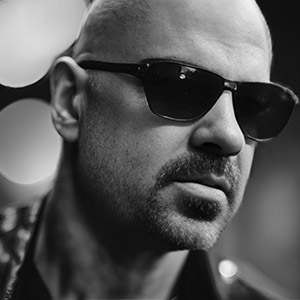
Don McLean is not here to play the role of the fading folk singer. Sitting across from him, you do not find a man clinging to the rafters of 1971 with desperation. Instead, there is a sharp, almost jagged clarity to how he views his place in the cultural firmament. He knows "American Pie" is the monolith. He knows it is the eight-minute and 42-second beast that swallowed the radio and never quite spat it back out.
But he is not tired of it. And that is the first thing you notice when you catch him in a quiet moment, perhaps backstage at a theatre where the air smells of floor wax and old velvet. He treats the song like a high-performing asset, a piece of living history that he happens to own. It has been 50 years since that track redefined the parameters of a pop hit, blending the 1959 plane crash that took Buddy Holly, Ritchie Valens and The Big Bopper with a sprawling, impressionistic mourning for the American Dream.
Now, that legacy is being repackaged for a generation that was not even a thought in 1971. The 50th anniversary has brought with it a children’s book, an odd pivot for a song about "the day the music died."
McLean says, "Well, that is my story, as a little boy and paper boy. Some ladies did an interview with me and created this whole thing. That was something that we’re actually going to take a lot further with. It will be an animated feature of some sort, in the future, and also, they’re doing a Broadway show with a lot of my songs called 'The Day That We Died', or 'American Pie'."
It is an aggressive expansion of the brand. McLean is not just sitting on his royalties; he is building a cinematic and theatrical universe. There is a documentary in the works that aims to dissect the "why" behind the song’s longevity.
He says, "Then there’s a documentary movie, the same thing focused on the making of the song, and what seems to be its universal appeal. Then there is a whole lot of other stuff going on at the same time."
The "other stuff" includes a third crack at his life story. In an era where legacy acts are cashing out their publishing catalogues for nine-figure sums, McLean is doubling down on his own narrative. He is also looking at the road, though the post-pandemic reality remains a logistical headache for any artist with a global footprint.
"I’ve signed up to do another biography. It’ll be the third book to come out about my life. And, of course, a lot of touring next year," McLean says. "Everybody’s touring has been put off till next year, fingers crossed that borders will open and we can get back to some form of normal. So there’s a lot of stuff going on."
The children’s book itself is a curious beast. It is a fable, a sanitized version of the rock and roll mythos that strips away the disillusionment of the original lyrics and replaces it with the hopeful arc of a boy and his guitar. It is "American Pie" through a soft-focus lens.
McLean says, "It’s actually a fable, it’s just an invented idea of a boy delivering a newspaper and finding a friend, getting a guitar, going off into the world and making a difference with his music. It’s kind of my story, but for little kids."
But do not expect him to try and catch lightning in a bottle twice. McLean is remarkably disciplined about his output. He does not suffer from the anxiety of the "follow-up" hit because he does not believe in repeating himself. He has written a few hundred songs, a modest number compared to the industrial-scale songwriting of his peers, but he only strikes when the iron is actually hot.
"No, I felt I did it, so, I didn’t really need to do it again. I really only write one song about one thing, and that’s it," McLean says. "I don’t really do things over and over. I’ve only written a couple 100 songs in my life. I’m primarily a singer. But I also write songs when I have what I think are good ideas, or something that I want to say. Otherwise I don’t."
That said, he has not been idle during the global shutdown. While the world was baking sourdough, McLean was in the studio. He has a new record, *American Boys*, which he co-wrote with his long-time guitarist Vip Vipperman. It is a return to his favourite subject: the identity of his home country.
McLean says, "I have a new album, which is going to come out probably at the end of this year or the first part of next year, with all new songs. I’ve been very busy these last two years, with this pandemic going on. I’ve been fortunate not to get it. So I’m pretty lucky and done a lot of things that I had planned to do."
The new material is not a "pandemic record" in the traditional sense. There are no songs about isolation or Zoom calls. Instead, it is a collaboration that leans into the roots of the genre they helped sustain.
"No, no, no, it’s a lot of different songs, called *American Boys* and 'American Boys Invented Rock and Roll'. That’s the song that I wrote with my guitar player, Vipperman, who was also a songwriter," McLean says. "We teamed up and wrote a bunch of songs. Then I wrote a bunch more, and we now have an album but still ready to go."
McLean’s relationship with America is complex. He is a patriot, but not a blind one. He views the country as a laboratory, a place of extreme success and extreme failure. He is quick to point to the successes of Black entrepreneurs as a counter-narrative to the idea of a failing state, even as he acknowledges the systemic rot.
I’m sad about... the art of songwriting and the communication of songwriters with the larger audience because there’s no way to really figure out what the audience wants, they’re almost illiterate. They don’t really listen to lyrics. It’s all kind of garbage with rhythm tracks... It’s sad, it really is not music.
McLean says, "Yeah, it is. I love my country. But I’m not one of those, America, right or wrong, I believe that we need to be constantly corrected. America’s unique among all the countries of the world because it is an ongoing experiment of sorts. It’s a place where people come to make their fortune. They can do it here more than they can anywhere else."
He does not mince words when it comes to the meritocracy. In his view, the American Dream is still accessible, provided you are willing to bleed for it. It is a traditionalist view, one that feels increasingly at odds with the modern discourse on social equity.
"I’m sure there are a lot of people in America, who are racially motivated to try to make America into some sort of a socialist country. But I’m sure if you asked Oprah Winfrey, or Jay-Z, or Beyoncé, or P. Diddy, or any of those very successful black entrepreneurs, if they hate America, they would say definitely not," McLean says. "You have to work for something, you can’t be given something. And the key to being successful in America is hard work, study in school."
But he is also a realist about the economic cliff the country is approaching. He looks at the end of stimulus checks and the looming eviction crisis with a grim, prophetic eye. He sees a "reckoning" on the horizon that Washington is ignoring.
McLean says, "You’re not going to get any gifts, although that’s changing somewhat. But that’s going to change back pretty soon, we have a lot of serious problems in America, and one of them is the homeless problem, which is going to get much worse very soon. All those stimulus checks, they’re going to stop. And they’re going to be able to kick people out of their apartments. It’s terrible, but unfortunately, reckoning is coming and nobody in Washington in spite of their so called concerns your people. Nobody in Washington is looking at this problem and getting ahead of it a little bit, it’s gonna get very bad, and you have to really sort this all out. This is a big deal. What do you do with all these families and people that have nothing and have no future? What are you going to do with them? What are we going to do to sort this out? It’s like the 1930s, almost."
This concern is not just talk. McLean has set up a foundation to ensure his wealth—largely generated by those iconic songs—goes toward fighting poverty and hunger, specifically in Maine where he maintains his homes.
"I have a foundation called the Don McLean Foundation, and all of my money and all the money that is generated by my songs will go into that foundation after I’m gone," McLean says. "One of the things it is going to address, especially around the country in the United States, is homelessness, poverty and hunger. There are a lot of great people in the state of Maine where I have homes. They have food banks and do things for folks who don’t have anything. I’m going to help do that."
The financial engine behind this philanthropy is, of course, the hits. While "American Pie" is the crown jewel, McLean is quick to point out that "And I Love You So" is actually his most covered work, providing a steady stream of revenue from dozens of different interpretations.
McLean says, "'American Pie', 'And I Love You So', 'Vincent', 'Castles In The Air', those I guess are the four that have been played millions of times on the radio. Of course, 'American Pie' is the most famous. 'And I Love You So' has been recorded by the most people. There are not a lot of versions of 'American Pie'. There’s very few, but there are dozens of versions of 'And I Love You So' that earn money."
And he has no patience for artists who resent their success. You know the type—the ones who refuse to play their biggest hit at a concert because they find it "artistically stifling." To McLean, that is pure vanity.
"I don’t really feel that way. It’s the hand I was dealt, and it’s a good hand, it has aces in it," McLean says. "I think that anybody who has been given success in the music business and feels it’s a cross to bear is an idiot, because who do they think they are, you’re lucky to have anything at all, this is a very, very tough business."
He views his 50-year career as a marathon, not a sprint fueled by a single moment. He values the relationship he has built with his audience, one that goes deeper than a catchy chorus.
McLean says, "I have had a fantastic career as a recording artist, and a stage performer that has lasted for 50 years. It hasn’t been because of one song. It’s been because of albums and many songs and the relationship that I built with audiences throughout the years. I really feel that some people are very spoiled and very stupid to think that success is somehow a burden."
Half a century later, his assessment of "American Pie" remains unchanged. He sees it as a piece of impressionist art, a dream sequence that managed to telescope the American experience into a manageable, albeit long, radio format.
"Well, I think exactly what I thought about it when I wrote it. It kind of telescopes the American story into eight minutes," McLean says. "It’s also kind of a collage and an impressionistic song lyrically, it’s not a board game, it’s meant to be a dream sequence of some sort, I succeeded, I did exactly what I planned to do."
The song’s ascent to the top of the "greatest songs" lists was not something he predicted, but it is something he accepts as the will of the people. It beat out the Beatles and the Beach Boys because it resonated on a frequency those bands didn't always hit.
McLean says, "But what I didn’t expect was that people would love it and understand it, and embrace it, as they have over all these years to the point where it was chosen as the fifth greatest song of the 20th century by a whole variety of different people who could just as easily have mentioned the Beach Boys track or a Beatles song or something, but 'American Pie' topped them all, and that’s because people wanted it that way."
But McLean is less than impressed with what has followed. He views the current state of music as a "mindless road" that began with disco and ended in a desert of rhythm tracks and illiterate lyrics. He is the quintessential old guard, lamenting the loss of the songwriter’s connection to the audience.
"That’s a very good observation. I think you’re right about that," McLean says. "I think that what one of the many things that I’m sad about is the collapse in the United States, other than the environment, and course the animal kingdom devastation. Also, the art of songwriting and the communication of songwriters with the larger audience because there’s no way to really figure out what the audience wants, they’re almost illiterate. They don’t really listen to lyrics. It’s all kind of garbage with rhythm tracks, and stuff that’s said over and over again, like you’re in a mental institution, and if you listen to it enough, it’ll put you into a mental institution. It’s sad, it really is not music."
He hears the music of today through his much younger girlfriend, and he finds it entirely indistinguishable. To him, the "blabber" of modern pop and rap is a sign of a society that has lost its direction.
McLean says, "I hear this stuff on the radio and I have a girlfriend who is a lot younger than I am, she plays this stuff around the house, but I don’t hear any difference between one thing to the next. It’s all just noise as far as I can see, and that’s sad. That says something about people and something about what’s going on in people’s minds and in their hearts. Obviously, they don’t have a direction. They don’t have any kind of thoughts that really coalesce into something. It’s just blabber and we’ve lost that now."
He traces this decline back to the mid-70s. For McLean, disco was the turning point where the focus shifted from the message to the dance floor, a trend he believes rap has simply continued.
"Once disco came in, we started down the mindless road of dancing and snorting coke and looking good on the dance floor and the hell with everything," McLean says. "I think that’s been the same ever since. All this stuff that I hear, like rap music, it’s nothing but dance music. That’s all it is."
His own process has always been about following the "nutty" ideas. He is not afraid of the weird or the dark. He mentions "Aftermath," a song about a murderer in a mental institution, as an example of the kind of ambitious, strange directions he used to explore.
McLean says, "Well, I have to say I was always interested in ambitious ideas that I would have and I never shirked ideas that would come into my crazy head, I always followed through on them. Regardless of how nutty it might be, I wrote a lot of songs I never recorded, probably 40 or 52. And there are all sorts of weird ideas that I had."
He recalls the re-release of the *American Pie* album, which unearthed some of these darker experiments.
"In fact, when they released the CD of the re-mastered *American Pie* album a bunch of years ago, they put two songs on there that were supposed to be on the *American Pie* album, one was called 'Mother Nature' and the other was called 'Aftermath'," McLean says. "And 'Aftermath' is one of my more interesting attempts. It’s about somebody who’s in a mental institution and basically, the guy’s a murderer. But he starts talking about his life, and I do some very interesting guitar work on that. I used to concentrate on that kind of thing. So, I would go in any direction that I felt like, and I said, that’s it, that’s fun. I want to do that. That’s interesting. I want to do it, and I did it."
Ultimately, "American Pie" was born from that same impulse—to do something big, something that captured the "craziness" of the country without falling into the trap of a standard patriotic anthem.
McLean says, "I wrote 'American Pie' because I wanted to write a big song about America. And I wanted to write a new song about America that had never been written before. Not 'America The Beautiful', or 'This Land Is Your Land' or any kind of patriotic song, but something that would capture the emotion of America and the craziness of America."
And he did. Five decades later, the music hasn't died; it has just become a very lucrative, very complicated business. Catch him on tour if you can find a ticket. Just don't expect him to be nostalgic for anything other than the truth.