
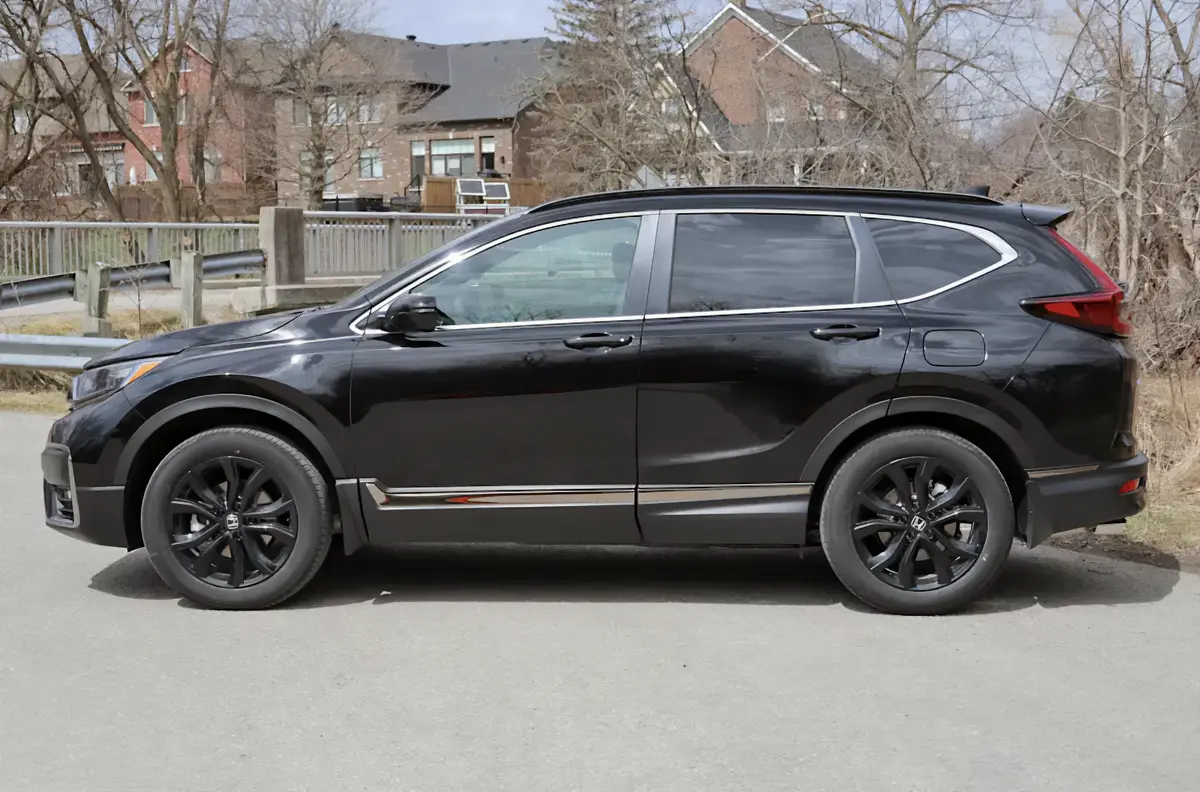

For twenty years, my household was the definition of brand loyal. Two Civics and a CR-V later, I bought entirely into the premium marketing promise of Honda’s legendary reliability and engineering safety.
That two-decade relationship died on the side of the 401 outside of London.
I was on my way to cover an important concert—a time-sensitive media assignment where missing the curtain call isn't an option. Instead of arriving at the venue, I found myself stranded on the shoulder of Canada’s busiest highway.
It started with a sudden, terrifying engine hesitation under acceleration. Right around the 25–30 km/h mark, the motor would choke, cut power entirely, and leave my 2020 Honda CR-V coasting dead in active traffic. It was automotive roulette. After a frustrating, long-distance CAA tow back to my driveway, the diagnosis was clear: a catastrophic fuel system failure.
If you follow automotive safety news, this textbook failure should sound incredibly familiar. It matches the exact, widespread mechanical defect detailed in Transport Canada Recall #2024-262 (which expanded on massive global fuel pump recalls affecting hundreds of thousands of Canadian vehicles). The culprit is a defective, low-density plastic impeller manufactured by a third-party supplier that swells, creates friction, and causes the engine to abruptly seize while the vehicle is in motion.
Yet, when I ran my 17-digit VIN through Honda’s public database, it shot back a clean bill of health: No Outstanding Recalls.
Believing a manufacturing flaw strictly respects the arbitrary, cost-saving boundaries of a corporate spreadsheet is a dangerous mistake. The physical part in my vehicle failed exactly how Honda’s engineers warned it would. But it was Honda Canada’s response to this active safety hazard that transformed a mechanical frustration into a profound lesson in corporate evasion.
The Stalling Tactics: Data Harvesting Over Public Safety
When you report a multi-ton piece of machinery completely dying on a regional transit artery, you expect a level of corporate triage. Instead, Honda Canada treated a dangerous road hazard like a multi-stage bureaucratic compliance trap designed to extract personal data.
First came the administrative friction. Despite supplying my exact 17-digit VIN, a customer relations agent named Daniel stated they could not help me until I proved the vehicle was legally transferred into my name. They demanded copies of my private vehicle ownership papers. I sent them immediately, assuming this would fast-track a safety resolution.
I was wrong. It bought them days of silence.
When Daniel finally replied days later, the true corporate agenda became clear. Honda Canada explicitly refused to move forward or address my safety concern until I jumped through their digital compliance hoops. The response demanded that I first confirm which language I wanted to receive communications in, and—crucially—whether I agreed to sign up for their corporate marketing materials.
Let that sink in. A 20-year brand loyalist is stranded on the side of the highway on the way to a major assignment because of a textbook manufacturing defect. Instead of addressing the hazard, Honda Canada holds the case file hostage. They use a critical safety inquiry as leverage to force a consumer onto their advertising distribution list. Only after checking their digital marketing boxes, I was told, might they consider reviewing my concern.
When the boilerplate brush-off was finally complete, the terms were insulting: pay out-of-pocket for a costly diagnostic fee at an authorized dealership just so they could “review the possibility of assisting with a portion of the cost of the repair.”
They wanted me to pay a hostage fee to a dealership just to beg for a partial fix on a defect they engineered, all while ensuring my data was logged for future advertisements.
Bypassing the Corporate Firewall
I refused to play their game. I didn't give them empty emotion; I gave them a deadline. I gave Honda Canada’s management tier a full business week to step up, bypass the boilerplate script, and address an active safety liability on principle.
Their response? Total, deafening silence.
They chose to hide behind their weekend corporate timeline rather than rush to protect a consumer. Because of their evasion, I decided to take my money, my time, and my sanity out of Honda's ecosystem entirely. A replacement fuel pump motor assembly costs roughly $200 online, and I can swap it out myself on my driveway in about an hour. I don't need Honda Canada to fix my car.
But our readers across the 519 need to know how this company operates when the chips are down and we need to encourage you to avoid companies that don't take safety seriously.
A Call to Action for Southwestern Ontario CR-V Owners
Car manufacturers do not expand multi-million-dollar safety recalls out of the goodness of their hearts. They do it when they are legally cornered by federal regulators.
If your fifth-generation Honda CR-V is hesitating on the 401, sputtering under load, or stalling out entirely at low speeds—and a dealership service advisor tries to convince you it’s a standard, out-of-warranty maintenance issue—do not believe them.
If your VIN is currently listed as "unaffected," your next move should not be jumping through administrative hoops with a customer relations department that values newsletter sign-ups over human safety. Your next move must be filing a formal complaint with Transport Canada.
When an automaker limits a recall batch, they are working off estimated production windows. The only way federal regulators can prove that a defect has bled into the rest of the generation is through raw consumer data. When dozens, hundreds, or thousands of "out-of-scope" owners log identical stalling failures, the Defect Investigations and Recalls Division can open an active investigation and compel a mandatory recall expansion.
Furthermore, federal law dictates that if a manufacturer eventually expands a safety recall, they are legally mandated to retroactively reimburse any owner who previously paid out-of-pocket to fix that specific defect.
By taking your data straight to the regulator and executing the repair through an independent local mechanic or on your own driveway, you keep the receipts and strip the manufacturer of their leverage.
Corporate loyalty is a one-way street. Honda Canada proved that the moment they left an active highway hazard sitting in a driveway over a technicality. Bypass the corporate firewall, log your failures federally, and let the stories speak for themselves.
Public Resources:
Report a Safety Defect to Transport Canada:
tc.canada.ca/report-a-defect Reference File: Transport Canada Safety Recall #2024-262 (Fuel Pump Motor Replacement).